Quick TakeArticle at a glance
- The best Deadpool comic storylines aren't the loudest ones. The character's two biggest critical hits — "With Great Power Comes Great Coincidence" and Weapon X-adjacent horror turn Deadpool Kills the Marvel Universe — work because they slow down and let Wade be something other than a joke machine for a minute.
- Deadpool: The Circle Chase (1993) is where the mask, the mouth, and the mercenary-for-hire premise all locked into place for the first time, three years after his 1991 debut as a one-off villain.
- Cable & Deadpool ran 50 issues from 2004 to 2008 and is still the series that gets recommended first, because it's the one place that explains why Wade and Nathan Summers actually like each other underneath all the bickering.
The best Deadpool comic storylines are the ones willing to let Wade Wilson stop performing for a page or two. Across three decades and three ongoing volumes, the character has been a C-list X-Force villain, a Spider-Man-obsessed Silver Age parody, half of comics’ most unlikely friendship, and — in one genuinely unsettling 2012 miniseries — a self-aware horror antagonist who turns on the entire Marvel Universe. These seven are the ones worth reading first.
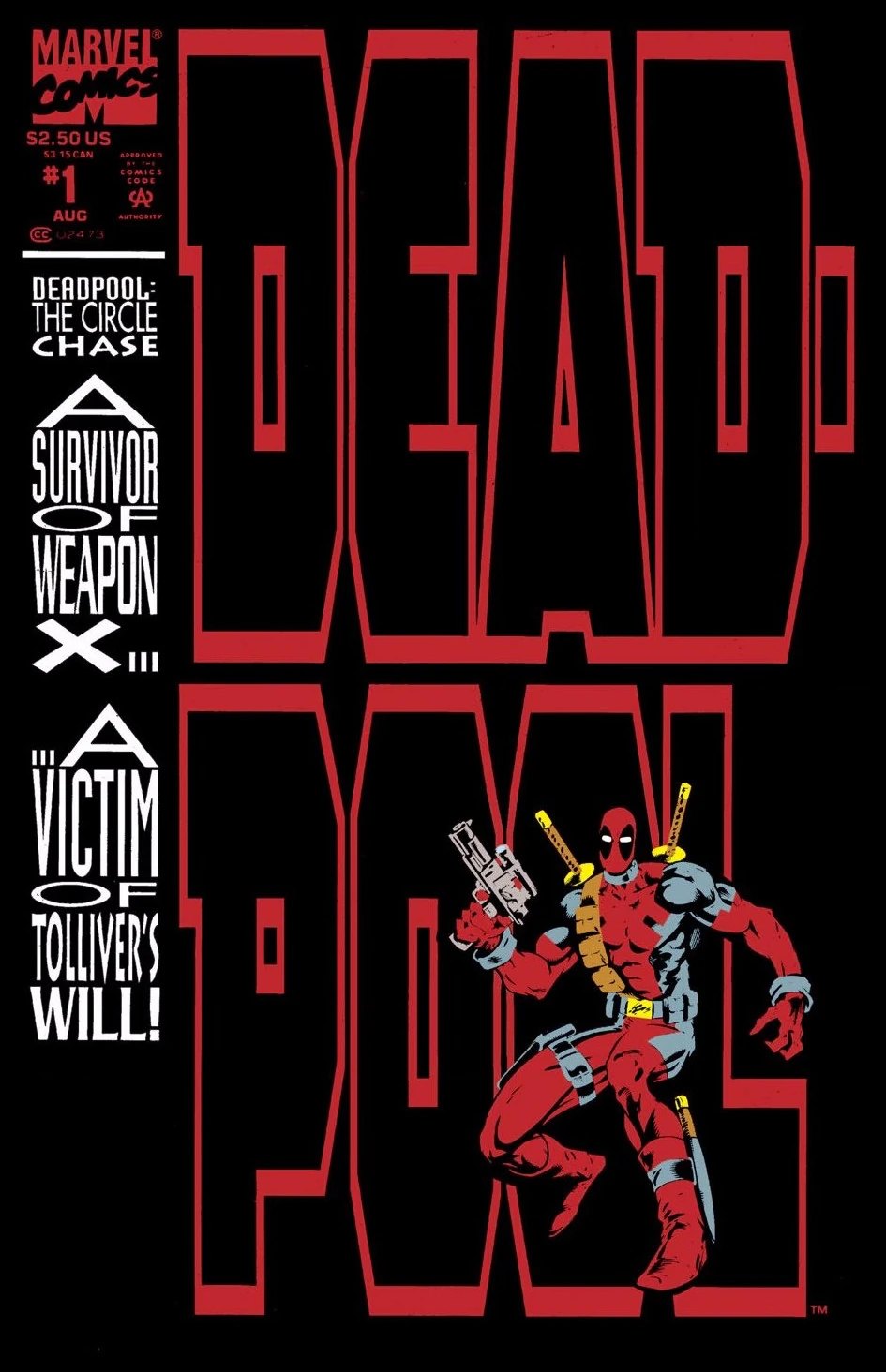
Deadpool: The Circle Chase (1993)
Deadpool debuted as a one-off villain in New Mutants #98 in 1991, but he didn’t get his own comic until Fabian Nicieza and Joe Madureira wrote and drew Deadpool: The Circle Chase, a four-issue miniseries published in 1993. It’s the character’s first real solo spotlight, built around Wade chasing a bounty while Black Tom Cassidy and Juggernaut circle the same target, and it’s where the mercenary-with-a-mouth premise gets room to breathe outside an X-Men team book for the first time.
It’s not the most sophisticated Deadpool story on this list, but it’s the correct starting point if you want to see how the character actually got here, and it needs none of the surrounding X-Men history that a lot of Marvel comics expect new readers to already know. Madureira’s art is unmistakably early-’90s Marvel — big guns, bigger shoulder pads — and that’s part of the appeal.
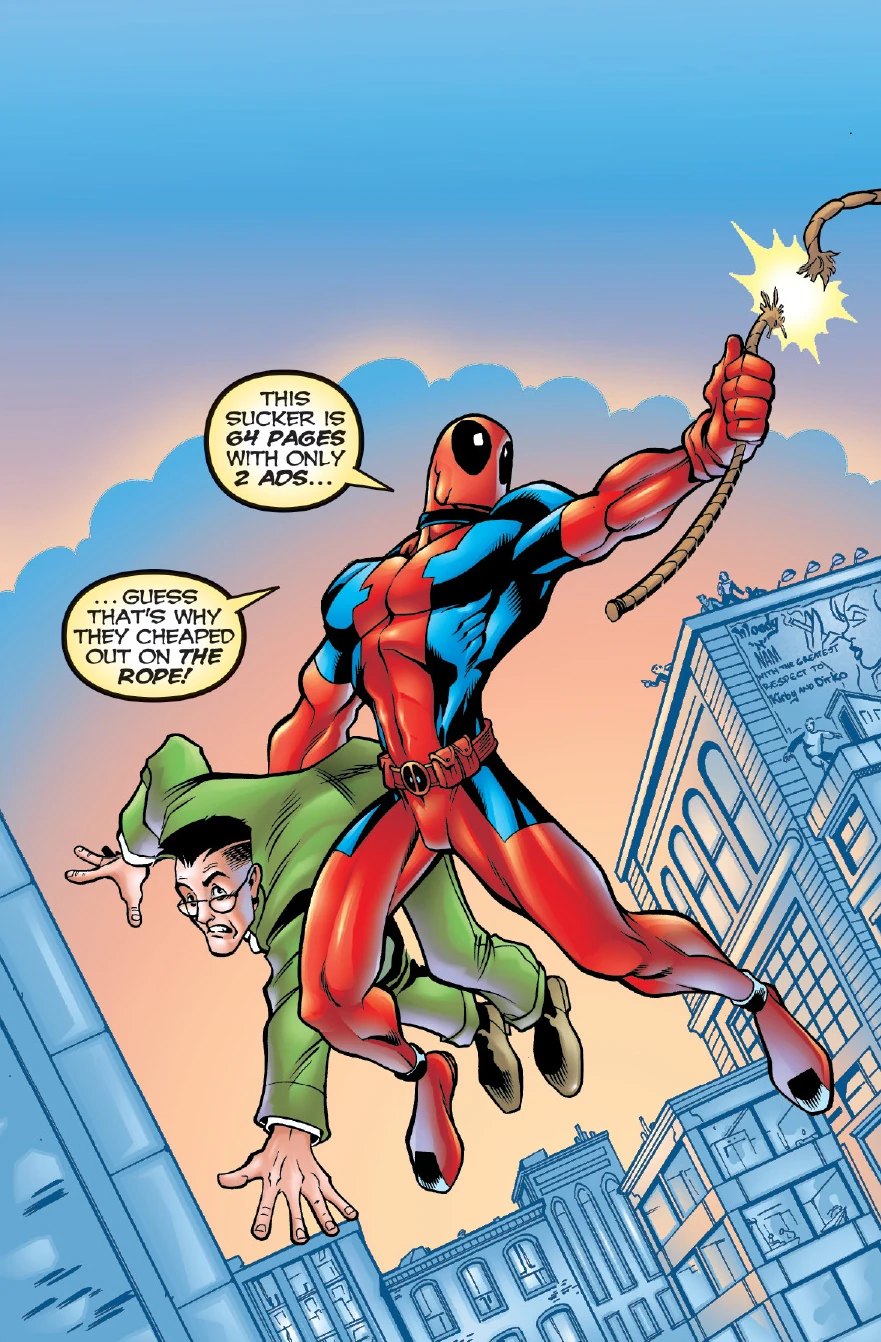
Deadpool Vol. 2: “With Great Power Comes Great Coincidence” (1997)
Joe Kelly and Ed McGuinness launched the second ongoing Deadpool series in 1997, and it’s the run that actually built the character fans recognize today — the apartment with Blind Al, the running beef with Weasel, the constant fourth-wall needling. Issue #11, “With Great Power Comes Great Coincidence,” is the best single issue of that 33-issue run: a botched teleport throws Wade into the pages of 1967’s Amazing Spider-Man #47, digitally inserted into Stan Lee and John Romita Sr.’s original art.
It’s a genuine love letter to Silver Age Marvel dressed up as a goof, and it’s the clearest early example of the thing that makes Deadpool work as a character instead of just a gimmick: he knows exactly how ridiculous he is, and the comic is in on the joke with him.
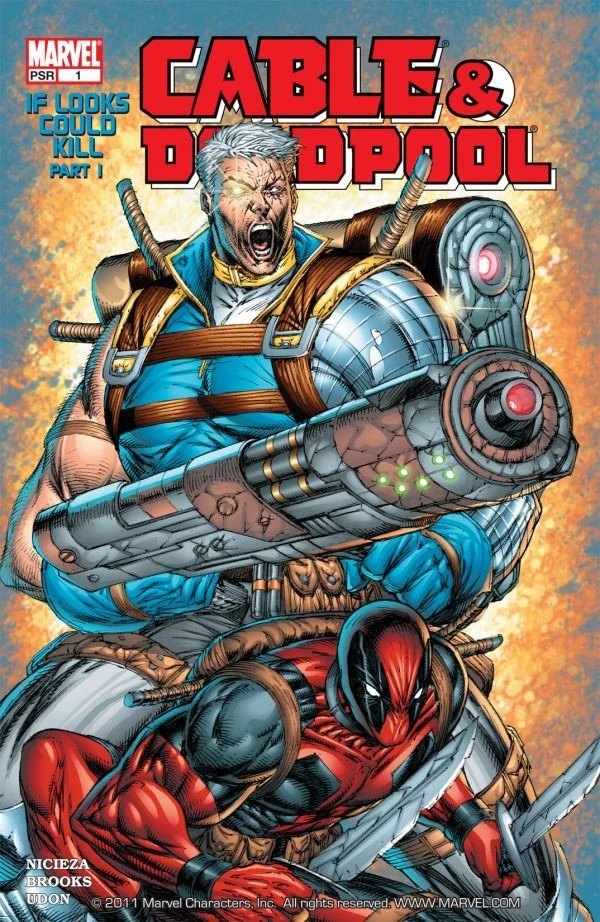
Cable & Deadpool (2004-2008)
Fabian Nicieza wrote all 50 issues of Cable & Deadpool between 2004 and 2008, with Reilly Brown on art for most of the back half, and it’s the series most longtime readers point to first. Pairing Deadpool with Cable — a messianic time-traveling soldier who takes himself extremely seriously — shouldn’t work. It’s the contrast that makes it click: Cable wants to save the world, Wade just wants Cable to notice he’s trying to help.
This is also the series that quietly answers “why does anyone put up with Deadpool” better than any other entry on this list. Cable sees something in Wade worth saving, and watching that play out over four years is the emotional backbone the character rarely gets elsewhere.
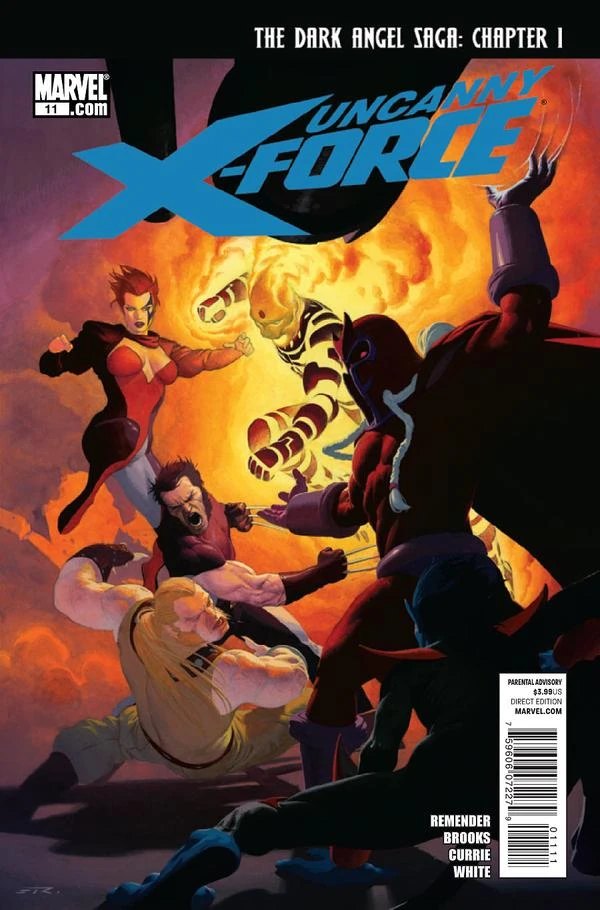
Uncanny X-Force: The Dark Angel Saga (2011)
Rick Remender’s Uncanny X-Force run put Deadpool on a black-ops team with Wolverine, Psylocke, Archangel, and Fantomex, and the nine-issue Dark Angel Saga — running from issue #11 through #18 — is the most dramatically serious work the character has ever been part of. The team travels to the alternate Age of Apocalypse timeline to save Warren Worthington from the villainous Archangel persona consuming him, and Deadpool spends most of it as the only person on the team still cracking jokes while everyone else unravels.
It’s worth reading specifically because it’s the opposite of a Deadpool solo book: he’s comic relief in someone else’s tragedy, and the restraint is what makes his handful of serious moments land so hard.
Dead Presidents (2012)
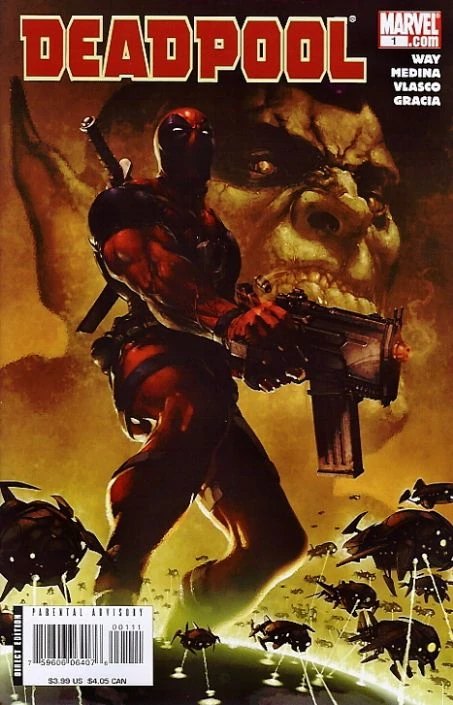
When Gerry Duggan and Brian Posehn took over Deadpool Vol. 3 in 2012, with Tony Moore on art, they opened with a premise that sounds like a joke pitch and somehow isn’t: a shadowy organization resurrects five dead U.S. presidents as zombies to seize power, and Wade teams up with the ghost of Benjamin Franklin to stop them. Dead Presidents (issues #1-5) proved Deadpool could carry high-concept absurdity and still land real stakes.
Deadpool Kills the Marvel Universe (2012)
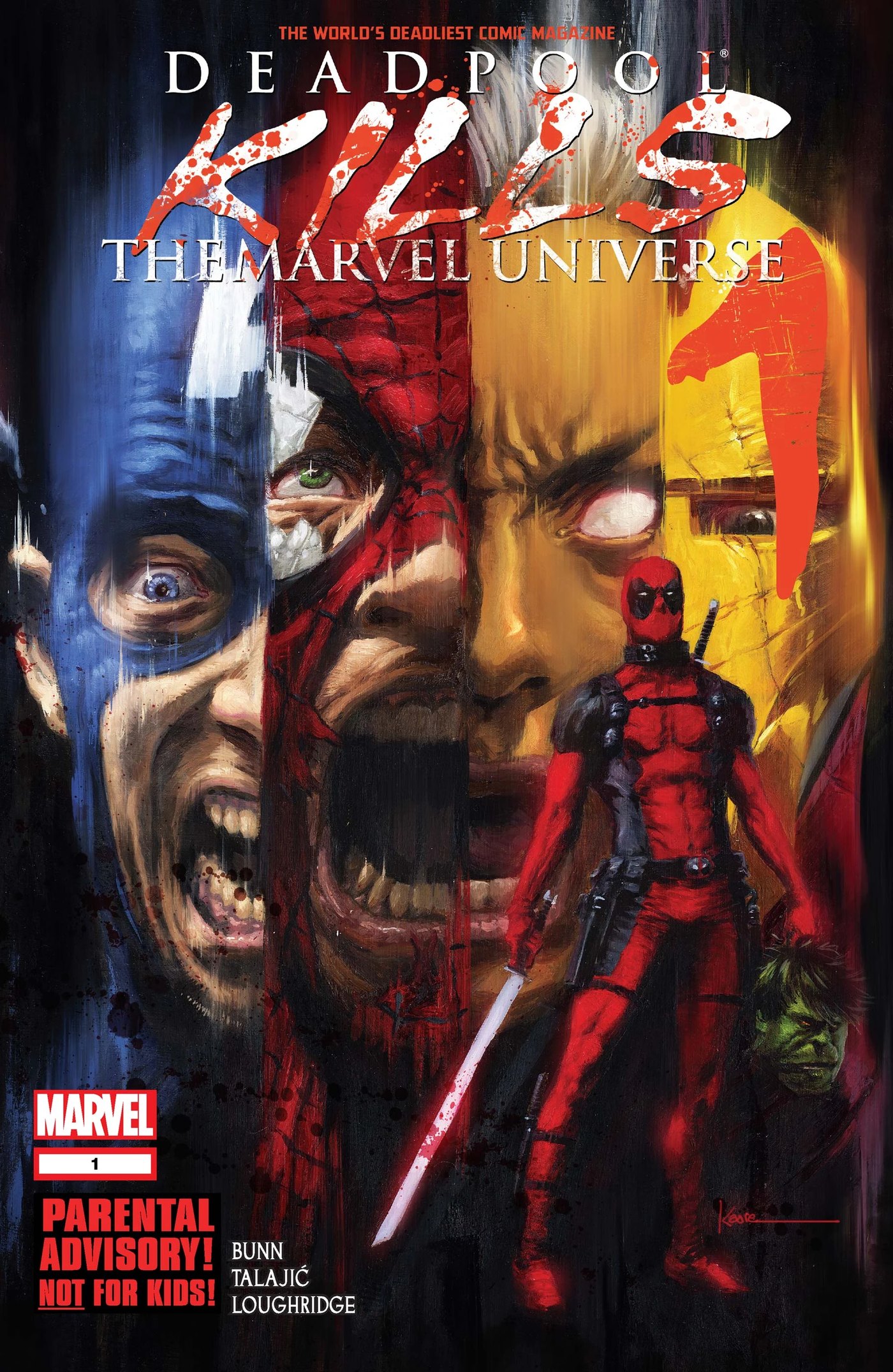
Cullen Bunn and Dalibor Talajic‘s miniseries takes the opposite approach from almost everything else on this list: it’s not funny at all. After a psychiatrist secretly controlled by the villain Psycho-Man tries to “fix” Wade’s mind, something snaps, and Deadpool realizes he’s a character in a comic book — then decides the kindest thing he can do for every hero and villain in the Marvel Universe is end their stories for good. What follows is a methodical, genuinely unsettling slasher story with Deadpool as the monster.
It shouldn’t work coming from a character built on jokes, but the miniseries sold well enough to spawn two sequels — Deadpool Kills the Marvel Universe Again and One Last Time — because Bunn found a genuinely disturbing angle nobody else had tried on the character.
The Good, the Bad and the Ugly (2013)
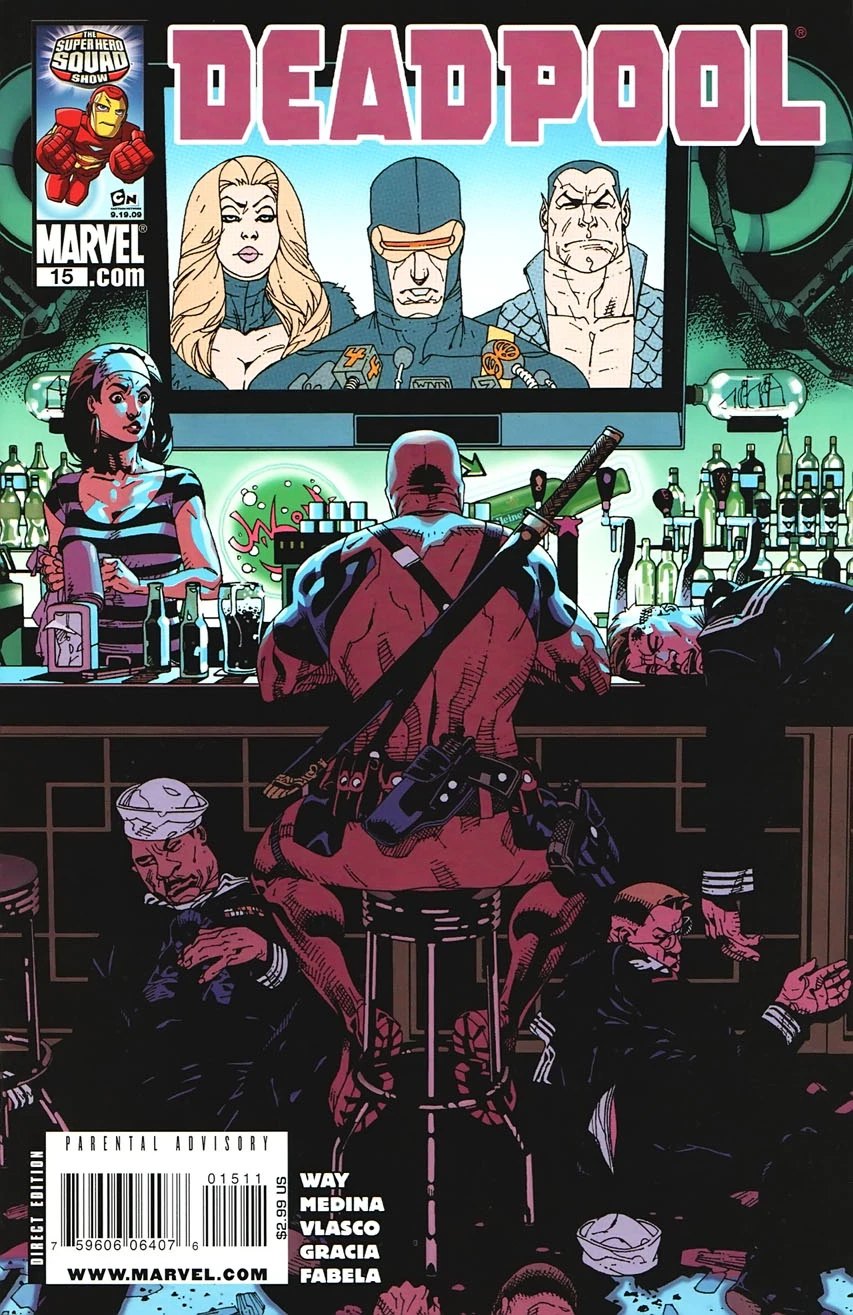
Still under Duggan and Posehn, Deadpool Vol. 3 #15-19 sends Wade on what’s widely considered his best team-up story: he wakes up repeatedly drugged and missing organs, and has to work with Wolverine, Steve Rogers, and a rotating cast of Marvel heroes to figure out who’s harvesting him and why. It’s a five-issue arc that moves like a buddy-cop comedy and still finds time for a genuinely strange body-horror mystery underneath it.
If the rest of this list proves Deadpool can do horror, romance-adjacent friendship stories, and Silver Age pastiche, this arc is the one that proves he can still just be straightforwardly, reliably funny for five issues in a row.
| Storyline | Year(s) | Writer | Artist |
|---|---|---|---|
| The Circle Chase | 1993 | Fabian Nicieza | Joe Madureira |
| Deadpool Vol. 2 #11, “With Great Power Comes Great Coincidence” | 1997 | Joe Kelly | Ed McGuinness |
| Cable & Deadpool | 2004-2008 | Fabian Nicieza | Reilly Brown & others |
| Uncanny X-Force: The Dark Angel Saga | 2011 | Rick Remender | Jerome Opena & others |
| Dead Presidents | 2012 | Gerry Duggan & Brian Posehn | Tony Moore |
| Deadpool Kills the Marvel Universe | 2012 | Cullen Bunn | Dalibor Talajic |
| The Good, the Bad and the Ugly | 2013 | Gerry Duggan & Brian Posehn | Scott Koblish |
What Actually Separates a Great Deadpool Story From a Loud One
Put these seven side by side and a pattern shows up fast: the best Deadpool stories aren’t the ones that lean hardest into the jokes, they’re the ones that use the jokes as cover for something else. Cable & Deadpool uses the comedy to sneak in a real friendship. Dead Presidents uses it to sell a genuinely strange high-concept plot. Deadpool Kills the Marvel Universe drops the comedy almost entirely and the character still works, because by 2012 writers understood that Wade’s self-awareness is the actual engine, not the one-liners it produces.
That’s the same trick the character pulled off at the box office — Deadpool & Wolverine leaned on Cable & Deadpool-style odd-couple chemistry for its biggest emotional beats, not just the fourth-wall jokes the marketing sold, and it worked: the film earned a record $205 million domestic opening weekend in July 2024, the biggest debut ever for an R-rated movie, on its way to a $1.3 billion worldwide total. If you only know the character from the movies, the Wolverine stories that shaped his on-screen partner are the natural next stop, and either Circle Chase or Cable & Deadpool is the right place to actually start reading Wade’s own comics.
Frequently Asked Questions
What is the best Deadpool comic storyline to start with?
Deadpool: The Circle Chase (1993) is the character’s first solo spotlight and needs no prior context. For a slightly more polished entry point, Cable & Deadpool (2004-2008) is the series most fans recommend first.
Is Deadpool Kills the Marvel Universe canon?
No. It’s told from inside Deadpool’s fractured perspective after he realizes he’s a comic book character, and Marvel has never treated its events as part of mainstream continuity. It’s meant to be read as its own self-contained story.
Do you need to read other comics before Cable & Deadpool?
No. The series recaps what matters about both characters’ histories as it goes, which is part of why it’s such a common recommendation for new readers.
Which Deadpool storyline is closest to the Deadpool & Wolverine movie?
None of them directly, but Cable & Deadpool’s odd-couple dynamic and Uncanny X-Force’s willingness to put Wade in a genuinely dramatic team story are the closest comic equivalents to the tone the 2024 film struck.
Last updated October 4, 2026.