Doctor Doom’s best comic book storylines are the reason Marvel Studios bet an entire Avengers crossover on Robert Downey Jr. playing him: across six decades, no Marvel villain has been written with this much range, from world-conquering tyrant to grieving son to reluctant hero. Here are the eight stories that built that reputation, ranked.
Last updated: October 27, 2026
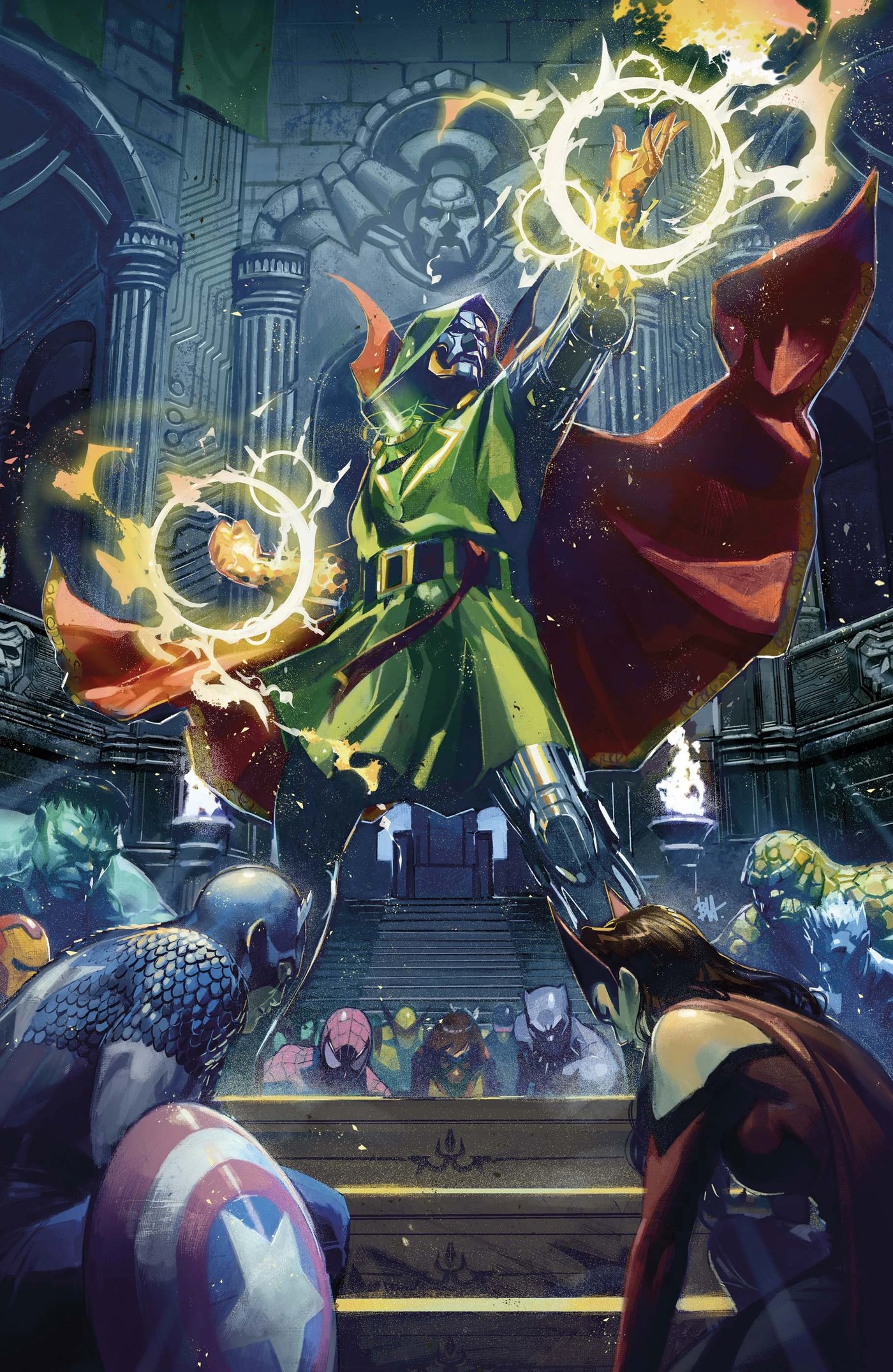
Most “best Doctor Doom stories” lists rank by craft alone. This one ranks by a narrower question: how much each story actually explains the Victor von Doom that Robert Downey Jr. is about to play in Avengers: Doomsday, out December 18, 2026. Advance interest is already unusually high: the film passed $100 million in worldwide advance ticket sales by October 6, 2026, more than two months before release, the fastest any movie has hit that mark. That standard is why an obscure Doctor Strange team-up outranks a universe-ending crossover below, and why the character’s very first appearance still makes the list at all.
1. Secret Wars (2015)
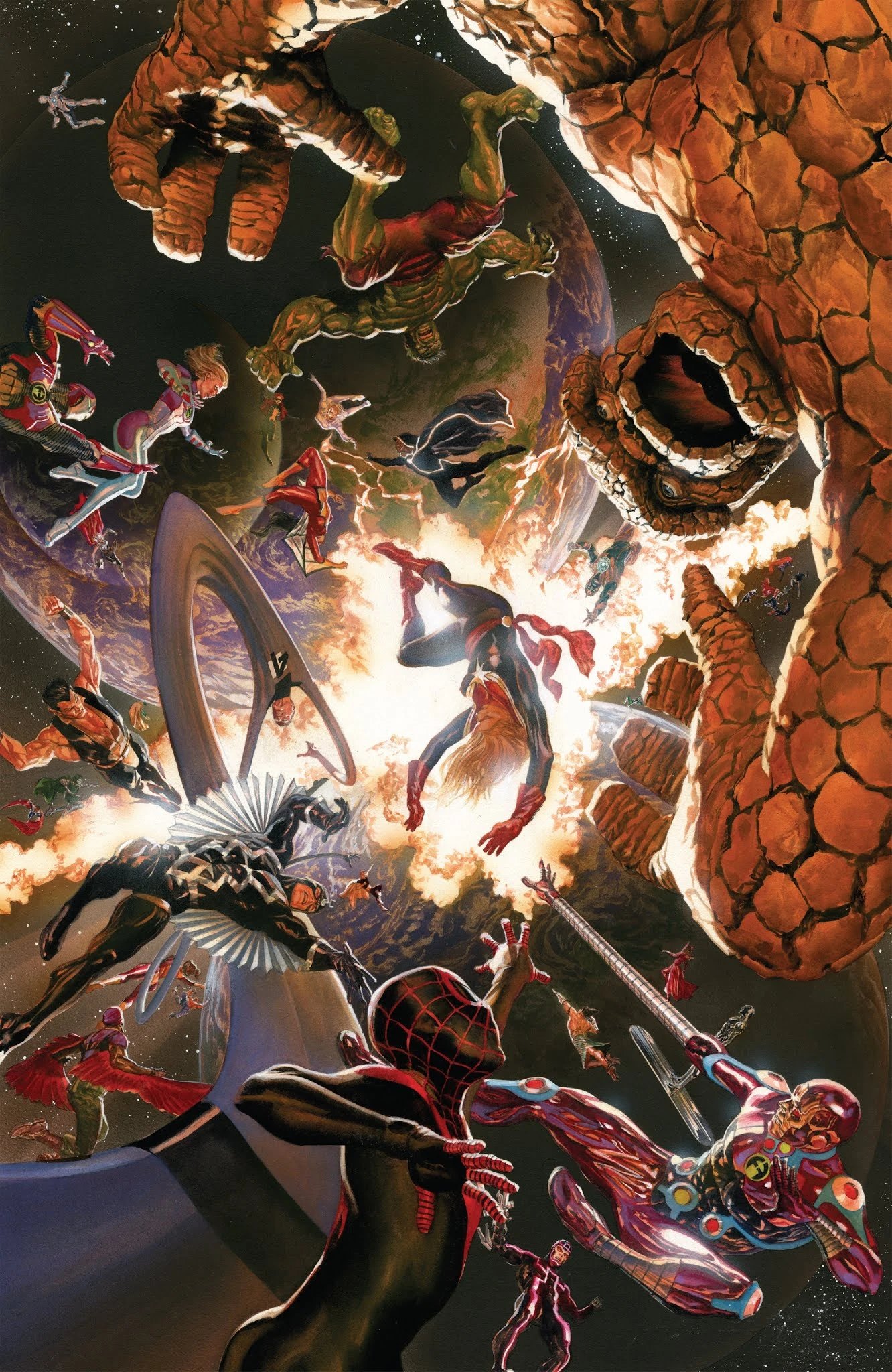
Jonathan Hickman (writer), Esad Ribić (artist) — 9 issues, 2015–2016
Secret Wars is the story where Doom stops wanting to beat
Reed Richards and simply takes Reed’s job instead. After the Marvel multiverse
collapses into itself, Doom salvages the last fragments into a patchwork
planet called Battleworld and rules it as “God Emperor Doom,” having quietly
taken the Beyonders’ power for himself in the process. He keeps the peace. He
runs the place more competently than most Marvel heroes have ever run
anything. And he still cannot make himself tell his oldest friend, Reed’s
analog on Battleworld, the truth about how he got there.
Writer Jonathan Hickman spent more than two years of interconnected
Avengers and New Avengers issues building to this, and CBR calls it one of
the best Marvel events ever published, with Doom as its most important
part. It reads less like a crossover event and more like the final exam on
everything Doom has ever wanted — and it’s widely read as the closest
print precedent for a Doom who has already won before the story starts,
which is exactly the shape of threat Avengers: Doomsday is built
around.
2. Books of Doom (2005–2006)
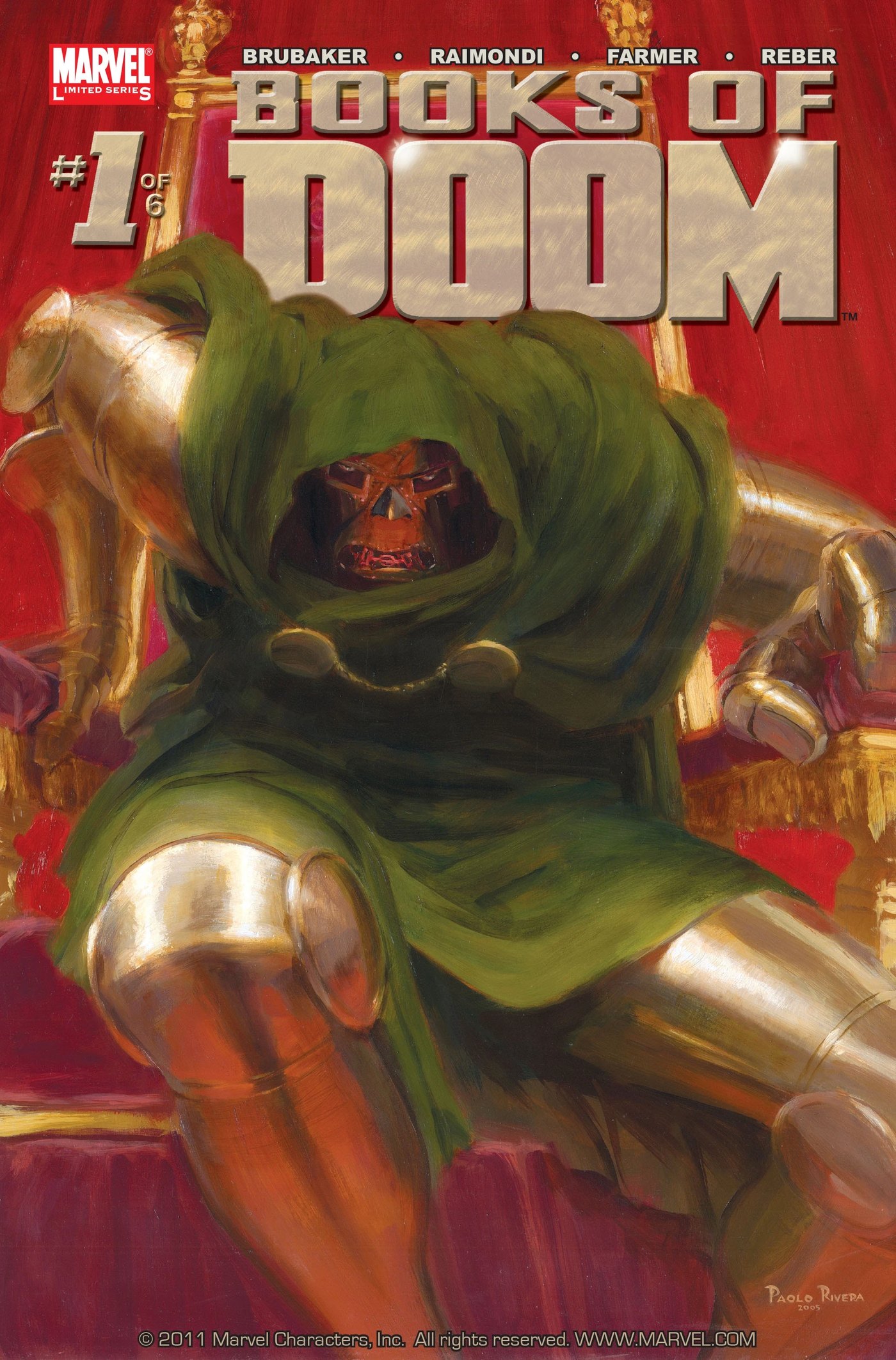
Ed Brubaker (writer), Pablo Raimondi (artist) — 6 issues
Books of Doom is the origin story Marvel keeps pointing
new readers toward, and for good reason: it is the only one told entirely
from young Victor von Doom’s side. Ed Brubaker and Pablo Raimondi walk through
his childhood in Latveria, his mother Cynthia’s death and damnation at the
hands of the sorcerer Mordo’s predecessor, the college rivalry with Reed
Richards at State University, and the lab accident that scarred his face —
reframing each beat as something closer to tragedy than villain origin.
The miniseries doesn’t excuse what Doom becomes; it explains why he
believes every version of events in which he isn’t the hero must be wrong.
ScreenRant ranks it among the essential Doom comics for exactly that reason, and
it’s the likeliest print source for however Avengers: Doomsday
handles his backstory.
3. Fantastic Four: Unthinkable (2003)
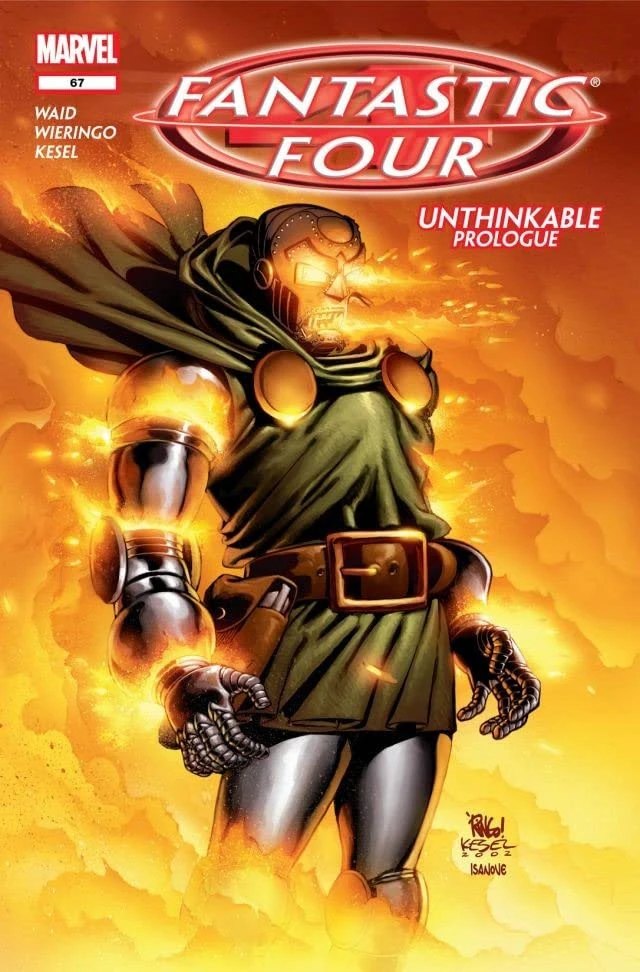
Mark Waid (writer), Mike Wieringo (artist) — Fantastic Four #67–70
Unthinkable is the story that proves Doom’s genius has
never been the scary part — his willingness to pay any price is. Mark Waid
and Mike Wieringo have Doom strip away his own humanity on purpose, trading
emotion and memory for raw magical power so he can finally beat Reed
Richards on Reed’s own terms, then turning that power on the Fantastic
Four’s children.
It’s the single darkest mainstream Doom story Marvel has published, and
the one most frequently cited when writers need to establish that, whatever
his nobler stories suggest, Doom is still capable of real monstrousness when
the Richards family is the target.
4. Doctor Strange and Doctor Doom: Triumph and Torment (1989)
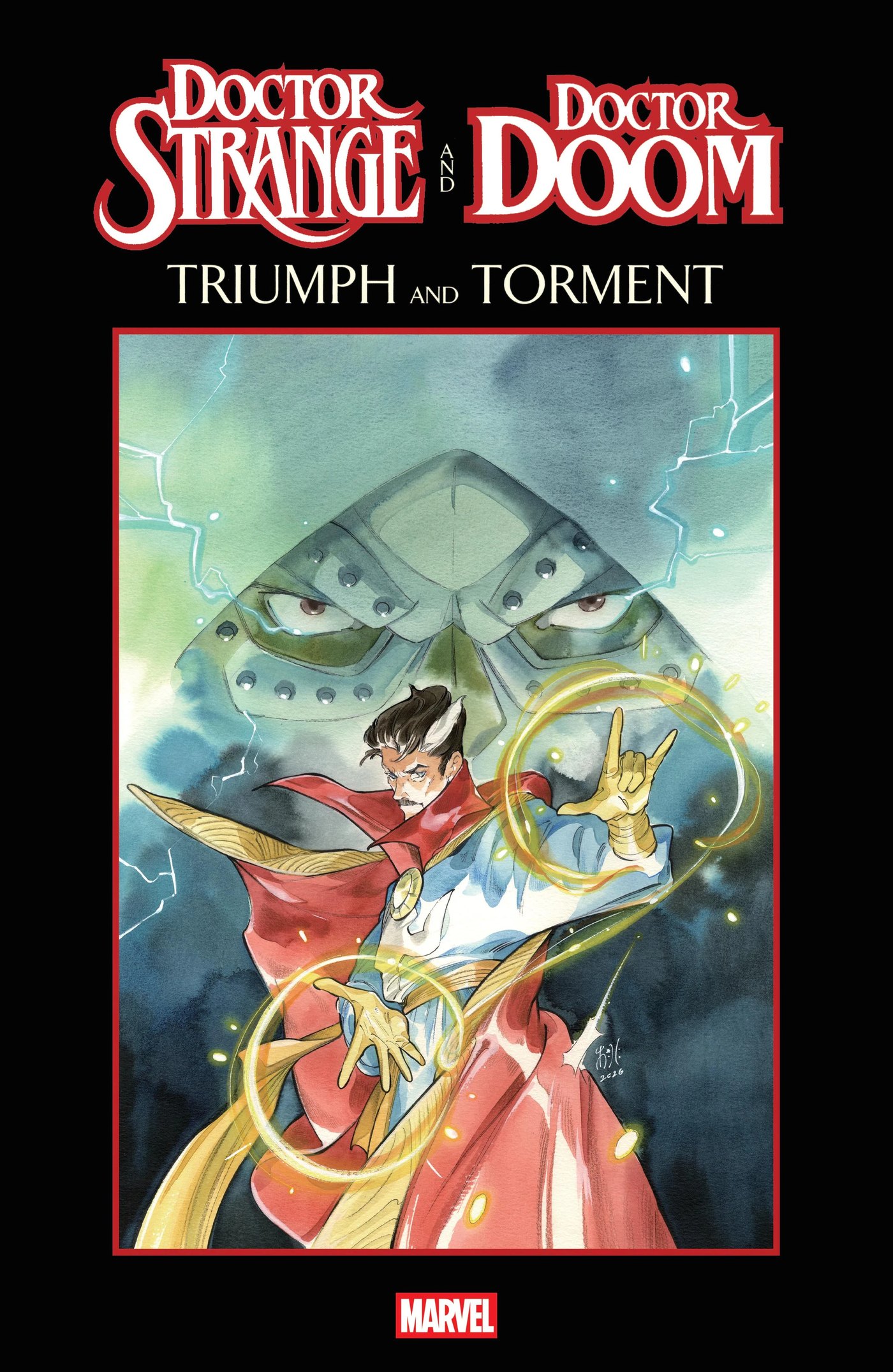
Roger Stern (writer), Mike Mignola (artist) — one-shot graphic novel
Often called the single best Doom story ever published, Triumph
and Torment drops the armor entirely for one night. Doom asks his old
foe Doctor Strange to help him rescue his mother Cynthia’s soul from the
demon lord Mephisto — and for the length of the quest, the two of them
fight side by side as something close to equals.
Future Hellboy creator Mike Mignola’s gothic artwork gives the
rescue genuine weight, and Roger Stern’s script lets Doom be grieving,
noble, prideful and ruthless in the same twenty-two pages without any of it
reading as inconsistent. It’s the story every “is Doom secretly honorable”
argument traces back to.
5. Avengers: Emperor Doom (1987)
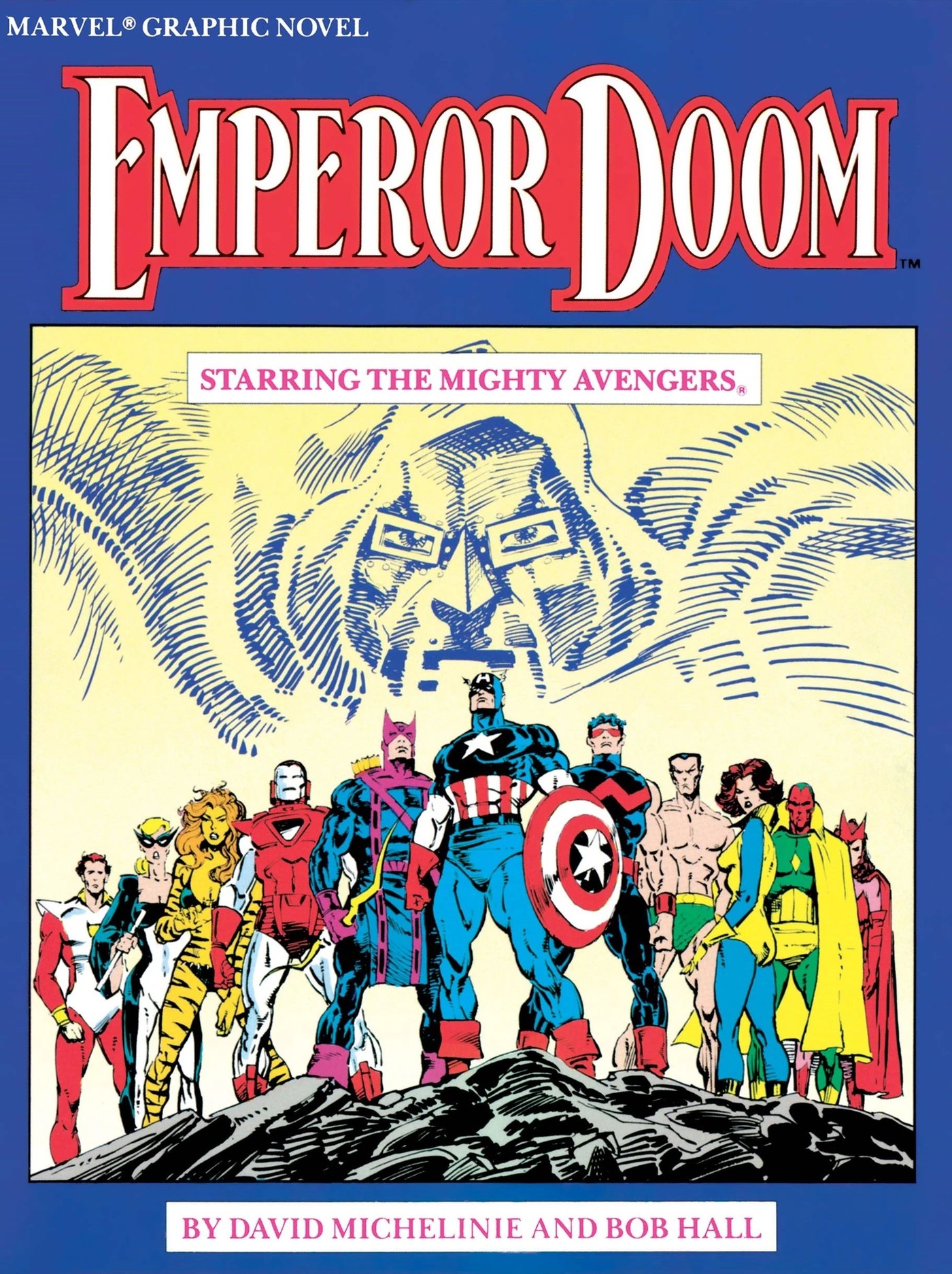
David Michelinie, Mark Gruenwald, Jim Shooter (writers), Bob Hall (artist) — graphic novel
Emperor Doom is the cleanest demonstration of Doom’s central
flaw: he conquers the entire planet using the mind-controlling Purple Man
and Psycho-Man, ends war, ends hunger, and governs more effectively than any
Marvel hero ever has — and the story still frames his defeat by the
Avengers as a happy ending, because the peace was never actually chosen by
the people living under it.
It’s a blunter morality tale than Doom usually gets, but that bluntness is
the point: even a demonstrably competent, demonstrably benevolent Doom is
still a dictatorship, and Marvel has never once let him keep the throne for
that reason.
6. Infamous Iron Man (2016–2017)
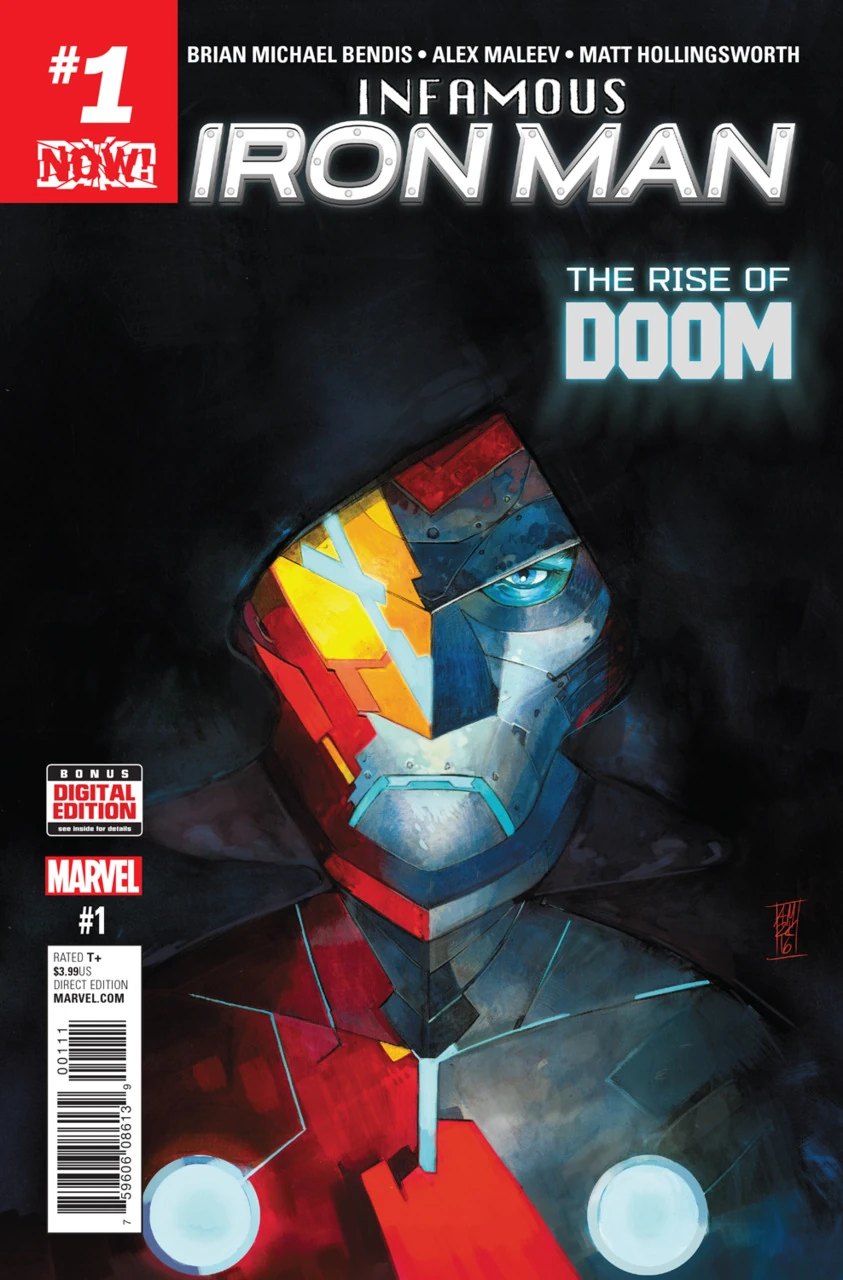
Brian Michael Bendis (writer), Alex Maleev (artist) — 12 issues
After Secret Wars leaves Doom powerless and humbled, Infamous
Iron Man has him do something no other major story lets him try for
long: actually be a hero. Wearing a version of Tony Stark’s armor with
Reed Richards’s blessing, Doom spends twelve issues genuinely attempting
redemption — and the series’ tragedy is how convincingly Brian Michael
Bendis sells it before showing exactly where Doom’s ego still gets in the
way.
It’s the sharpest point of comparison for Robert Downey Jr.’s casting
specifically: an actor who spent a decade as Iron Man now playing the villain
who, in this very story, tried on the hero’s armor and couldn’t fully
become him.
7. Doomwar (2010)
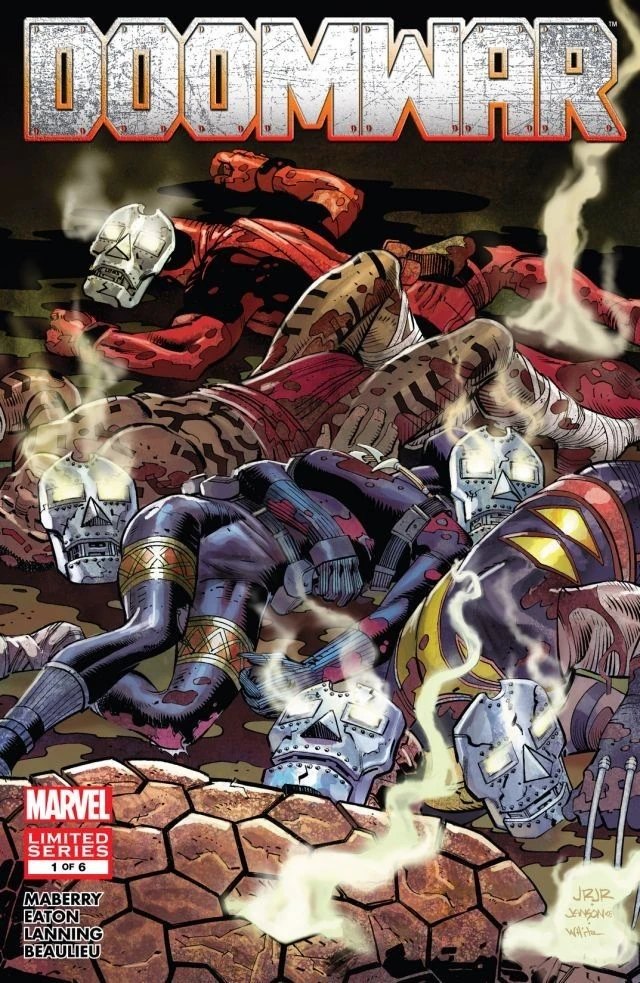
Jonathan Maberry (writer), Scot Eaton (artist) — 6 issues
Doomwar is Doom at his most purely tactical: he invades
Wakanda to seize its vibranium supply, fighting the Black Panther, the
Fantastic Four and the X-Men simultaneously and nearly winning against all
three at once. There’s no tragic backstory beat here and no flicker of
nobility — just a villain treating three of Marvel’s best-defended
nations and teams as a logistics problem to be solved.
It’s the story that best argues Doom doesn’t need magic or mysticism to
be the Marvel Universe’s most dangerous strategist; raw planning and
ruthlessness get him most of the way to winning on their own.
8. Fantastic Four #5 (1962)
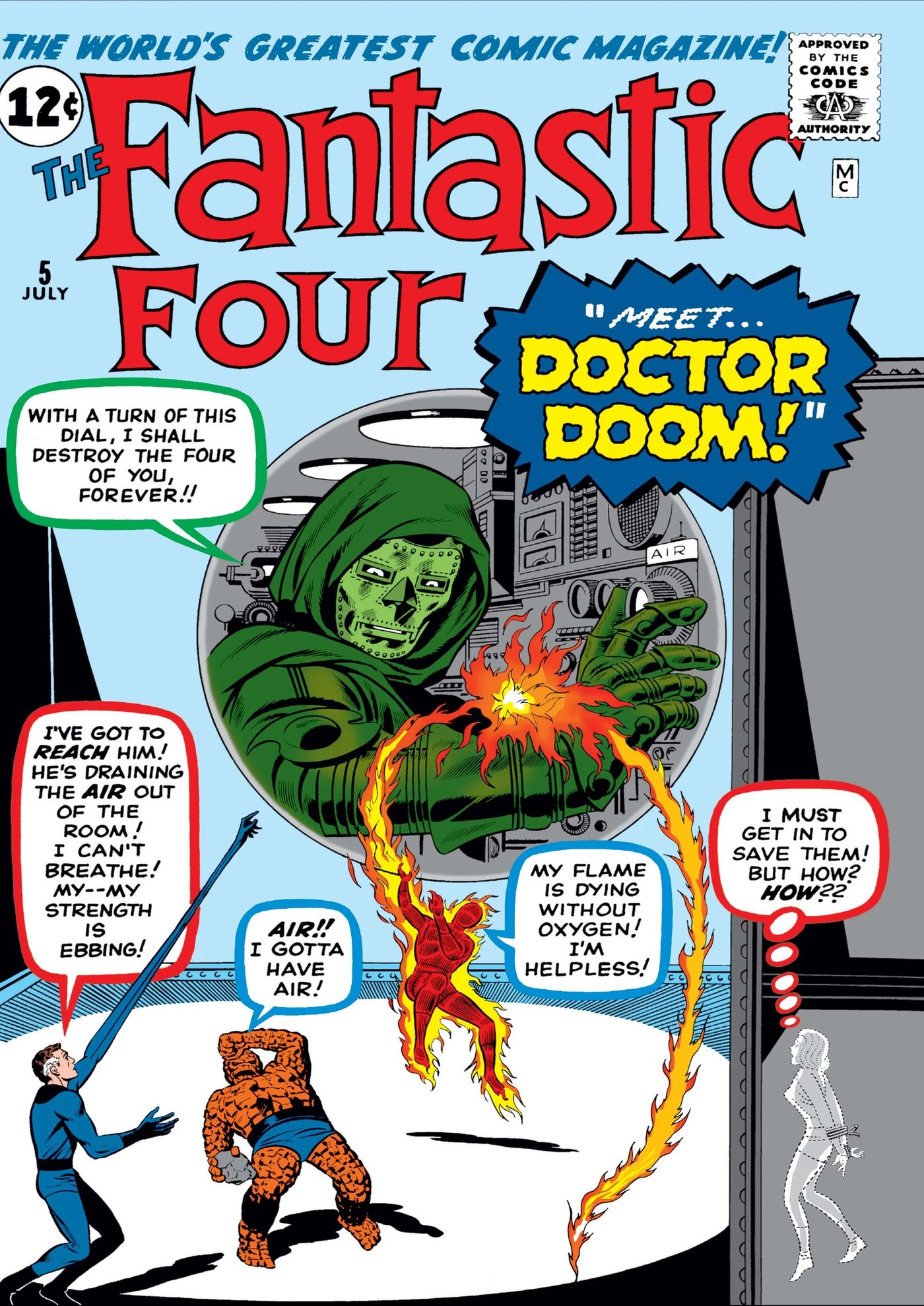
Stan Lee (writer), Jack Kirby (artist) — Doctor Doom’s first appearance
Every other entry on this list is, in some sense, still elaborating on
Fantastic Four #5. Stan Lee and Jack Kirby introduce Doom as a
former college rival of Reed Richards, his face scarred by a botched
experiment Doom blames entirely on Reed, ruling Latveria from a castle and
scheming to steal Blackbeard’s treasure using a time machine.
It’s wildly pulpy by modern standards, and it’s also the issue that
permanently set the terms of the Doom/Richards rivalry — brilliant minds,
one conviction each that the other one is to blame — that every later
writer, including whoever scripted Robert Downey Jr.’s dialogue for
Avengers: Doomsday, is still working from.
What Connects Doctor Doom’s Best Stories
Line these eight up and a pattern falls out that the rankings above don’t spell out on their own: Doom’s best stories almost never end with him losing a fight. They end with him losing an argument — to Reed Richards about who’s really to blame, to himself about whether ruling the world was ever actually about Latveria, to Doctor Strange about what his pride has cost his mother’s soul. He is written, consistently, as the smartest person in Marvel Comics who has never once been able to out-think his own ego. That’s a sharper, stranger villain than “world conqueror,” and it’s exactly the version Avengers: Doomsday is staking its marketing on.
| Rank | Storyline | Year | Creative Team |
|---|---|---|---|
| 1 | Secret Wars | 2015 | Jonathan Hickman, Esad Ribić |
| 2 | Books of Doom | 2005–2006 | Ed Brubaker, Pablo Raimondi |
| 3 | Fantastic Four: Unthinkable | 2003 | Mark Waid, Mike Wieringo |
| 4 | Triumph and Torment | 1989 | Roger Stern, Mike Mignola |
| 5 | Avengers: Emperor Doom | 1987 | Michelinie, Gruenwald, Shooter, Bob Hall |
| 6 | Infamous Iron Man | 2016–2017 | Brian Michael Bendis, Alex Maleev |
| 7 | Doomwar | 2010 | Jonathan Maberry, Scot Eaton |
| 8 | Fantastic Four #5 | 1962 | Stan Lee, Jack Kirby |
For the film side of all this, our breakdown of everything confirmed so far about Avengers: Doomsday covers the cast, release date and production history, and our explainer on who Doctor Doom is goes deeper on his powers and Latverian rule for readers who are new to the character. Readers building out a full Marvel movie watchlist before December can check our ranking of every MCU movie for where the previous Multiverse Saga entries land.
Frequently Asked Questions
What is Doctor Doom’s best comic book storyline?
Most critics and longtime readers point to either 2015’s Secret Wars, where Jonathan Hickman and Esad Ribić have Doom rule a patchwork Battleworld as a god-emperor, or 1989’s Doctor Strange and Doctor Doom: Triumph and Torment, which is more often cited as his single best standalone story.
Is Robert Downey Jr.’s Doctor Doom in Avengers: Doomsday based on a specific comic?
Marvel Studios hasn’t confirmed a single source, but Secret Wars (2015) and Books of Doom (2005–2006) are the two stories most commonly cited as likely influences, given Avengers: Doomsday’s scale and its focus on Doom’s origin and motivations.
Who created Doctor Doom?
Stan Lee and Jack Kirby created Doctor Doom, introducing him in Fantastic Four #5 in July 1962 as a former college rival of Reed Richards.
Is Doctor Doom a hero or a villain in Avengers: Doomsday?
He’s the film’s central antagonist. Avengers: Doomsday unites the Avengers, the X-Men and the Fantastic Four specifically to confront Robert Downey Jr.’s Victor von Doom, who is playing the villain role Doom has held in Marvel Comics since 1962.