Clayface’s ending has no post-credits scene to wait for, but the final five minutes do the real work: a kill-switch twist, a body-horror transformation, and a closing scene that deliberately refuses the redemption arc most DC villain origins reach for. Here’s exactly what happens, confirmed against the film itself.
Last updated: October 27, 2026

Does Clayface Have a Post-Credits Scene?
No. Clayface has no mid-credits or post-credits scene of any kind, Yahoo Entertainment confirms — the film plays out its entire story before the credits roll, and nothing plays after them. Audiences can leave the theater the moment the movie ends without missing a setup, a tease, or a cameo.
That’s a deliberate choice, not an oversight. Director James Watkins (Speak No Evil) and co-writer Mike Flanagan built the film as a self-contained body-horror story rather than a franchise-first DCU building block, and the ending itself (below) goes out of its way to avoid teeing up a sequel.
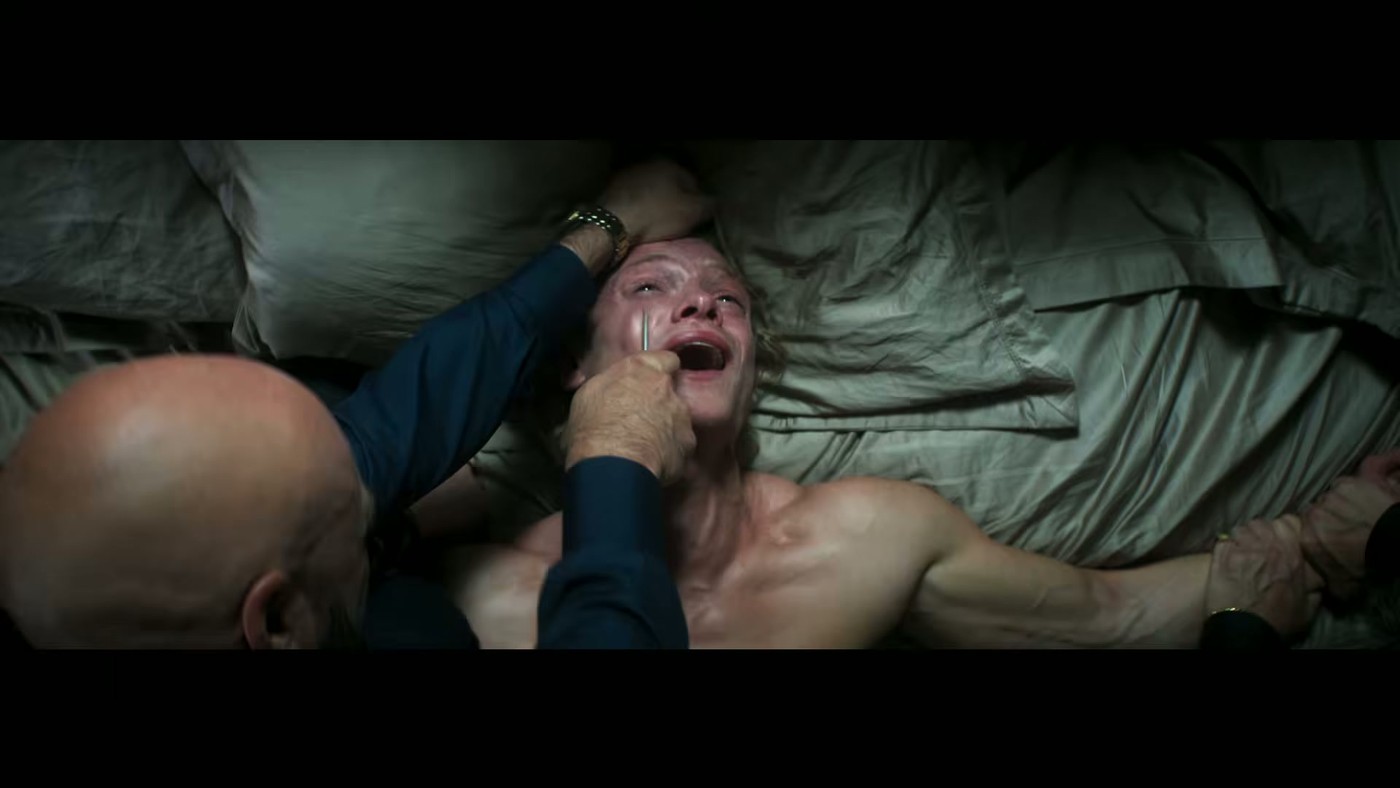
How Clayface Ends, Explained
Struggling actor Matt Hagen (Tom Rhys Harries) spends the film’s final act fully transformed into the classic brown-gray Clayface form after his black-market cosmetic treatment — overseen by the scientist responsible for it, Dr. Caitlyn Corr (Naomi Ackie) — spirals completely out of his control. Corr activates a pre-established kill switch, apparently destroying Hagen’s monstrous body and leaving his remains to dissolve into a storm drain.
He survives. Disguising himself as an unhoused man, Hagen secretly tracks Corr down, shapes a perfect simulacrum of her out of his own clay-like skin, and kisses it before his disguise breaks down entirely — transforming back into his monstrous form and screaming in anguish over his isolation and everything he’s lost. Corr’s underground lab is raided by police shortly after, ending her career even though she avoids prison. Hagen, notably, never loses the ability to turn back into his human form; the film’s closing moments make clear he simply chooses not to anymore, settling into the Clayface identity as his default state rather than a curse he’s still fighting.

What the Ending Means for Batman and the DCU
Despite swinging through Gotham, Clayface’s ending includes no Batman cameo and no direct DCU crossover tease — the film is written to stand almost entirely on its own. What it does establish is thematic rather than literal: Gotham as a city where criminal and institutional corruption created Hagen’s transformation in the first place, not just street-level gangsters.
That groundwork still matters for Batman’s future on screen. A Clayface who can perfectly mimic anyone he touches — as he does to Corr in the film’s final minutes — is a fundamentally different problem for a detective than a villain who relies on weapons or brute strength. It’s an identity-deception threat that could complicate Batman’s ability to trust what he’s looking at, rather than just another physical fight to win.
The HoloFiles goes further on the DCU implications, and GamesRadar breaks down exactly who survives the final act and who doesn’t.
Clayface’s Box Office and Reception
Clayface opened to $24.5 million domestically and roughly $43 million worldwide against a reported $44 million budget, Deadline and Fortune reported on Monday, October 26, 2026 — enough for the R-rated body-horror film to top the weekend box office in 3,458 theaters, though it came in under Warner Bros. Discovery’s own $25-30 million opening projection. It scored an A- CinemaScore from opening-night audiences, rare territory for a horror film; DC Studios co-head James Gunn has pointed out that puts it in the same company as Weapons, Obsession and Get Out.
Movie Clayface vs. Comic Clayface
| 2026 Film (Matt Hagen) | Classic Comics (Basil Karlo / others) | |
|---|---|---|
| Origin | Black-market cosmetic procedure gone wrong | Karlo: exposure to a protoplasmic chemical; multiple other characters have also taken the Clayface name |
| Ending state | Chooses to remain in monstrous form, isolated | Usually remains an active, recurring Batman rogue across stories |
| Batman connection | No on-screen appearance in this film | One of Batman’s most consistent rogues since 1940 |
| Tone | R-rated body horror, self-contained | Varies widely by era and writer |
Readers who want the comic book side of the character in full can check our ranking of Clayface’s best comic book storylines, which covers Basil Karlo, Preston Payne and the character’s other identities the film leaves out entirely. For the opening-weekend numbers in full, see our Clayface box office breakdown, and our Clayface guide has the full cast list and where to watch once it streams.
Frequently Asked Questions
Does Clayface have a post-credits scene?
No. There is no mid-credits or post-credits scene in Clayface (2026) — the story is fully resolved before the credits begin, and nothing plays after them.
Who dies in Clayface?
The film doesn’t center its ending on a body count. Its climax turns on Dr. Caitlyn Corr’s kill-switch attempt on Hagen’s monstrous form and his survival and deception of her afterward, rather than a traditional villain death.
Does Clayface set up a sequel or connect to Batman?
Not directly. There’s no Batman cameo and no explicit sequel tease in the film’s ending, though its Gotham setting and Hagen’s permanent transformation leave the door open for the character to return.
How much money did Clayface make at the box office?
Clayface opened to $24.5 million domestically and about $43 million worldwide on its October 23-26, 2026 opening weekend, against a reported $44 million budget, per Deadline and Fortune.