Every My Hero Academia video game with a real English-language release is ranked here from weakest to best, using sourced Metacritic and OpenCritic scores plus genuine reasoning about combat depth, roster size, and staying power. MY HERO ACADEMIA: All’s Justice, which just reached Nintendo Switch 2 on September 4, 2026, currently sits at the top of an early, hedged read.
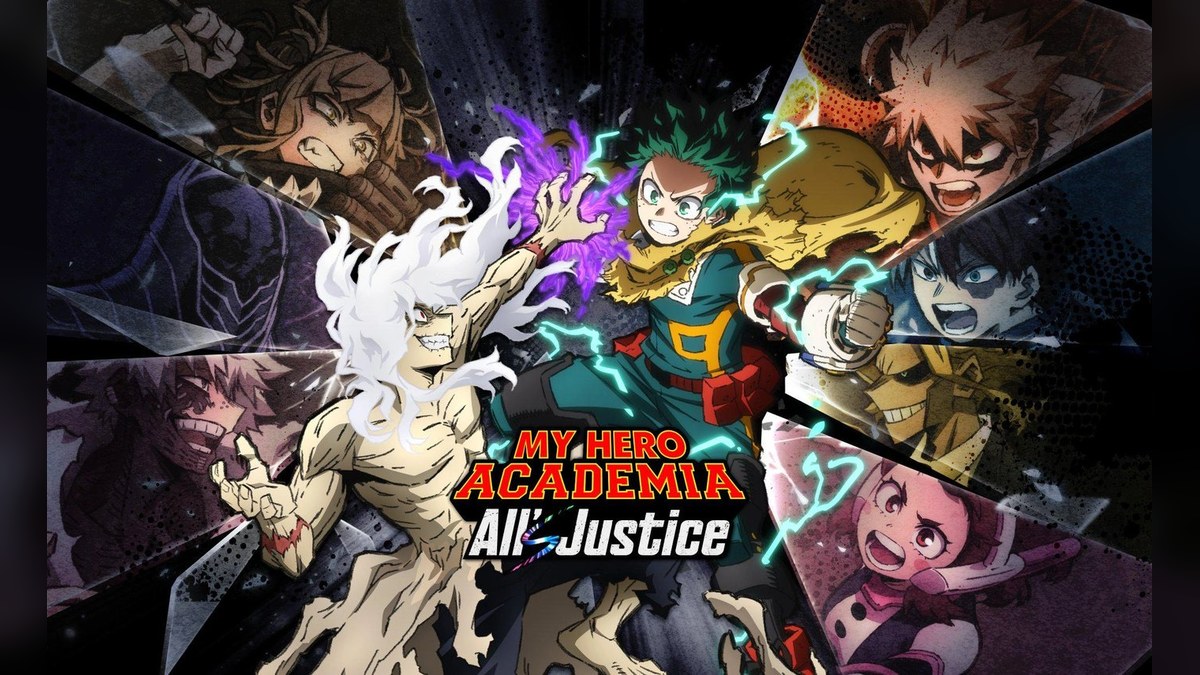
This ranking covers the franchise’s four games with genuine, sourced critical reception: the two My Hero One’s Justice arena fighters, the free-to-play battle royale My Hero Ultra Rumble, and the newest arena fighter, MY HERO ACADEMIA: All’s Justice. Several mobile spin-offs exist too — they’re covered lower down, but without a critic score to cite, we’re not ranking them alongside the console and PC releases. If you want the news write-up on the Switch 2 launch itself, we covered that separately.
Every My Hero Academia game compared
The table below is the quick reference: every game with a sourced critic score, its platforms, and its release year, in one place.
| Game | Platform(s) | Release Year | Score |
|---|---|---|---|
| My Hero One’s Justice | PS4, Xbox One, Switch, PC | 2018 | 68/100 (Metacritic, PS4, 35 critics) |
| My Hero One’s Justice 2 | PS4, Xbox One, Switch, PC | 2020 | 68/100 PS4/PC · 65/100 Switch/Xbox One (Metacritic) |
| My Hero Ultra Rumble | PS4, PS5, Xbox One, Xbox Series X/S, Switch, PC | 2023 | No critic Metascore (1 review) · 5.5/10 Metacritic user score |
| MY HERO ACADEMIA: All’s Justice | PS5, Xbox Series X/S, PC (2026); Switch 2 (Sept. 2026) | 2026 | 72/100 (OpenCritic, 55 critics; Metacritic PS5, 37 critics) |
| MHA: UNITED SURVIVAL (mobile, not ranked) | iOS, Android, PC | 2026 | No critic score · 4.56/5 App Store & Google Play user rating |
4. My Hero Ultra Rumble (2023) — the weakest overall
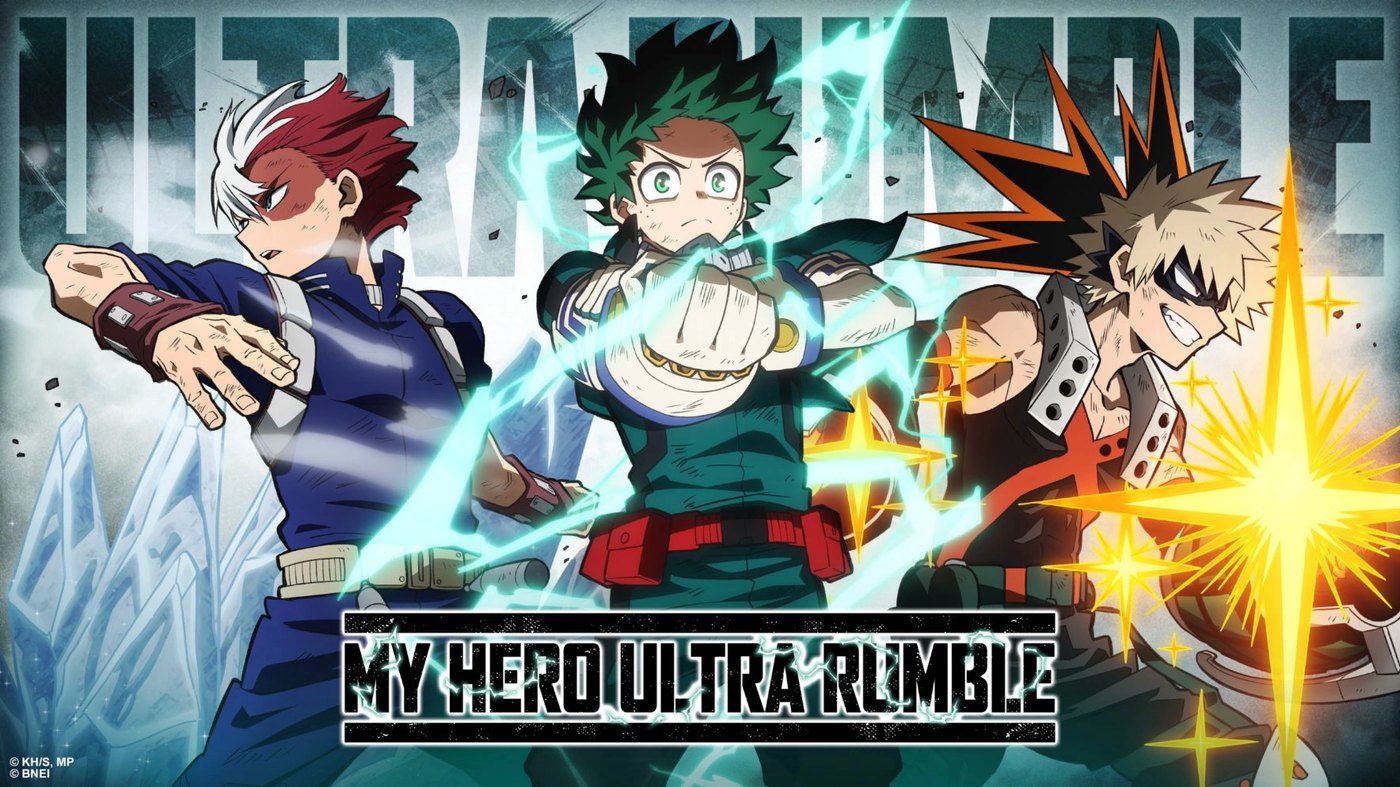
My Hero Ultra Rumble is a free-to-play 24-player battle royale built around Quirk-based combat, released September 28, 2023 on PS4, PS5, Xbox One, Xbox Series X/S, Switch and PC. Its skill-based fighting earned praise, but persistent bugs, a criticized gacha shop, and a shrinking player base make it the weakest experience in the library today.
Ultra Rumble never accumulated the four critic reviews Metacritic requires to generate a Metascore — its lone tracked review, from TheXboxHub, scored it 80 and called it “an extraordinary take on the battle royale genre.” Player sentiment tells a different story: Metacritic’s user score sits at 5.5/10 across 57 ratings, and Steam’s own tally is rated ‘Mixed,’ 67% positive of more than 13,000 reviews (checked September 2026). The recurring complaints are a gacha-style monetization system layered onto a free game and a bug list that outpaced fixes, which is why a genuinely fun combat system hasn’t translated into a healthy long-term population the way the arena fighters have.
3. My Hero One’s Justice (2018) — the foundation
My Hero One’s Justice launched October 26, 2018 on PS4, Xbox One, Switch and PC as the franchise’s first 3D arena fighter, pitting Quirks against each other in destructible stages. It scored a 68 on Metacritic (PS4), and its roughly 20-character launch roster and shallow story mode make it feel like a foundation rather than a finished game today.
The Metascore — 68/100 on PS4, based on 35 critic reviews — is the middle of the road, and it’s earned. The 3-on-3 tag combat was a genuinely novel way to translate My Hero Academia’s big Quirk clashes into a fighting game, and destructible arenas gave fights real spectacle. But the launch roster left out major characters fans expected, the single-player mission mode was thin, and the game aged into “proof of concept” status the moment its own sequel arrived less than 18 months later. It’s worth playing today mainly for series completionists or anyone who can find it cheap; it isn’t the version of this franchise’s fighting game worth buying first.
2. My Hero One’s Justice 2 (2020) — bigger, not deeper
My Hero One’s Justice 2 arrived March 13, 2020 on the same four platforms and doubled the roster to 40 characters, adding fan favorites like Overhaul, Lemillion and Hawks. Metacritic scored it 68 on PS4/PC and 65 on Switch/Xbox One; GameSpew’s 6/10 review called it ‘more like an expansion than a sequel,’ since the combat barely changed.
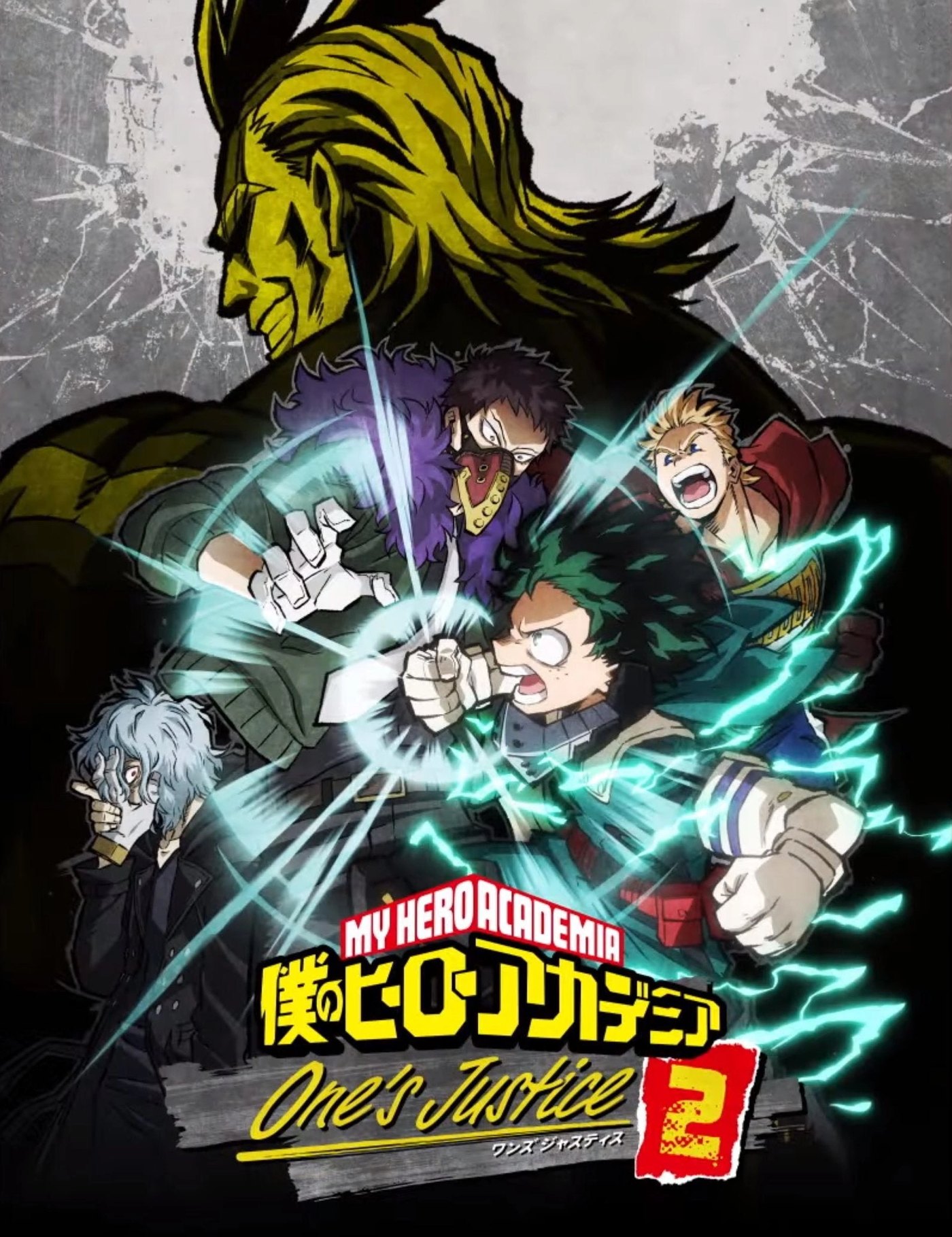
That’s the honest read on why it only ranks second rather than first: twice the cast (per GameSpew’s review, which put the count at 40 characters versus the original’s 20) is a real, valuable upgrade for a roster-driven fighter, and the Shie Hassaikai arc characters it adds — Overhaul, Lemillion, Nejire — were genuine gaps in the first game. But Metacritic’s 68/100 on PS4 and PC, 65/100 on Switch and Xbox One reflects a sequel that reused its predecessor’s combat system almost unchanged. For anyone choosing one One’s Justice game, this is the one to buy — it’s the same fighter with much more content — but it never solved the series’ combat-depth ceiling.
1. MY HERO ACADEMIA: All’s Justice (2026) — the best so far, with a caveat
MY HERO ACADEMIA: All’s Justice launched February 6, 2026 on PS5, Xbox Series X/S and PC, then reached Switch 2 on September 4, 2026 at 1080p/30fps versus 60fps elsewhere. Its 68-character roster and refined 3v3 battle system earned a 72 on both OpenCritic and Metacritic, the library’s best score — though the Switch 2 port is too fresh to call settled.
On critical merit alone this is the strongest entry the franchise has produced: OpenCritic lists a 72 average across 55 critics, and Metacritic shows 72 on PS5 (37 reviews) and 64 on PC (14 reviews) — both several points above either One’s Justice game. The 68-character roster is the biggest the series has ever had, the 3v3 Refined Battle System adds real tactical layers the older 3-on-3 tag combat lacked, and the Story Mode adapting the Final War arc is the most faithful the series has been to its source material. Critics’ complaints — repetitive side activities, a limited arena count, an inconsistent camera — are real, but they’re polish issues on top of the deepest combat system in the franchise, not structural ones.
The hedge matters, though. This is a February 2026 game whose Switch 2 port is barely two days old as of this writing, and Bandai Namco’s own specs confirm it runs at a locked 30fps on Switch 2 against a 60fps ceiling on every other platform — a real performance gap for anyone buying the Nintendo version specifically. Ranking a two-day-old port above a five-year-old sequel with a settled reputation is a genuine early read, not a permanent verdict; if the Switch 2 version turns out to have technical problems the other platforms don’t, or if post-launch support stalls the way it eventually did for Ultra Rumble, this placement is the one on this list most likely to move.
The mobile My Hero Academia games (not ranked)
Beyond the four ranked titles, Bandai Namco and partner studios released several My Hero Academia mobile games: Smash Tap (2017), My Hero Academia: The Strongest Hero (2021, shut down 2025), My Hero Ultra Impact (2022, shutting down May 18, 2026), and My Hero Academia UNITED SURVIVAL (August 6, 2026). None have reliable critic scores, so none are ranked.
My Hero Academia: Smash Tap (2017, mobile) and My Hero Ultra Impact (2022, mobile) never drew enough critic coverage on Metacritic to produce a usable score, which is itself the story — gacha-driven mobile spin-offs in this franchise typically get judged by players, not critics, and the judgment has been unforgiving. Ultra Impact’s service ends May 18, 2026, less than four and a half years after launch, and My Hero Academia: The Strongest Hero already shut down in 2025. The newest mobile entry, MHA: UNITED SURVIVAL, launched August 6, 2026 and reached No. 1 on the US App Store’s Top Free Games chart with a strong 4.56/5 aggregate user rating — a promising early run, but one month old, with no independent critic reviews yet and this franchise’s recent mobile track record working against it.
Where does this ranking come from?
Every score above is linked to its source — Metacritic, OpenCritic, or the outlet that published it — and no score on this page was estimated or invented. Where a game hasn’t drawn enough critic coverage for an aggregate (Ultra Rumble’s Metascore, every mobile title), that’s stated explicitly rather than papered over with a guess. The ranking order itself is editorial: it weighs combat depth, roster size, story-mode faithfulness, and — for the free-to-play and mobile titles — monetization and long-term player support alongside the sourced scores, not instead of them. If you want more on the franchise’s wider cast and story stakes, we’ve also ranked the 15 strongest My Hero Academia characters and the 15 strongest villains, and if you just want the Switch 2 launch specifics for All’s Justice, we covered the release date and editions ahead of the port.
Frequently Asked Questions
What is the best My Hero Academia video game?
MY HERO ACADEMIA: All’s Justice (2026) currently holds the franchise’s best aggregate score — 72 on both OpenCritic (55 critics) and Metacritic’s PS5 tally (37 critics) — thanks to its 68-character roster and refined 3v3 combat. It just reached Switch 2 on September 4, 2026, so that placement is an early read rather than a long-settled verdict.
Is My Hero Ultra Rumble worth playing in 2026?
It’s free, so the barrier to trying it is zero, and the core Quirk-based battle royale combat is genuinely well-regarded. But Metacritic’s user score sits at 5.5/10 and Steam reviews are rated ‘Mixed,’ driven by complaints about bugs and its gacha-style monetization — go in expecting a rougher, less-supported experience than the arena fighters.
How many characters are in MY HERO ACADEMIA: All’s Justice?
68 playable characters — 59 unique fighters plus 9 variant forms, per Bandai Namco’s official character list — making it the largest roster in the franchise, roughly 28 more than My Hero One’s Justice 2 and nearly triple the original My Hero One’s Justice.
Does the Switch 2 version of All’s Justice run the same as PS5 and Xbox?
No. Bandai Namco’s own specifications confirm the Switch 2 version runs at 1080p/30fps, while PS5, PS5 Pro, Xbox Series X and Xbox Series S all run the same 1080p resolution at up to 60fps. It’s the only platform-specific downgrade across the release.
Are the My Hero Academia mobile games worth playing?
Approach them cautiously. My Hero Academia: The Strongest Hero already shut down in 2025 and My Hero Ultra Impact is scheduled to end service May 18, 2026, so neither is a safe long-term investment. The newest mobile game, MHA: UNITED SURVIVAL (August 2026), is off to a strong start — a 4.56/5 user rating and a No. 1 App Store chart position — but it’s only about a month old with no independent critic reviews yet.