Daemons of the Shadow Realm episode 20, “The Hunted and the Hunter,” aired on August 22, 2026 and adapts three chapters of Hiromu Arakawa’s manga at once. It is the clearest example yet of Bones Film’s house method: add physical staging, subtract on-page information. That trade wins the fight scene and loses the quieter half of the episode.
Separate note for manga readers: this review compares the episode against chapters 26–28, which is material the anime has now caught up to, so nothing here spoils the manga ahead of the anime. The final section counts how many chapters remain unadapted without describing any of them.
How this review was put together: it compares episode 20 against the chapters it adapts — chapter 26 (pages 17–39), chapter 27 (pages 1–7 and 9–36) and chapter 28 (pages 6–8) — using the official episode synopsis and the shot-by-shot differences log kept by the Yomi no Tsugai Wiki. It judges adaptation choices. It does not grade the voice cast or the score, and it does not attach a numerical rating, because this desk runs no defined scale for weekly episodes.
What happens in Daemons of the Shadow Realm episode 20
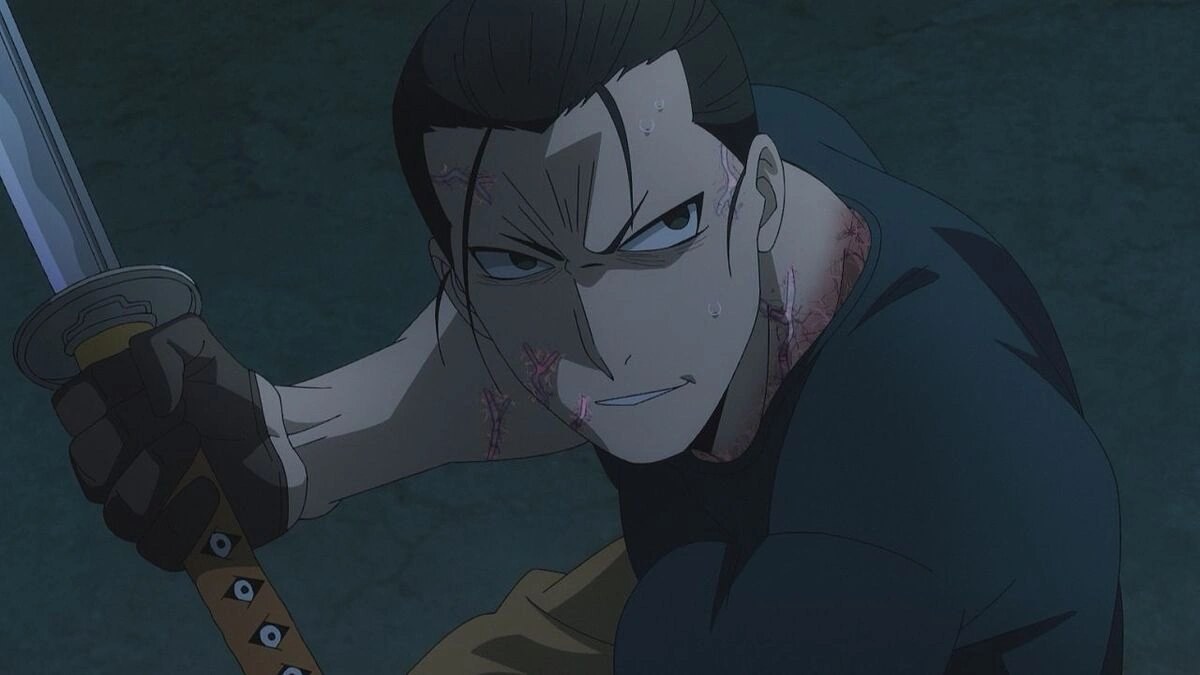
Asa, drawn by the signal fire, frees Azami and the other captives and regroups with Danji, Yuru, Dera, Fuyuki and Gonzo. Yuru and Danji talk without the resentment they carried out of Higashi Village. Then Yuru finally faces Ivan, and in the middle of a scrappy exchange — Left and Right attacking, Dera covering with rifle fire — Ivan tells him he was the one who killed Mine and Nagisa. Elsewhere, Asuma is cornered by Shingo and then by Ivan, and a new figure, Anna Mineyama, turns up at the edge of the fight. That is the episode. The rest of this review is about how it was built.
The method: 33 documented changes, and what kind they are
The Yomi no Tsugai Wiki logs 33 differences between episode 20 and its source chapters — the highest count in the current run, against 27 for episode 19, 23 for episode 18, 18 for episode 17 and 20 for episode 16. Raw counts like that partly measure how thoroughly volunteers wrote the entry, so the number on its own proves little. What the changes are proves a great deal, because they sort almost perfectly into two piles.
| Direction of the change | Examples in episode 20 |
|---|---|
| Added — physical, spatial, kinetic | Ivan sees Yuru’s arrow before it hits him; the dodge sequence is lengthened; Ivan runs at Left and Right instead of jumping; Right runs, dodges Ivan, then jumps; Dera takes aim repeatedly hunting for him; the bandit is shown running away; Mineyama is shown closing her backpack and then running toward Ivan |
| Removed or muted — informational, emotional | The on-panel text noting the policeman cannot see the tsugai is cut; the close-up of Shokyo during the dodge sequence is a manga-only beat; Yuru’s surprise at Ivan cutting the arrow is a manga-only beat; Yozakura on Gonzo’s shoulder and a background moth in the Shingo and Asuma scenes are logged as manga-side details |
That is a coherent editorial position, not a set of accidents. Bones Film is consistently converting static information into movement. When the manga tells you something in a caption or a held reaction, the anime either shows it as an action or lets it go.
The best thing the episode adds is Yozakura, and it is not close
Here is the detail worth the whole episode. In two separate places the differences log records a moth sitting in the background of a manga panel — once while Shingo asks Asuma whether he has ever killed anyone, again as Asuma screams at Yozakura being cut — and it explicitly notes that the first of those does not happen in the anime. A third entry records Yozakura visible on Gonzo’s shoulder on the page and not on screen.
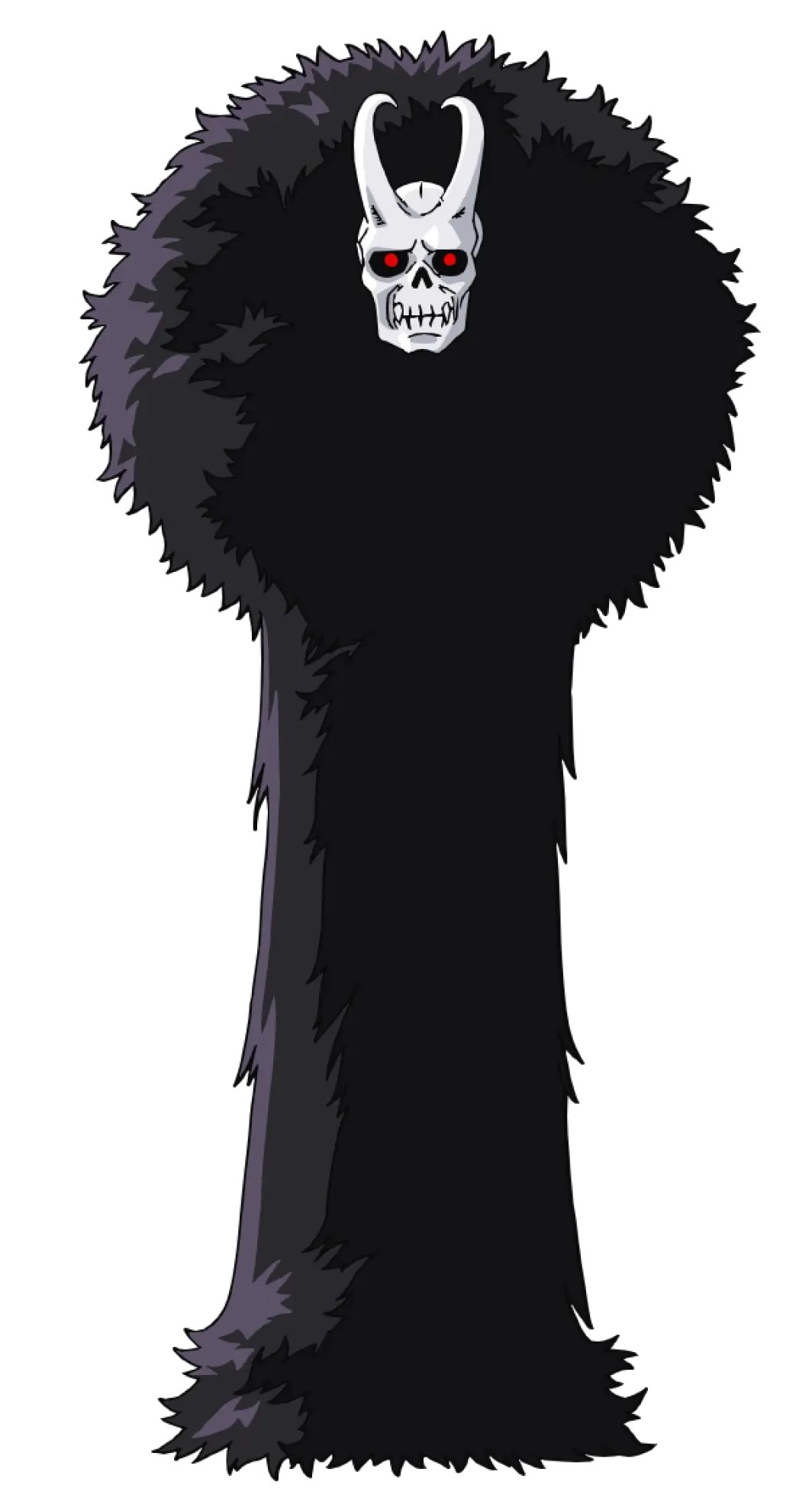
Read those three together with Yozakura’s character page and they stop looking like set dressing. Yozakura is a tsugai “composed of a cluster of moths,” and the same page notes he habitually pretends to be unintelligent, plays dead and hides, and that — unlike his other half Asagiri — he can only speak to those inside his body. The most natural reading of those background moths is that they are him: Arakawa telling you Asuma is never alone and that his tsugai is in the room listening, in scenes where nobody acknowledges him. That is an inference rather than something the log states outright, but it is the only reading that makes a recurring background moth in Asuma’s scenes mean anything.
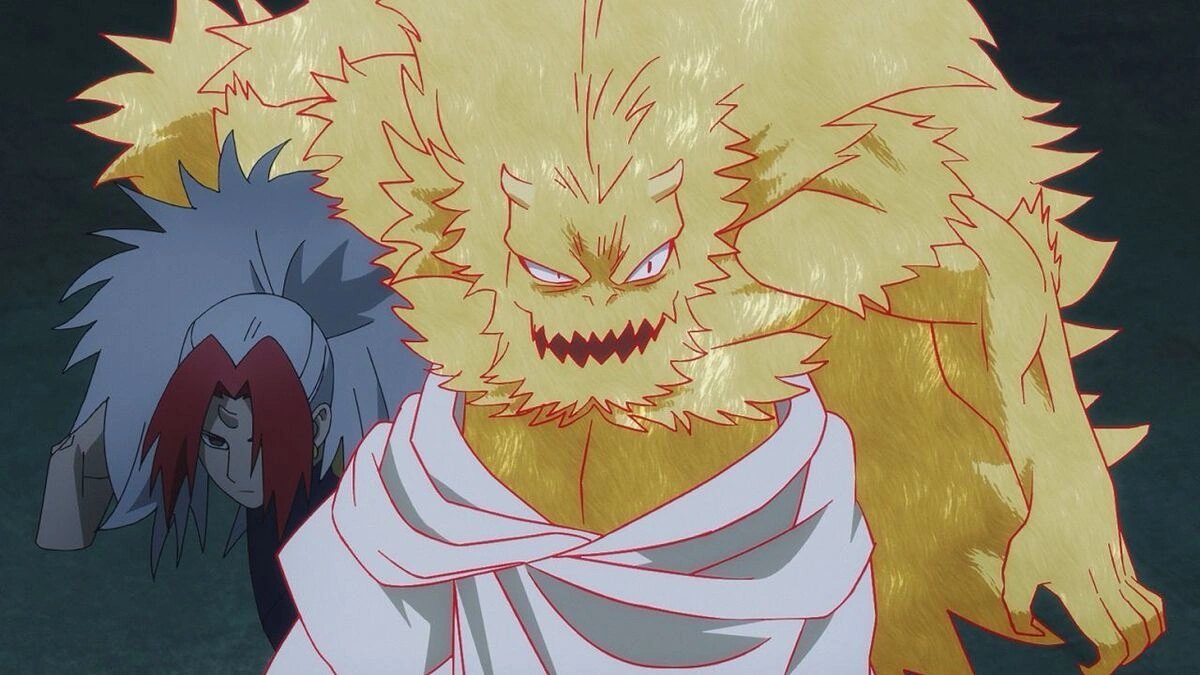
The anime drops that background presence — and then adds a scene in which several moths cover Shingo. That is not a flourish. Given how Yozakura communicates, a swarm enveloping a character is precisely the staging that makes his established mechanic legible on screen. Arakawa hid the information in the corner of a panel; Bones Film converted it into a shot you cannot miss. This is the version of the method working, and it is the kind of choice a general television outlet reviewing the episode will not catch, because catching it means reading the panel the anime left out.
What the same instinct cost: the caption nobody replaced
Now the other side. Of the 33 entries, exactly one is written as a straight deletion of text: “the anime removes the text indicating that the policeman cannot see the tsugai.” The anime keeps the policeman. It keeps the chaos happening around him. It cuts the line explaining why he is behaving as though none of it is there — and the log records nothing staged in its place.
That is the failure mode of “subtract information.” A moth swarm is a thing you can turn a caption into. A rule about perception is not, and this episode does not try. What is left is a beat that reads as a continuity oddity to anyone watching without the manga to hand, in a series whose entire premise is that these creatures are real and mostly unseen. Bones Film has been trimming Arakawa’s explanatory text throughout the second cour; this is the clearest case yet of it trimming something load-bearing.
Anna Mineyama gets a debut, and it gets buried

Episode 20 introduces Anna Mineyama, an eighteen-year-old who works as Ivan’s “cleaner” and commands the tsugai pair “Soul Roller”; she is voiced in Japanese by Sumire Uesaka. In the manga she arrives in chapter 27. In the anime she arrives in the back third of an episode that is already spending itself on the Ivan duel and the Asuma material, and the two changes the wiki records for her are both movement — closing her backpack, running toward Ivan. A character whose function is that she cleans up after an assassin is introduced as somebody hurrying.
This is where cramming three chapters into one episode actually bites. The method that gives Yozakura a real scene gives Mineyama a gait.
The pace, and what the last four episodes have to hold
Twenty episodes have now carried the story from chapter 1 to chapter 28, an average of roughly 1.4 chapters per episode. The series is booked for 24 episodes across two consecutive cours, per Anime News Network’s encyclopedia entry, which leaves four episodes and, at the current rate, room for about five or six more chapters. The series wiki documents the manga as far as chapter 56. On that arithmetic the anime finishes having adapted a little over half of it.
One more structural note that the differences log makes visible and no episode watched in isolation would: this adaptation is willing to re-order Arakawa. Episode 12 adapts chapter 16 before returning to the back of chapter 15. Episode 13 opens on chapter 17 and only then picks up chapter 16’s final pages. Episode 18 runs the opening of chapter 25 ahead of the whole of chapter 24. Three of twenty episodes deliberately invert publication order — which means the “convert information into motion” instinct is not a stylistic tic. It is a full editorial rewrite of how the story is sequenced, and it has been running since June.
The verdict
Episode 20 contains the strongest argument for Bones Film’s approach and the clearest evidence of its blind spot, in the same twenty minutes or so of screen time. Every documented addition is aimed at making the fight physically readable, and the Yozakura swarm is a genuine improvement on the page. What comes out, though, makes the world less explicable, and the cut caption is a mistake rather than a taste call: it removes information without replacing it. Read the manga and this is an upgrade. Come to it cold and you finish the episode slightly less sure how this world works than you were before it — which is not a trade a mystery series should be making at the three-quarter mark. Episode 21 arrives on Saturday, August 29, with four episodes left in the 24-episode order. For how this adaptation came about in the first place, see our report on Arakawa’s return to television.
Frequently Asked Questions
When did Daemons of the Shadow Realm episode 20 air?
Saturday, August 22, 2026. In Japan the series broadcasts Saturdays at 23:30 JST on Tokyo MX and other stations, with streaming from 24:00 JST; the subtitled release lands Saturday mornings in North America.
What chapters does Daemons of the Shadow Realm episode 20 adapt?
Chapter 26 (pages 17–39), chapter 27 (pages 1–7 and 9–36) and chapter 28 (pages 6–8) of Hiromu Arakawa’s manga. Three chapters in one episode is the widest span the second cour has attempted, matched only by episodes 13 and 16.
Does episode 20 change anything from the manga?
Yes, substantially. The Yomi no Tsugai Wiki logs 33 differences. The additions are almost entirely physical staging in the Ivan fight; the manga-side entries are almost entirely explanatory text and quiet background detail, including the panel text noting that the policeman cannot see the tsugai, which the anime removes outright.
Who is the new character introduced in episode 20?
Anna Mineyama, an eighteen-year-old affiliated with Nishino Village who works as Ivan’s cleaner and is master of the tsugai pair “Soul Roller.” She debuts in chapter 27 of the manga and is voiced in Japanese by Sumire Uesaka.
Is Daemons of the Shadow Realm worth watching if you have read the manga?
For the action, yes — the changes logged for the fight scenes are consistently about making the physical geography of a fight explicit, which the page leaves to the reader. For the mystery, it is a downgrade, because the anime keeps trimming the captions and background details Arakawa uses to carry information.
Adaptation comparison drawn from the official episode synopsis at yominotsugai.com and the Yomi no Tsugai Wiki’s episode 20 differences log. Hiromu Arakawa’s earlier work is covered in our Fullmetal Alchemist watch order, and the anime’s original announcement is covered here. Last verified August 23, 2026.