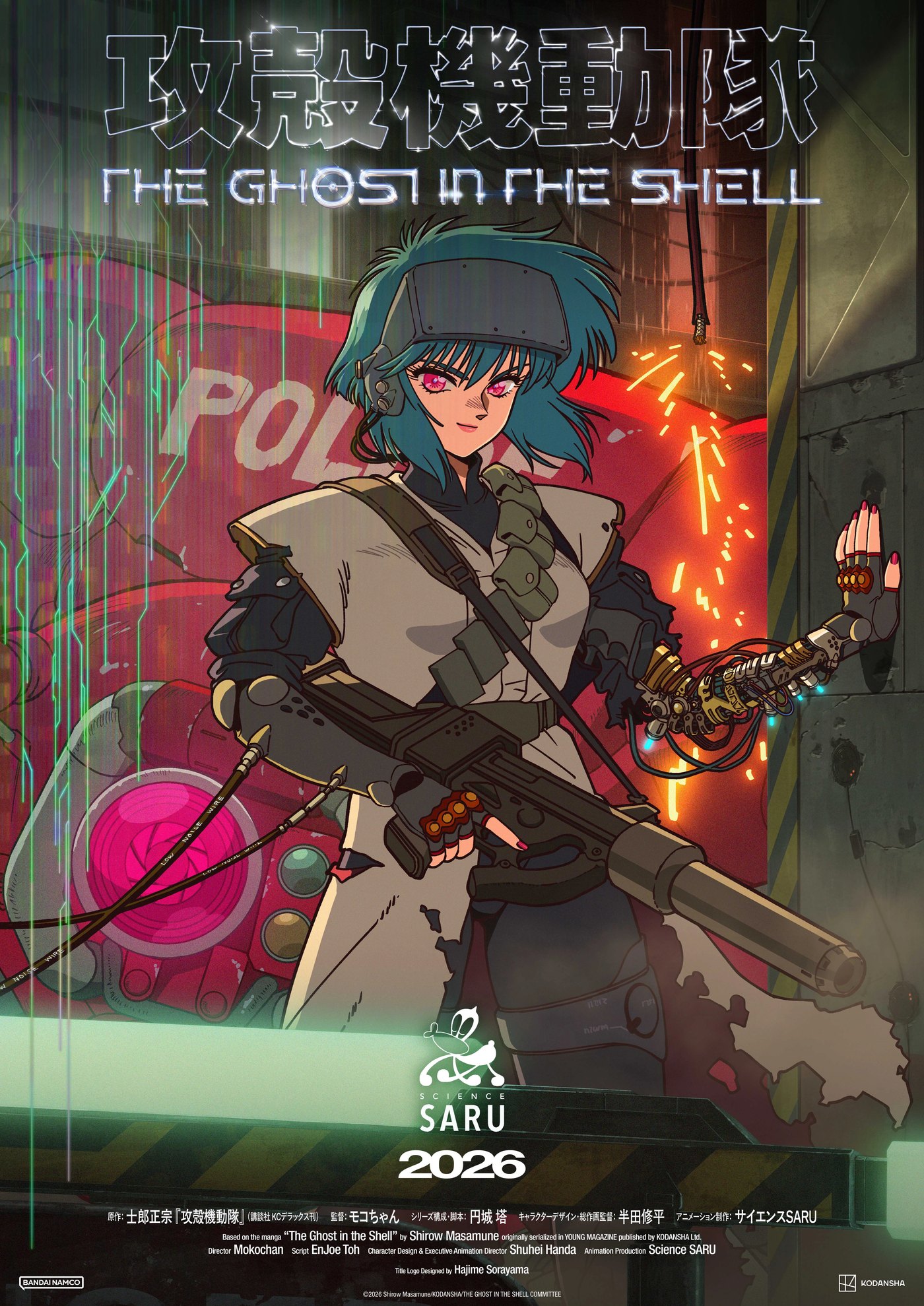
The Ghost in the Shell Episode 8, “Intermission + Brain Drain i,” sends Motoko Kusanagi into a dive with the newly created Puppet Master and pulls her out changed — shaken enough to botch a public execution on live television. It is the first time this adaptation makes the franchise’s central philosophy cost something in the present tense.
⚠️ Full episode spoilers follow for The Ghost in the Shell Episode 8, “Intermission + Brain Drain i.” Spoilers for the 1989–91 manga and Mamoru Oshii’s 1995 film are flagged separately in their own section below — skip it if you only watch the 2026 series.
A note on how this review was reported: this desk does not have a video pipeline for weekly anime episodes (unlike our trailer-breakdown coverage, which downloads and frame-verifies video). This piece is built from the episode’s official synopsis and multiple critics’ published accounts of what airs in it — cited throughout and linked below — rather than a first-hand viewing. The analysis and thesis below are this desk’s own; the plot facts they are built on are independently cross-checked across sources, not judgments of direction or performance we watched ourselves.
What Happens in Episode 8
The episode splits its runtime in two. The first half is a flashback into how Section 6 built the Puppet Master — a black-budget program that started gaining what looked like sentience, prompting Section 6 to try to pull the plug before it escaped into the net on its own. The second half returns to the present, where Section 9 is mid-mission and the Major goes further into a dive with what is left of the Puppet Master than anyone intended.
Batou pulls her out before the dive finishes, an act the episode strongly implies kills the Puppet Master in the process. Kusanagi survives, but not intact: she spends the rest of the episode uncharacteristically drained, describing something close to a religious experience. That state directly causes a mistake — her face ends up exposed on live national television in the middle of an execution, a screwup that threatens to blow Section 9’s cover entirely.
Source-Material Spoilers: How the 1995 Film and Manga Handle This Differently
Source-material spoilers below — covers the manga and Mamoru Oshii’s 1995 film, not just the 2026 series.
Oshii’s 1995 film treats the Puppet Master’s nature as something Kusanagi has to investigate and argue her way toward across the entire runtime, and the eventual merge offer plays as a quiet, dialogue-driven proposition rather than a physical near-death event. Shirow’s manga is blunter and stranger about it, and more comic — the 2026 series has generally leaned into that tone, with Tachikoma banter and slice-of-life beats replacing the film’s existential dread.
Episode 8 briefly drops that lighter register. Delivering Section 6’s betrayal and the Puppet Master’s escape as a flashback, rather than something Kusanagi pieces together herself the way she does in the film, is the biggest structural swing this adaptation has taken away from Oshii’s version so far — and it is the choice most worth arguing about.
Why Making the Merge Cost Something Actually Works
The 1995 film wins its Puppet Master scene by treating identity as a philosophical argument Kusanagi has to sit with. That is a hard thing to redo without just restaging the film. Episode 8’s smarter move is to skip the argument and go straight to the consequence: instead of Kusanagi debating whether to merge, she nearly does, gets yanked out mid-experience by Batou, and immediately makes a real, costly mistake because of it.
That is a meaningfully different kind of adaptation choice, not just a shortcut. It answers the manga and film’s “what is identity” question with something more concrete: identity is whatever is still standing after your face is on the news and your unit is compromised. Putting Section 9’s operational security at risk over Kusanagi’s state of mind is the first time this season has treated the source material’s ideas as something with stakes attached, rather than a debate the show can win with clever dialogue.
Where the Episode Still Undercuts Itself
The flashback structure is also the episode’s biggest weakness. Section 6’s creation of the Puppet Master and its escape are the emotional foundation for everything that happens to Kusanagi afterward, and the show delivers all of it as narrated backstory rather than something happening in real time to characters we are watching react to it. It is information, not experience — the same trap this desk flagged in Daemons of the Shadow Realm’s recent episodes, where dense lore gets handed to the audience in a block instead of earned scene by scene.
It costs the episode momentum right when it needs it most: the “Intermission” half of the title is honest about what that section actually is, and the hand-off to the present-day fallout, while stronger, has to do double duty making up the difference.
| Version | How the Puppet Master reveal plays out | Tone |
|---|---|---|
| 1995 film (Oshii) | Kusanagi investigates and argues philosophy with it directly, in real time | Existential, dialogue-driven |
| Manga (Shirow) | Blunter, stranger, and threaded through the series’ usual dry comedy | Comic, matter-of-fact |
| 2026 series, Ep. 8 | Delivered as a Section 6 flashback, with the present-day cost shown afterward | Shifts from comedy to a heavier, consequence-driven register |
What This Means Heading Into the Finale
With the Puppet Master’s origin now on the table and Kusanagi visibly compromised, the show has set up real fallout for its final two episodes — episode 9 on September 1 and the confirmed finale on September 8. See our full episode release schedule for exact dates and times. Whether the season actually makes Section 9 pay for the exposure, or quietly resets it next week, is the thing worth watching for.
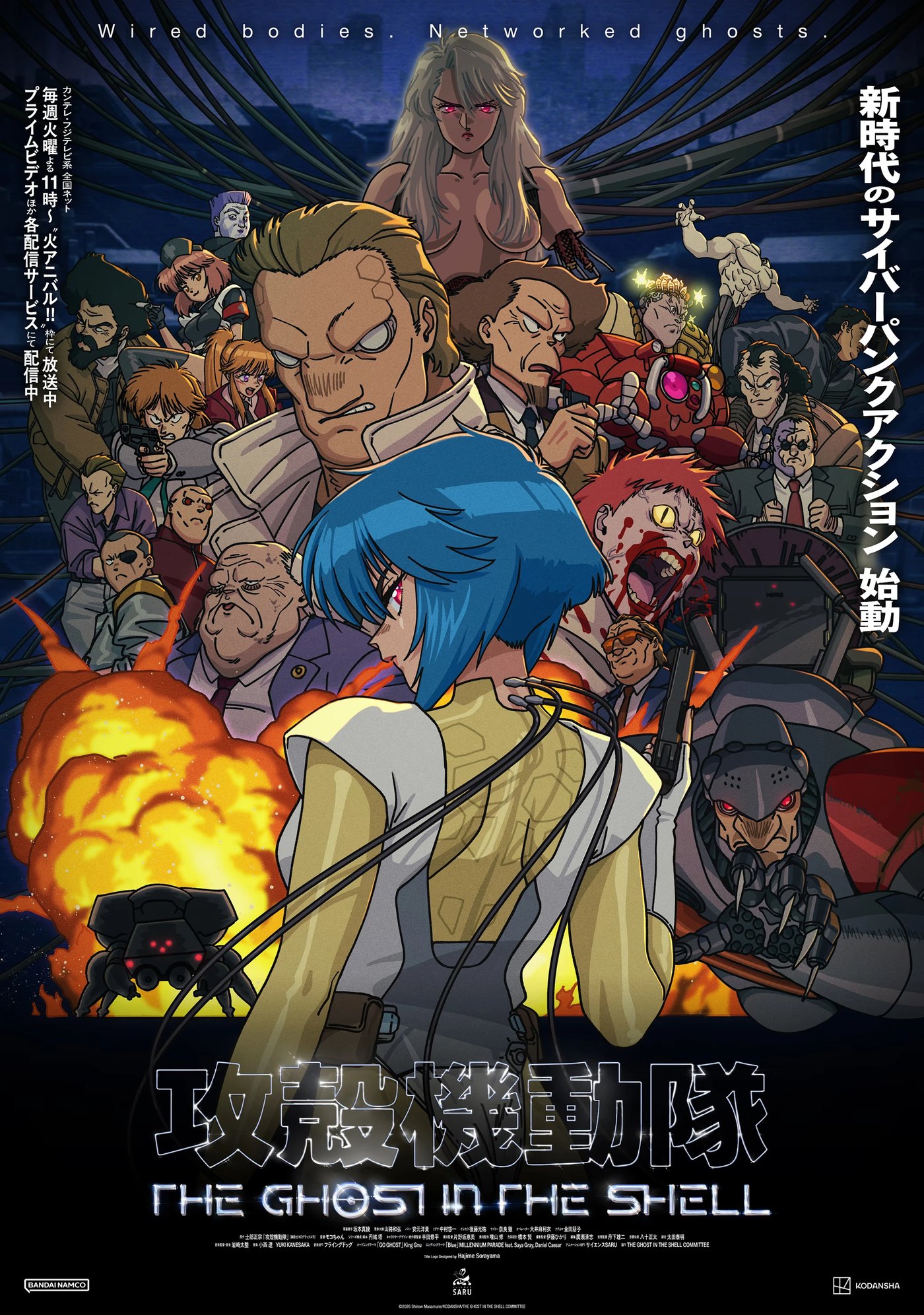
For the episode’s full plot beats, see the official episode 8 synopsis from the anime’s production committee, and for a second critical read, The Fandom Post’s own episode 8 review. Production and cast details are tracked on Wikipedia’s entry for the series.
Frequently Asked Questions
Did the Puppet Master die in The Ghost in the Shell Episode 8?
The episode strongly implies it, but does not confirm it outright. Batou pulls Kusanagi out of the dive before it completes, and the Puppet Master is not shown or referenced again afterward in the episode.
Is Episode 8 a recap episode?
Not exactly. The title “Intermission + Brain Drain i” reflects its structure — half flashback, half present-day fallout — but the flashback contains new information about the Puppet Master’s creation, and the present-day half moves the plot forward with real consequences.
How does this compare to the Puppet Master in the 1995 film?
The 1995 film has Kusanagi investigate and philosophically debate the Puppet Master over the course of the whole movie. Episode 8 skips the debate and goes straight to a physical near-merge and its aftermath, which is a real structural departure, not just a faster retelling.
When does the next episode of The Ghost in the Shell come out?
Episode 9 releases September 1, 2026, with the confirmed finale, episode 10, following on September 8. New episodes drop weekly on Tuesdays on Prime Video.