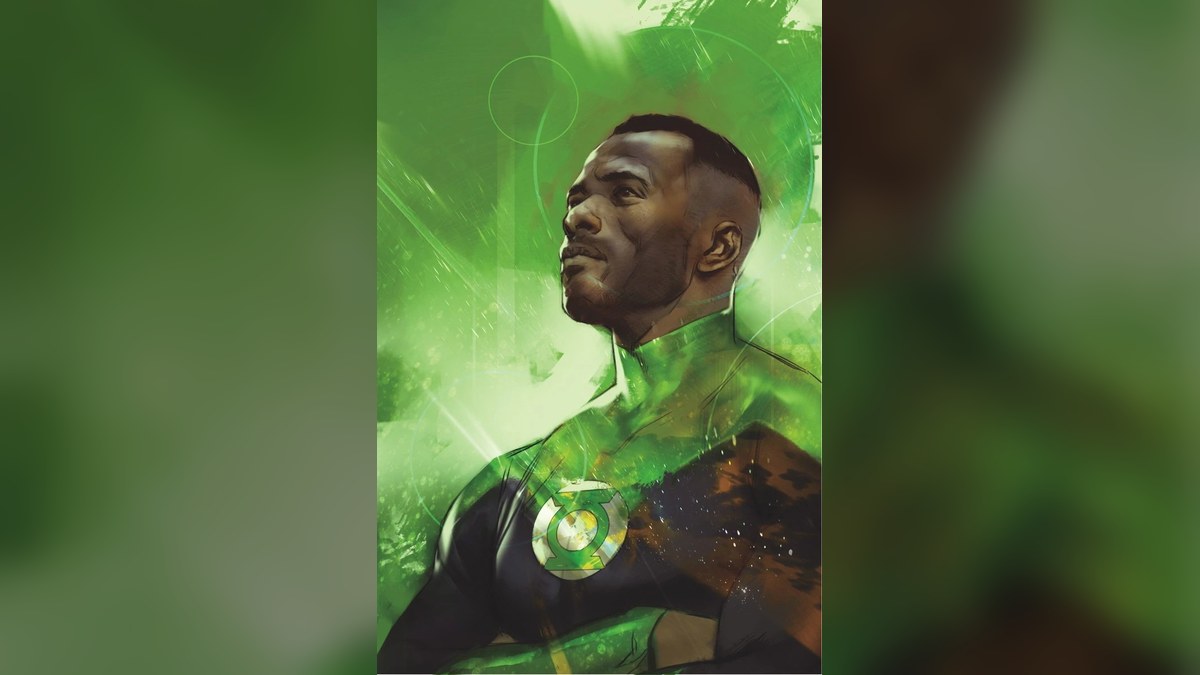
Lanterns episode 3, “OutKast,” aired Sunday, August 30, 2026 on HBO and HBO Max, and it is the first hour of this show that knows exactly what it is. Written by Vanessa Baden Kelly and directed by Stephen Williams, it abandons the Rushville murder plot for a nonlinear John Stewart origin story — and it is also the episode that has split the show’s critics hardest.
The Argument: OutKast Inverts the Whole Point of John Stewart
The thesis of this review, stated plainly: “OutKast” is the best episode Lanterns has produced, and it gets there by taking the one trait that defined John Stewart at his creation — refusal to hide — and turning it inside out into a life built entirely on concealment. That inversion is a real argument about the character rather than a shortcut, and the episode is strong because it treats the concealment as an injury instead of as cool. Where it fails is that it is a great hour of television bolted onto a show whose other two hours have not earned it.
That is a specific claim, and it is worth being clear about what it does not say. It does not say Lanterns is good. It says this episode is, in a way that makes the surrounding series look worse by comparison rather than better.
What Happens in OutKast (the Short Version)
The frame is a job interview. John Stewart (Aaron Pierre) waits a full day in an abandoned mall before a Guardian of the Universe in human form (Laura Linney) arrives to question him. Her questions pull the episode backwards through four timeframes.
In 1986, the ring reaches John Stewart Sr. (J. Alphonse Nicholson) before it reaches Hal Jordan. It asks whether he is afraid. He says yes. It leaves him and takes Hal instead, and the rejection breaks something in the family permanently. Across the early 1990s, John’s mother Bernadette (Jasmine Cephas Jones) raises her son as a corrective experiment: separate schooling and enforced isolation, and a night abandoned in a dangerous neighbourhood. The published recaps of the broadcast go further on the detail — a Green Lantern costume and a gun by age five, and an apple-shooting drill that is eventually turned around so the boy has to fire at his own parents — and we are reporting those specifics rather than vouching for them frame by frame.
In the recent past, John is a Marine sniper on a months-long classified assignment in Kamchatka, waiting on a shot at a target called Gray Wolf. Hal Jordan arrives uninvited, takes the target himself in violation of Guardian orders, and John absorbs the consequence: a dishonourable discharge. In the present, John is at art school, where he draws a replica of his father’s watch with enough precision that a Guardian recruiter takes an interest — which returns us to the mall. Per Comic Book Club’s recap, the Guardians’ actual purpose in recruiting him is to have a replacement for Hal Jordan ready without telling Hal.
That is the plot, and it is deliberately the smallest part of this review. A recap is not a review, and “OutKast” is not interesting because of what happens in it.
Why the Inversion Works
Every superhero origin has to answer one question: why this person? The lazy answer is destiny. “OutKast” gives a much harder one — John Stewart is qualified because two frightened people spent eighteen years manufacturing a child who could pass a test that had already humiliated them. The ring did not choose him. His parents aimed him at it.
The episode’s best decision is refusing to resolve whether that was love or abuse. Bernadette is not a villain and she is not vindicated. The training sequences are shot without triumph, and the apple-shooting reversal — John made to fire at his own father, then at his mother — is staged as damage, not as a milestone. When the episode reaches its final beat, the point is not that the conditioning worked. It is that fear was never removed, only buried, and the burial is what will cost him.
Vanessa Baden Kelly, the episode’s writer and a co-executive producer on the series, framed the intent directly to TheWrap: “We really started discussing how much more a Black superhero has to do to be accepted in that world.” She also described the goal as honouring the 1971 comic’s nerve rather than its plot — “If we’re going to honour anything with our John Stewart, we have to honour that bravery.” Whether that lands for you is a separate question from whether it is a coherent idea, and it is a coherent idea.
Comics Spoilers Start Here: What the Show Changed, and Whether It Should Have
Source-material spoiler warning. This section discusses John Stewart’s printed history from 1971 onward, including Green Lantern: Mosaic. Show-only viewers who want to meet those beats on screen should skip to the next heading.
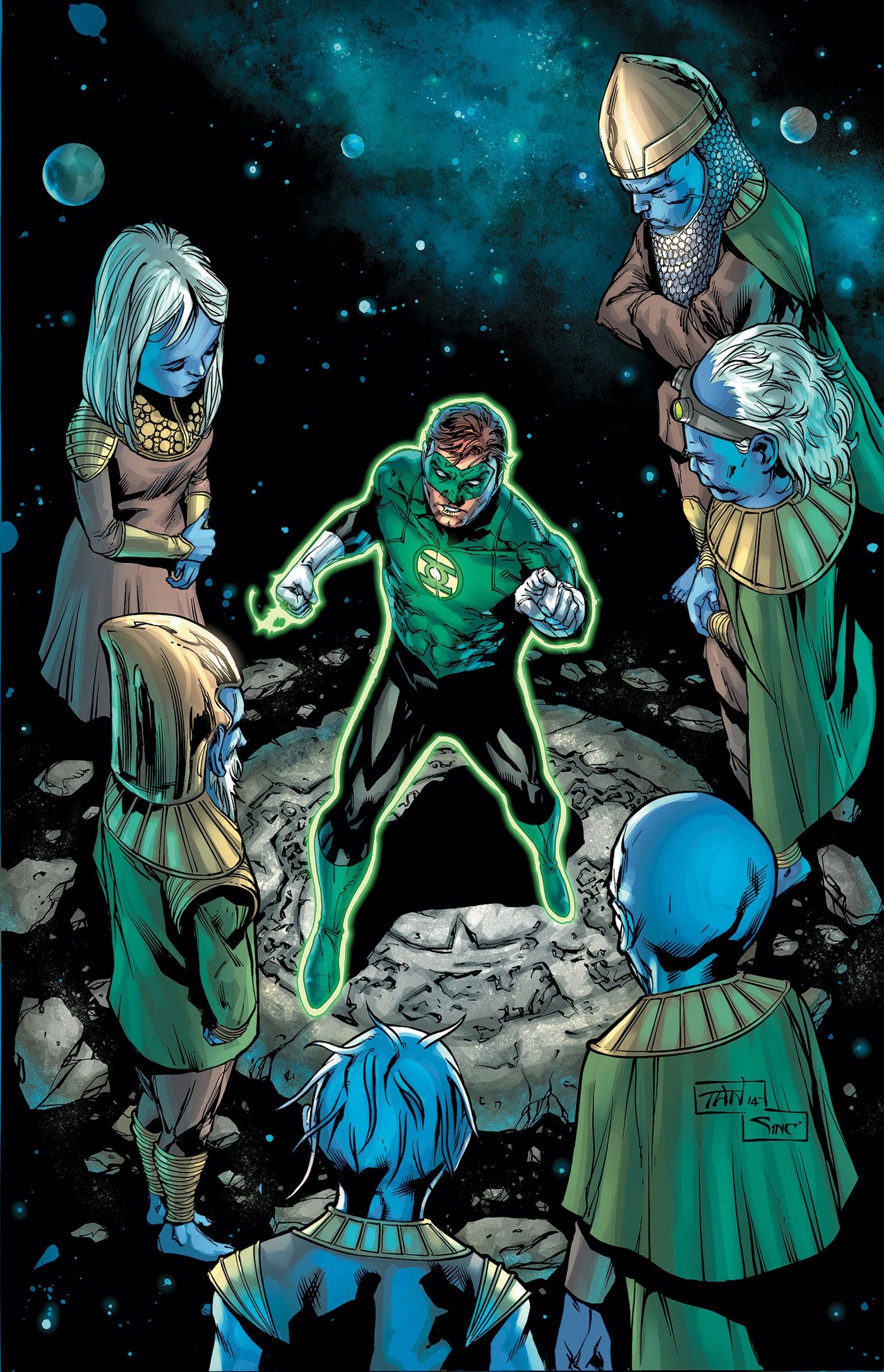
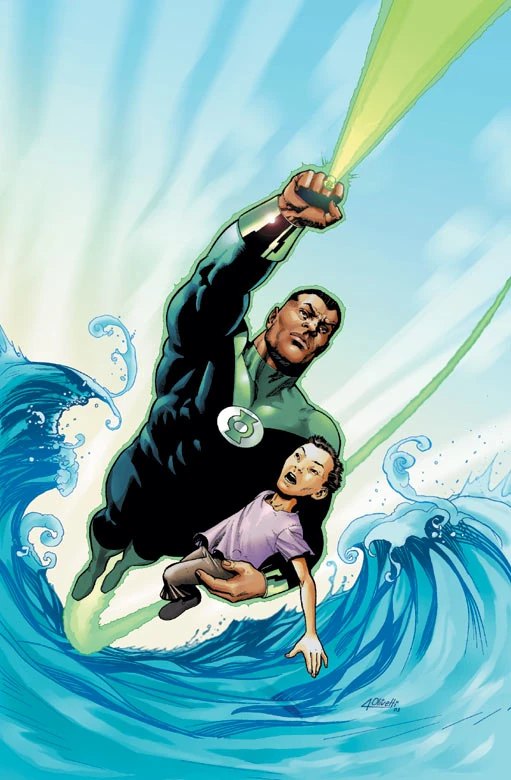
John Stewart debuted in Green Lantern vol. 2 #87 (cover-dated December 1971/January 1972), in a Dennis O’Neil and Neal Adams story called “Beware My Power!” He was a college-educated architect from Detroit. The Guardians selected him as Hal Jordan’s backup after Guy Gardner was hit by a car; Hal objected, calling him a man with a chip on his shoulder, and the Guardians told Hal his bias was his problem. And, per the character’s publication history, John refused to wear a mask. He did not believe he had anything to hide.
That refusal is the load-bearing detail. Adams modelled the character on Sidney Poitier, and the cover of #87 has him holding an unconscious Hal Jordan over the line “They whipped the Green Lantern — now let ’em try me!” The 1971 John Stewart is a man who will not shrink, will not disguise himself, and will not be polite about the job.
The show’s John Stewart is the opposite on every axis, and this is the original observation this review is built on. He is recruited in secret. He is trained in isolation. He is a sniper — a professional whose entire craft is not being seen. He is being installed as a hidden contingency against a man who does not know he exists. Where 1971’s John Stewart announced himself, 2026’s has been taught since infancy that announcing himself is how you get rejected the way his father was.
| Element | Comics (1971 onward) | Lanterns episode 3 |
|---|---|---|
| First appearance / debut | Green Lantern vol. 2 #87, Dec 1971–Jan 1972, by Dennis O’Neil and Neal Adams | Origin told in flashback across 1986, the early 1990s and the present |
| Profession | Architect from Detroit; later the "Master Builder" of Green Lantern: Mosaic (1992–93) | Marine sniper, then art student; the drawing skill is what gets him noticed |
| Military background | Not present at creation. Added by Bruce Timm’s Justice League in 2001, then written into comics by Geoff Johns in Green Lantern vol. 4 #26 (2007); sniper skill emerged in the Sinestro Corps War | Central. The discharge is the hinge of the whole episode |
| Why the Guardians chose him | Backup Lantern after Guy Gardner was seriously injured; Hal objected and was overruled | A covert replacement for Hal, recruited without Hal’s knowledge |
| His father | Not a factor in the origin | A rejected ring candidate whose failure defines the family |
| Defining trait | Refuses to wear a mask — will not hide who he is | Trained from infancy to conceal fear; works in professions built on not being seen |
Den of Geek’s review argues the episode “smooths over the character’s development over the years,” synthesising the activist, the architect and the Marine into one person. That is a fair defence, and it is partly true — the Marine background was a 2001 cartoon invention that the comics adopted six years later, so the show is not violating some pristine original. But synthesis is not what happened here. The show kept the Marine and discarded the refusal to hide, and those are not equally weighted pieces of the character. One is a job. The other is the reason DC’s own retrospective on the character treats his debut as a turning point.
Which is why the episode is better than the change it makes. It is a genuinely excellent hour about a man taught to disappear. It is not, yet, an hour about John Stewart.
Where the Episode’s Harshest Critics Are Right
The reaction to “OutKast” has been unusually polarised, and pretending otherwise would be dishonest. Den of Geek gave it 4.5 out of 5 and called it “a truly great episode of superhero television.” Cosmic Book News gave it 0 out of 10 and called for the DCU’s cancellation. Those are not two readings of the same thing; they are two different complaints.
The negative case has real substance in two places. First, the visual effects: Hal Jordan’s flight is repeatedly described as a man being yanked upward with no green aura and no weight to it, and if you came to a Green Lantern show for constructs and cosmic scale, three episodes in you have been given almost none. Second, structure: episode 2 ended on a Hal Jordan cliffhanger, and episode 3 simply does not address it. Viewers who care most about Hal have now waited two weeks for a resolution the show declined to give.
Where the negative case overreaches is Oa. Rendering the Guardians’ domain as an abandoned shopping mall is being read as a budget confession, and it may well be one, but it is also the correct image for the scene being played: a bureaucratic body conducting a job interview in a dead retail space it does not care about. A gleaming green city would have made the Guardian seem powerful. The mall makes her seem indifferent, which is the far more unsettling note and the one the writing is actually going for.
It is worth noting what is not in dispute: people are watching. Lanterns drew 9.3 million global viewers across its first three days on HBO and HBO Max — roughly 6.6 million of them in the United States — making it the biggest premiere for a DC Studios series on the platform, ahead of The Penguin, Peacemaker and Creature Commandos, per Variety’s August 20, 2026 report on Warner Bros. Discovery’s figures. A show with that audience and this much internal disagreement about its third episode is in an interesting position, not a doomed one.
Direction, Performance, and the One Thing That Has to Pay Off
Stephen Williams directs the training material without scoring it as heroism, and that restraint is the episode’s most important craft decision. A montage of a child being hardened is the easiest thing in the world to shoot as inspiring. Shot as inspiring, this episode collapses into the exact Black-exceptionalism cliche its critics accuse it of. Shot flat and quiet, it becomes an indictment, and the writing survives.
Aaron Pierre finally has room. Across the first two hours John Stewart was a closed door — correct, controlled, hard to read — which is defensible in retrospect and was inert to watch. Here the control is legible as an injury rather than a personality, which retroactively improves two episodes that did not deserve it.
The open risk is Hal. If John was installed as Hal’s covert replacement, and John Sr. has a motive against Hal, the season is assembling a fairly obvious answer to its own murder mystery. “OutKast” is strong enough to survive being a detour. It is not strong enough to survive being the setup for a twist the audience called in week three. Our episode 2 review flagged the Rushville plot as the show’s weakest thread; nothing here changes that.
Verdict
“OutKast” is the episode to point at when someone asks whether Lanterns is worth watching, and it is also the episode that makes the rest of the show harder to defend. It is carefully written, carefully directed, and built on a real idea about what fear costs a family. It also quietly discards the trait that made John Stewart matter in 1971, and it does so without seeming to notice. We are not assigning a numerical score, because we have no defined scale to apply consistently across a season and inventing one would tell you nothing.
If you bailed after episode 2, this is the one to come back for. If you are here for Green Lantern constructs and cosmic spectacle, episode 3 will not fix that and the show has not yet shown it can. New episodes land weekly — our Lanterns episode schedule has the full run, and where to watch Lanterns covers streaming access. If the ring itself is the part you want explained, start with how a Green Lantern power ring actually works.
Last updated: August 31, 2026.
Frequently Asked Questions
When did Lanterns episode 3 air?
“OutKast” premiered Sunday, August 30, 2026 on HBO and HBO Max. New episodes of Lanterns season 1 arrive weekly on Sunday nights.
Who wrote and directed Lanterns episode 3?
Episode 3 was written by Vanessa Baden Kelly, a co-executive producer on the series, and directed by Stephen Williams.
Does Lanterns episode 3 change John Stewart’s comics origin?
Substantially. In Green Lantern vol. 2 #87 (1971) John Stewart is a Detroit architect chosen as Hal Jordan’s backup after Guy Gardner was injured, and he famously refuses to wear a mask. The show makes him a Marine sniper conditioned from infancy by his parents and recruited covertly. His Marine background is itself a later addition, introduced in the 2001 Justice League cartoon and brought into comics by Geoff Johns in 2007.
Is Lanterns episode 3 worth watching if I gave up on the show?
Yes. It is a self-contained origin story that does not require you to be invested in the Rushville murder plot, and it is the strongest hour the series has produced. It will not fix complaints about the visual effects or the lack of cosmic spectacle.
Why are reviews of Lanterns episode 3 so split?
Critics are arguing about different things. Positive reviews, such as Den of Geek’s 4.5 out of 5, praise the writing, direction and Aaron Pierre’s performance. Negative reviews, including a 0 out of 10 from Cosmic Book News, object to the visual effects, the small-scale depiction of Oa and the decision to drop episode 2’s Hal Jordan cliffhanger entirely.
How many people are watching Lanterns?
The premiere drew 9.3 million viewers globally in its first three days on HBO and HBO Max, about 6.6 million of them in the United States. That made it the biggest DC Studios series premiere on the platform, ahead of The Penguin, Peacemaker and Creature Commandos, according to Warner Bros. Discovery figures reported on August 20, 2026.