Silo season 3 closed on Apple TV+ on September 4, 2026 with “Troy,” an episode critics and fans immediately called one of the show’s most intense hours. This review was built from the episode’s synopsis and multiple published critical accounts rather than a first-hand viewing — full spoiler policy and sourcing notes are below.
⚠️ Spoiler warning: everything past this point discusses major plot events from Silo season 3, episode 10, “Troy,” including the finale’s ending.
A sourcing note: this desk has not screened “Troy” first-hand — Comic Book Co does not currently run a video pipeline for weekly Apple TV+ episodes. What follows is built from Apple’s official episode synopsis and the published accounts of critics who did watch it, including The Review Geek, The National, /Film and AbsoluteGeeks. Every plot point below was cross-checked across at least two independent outlets before it was stated as fact; the analysis and thesis are this desk’s own.
What Happens in “Troy”
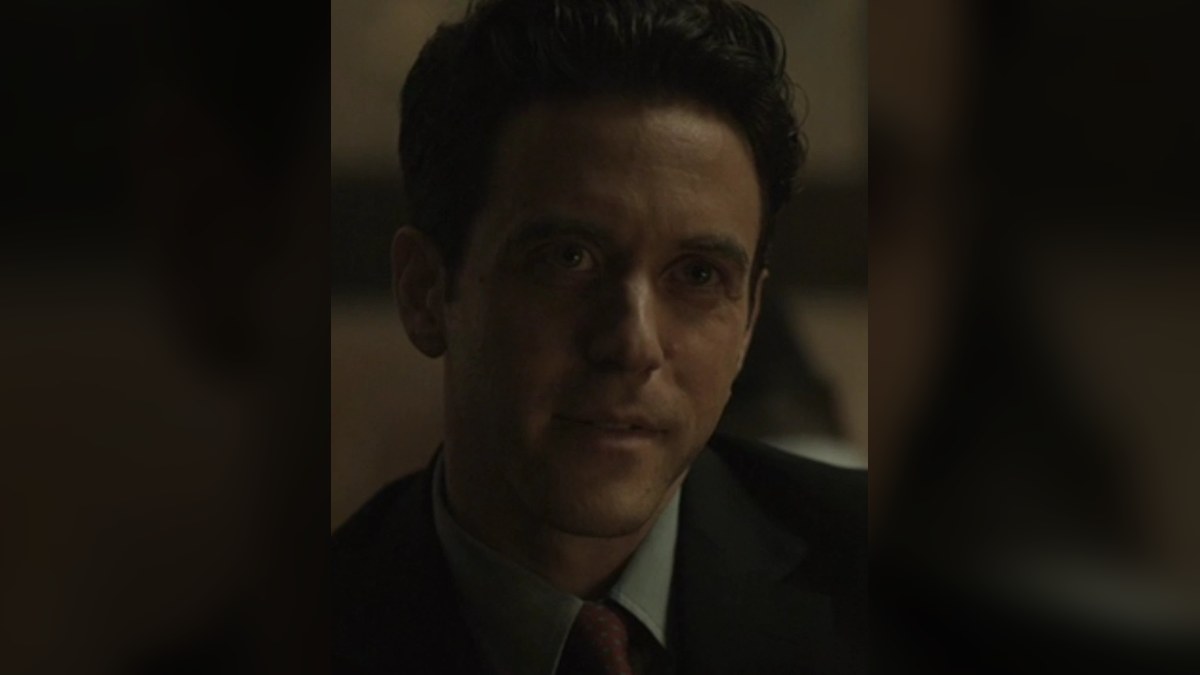
The season 3 finale confirms what the “Before Times” flashbacks had been building toward: Troy, the icy Silo 1 “specialist” who has been issuing kill orders all season, is Daniel Keene (Ashley Zukerman) — the congressman introduced earlier this season, kept alive for decades inside Silo 1 through a repeating cycle of cryogenic sleep, memory-suppression drugs, and what multiple outlets describe as periodic “reboots” that erase him and put him back to work whenever the silo system needs a problem solved.
That problem, this episode, is Silo 17. Its residents make it aboveground believing they have finally escaped, only for Troy to order Silo 1’s drones to release a lethal compound over the crowd. Outlets differ on the precise body count — /Film and Den of Geek both put the toll at close to 10,000, while The National‘s review cites “more than 2,000” — but every account agrees the massacre wipes out effectively the entire population that surfaced.
The episode’s other long-running mystery also gets resolved: the “Algorithm,” the seemingly automated authority Silo 18 has spent three seasons treating as an inscrutable machine, turns out to be a person. Victor Crnkovich (Matt Craven), the Silo 1 psychologist who pioneered the memory-suppression program, has been voicing it from inside Silo 18 the whole time. After Camille, Silo 18’s head of IT, out-maneuvers him and stops a lethal “safeguard” flood from being triggered, Victor breaks down and takes his own life — but not before recording a message for Troy that names the woman who has been haunting his fragmented memory: Helen Drew (Jessica Henwick), the journalist and pregnant partner he lost when the world he helped build ended. The revelation is the first crack in Troy’s programming, and it lands in the same episode that sets up Silo 18 and Silo 1 heading toward open war, with Juliette Nichols (Rebecca Ferguson) reportedly plotting to strike Silo 1 through the tunnels before it can retaliate against her own silo.

The Algorithm Finally Has a Face — That’s the Whole Point
For two and a half seasons, Silo’s most effective trick was refusing to personify its antagonist. “The Algorithm” worked as a dystopian idea precisely because it was faceless — a bureaucratic abstraction that let the show interrogate systemic control without ever having to write a single scene-chewing villain. “Troy” spends its entire runtime dismantling that ambiguity on purpose. The Algorithm is not software; it is Victor Crnkovich, an old man in a cardigan, making a series of very human, very cowardly choices from inside a room in Silo 18.
That is a real structural gamble, and it is the thing this review keeps coming back to: making the silo system’s authority literally one traumatized, grief-broken man is a more emotionally legible villain than an algorithm ever could be, and multiple critics single out Victor’s arc — his complicity, his final act of cowardice, and the cruelty of the message he leaves behind — as the episode’s most effective material. But specificity is a trade, not a pure upgrade. A show that spent two seasons arguing the horror was the system now has to argue the horror was also, somehow, personal — that one grieving psychologist’s choices are what kept an entire population regime running. The finale mostly earns that trade by making Victor’s collapse feel inevitable rather than convenient. Whether it holds up depends on how season 4 answers a question this episode raises but does not settle: is Silo 1’s control structurally self-perpetuating, or was it always going to unravel the moment one specific man ran out of resolve?

The Massacre, and What Specificity Costs
The Silo 17 killing is the episode’s centerpiece, and it is the sequence every outlet in this desk’s research keeps returning to. /Film’s review calls it “the most harrowing moment on TV since Andor Season 2’s Ghorman Massacre,” and describes the drone operators as watching the killing through thermal cameras with the audio muted — a detail the review frames as a study in the banality of evil, echoing exactly the distancing mechanisms real atrocities rely on. That comparison is doing a lot of work for the episode’s reputation, and it is earned: staging mass violence as a bureaucratic, remote-controlled procedure rather than a battle is a harder, more upsetting choice than the show has made before.
It is also the moment the episode’s political argument narrows. Seasons 1 and 2 mostly kept their systemic critique diffuse — nobody in particular was to blame, which was the point. This scene assigns the massacre to a single order, given by a single named man, on a single day. It is a gut-punch. It is also a simplification of the exact ambiguity that made the earlier seasons distinct from a standard prestige-thriller villain reveal.
Performance and Direction
Ashley Zukerman carries most of the episode’s weight, playing Troy as someone whose blankness is the performance — a man with the emotional range surgically removed, whose face barely moves until Victor’s final message forces the first flicker of Daniel Keene back through. It’s a harder role to play well than a more visibly tortured villain would be, and critics who watched the episode single it out as a highlight rather than a limitation. Matt Craven’s Victor gets the showier arc — sobbing, cornered, finally honest — and it is the performance showrunner Graham Yost spent a post-finale interview unpacking rather than defending, which is itself a tell that the writing room knew the character needed the explanation.
“If you’ve ever known anyone who’s taken their life, there’s never really one answer. There’s often a lot of answers,” Yost, Silo’s creator and showrunner, told The Tab, describing Victor’s suicide as the accumulation of the failed Safeguard, Troy’s massacre, and Silo 18’s rebellion rather than a single trigger. It is a rare case of a showrunner explaining a character’s psychology in a way that actually clarifies the episode rather than papering over a gap in it.
Silo vs. the Books: What “Shift” Does Differently
This is where Silo has room to distinguish itself from every other prestige-sci-fi finale write-up this week, and it is worth being exact about what does and does not map cleanly onto Hugh Howey’s novels. Season 3 draws its “Before Times” backstory from Shift, the second book in Howey’s trilogy (after Wool, before Dust), which centers on Congressman Donald Keene — the show renames him Daniel — waking from decades of cryosleep inside Silo 1 to confront what he unknowingly helped build.
The show changes more than the name. In Shift, Donald is recruited by Senator Paul Thurman as an architect to design the physical silo structures; the show instead makes Daniel an investigative journalist’s source uncovering a dirty-bomb conspiracy, which gives Helen Drew a reason to exist as a character at all — in the novel, Helen is already Donald’s wife and is shipped off to a different silo; on screen she is pregnant and, per multiple recaps, ends up in Silo 18 — Juliette’s own silo — which is a structural change with no clean equivalent in the books. That’s a real invention, not a translation, and it’s the choice that gives “Troy” its final gut-punch: the woman haunting Daniel’s visions isn’t just his past, she’s tangled into the present silo Juliette is trying to save.
The Algorithm comparison is honestly murkier, and it’s worth saying so rather than forcing a tidy parallel. Howey’s novels describe the Algorithm as a literal computer system — on “E-Day,” it is a piece of software that evaluates variables to select which silo repopulates the world — operating under parameters that human administrators like Thurman set up in advance. The show’s twist is more direct: there is no software making the call in the moment, just Victor and, before him, other Silo 1 “founders” speaking through a voice-modulated line. Both versions end up making the same argument — that an apparently neutral, automated authority is actually doing exactly what specific people designed it to do — but the show gets there by removing the algorithm part of the Algorithm entirely, which is a bolder and, frankly, more TV-legible way to land the same thesis than restaging the book’s more procedural reveal would have been.

What Didn’t Fully Land
Not every account of the finale is uncomplicated praise, and a review built on uniform positivity would be doing exactly the promotional thing this format exists to avoid. AbsoluteGeeks’ review calls the season an “ambitious bridge” but flags that it “deliberately leaves enough unanswered that the quality of this chapter will inevitably depend somewhat on whether season 4 can stick the landing” — in other words, the finale is graded on credit it hasn’t earned yet. Multiple other write-ups make a similar point about pacing: the episode doesn’t structure its reveals as a conventional finale barrage, letting some answers arrive quietly rather than as shocks, which reads to some critics as confident restraint and to others as a season that functions more as table-setting for season 4 than as a destination in its own right.
That is a fair caveat on top of a genuinely strong hour: an episode that resolves two of the show’s biggest mysteries in the same 50 minutes it stages a mass-casualty event can be simultaneously the season’s best episode and an hour that is, structurally, mostly a very well-executed cliffhanger.
The Verdict
This review isn’t assigning “Troy” a numeric score — with no first-hand viewing to weigh against a consistent internal scale, a made-up number would carry false precision. What can be said with confidence, cross-checked across multiple critics who did watch it: this is being described as Silo’s most emotionally direct hour, and per ComicBasics, “Troy” debuted with a 9.6/10 average on IMDb — the highest score of any episode in the show’s three-season run, ahead of the previous week’s 9.3 for “Farewell” — at the cost of some of the political ambiguity that made the first two seasons distinct from a standard prestige-thriller villain reveal. Whether that trade was worth it depends entirely on what season 4 does with a system now explicitly run by people rather than an abstraction — which is, fittingly, exactly the question Juliette Nichols is about to go to war over.
Keep Reading
For more on where the story goes next, see our Silo season 4 trailer breakdown. If dystopian sci-fi with a human-run control system is your thing, our coverage of Severance and Vince Gilligan’s Pluribus cover similar ground from different angles.
Frequently Asked Questions
Who is Troy in Silo season 3?
Troy is the identity given to Daniel Keene (Ashley Zukerman) inside Silo 1. The season 3 finale reveals he has been kept alive for decades through repeated cryogenic sleep and memory-suppression, waking periodically as an emotionless “specialist” who handles crises across the silo system.
Is the Algorithm a computer or a person in Silo?
In the show, the season 3 finale reveals the Algorithm is not an automated system at all — it’s Victor Crnkovich, a Silo 1 psychologist, voicing it from inside Silo 18. In Hugh Howey’s original novels, the Algorithm is described as a literal computer program that selects a surviving silo based on parameters set by human administrators, so the show’s version removes the software from the equation entirely.
How many people died in the Silo 17 massacre?
Outlets differ on the exact figure. /Film and Den of Geek both cite a toll close to 10,000, while The National’s review cites “more than 2,000.” Every account agrees the drone-deployed compound killed effectively everyone who had surfaced from Silo 17.
When does Silo season 4 come out?
Showrunner Graham Yost has said season 4, which was already shot at the time of the season 3 finale, picks up mere hours after “Troy” and is framed simply as “war” between Silo 18 and Silo 1. Reporting on Yost’s Deadline interview points to a July 9, 2027 premiere.
Is Silo season 3 based on a specific Hugh Howey book?
Season 3’s “Before Times” storyline draws on Shift, the second book in Howey’s trilogy (Wool, Shift, Dust), which follows Congressman Donald Keene. The show changes his recruitment story, renames him Daniel, and invents a pregnant Helen Drew who ends up in Juliette’s own silo — none of which has a direct equivalent in the novel.