The HBO Max series makes a definitive break from the SnyderVerse while establishing the new DC Universe continuity
The wait is finally over. After three years of anticipation and countless fan debates about continuity, Peacemaker Season 2 has arrived on HBO Max, and James Gunn has delivered the most definitive statement yet about the future of DC’s cinematic universe. In a move that will undoubtedly send shockwaves through the DC fandom, the season premiere “The Ties That Grind” doesn’t just transition from the DC Extended Universe to the new DC Universe—it completely erases Zack Snyder’s Justice League from existence through a bold retcon that replaces them with an entirely new team of heroes.
This isn’t just another superhero show returning for a second season. Peacemaker Season 2 represents a pivotal moment in DC’s multimedia strategy, serving as the third official entry in James Gunn and Peter Safran’s carefully orchestrated DC Universe following the critical successes of Creature Commandos and Superman. The series has earned near-perfect scores from critics who praise its seamless blend of humor, action, and character-driven storytelling, proving that Gunn’s story-first philosophy is already yielding significant results.

Source: Tom’s Guide
The End of the SnyderVerse: A Clean Break From the Past
For fans who held onto hope that DC Studios might eventually return to Zack Snyder’s vision of the DC Extended Universe, Peacemaker Season 2’s opening moments deliver a crushing but necessary blow. The season begins with a recap of Season 1’s events, but eagle-eyed viewers will immediately notice something different: the Justice League cameo that concluded the first season has been completely reshot and replaced with an entirely new group of heroes.
Gone are Henry Cavill’s Superman, Gal Gadot’s Wonder Woman, Ezra Miller’s The Flash, and Jason Momoa’s Aquaman—the heroes who arrived too late to help Peacemaker in his battle against the Butterflies. In their place stands the “Justice Gang,” featuring Nathan Fillion’s Guy Gardner, Isabela Merced’s Hawkgirl, Edi Gathegi’s Mister Terrific, David Corenswet’s Superman, and Milly Alcock’s Supergirl. This isn’t just a simple recast; it’s a complete narrative overhaul that retroactively changes the events of Season 1 to fit within the new DCU continuity.
The decision to reshoot portions of the Season 1 finale specifically for this recap represents an unprecedented level of commitment to continuity management in modern superhero media. While Marvel Studios has occasionally used similar techniques to maintain narrative coherence, the scope and boldness of Gunn’s approach sets a new standard for how shared universes can evolve and adapt. By literally replacing the previous iteration of these characters with their DCU counterparts, Gunn has created the clearest possible explanation of what remains canon from the DCEU era.
This retcon effectively closes the door on any future appearances by Ben Affleck’s Batman, Ray Fisher’s Cyborg, Zachary Levi’s Shazam, and the other heroes who defined the Snyder era of DC films. While some fans may mourn the loss of these interpretations, the move paves the way for fresh takes on these iconic characters that will be specifically designed to fit within Gunn’s cohesive vision for the DC Universe.
James Gunn’s Story-First Philosophy in Action
The seamless transition from DCEU to DCU in Peacemaker Season 2 exemplifies the story-first philosophy that has defined James Gunn and Peter Safran’s approach to building the new DC Universe. Unlike the previous era of DC films, which often locked in release dates years in advance and sometimes forced productions to rush forward without completed screenplays, the new DC Studios operates under a strict mandate that no project moves into production until its script is fully approved and meets their exacting standards of quality.
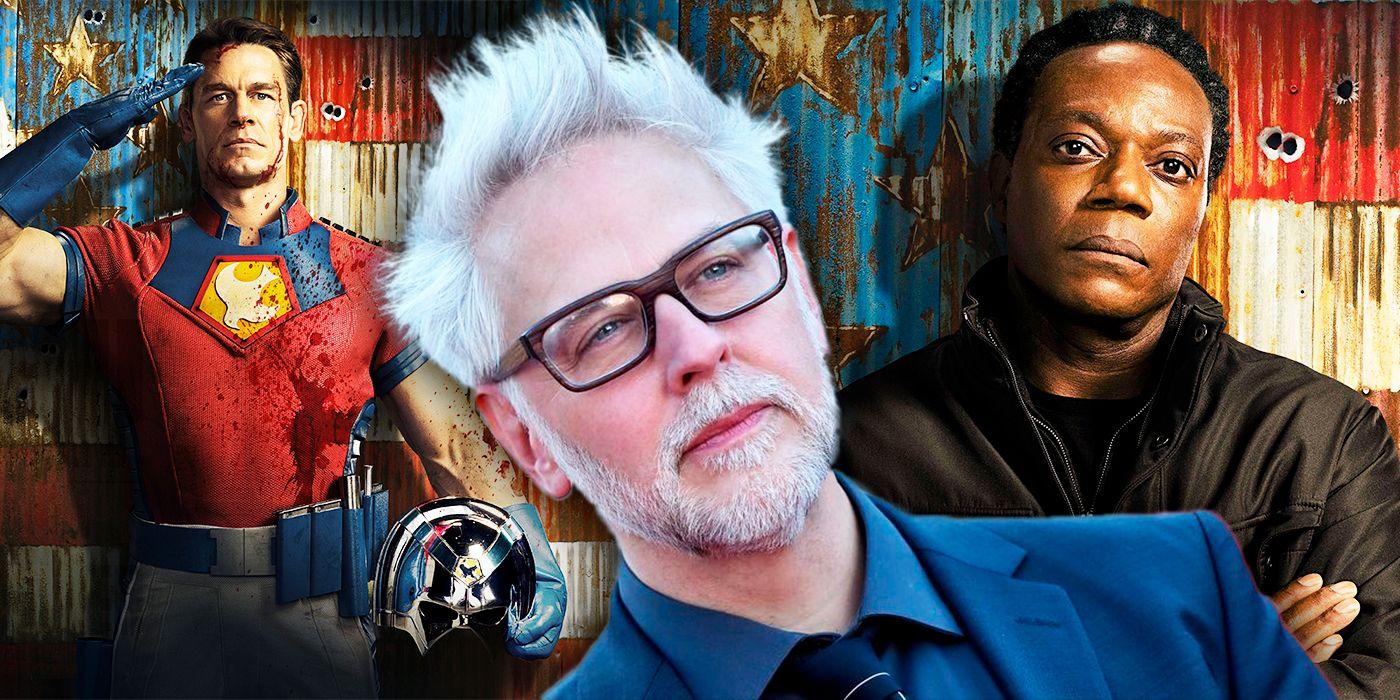
This methodical approach stands in stark contrast to current industry trends and even some of Marvel Studios’ recent practices. While films like Avengers: Doomsday have reportedly begun filming despite still being in the writing process, Gunn has demonstrated his willingness to delay even passion projects to ensure narrative integrity. The postponement of The Authority, a project Gunn has personally expressed great enthusiasm for, serves as proof that the DC Studios co-head prioritizes story quality over personal preferences or external pressures.
Source: CBR
The results of this disciplined creative strategy are already evident in the overwhelmingly positive reception for the DCU’s initial projects. Creature Commandos launched the universe with widespread critical acclaim, establishing a foundation of quality that Superman built upon with both commercial success and critical praise. Peacemaker Season 2 continues this trend, with early reviews highlighting the show’s ability to balance its signature crude humor with genuine emotional depth and character development.
Perhaps most importantly, Gunn’s commitment to this process extends beyond just script quality to encompass every aspect of universe-building, including casting decisions. When asked by a fan on social media how the DCU would handle situations where an actor could no longer continue in their role, Gunn offered a direct and unambiguous response: “If an actor can’t continue a role I’ll change the actor no problem.” This declaration carries massive implications for the future of the cinematic universe, as it establishes a clear policy that characters and overarching story take precedence over any single performer.
Avoiding Marvel’s Kang Conundrum
Gunn’s willingness to recast actors when necessary represents a crucial lesson learned from Marvel Studios’ recent struggles with the Kang the Conqueror storyline. The studio’s troubles with actor Jonathan Majors led to Marvel distancing itself from the performer, a move that effectively sidelined the entire overarching threat that was meant to define the Multiversal Saga. This situation left a gaping hole in the franchise’s narrative architecture, forcing a massive creative pivot toward Robert Downey Jr.’s Doctor Doom that many fans and critics viewed as reactive rather than strategic.
By establishing this recasting policy from the outset, Gunn ensures that no DCU movie or television show will ever be scrapped or fundamentally altered because of unforeseen issues with a specific actor. This approach maintains the stability and security of the universe’s narrative architecture while preventing any single performer from becoming indispensable to the franchise’s success. It’s a pragmatic solution that prioritizes long-term storytelling over short-term star power, reflecting the lessons learned from nearly two decades of shared universe filmmaking.
The policy also reflects a fundamental difference in how DC Studios approaches character ownership compared to the Marvel Cinematic Universe. While Marvel built its success on audiences growing to see specific familiar faces as the definitive versions of iconic heroes and villains, Gunn’s DCU operates under the principle that the characters themselves are more important than the actors who portray them. This philosophy allows for greater flexibility in casting decisions and reduces the risk of narrative disruption due to real-world complications.
The New Justice Gang: Introducing the DCU’s Premier Heroes
The replacement of Snyder’s Justice League with the Justice Gang in Peacemaker Season 2’s opening recap provides fans with their first substantial look at how classic DC heroes will be reimagined within the new universe. Each casting choice reflects Gunn’s commitment to finding actors who can embody both the iconic nature of these characters and the specific tonal requirements of his interconnected universe.
Nathan Fillion’s Guy Gardner represents perhaps the most intriguing addition to the DCU roster. Known for his charismatic performances in Firefly, Castle, and The Rookie, Fillion brings a natural swagger and comedic timing that perfectly suits the brash Green Lantern. Guy Gardner has long been considered one of the more challenging DC characters to adapt for live-action due to his abrasive personality and complex relationship with authority, but Fillion’s casting suggests that Gunn intends to lean into the character’s more irreverent aspects while maintaining his heroic core.
Isabela Merced’s Hawkgirl continues the DCU’s commitment to diverse casting while honoring the character’s rich comic book history. Merced, who has demonstrated her action credentials in films like Dora and the Lost City of Gold and Sweet Girl, brings both the physical presence and emotional range necessary to portray one of DC’s most complex female heroes. Hawkgirl’s inclusion in the Justice Gang also suggests that the DCU will explore the character’s connections to ancient mythology and reincarnation themes that have defined her comic book appearances.

Source: Reddit
Edi Gathegi’s Mister Terrific represents a particularly inspired casting choice that highlights Gunn’s commitment to showcasing lesser-known but equally compelling DC heroes. Gathegi, whose previous work includes memorable roles in X-Men: First Class and The Blacklist, possesses the intellectual gravitas necessary to portray Michael Holt, one of the smartest individuals in the DC Universe. Mister Terrific’s inclusion in the Justice Gang signals that the DCU will not shy away from characters whose powers are based on intellect and technology rather than traditional superhuman abilities.
The brief appearances of David Corenswet’s Superman and Milly Alcock’s Supergirl in the recap serve as tantalizing glimpses of how these iconic characters will function within the broader DCU. While their roles in the Peacemaker Season 2 premiere are limited to shadowy cameos, their presence establishes the hierarchical structure of the DCU’s heroic community and confirms that the Justice Gang operates within the same world as the universe’s most powerful heroes.
Critical Reception and Cultural Impact
The critical response to Peacemaker Season 2 has been overwhelmingly positive, with reviewers praising the show’s ability to evolve beyond its origins while maintaining the irreverent spirit that made the first season such a success. Critics have particularly noted how the series manages to balance its signature crude humor with genuine emotional depth, creating a viewing experience that satisfies both fans seeking entertainment and those looking for meaningful character development.
The show’s handling of the DCEU-to-DCU transition has been universally praised as a masterclass in continuity management. Rather than ignoring the previous season’s events or attempting to explain them away through convoluted multiverse mechanics, Gunn’s decision to simply replace the problematic elements with their DCU counterparts demonstrates a confidence in his creative vision that has impressed both critics and fans. This approach allows new viewers to jump into Season 2 without extensive knowledge of DC’s complicated film history while providing longtime fans with a clear understanding of how the universe has evolved.
Industry analysts have noted that Peacemaker Season 2’s success validates DC Studios’ patient approach to universe-building. Unlike the rushed expansion that characterized the later years of the DCEU, the new DC Universe has taken time to establish its tone, characters, and narrative priorities before attempting large-scale crossover events. This methodical approach has resulted in a more cohesive and critically acclaimed slate of projects that suggests a sustainable long-term strategy for the franchise.
The show’s cultural impact extends beyond just superhero media, with its frank discussions of masculinity, trauma, and redemption resonating with audiences who have grown weary of more superficial approaches to these themes. John Cena’s performance as Christopher Smith continues to be praised for its surprising emotional depth, with critics noting how the actor has evolved the character beyond the simple comic relief role he might have occupied in less skilled hands.
Looking Forward: The Future of the DCU
Peacemaker Season 2’s successful launch represents more than just the return of a popular television series; it serves as a proof of concept for how the DC Universe will handle the complex task of maintaining continuity across multiple media platforms while allowing individual projects to maintain their unique identities. The show’s ability to function both as a standalone story and as part of a larger narrative tapestry suggests that Gunn and Safran have found the right balance between creative freedom and universe-building requirements.
The series also establishes important precedents for how future DCU projects will handle character introductions and crossover events. Rather than relying on post-credits scenes or forced cameos that can feel disconnected from the main narrative, Peacemaker Season 2 integrates its universe-building elements organically into the story, making them feel essential rather than obligatory. This approach suggests that future DCU projects will prioritize narrative coherence over fan service, a philosophy that could help the universe avoid some of the pitfalls that have plagued other shared universe attempts.
The show’s treatment of legacy characters also provides insight into how the DCU will approach the challenge of honoring comic book history while creating fresh interpretations for modern audiences. By replacing familiar versions of iconic heroes with new iterations that serve the story’s specific needs, Peacemaker Season 2 demonstrates that the DCU is willing to make bold creative choices in service of narrative quality.
As the DC Universe continues to expand with upcoming projects like Supergirl: Woman of Tomorrow, The Authority, and Swamp Thing, Peacemaker Season 2 stands as evidence that Gunn’s vision for a cohesive, character-driven universe is not just theoretically sound but practically achievable. The show’s success suggests that audiences are hungry for superhero content that prioritizes storytelling over spectacle, character development over action sequences, and emotional authenticity over empty nostalgia.
The future of the DCU looks brighter than ever, and Peacemaker Season 2 has provided the roadmap for how that future will unfold. With its bold creative choices, exceptional performances, and unwavering commitment to quality storytelling, the series has established itself as an essential viewing experience for anyone interested in the evolution of superhero media. As James Gunn continues to build his vision of the DC Universe, Peacemaker Season 2 will undoubtedly be remembered as the moment when that vision truly came into focus.
Peacemaker Season 2 is now streaming on HBO Max, with new episodes releasing weekly.
References
[1] WBUR. “Season 2 of DC Comics superhero show ‘Peacemaker’ premieres.” August 22, 2025. https://www.wbur.org/hereandnow/2025/08/22/dc-comics-peacemaker
[2] ComicBook.com. “James Gunn Reveals How the DCU Will Avoid Marvel Studios’ Kang Issue.” August 21, 2025. https://comicbook.com/movies/news/james-gunn-actor-replacement-dcu-comments/
[3] CBR. “Today’s a Sad Day For Fans of Zack Snyder’s DC Movies.” August 22, 2025. https://www.cbr.com/peacemaker-season-2-erases-zack-snyder-justice-league/
[4] Screen Rant. “Peacemaker Season 2, Episode 1 Review: James Gunn’s Show Returns Strong.” August 22, 2025. https://screenrant.com/peacemaker-season-2-episode-1-review/
[5] IndieWire. “‘Peacemaker’ Season 2 Review: Change Is Good in Emotional New Season.” August 21, 2025. https://www.indiewire.com/criticism/shows/peacemaker-season-2-review-new-season-1235145886/
[6] IGN. “Peacemaker Season 2 Episodes 1-5 Spoiler-Free Review.” August 15, 2025. https://sea.ign.com/peacemaker/231716/review/peacemaker-season-2-episodes-1-5-spoiler-free-review
[7] The Ringer. “‘Peacemaker’ Enters Its Second Season—and Its New Universe.” August 21, 2025. https://www.theringer.com/2025/08/21/dc/peacemaker-season-2-premiere-dcu-james-gunn
[8] Decider. “‘Peacemaker’ Season 2 HBO Max Review: Stream It Or Skip It?” August 21, 2025. https://decider.com/2025/08/21/peacemaker-season-2-hbo-max-review/
[9] Games Radar. “Peacemaker season 2: Release date and everything we know so far.” August 22, 2025. https://www.gamesradar.com/entertainment/dc-tv-shows/peacemaker-season-2-release-date-trailer-cast-plot/
[10] Polygon. “Peacemaker’s season 2 premiere begins with a Zack Snyder retcon.” August 22, 2025. https://www.polygon.com/peacemaker-season-2-zack-snyder-justice-league-retcon/
This article contains analysis and commentary based on publicly available information about Peacemaker Season 2 and the DC Universe. All images are properly attributed to their original sources as indicated in the captions.