In the vast, sprawling cosmos of the DC Universe, one organization stands as the ultimate line of defense against chaos and evil: the Green Lantern Corps. For decades, these emerald-clad space cops have captivated readers with their tales of bravery, willpower, and the incredible power of their rings. But what exactly is the Green Lantern Corps, and how did it become the legendary peacekeeping force it is today?
From their ancient origins to their most iconic members and universe-shattering battles, we’re diving deep into the history of the Green Lantern Corps. Whether you’re a new recruit or a seasoned veteran, this is your ultimate guide to understanding DC’s cosmic protectors.
What is the Green Lantern Corps?
The Green Lantern Corps is an intergalactic police force created by the immortal Guardians of the Universe to maintain order across all 3,600 sectors of space. Each member, known as a Green Lantern, is chosen for their ability to overcome great fear and is armed with a power ring—often called the most powerful weapon in the universe—fueled by sheer willpower. With over 7,200 members, the Corps has a rich and complex history stretching back billions of years.
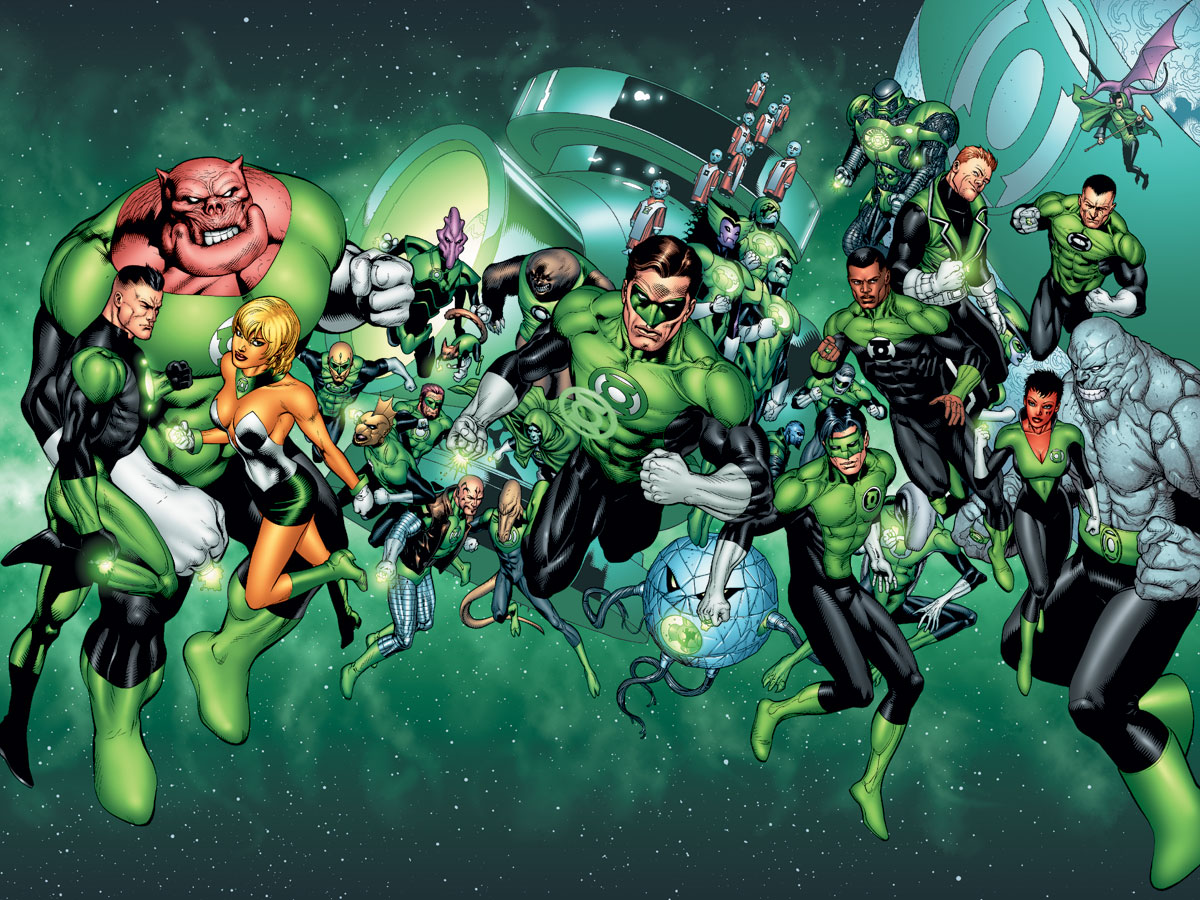 Caption: The Green Lantern Corps assembles members from across the universe to protect all 3,600 sectors of space.
Credit: DC Comics
Source: DC Database
Caption: The Green Lantern Corps assembles members from across the universe to protect all 3,600 sectors of space.
Credit: DC Comics
Source: DC Database
The Ancient Origins of the Corps
The story of the Green Lantern Corps begins not with a ring, but with a race of ancient, blue-skinned beings known as the Maltusians. Ten billion years ago, a Maltusian scientist named Krona defied his peers and attempted to witness the very dawn of creation. His experiment had catastrophic consequences, potentially unleashing evil upon the universe itself. In response, the Maltusians dedicated themselves to protecting the cosmos, eventually becoming the Guardians of the Universe.
Their first attempt at a peacekeeping force was a disastrous failure. The Guardians created an army of emotionless androids called the Manhunters, but their rigid programming led them to a horrifying conclusion: the only way to maintain order was to eliminate all life. The Manhunters went on a genocidal rampage, most notably in Sector 666, before the Guardians could stop them. This failure taught the Guardians a crucial lesson: true justice requires a conscience.
Learning from their mistakes, the Guardians revisited an earlier experiment with the Emotional Spectrum—a cosmic energy field powered by the collective emotions of all living things. They decided to harness the green light of willpower, the most stable energy in the spectrum, to power their new force. They forged the first power rings and a Central Power Battery on their new headquarters, the planet Oa, located at the center of the universe. Thus, the Green Lantern Corps was born.
Structure and Organization: How the Corps Works
The Green Lantern Corps is a highly organized and structured force. The 3,600 sectors of the universe are each assigned two Green Lanterns, who patrol their jurisdiction with a great deal of autonomy. While they are expected to uphold the laws of the worlds they protect, their primary guide is the Book of Oa, the sacred text containing the laws and principles of the Corps.
The Guardians of the Universe
At the top of the hierarchy are the Guardians of the Universe. These ancient beings oversee the Corps from Oa, making key decisions and providing guidance to the Lanterns. Though they are beings of immense power and knowledge, their commitment to logic over emotion has often put them at odds with their more passionate officers, particularly the human Lanterns.
Notable Members
While the Corps boasts thousands of members from countless alien species, a few have risen to legendary status:
- Hal Jordan: The first human ever inducted into the Corps, Hal Jordan is often considered the greatest Green Lantern of all time. A reckless but incredibly brave test pilot, his ability to overcome fear is second to none. His story is a cornerstone of the Green Lantern mythology, from his heroic deeds to his tragic fall from grace and eventual redemption.
- John Stewart: An architect and U.S. Marine veteran, John Stewart was chosen as Hal Jordan’s backup. Known for his disciplined and strategic mind, Stewart’s constructs are meticulously detailed and incredibly strong. He has served as the primary Green Lantern of Earth for long stretches and is a respected leader within the Corps.
- Guy Gardner: Loud, obnoxious, and fiercely loyal, Guy Gardner is the Corps’ resident hothead. His brash personality often clashes with his fellow Lanterns, but his unwavering courage and sheer stubbornness make him a formidable force for good.
- Kyle Rayner: When Hal Jordan, under the influence of the fear entity Parallax, destroyed the Corps, Kyle Rayner was chosen as the sole remaining Green Lantern. An artist by trade, his constructs are known for their creativity and imagination. He carried the torch of the Green Lanterns alone for years and was instrumental in the Corps’ eventual rebirth.
- Mogo: A sentient planet, Mogo is a unique and powerful member of the Corps. He plays a vital role in the distribution of power rings, guiding them to new recruits across the universe.
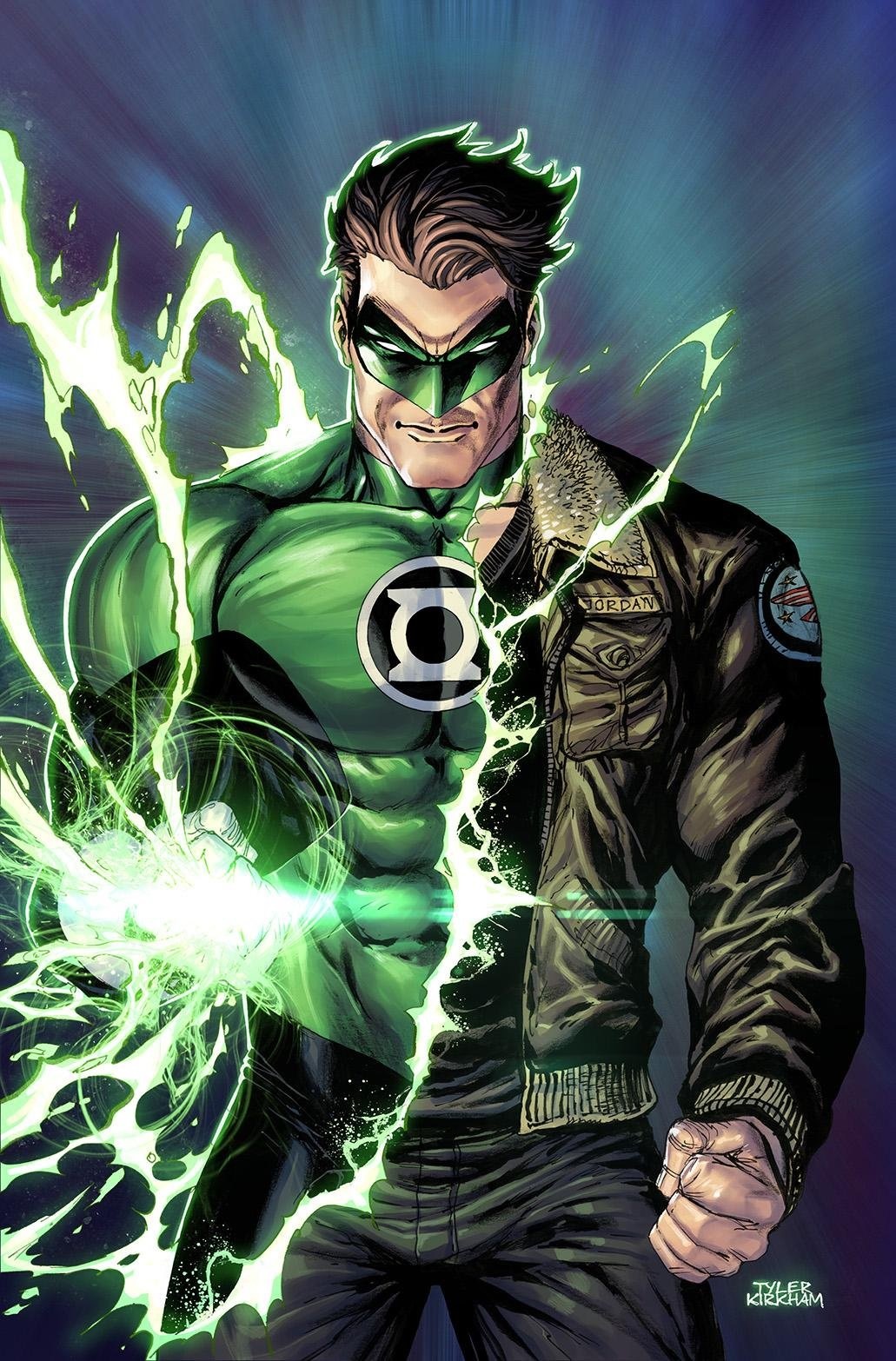 Caption: Hal Jordan, Earth’s first human Green Lantern and considered the greatest member of the Corps.
Credit: DC Comics
Source: DC Database
Caption: Hal Jordan, Earth’s first human Green Lantern and considered the greatest member of the Corps.
Credit: DC Comics
Source: DC Database
The Power Ring and the Emotional Spectrum
The power ring is a Green Lantern’s most important tool. It allows them to fly, survive in the vacuum of space, communicate with other species, and, most famously, create solid light constructs of anything they can imagine. The only limit to a ring’s power is the willpower of the person who wields it.
How the Power Ring Works
When a Green Lantern receives their ring, they also receive a power battery—a lantern-shaped device used to recharge the ring every 24 hours. The rings themselves are connected to the Central Power Battery on Oa, a massive reservoir of willpower energy that fuels the entire Corps. Each ring is a marvel of Oan technology, capable of translating languages in real-time, creating protective force fields, and generating constructs limited only by the user’s imagination and will.
The constructs themselves are made of solid light and can take any form the Lantern envisions. A skilled Lantern can create everything from simple shields and weapons to complex machinery and even entire buildings. The more detailed and focused the Lantern’s mental image, the stronger and more effective the construct. This is why members like John Stewart, with his architectural background, and Kyle Rayner, with his artistic training, are known for their particularly impressive creations.
The Weakness to Yellow
For decades, the Green Lanterns had a mysterious and frustrating weakness: their rings couldn’t affect anything colored yellow. This limitation was originally explained as a necessary impurity in the rings’ design, but the truth was far more sinister. The yellow impurity was actually the result of Parallax, the living embodiment of fear, being imprisoned within the Central Power Battery by the Guardians. Parallax’s influence created the weakness, making the rings ineffective against the color associated with fear.
When Parallax was eventually freed and defeated, modern Green Lanterns discovered they could overcome this limitation by acknowledging and conquering their own fears. This revelation was a major turning point, as it meant the rings were now more powerful than ever—provided the wielder had the courage to face what frightened them most.
However, the green light of willpower is just one part of a larger cosmic energy field. The Emotional Spectrum is composed of seven colors, each corresponding to a different emotion:
- Red: Rage
- Orange: Avarice (Greed)
- Yellow: Fear
- Green: Willpower
- Blue: Hope
- Indigo: Compassion
- Violet: Love
For years, the Green Lanterns’ rings had a weakness to the color yellow. This was eventually revealed to be the result of Parallax, the living embodiment of fear, being imprisoned within the Central Power Battery. The discovery of the full Emotional Spectrum led to the rise of other Lantern Corps, each with their own powers and motivations, culminating in the universe-spanning “War of Light.”
Major Storylines and Cultural Impact
The history of the Green Lantern Corps is marked by epic battles and universe-altering events. Storylines like “Sinestro Corps War,” where the rogue Green Lantern Sinestro forms his own fear-powered Corps, and “Blackest Night,” which sees the dead rise as the terrifying Black Lanterns, have become modern classics. These events not only tested the Corps to its limits but also explored deep themes of mortality, emotion, and the nature of heroism, much like how some of our favorite heroes cheat death.
The Sinestro Corps War
This universe-spanning conflict pitted the Green Lantern Corps against their fallen member, Sinestro, who had harnessed the yellow light of fear to create his own army: the Sinestro Corps. The war was a brutal and devastating affair that forced the Guardians of the Universe to make a difficult decision: they amended the Book of Oa to allow Green Lanterns to use lethal force. This was a major turning point for the Corps, as it blurred the lines between justice and vengeance and set the stage for future conflicts.
Blackest Night
Perhaps the most terrifying event in the Corps’ history, “Blackest Night” saw the rise of the Black Lanterns—an army of undead heroes and villains resurrected by the black light of death. Led by the cosmic entity Nekron, the Black Lanterns sought to extinguish all life and emotion from the universe. The Green Lantern Corps was forced to unite with the other Lantern Corps of the Emotional Spectrum—including their enemies in the Sinestro Corps—to fight back against the darkness. The event had a profound impact on the DC Universe, leading to the discovery of the White Lantern and a deeper understanding of the forces of life and death.
The Green Lanterns have also made a significant impact on pop culture beyond the comics. They have been featured in animated series, films, and video games, introducing their mythology to a wider audience. The concept of a power ring fueled by willpower has become an iconic part of the superhero genre, a symbol of the potential that lies within us all. The history of Superman is another great example of a character with lasting cultural impact.
The Green Lantern Oath: Words of Power
One of the most iconic aspects of the Green Lantern Corps is the oath that many members recite while recharging their rings. While not required to charge the ring, the oath serves as a reaffirmation of the Lantern’s commitment to justice and the Corps. The most famous version, used by the majority of human Lanterns, goes:
“In brightest day, in blackest night,
No evil shall escape my sight!
Let those who worship evil’s might,
Beware my power, Green Lantern’s light!”
These words have become synonymous with the Green Lantern legacy, a rallying cry that embodies the Corps’ mission and values. While many Lanterns create their own personal oaths to reflect their unique backgrounds and cultures, the traditional oath remains a powerful symbol of unity across the Corps.
The Fall and Rebirth of the Corps
The Green Lantern Corps has faced extinction more than once, but perhaps no event was more devastating than the fall of Hal Jordan. When Jordan’s home city of Coast City was destroyed, his grief and rage made him vulnerable to Parallax’s influence. Possessed by the fear entity, Jordan went on a rampage, destroying the Central Power Battery and killing or maiming many of his fellow Lanterns in a quest for ultimate power.
With the Corps decimated, the last surviving Guardian, Ganthet, created a final ring and bestowed it upon Kyle Rayner, a young artist who had no prior connection to the Corps. For years, Rayner carried the burden of being the last Green Lantern, protecting Earth and the universe alone. His journey from uncertain rookie to confident hero is one of the most compelling character arcs in comics.
Eventually, the truth about Parallax was revealed, and Hal Jordan was freed from its influence. Jordan sacrificed himself to reignite Earth’s dying sun, redeeming himself in the eyes of many. Kyle Rayner later retrieved the Central Power Battery’s energy and returned it to Oa, where he helped resurrect the Guardians and rebuild the Corps. The reborn Green Lantern Corps was stronger than ever, with an expanded roster of over 7,200 members—two for each of the 3,600 sectors.
Why the Green Lantern Corps Endures
More than just a group of space cops, the Green Lantern Corps represents the idea that anyone, from any corner of the universe, can rise to the occasion and become a hero. It’s a story about the power of will, the importance of facing our fears, and the enduring struggle between order and chaos. From the epic space battles to the intricate lore of the Emotional Spectrum, the Green Lantern Corps continues to be one of the most imaginative and compelling concepts in comics.
The Corps’ diversity is one of its greatest strengths. With members from thousands of different species and cultures, each with their own perspectives and abilities, the Green Lantern Corps is a testament to the idea that heroism transcends borders, species, and even planets. Whether it’s a human test pilot, a sentient planet, or a crystalline being from a distant galaxy, the ring seeks out those with the courage and will to make a difference.
As the DC Universe continues to evolve, the Green Lantern Corps remains a cornerstone of its mythology. New stories continue to explore the depths of the Emotional Spectrum, introduce new Lanterns from across the cosmos, and challenge our understanding of what it means to be a hero. For fans old and new, the Green Lantern Corps offers endless possibilities for adventure, wonder, and inspiration.
References
- The History Of The Green Lantern Corps Explained – https://www.looper.com/274006/the-history-of-the-green-lantern-corps-explained/
- Green Lantern Corps (New Earth) – https://dc.fandom.com/wiki/Green_Lantern_Corps_(New_Earth)
- Green Lantern Corps – https://en.wikipedia.org/wiki/Green_Lantern_Corps