What Is the Multiverse in Marvel and DC Comics? A Beginner Guide
What is the multiverse? In comics, the multiverse is the idea that reality is not one universe but a vast collection of parallel universes, each its own version of Earth, its own history, and its own versions of familiar heroes. Marvel and DC both use it to tell alternate stories, stage crossovers, and reset their continuities.
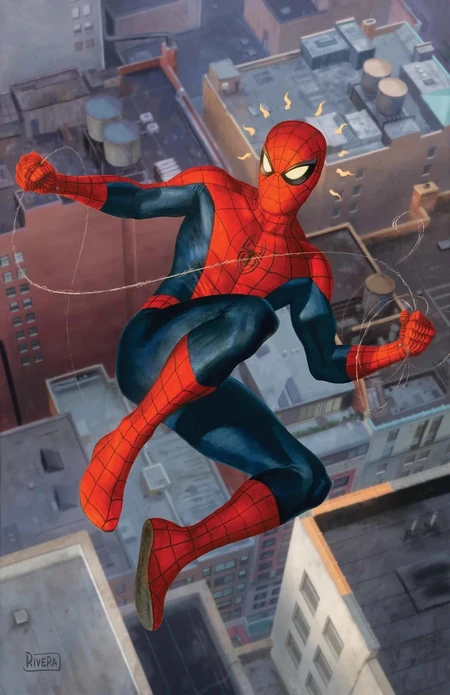
If you have watched Spider-Man: No Way Home or The Flash and walked out wondering how there can be five Spider-Men or two Barry Allens, you have already met the multiverse. It is one of the oldest and most flexible ideas in superhero comics, and understanding it unlocks decades of storytelling that can otherwise feel impenetrable. This guide breaks it down from the ground up: what the multiverse actually is, how it works, the numbering systems Marvel and DC use, the events that reset entire timelines, and the common misconceptions that trip up new readers.
By the end, you will understand why Marvel’s main reality is called Earth-616, why DC keeps “ending” its universe every couple of decades, and why the multiverse is arguably the single most important creative tool the Big Two have ever invented.
What Is the Multiverse in Comics?
The multiverse is a shared-fiction framework in which many self-contained universes coexist at once, usually described as vibrating at different frequencies or occupying overlapping space. Each universe, or “Earth,” has its own continuity. Characters can, under the right conditions, cross between them, which is how a hero from one Earth can meet an alternate version of themselves.
The word itself is older than comics. Philosopher William James used “multiverse” back in 1895, and novelist Michael Moorcock popularized its modern fantasy meaning in the 1960s. But comics turned it into a load-bearing structure. Where a single universe can only hold one canonical version of a character, a multiverse can hold infinite versions, each free to live, die, marry, or turn evil without touching the “real” one.
That flexibility is the whole point. A multiverse lets writers ask “what if?” and then actually show you the answer as a fully realized world rather than a hypothetical. It is the engine behind alternate-reality classics, evil-twin storylines, and the giant crossover events that define modern superhero publishing.
How the Multiverse Works
Mechanically, every universe in the multiverse is a parallel Earth with a slightly (or wildly) different history. On one Earth, Superman landed in Kansas. On another, his rocket landed in the Soviet Union and he grew up a communist icon, the premise of DC’s Red Son. Both are “real” within the fiction; they simply occupy different universes.
Travel between these worlds usually requires something extraordinary: cosmic speed, dimensional technology, magic, or a reality-bending villain. When it happens, you get a crossover. When it happens catastrophically, you get a Crisis or an incursion, events large enough to merge, destroy, or rewrite whole universes.
To keep track of thousands of parallel Earths, both publishers assign numbers. This is where new readers see designations like Earth-616 or Earth-0 and assume they need a spreadsheet. You do not. The numbers are just addresses. Here is how the two systems compare.
Marvel and DC numbering at a glance
| Concept | Marvel Comics | DC Comics |
|---|---|---|
| Main universe | Earth-616 (the “Prime” Marvel Universe) | Earth-0 (also called Prime Earth) |
| Famous alternate | Earth-1610, the Ultimate Universe | Earth-2, home of the Golden Age heroes |
| Reset mechanism | Incursions and Secret Wars | Crisis events |
| Structure today | Infinite realities under one Multiverse | 52 Earths, later expanded to infinite |
| Overarching frame | The Multiverse (within a larger Omniverse) | The Multiverse / Omniverse |
Marvel’s main reality earned its famous Earth-616 label from writer Alan Moore in a 1983 Captain Britain story. DC’s numbering runs from Earth-0 (the main universe) outward, a system cemented by its 2006 series 52. Different publishers, same underlying idea: give every parallel world a stable address so stories can point to them.
The DC Multiverse: Where It All Started
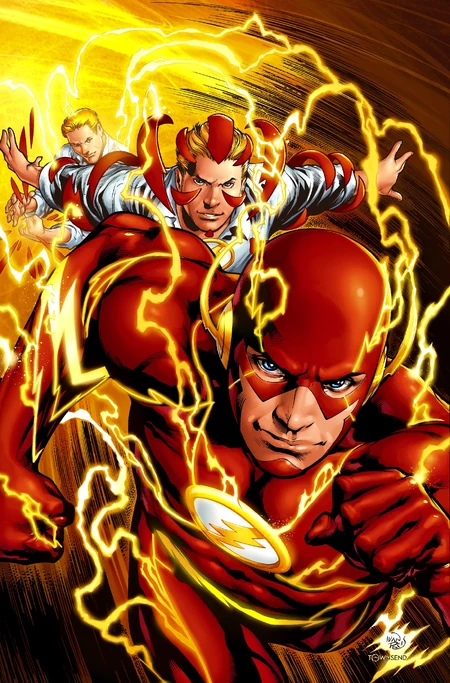
DC invented the modern comic-book multiverse almost by accident. In The Flash #123 (1961), the classic story “Flash of Two Worlds,” the Silver Age Flash Barry Allen vibrated across dimensions and met Jay Garrick, the original 1940s Flash. To explain how both could exist, DC declared that Garrick lived on a separate world, Earth-Two, while Allen lived on Earth-One. The multiverse was born.
For decades this let DC host its Golden Age heroes (the Justice Society on Earth-Two), its main Silver Age heroes (the Justice League on Earth-One), evil-counterpart worlds like Earth-Three’s Crime Syndicate, and dozens more. It was creatively rich but increasingly confusing, which set up DC’s defining habit: periodically blowing the whole thing up.
DC’s reality-altering events are called Crises. Crisis on Infinite Earths (1985–86) destroyed the sprawling infinite multiverse and merged its survivors into a single streamlined universe. Twenty years later, Infinite Crisis and the weekly series 52 brought the multiverse back, this time capped at exactly 52 Earths. Flashpoint (2011) rewrote the timeline again and launched the rebooted “New 52” line, and Dark Nights: Death Metal (2020–21) finally expanded everything into an infinite, all-canon Omniverse. If you have ever heard that DC “restarted its universe,” a Crisis is almost always what did it.
The Marvel Multiverse and the Multiverse Saga
Marvel came to parallel Earths a little later and a little more cautiously, but it built an equally vast structure. Its main line is Earth-616. Its most influential alternate was Earth-1610, the Ultimate Universe, launched in 2000 to modernize characters for new readers; the Ultimate line is where the Miles Morales version of Spider-Man first appeared.
Marvel’s version of a Crisis is the incursion. Introduced in Jonathan Hickman’s New Avengers run beginning in 2013, an incursion is what happens when two universes collide at a single shared Earth. Unless someone destroys one of the two Earths, both universes are annihilated. This slow apocalypse built to 2015’s Secret Wars, which collapsed the multiverse entirely into a patchwork planet called Battleworld, then rebuilt reality, folding elements of the Ultimate Universe into the main Earth-616 timeline.
More recently, “the Multiverse” has become Marvel’s central marketing engine through the films. The Marvel Cinematic Universe’s Phases Four through Six are collectively branded The Multiverse Saga, running from Loki and Spider-Man: No Way Home onward. The comics that inspired all of this remain the deepest well; if you want to see where these ideas were forged, our roundup of the most powerful comic book characters ranked is packed with multiversal heavy-hitters.
Types of Multiverse Stories
Not every multiverse tale is a universe-ending Crisis. The concept shows up in a few recurring flavors, and recognizing them helps you know what kind of story you are reading.
Alternate-history “what if?” stories take a single divergence and follow it. Marvel literally titles these What If?; DC’s equivalent was the Elseworlds line, home to tales like a Victorian Batman hunting Jack the Ripper. These are self-contained and usually do not affect the main continuity.
Evil-counterpart stories use a mirror universe to stage a hero-versus-dark-self conflict, like DC’s Crime Syndicate or Marvel’s various zombie and vampire Earths. Crossover events bring characters from different Earths together for a team-up or a war. And reset events, the Crises and incursions, use the multiverse to clean house and relaunch continuity. Villains, too, gain new dimensions across realities, as our guide to the strongest Marvel villains shows with reality-warpers like Kang and his infinite variants.
Common Misconceptions About the Multiverse
New readers reliably stumble on a handful of myths. Clearing them up makes everything downstream easier.
“Earth-616 is just the movies.” No, Earth-616 is the main comics universe and has been since 1983. The films only recently adopted the label; the MCU spent years as Earth-199999 before Doctor Strange in the Multiverse of Madness retagged its reality as Earth-616.
“You need to read every universe to understand a character.” You do not. Ninety percent of the time a character lives entirely in one universe. Alternate versions are optional detours, not required reading.
“The multiverse is a modern gimmick.” It is older than most readers alive today, dating to 1961 at DC. What is modern is the marketing, not the mechanism.
“A reboot erases everything.” Rarely true anymore. Modern events like Death Metal and Secret Wars tend to preserve old stories as still-canon alternate Earths rather than deleting them. The multiverse is designed to keep contradictory histories all technically real at once.
The Original Insight: The Multiverse Is a Storytelling Pressure Valve
Here is the idea that reframes everything above. The multiverse is best understood not as cosmology but as a pressure valve, a mechanism that lets publishers take enormous creative risks without permanent consequences. That is simultaneously its greatest strength and the source of its deepest problem.
Think about what a serialized superhero franchise needs to survive for eighty-plus years. It has to feel like the stakes are real, or nobody cares. But it can never actually end, because the character is a multibillion-dollar asset. Those two demands are in direct conflict. Kill Superman and readers grieve, but you cannot leave him dead. Marry Spider-Man off and the status quo calcifies. Age your heroes in real time and they die of old age before the franchise does.
The multiverse dissolves that conflict. A publisher can kill a hero, marry them off, turn them evil, destroy the planet, or reboot the entire timeline, and none of it has to stick, because there is always another Earth where it did not happen, or a Crisis that can undo it. The multiverse is a way to have real consequences and no consequences at the same time. Every bold swing comes with a built-in escape hatch. When DC “killed” the universe in Crisis on Infinite Earths, it was really just clearing the board to keep playing.
But a valve that never stops releasing pressure eventually stops holding any. This is the “multiverse fatigue” that fans and critics increasingly name. When every death can be reversed by a variant, and every reboot can be un-rebooted by the next Crisis, stakes deflate. Audiences learn that nothing is permanent, so nothing quite lands. The same tool that lets a franchise take infinite risks quietly trains its audience to stop believing any risk is real. Marvel’s film slate ran into exactly this wall, and the comics have been managing the tension for forty years. The multiverse’s genius and its curse are the same feature: consequences you can always take back.
That tension is worth watching as a reader. The best multiverse stories are the ones that briefly convince you the escape hatch is welded shut. The weakest are the ones where you can feel the reset coming from page one. It is also part of why long-running characters accumulate such wild power ceilings; if you enjoy that scale, our breakdowns of the strongest anime characters and the strongest One Piece characters chase the same appeal in manga.
Frequently Asked Questions
What is the multiverse in simple terms?
The multiverse is the idea that there are many parallel universes existing at once, each with its own version of Earth and its own versions of familiar heroes. In comics, it lets writers tell alternate stories and stage crossovers between different realities.
What is Earth-616 in Marvel?
Earth-616 is the designation for the main, “prime” Marvel Comics universe, the reality where the core versions of Spider-Man, the X-Men, and the Avengers live. The label was coined in 1983 and was later adopted by the Marvel Cinematic Universe.
What is the difference between Marvel and DC multiverses?
They share the same core idea but differ in labels and reset tools. Marvel’s main world is Earth-616 and resets reality through incursions and Secret Wars; DC’s main world is Earth-0 and resets through Crisis events like Crisis on Infinite Earths and Flashpoint.
Why do comics keep rebooting the multiverse?
Reboots let publishers clear away decades of tangled continuity, correct contradictions, and give new readers a jumping-on point, all without permanently killing off valuable characters. The multiverse makes these resets possible while keeping older stories technically canon.
Do I need to understand the multiverse to start reading comics?
No. Most characters live in a single universe, and most story arcs stand on their own. The multiverse only becomes essential during big crossover events, and even then, publishers usually provide enough context to follow along.
Wrapping Up
The multiverse is the concept that gives superhero comics their near-immortality: a framework of parallel universes that lets Marvel and DC take huge swings, reset the board, and keep beloved characters running for generations. Learn the two key addresses, Marvel’s Earth-616 and DC’s Earth-0, understand that Crises and incursions are just reset buttons, and the rest falls into place. For a deeper reference on the concept, the DC Multiverse Wikipedia entry and DC’s own history of the multiverse are excellent starting points. And if the whole idea has you itching to start a collection, see which issues are worth chasing in our guide to the best comics to invest in for 2026.