At San Diego Comic-Con 2026, DC announced new ongoing series for Vixen, Static and The Demon as part of its Next Level publishing wave. Vixen gets her first-ever ongoing from Stephanie Williams and Khary Randolph, Static returns via Cody Ziglar and Diego Olortegui, and James Harren writes and draws The Demon, launching October 7, 2026.
Three announcements, three very different bets. One of them has been 48 years in the making.
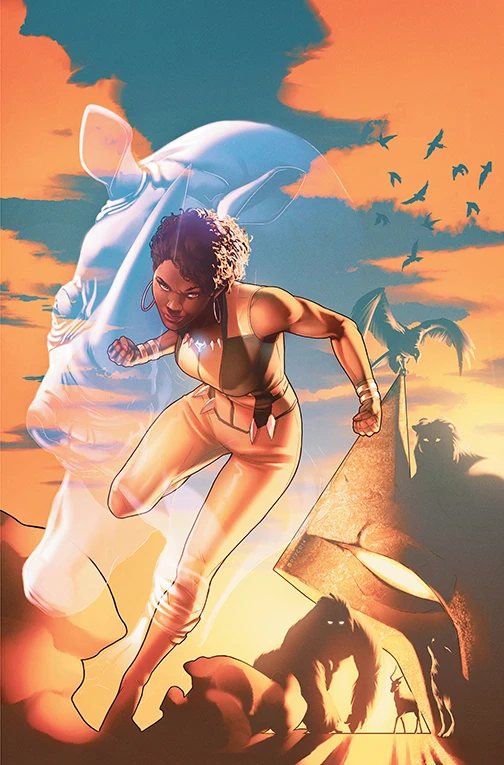
Vixen finally gets the ongoing series DC cancelled in 1978
Mari McCabe will headline her own ongoing series for the first time. Two-time Eisner nominee Stephanie Williams — the first Black woman nominated for Best Writer at the Eisner Awards — writes, with art by Khary Randolph (Excellence, Spawn).
Williams said at the panel that she had been carrying the idea for two years, and that her pitch document ran to roughly 20 pages. Her stated angle is that the book is not about slotting Mari in as another Justice League member; it is about Vixen reclaiming her own narrative.
Here is the context that makes this more than a routine launch. Vixen was supposed to headline her own book in 1978, which would have made her the first Black woman to lead a DC title. The DC Implosion — the mass cancellation that gutted the line that year — killed it before issue #1 ever shipped. The completed story was printed only in Cancelled Comic Cavalcade #2 (Fall 1978), an in-house edition of roughly 35 copies produced purely to secure copyright and distributed to DC employees.
Her actual public debut did not arrive until Action Comics #521 in July 1981, by which point her name had shifted from “Marilyn MacCabe” to the Mari Jiwe McCabe that stuck. So the 2026 series is not just her first ongoing. It is the delivery of a book DC promised, printed, and then shelved 48 years ago.
Static returns to a DC ongoing
Cody Ziglar writes and Diego Olortegui draws the new Static series. Ziglar framed the pitch at the panel as Virgil Hawkins “dusting off the cobwebs and reintroducing himself to the superhero world” — a soft-reset positioning rather than a continuity-heavy relaunch.
James Harren takes Etrigan somewhere darker
The wave’s headline creator play is The Demon. James Harren both writes and illustrates a new ongoing starring Etrigan, promising a horror-driven take on one of DC’s oldest supernatural characters. It is the only book in this group with a confirmed date: October 7, 2026.
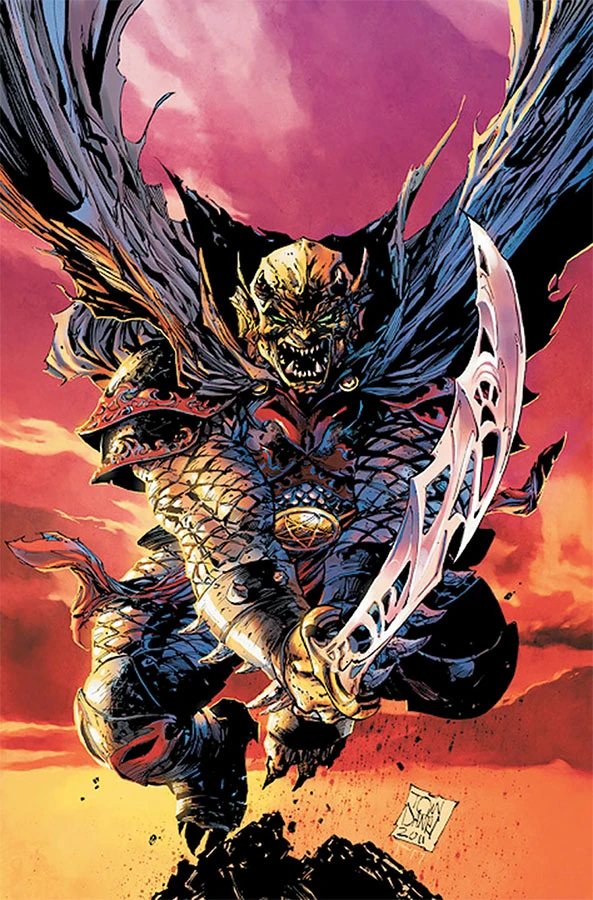
DC’s Next Level wave at a glance
| Series | Writer | Artist | On sale |
|---|---|---|---|
| Vixen | Stephanie Williams | Khary Randolph | Not yet announced |
| Static | Cody Ziglar | Diego Olortegui | Not yet announced |
| The Demon | James Harren | James Harren | October 7, 2026 |
Our take: these are two different strategies wearing the same banner
It is tempting to read Vixen and Static as a single initiative, but the publishing logic behind them is distinct from the logic behind The Demon — and the difference tells you what DC is actually testing.
Vixen and Static are recognition-conversion plays. Both characters have far more audience awareness than sales history. An enormous number of people know Static from the Static Shock animated series and know Vixen from animation and live-action television, yet neither has ever sustained a mainline DCU ongoing. That gap — high name recognition, near-zero single-issue track record — is exactly the profile DC converted successfully with Harley Quinn, who went from animation creation to top-tier seller. The bet is that recognition built on screen can be cashed in at the comic shop, provided the book gives new readers a clean entry point. Ziglar’s “reintroducing himself” framing is not incidental; it is the whole strategy stated out loud.
The Demon is a creator-as-brand play. Etrigan has no comparable screen footprint. What Harren has is a devoted following built on his own art. When one person writes and draws a book, the pitch to the reader is the artist’s voice, not the character’s history — and DC gave that book the firm October date while the two recognition plays are still undated. Read that scheduling gap as a confidence signal: the creator-driven title is locked, the audience-conversion titles are still being positioned.
The risk on the Vixen and Static side is the one that has sunk this approach before. Screen recognition reliably sells collected editions; it converts to monthly single-issue orders far less dependably. If these books are being measured on month-three floppy numbers rather than eventual trade performance, that is the wrong yardstick for what DC is actually building.
For more on where these characters sit in the wider DC hierarchy, see our rankings of the most powerful DC villains and the greatest comic book villains of all time.
Frequently asked questions
Who is writing the new DC Vixen series?
Stephanie Williams writes, with art by Khary Randolph. Williams is a two-time Eisner nominee and the first Black woman nominated for Best Writer at the Eisner Awards.
Is this Vixen’s first solo series?
It is her first ongoing series. A solo title was produced in 1978 but cancelled during the DC Implosion before release; the finished story appeared only in Cancelled Comic Cavalcade #2, an in-house printing of about 35 copies.
When does DC’s The Demon #1 come out?
October 7, 2026. James Harren both writes and illustrates the series.
Who is making the new Static comic?
Cody Ziglar writes and Diego Olortegui draws it. A launch date has not been announced.
Sources
- The Beat — DC unveils first-ever Vixen ongoing and Static’s return
- CBR — Stephanie Williams confirms Vixen series
- Wikipedia — The DC Implosion