Poison Ivy’s powers include chlorokinesis — control over all plant life — plus complete immunity to toxins and disease, the ability to secrete pheromones that chemically influence others, and a direct connection to The Green, the elemental force linking all plant life on Earth. Her physiology is plant-human hybrid, allowing regeneration from severe injury.
But listing her abilities misses what actually makes her dangerous. Poison Ivy is the most environment-dependent major character in DC Comics, and that single trait explains everything about how she is written.
Who is Poison Ivy?
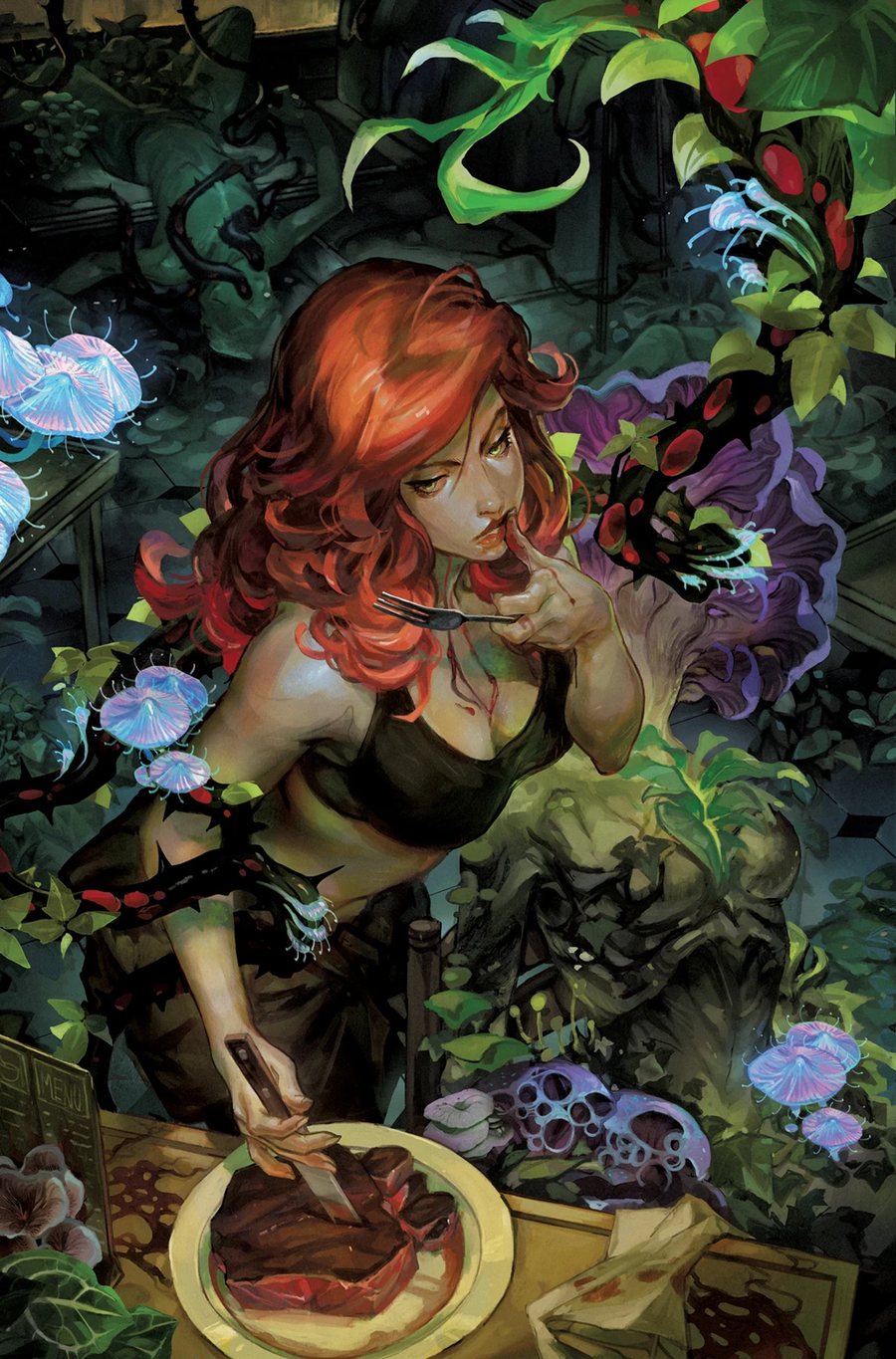
Dr. Pamela Lillian Isley was a gifted botanist and biochemist before becoming Poison Ivy. In most tellings, her transformation came from exposure to toxins during experiments conducted by Dr. Jason Woodrue — the Floronic Man — which should have killed her and instead rewrote her biology.
Her scientific background is not incidental colour. Ivy is one of the few DC villains whose intellect is genuinely part of her power set: she does not merely command plants, she engineers them. That is the difference between a character who grows vines and a character who designs an organism.
Poison Ivy’s powers, explained
| Power | What it does | Practical limit |
|---|---|---|
| Chlorokinesis | Controls, accelerates, animates plant life | Requires plant matter or seeds present |
| Connection to The Green | Taps the elemental network of all plant life | Can be severed or blocked |
| Toxin immunity | Immune to all poisons, viruses, bacteria | Effectively absolute |
| Pheromone control | Chemically influences behaviour and judgment | Needs proximity and airflow; resistible |
| Toxic physiology | Her blood and touch can be lethal | Usually requires contact |
| Plant-hybrid regeneration | Regrows from plant matter after fatal injury | Needs a viable biomass source |
| Botanical genius | Engineers novel plant organisms and toxins | Requires time and materials |
Chlorokinesis and The Green
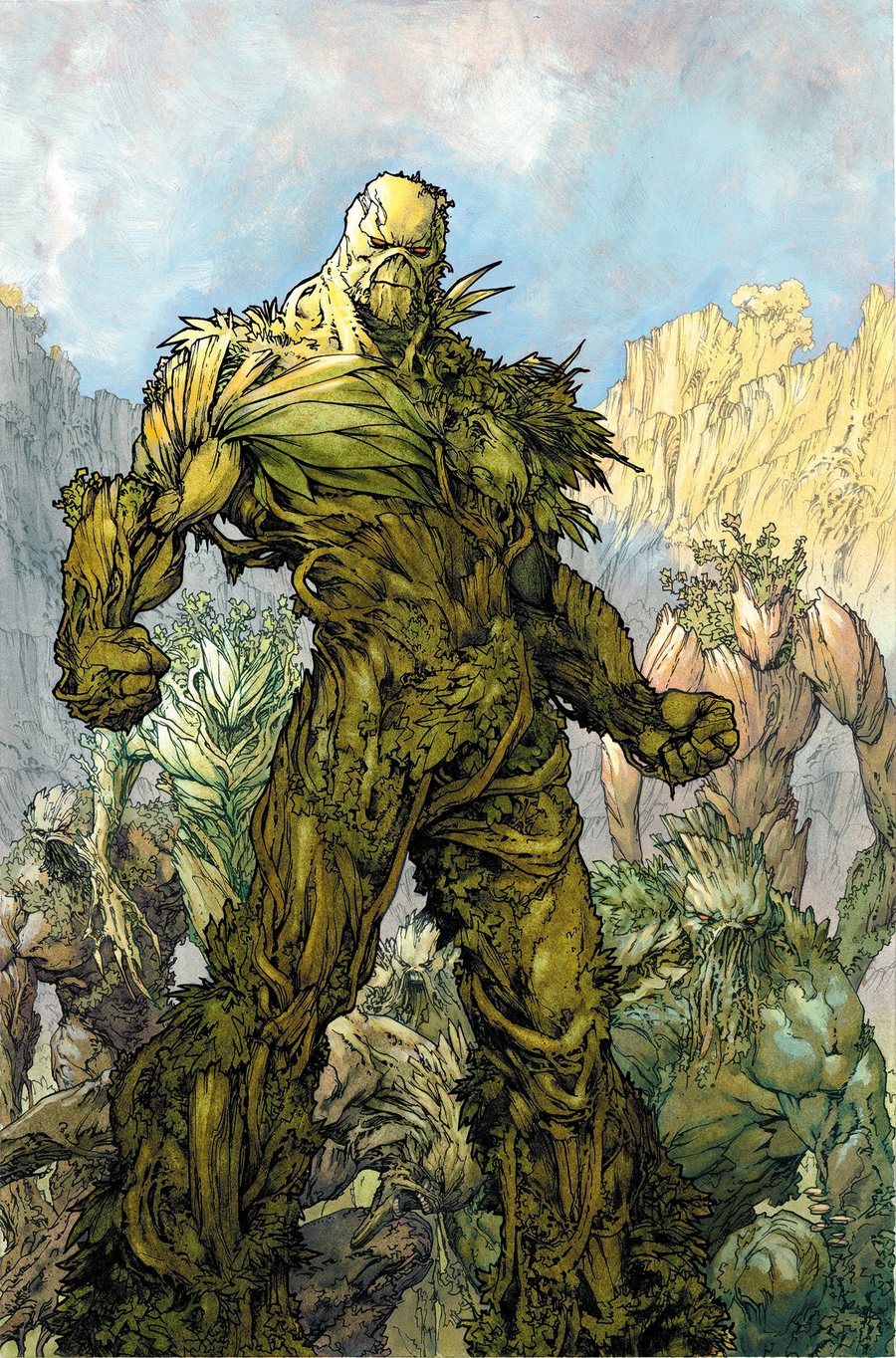
Ivy’s core ability is control over plant life — accelerating growth, animating vegetation into weapons, and directing flora with precision. At its low end this is vines and thorns. At its high end, it is reshaping terrain.
The escalator is her connection to The Green: the elemental force that links every plant on the planet, most associated with Swamp Thing. Access to The Green is what separates a skilled botanical villain from a genuine elemental threat, and it is why Ivy has been credibly written at Justice League scale in some stories and as a Batman rogue in others.
Immunity and toxic physiology
Ivy’s transformation left her immune to all toxins, poisons, viruses, and bacteria. It also made her body itself toxic — her blood is dangerous to handle, and in many versions her touch or kiss delivers a lethal dose without any preparation.
This is her most consistently written power and the least dependent on setting. It works in a sealed room, in a desert, anywhere.
Pheromone control — the power that got rewritten
Ivy secretes pheromones capable of influencing the behaviour and judgment of those around her. For decades this was framed as seduction, played as a flirtatious gimmick and aimed almost exclusively at men.
Modern writers have reframed it entirely, and it is the single biggest reason Ivy works better now than she did in the 1990s. Treated seriously, this is chemical coercion — a power that removes consent through biochemistry. Written as horror rather than as a wink, it makes Ivy legitimately frightening in a way the flirtation framing never allowed.
That shift also fixed a characterization problem. A villain defined by seduction is limited by who finds her seductive. A villain defined by airborne chemical control is limited by nothing.
The trait that defines her: Ivy is a terrain character
Here is the analysis that ties her whole power set together, and it is something surprisingly few breakdowns state directly.
Almost every major DC character carries their power level with them. Superman is exactly as strong in a desert as in a rainforest. Batman’s preparation works anywhere. The Flash’s speed does not care about the biome.
Poison Ivy is the conspicuous exception. Her power output is a direct function of available biomass:
- Sealed concrete room, no plants: she is a highly intelligent human with toxic blood and pheromones. Dangerous, but beatable by a competent street-level hero.
- Gotham city street: parks, planters, root systems under the pavement. She becomes a serious threat requiring the full Bat-Family.
- Forest or jungle: she is functionally unbeatable by conventional means.
- Fully connected to The Green: planetary-scale elemental threat.
That variance is not inconsistent writing — it is the character working as designed. It is also why Ivy has remained useful to DC for sixty years while other rogues have calcified. Writers can dial her to any threat tier without contradicting a single prior appearance. They just change the room.
Which is why importing her own terrain is the real escalation
Once you see Ivy as a terrain-dependent character, her most dangerous possible move becomes obvious: stop looking for favourable ground and manufacture it instead.
That is precisely the premise of DC’s Batman: Bad Seeds event, in which Ivy unleashes prehistoric, partly carnivorous plant life that consumes Gotham’s buildings and reverts entire neighbourhoods to a primordial state. Read as spectacle, it is a monster-plant story. Read mechanically, it is Ivy solving her one structural weakness — converting the concrete environment that caps her power into the jungle that removes the cap.
It is the smartest possible use of the character, because it is an escalation that comes from her limitations rather than from handing her a new power. Comics Beat’s breakdown of the event details the scale of the transformation.
Poison Ivy’s weaknesses
For all of the above, she is not unbeatable. Her consistent vulnerabilities:
- Fire. The straightforward counter to a plant-based power set, and the reason fire-based responses recur in her stories.
- Herbicides and defoliants. Chemical attacks that target plant matter affect both her constructs and, in some versions, her directly.
- Environmental deprivation. Remove the plants and you remove most of her arsenal — the single most reliable tactic against her.
- Severance from The Green. Her elemental connection can be cut, which has been used to depower her in multiple storylines.
- Her own conviction. Ivy will consistently protect plant life over her own tactical advantage, which is exploitable and has been exploited.
That last one is worth noting, because it is a weakness of character rather than biology — and it is what keeps her closer to anti-hero than pure villain in modern runs.
Frequently asked questions
What are Poison Ivy’s main powers?
Her primary abilities are chlorokinesis (control over plant life), immunity to all toxins and disease, pheromone secretion that chemically influences behaviour, toxic blood and touch, plant-hybrid regeneration, and a connection to The Green, the elemental force linking all plant life.
How strong is Poison Ivy compared to other DC villains?
Her power level varies more than almost any other DC character because it depends on available plant life. In a sealed environment with no vegetation she is a street-level threat; fully connected to The Green in a dense biosphere she operates at elemental, planetary scale.
Can Poison Ivy control people’s minds?
Not telepathically. She secretes pheromones that chemically influence judgment and behaviour, which functions as a form of coercion rather than true mind control. It requires proximity and can be resisted or blocked by filtering the air.
What is Poison Ivy’s biggest weakness?
Environmental deprivation. Removing access to plant matter strips away most of her offensive capability. Fire and herbicides are the other reliable counters, and her connection to The Green can be severed to depower her.
The bottom line
Poison Ivy is not a fixed power level, and treating her as one is the mistake behind every “is Ivy actually strong?” argument. She is a character whose ceiling is set by her surroundings — which makes the room she is standing in the most important variable in any fight she is in.
For more on where she ranks among Gotham’s rogues, see our list of the greatest Batman villains of all time and our broader ranking of the most powerful DC villains. Official character background is available at DC’s Poison Ivy hub, and her six-decade publication history tracks how each of these powers was added over time.