The Ribbon Hero is streaming worldwide on Netflix from August 8, 2026. The 111-minute anime film, directed by Yuki Igarashi at studio OUTLINE, reimagines Osamu Tezuka’s 1953 manga Princess Knight as a magical-girl story about a refugee princess defending the kingdom that took her in.
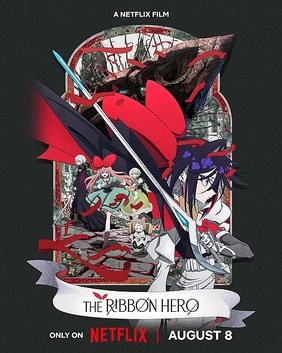
The Ribbon Hero release date, runtime, and where to watch
The Ribbon Hero premiered worldwide on Netflix on August 8, 2026. It is a Netflix original with no theatrical run, though it did screen ahead of release at the Annecy International Animation Film Festival on June 24, 2026. The film runs 111 minutes.
Netflix and Twin Engine produced the feature, with animation by OUTLINE, director Yuki Igarashi’s own studio. Here is the core creative team:
| Role | Credit |
|---|---|
| Director | Yuki Igarashi (feature debut) |
| Animation studio | OUTLINE |
| Production | Netflix, Twin Engine |
| Character design | Kei Mochizuki |
| Music | Satoru Kosaki, Ryuichi Takada |
| Runtime | 111 minutes |
The Japanese voice cast is led by Saaya Kadokura as Sapphire, with Seiran Kobayashi as Pine, Koki Uchiyama as Velvet, Mayumi Shintani as Zirco, Yoshimasa Hosoya as Rock, and Haruhiko Jō as the Pope.
What The Ribbon Hero is about
Sapphire is the princess of Silverland, a kingdom that no longer exists. After a calamity called Nergal reduces her homeland to ash, she wanders in despair until the people of Goldland take her in. When Nergal returns to threaten her adopted home, Sapphire ties her ribbon, transforms, and takes up her sword.
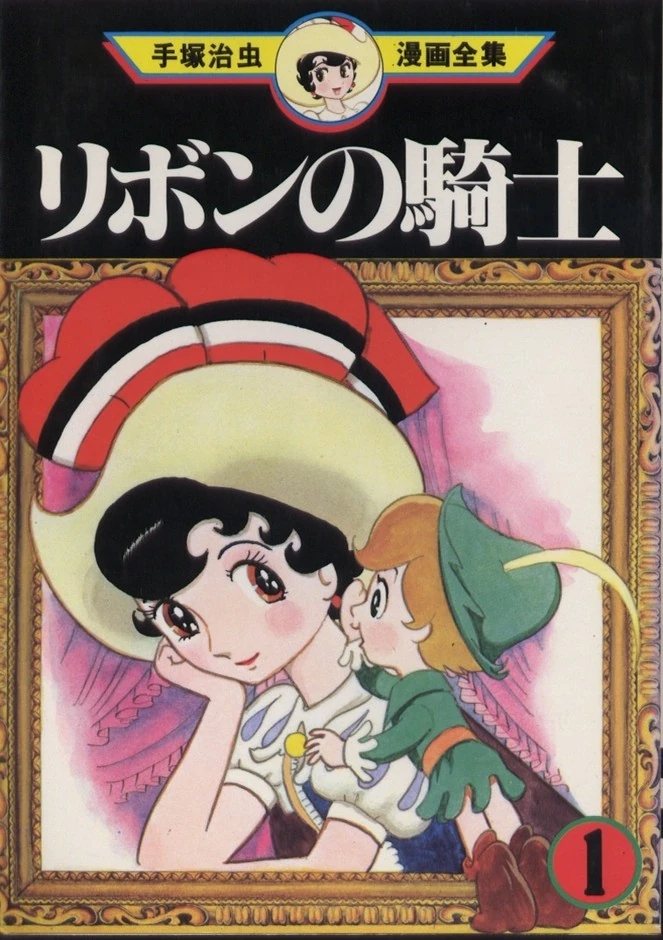
That is a substantial departure from the source. In Tezuka’s Princess Knight, serialized in Kodansha’s Shōjo Club from January 1953, Sapphire is born with “the blue heart of a boy and the pink heart of a girl” and must pose as a prince because a woman cannot inherit Silverland’s throne. The engine of the original is a gender-disguise court intrigue; the engine of the film is displacement and belonging.
The director connection nobody is mentioning
Igarashi is best known to Western audiences for a single short: Lop & Ochō, his episode of Star Wars: Visions. Watch the two back to back and the film stops looking like a Tezuka adaptation and starts looking like the same director telling his story a second time, at feature length.
Lop & Ochō is about an alien outsider taken in by a family on an occupied world, who picks up a blade to defend the home that adopted her when an imperial force arrives to take it. The Ribbon Hero is about a refugee taken in by a foreign kingdom, who picks up a sword to defend the home that adopted her when the force that destroyed her first home arrives to take it too.
That is not a loose thematic rhyme — it is the same premise with the science fiction swapped for fairy tale. It matters for how you should read the adaptation choices. The obvious question about this film is why it drops Tezuka’s two-hearts premise, and the obvious answer is that a 1953 gender-disguise plot is awkward to stage in 2026. But the throughline suggests something simpler: Igarashi did not set out to adapt Princess Knight faithfully. He set out to tell his own recurring story about earned belonging, and Tezuka’s Silverland gave him a kingdom to burn down in the first act. If you want the context, our complete Star Wars: Visions watch order covers where Lop & Ochō sits in the anthology, and our guide to The Ninth Jedi’s full run tracks how Visions directors have graduated to bigger projects.
Why adapting Princess Knight at all is a bigger deal than it sounds
Princess Knight is not simply an old Tezuka title. It is widely credited as the first modern shōjo manga — the work that moved the demographic away from gag strips and etiquette lessons toward sustained narrative — and it established the visual grammar that followed: large-eyed heroines, idealized European settings, androgynous leads.
It is also the prototype for the magical-girl genre. So there is a genuine irony in what the film does: by rebuilding Sapphire as a ribbon-triggered transforming heroine, The Ribbon Hero hands the magical-girl template back to the work that invented it. The transformation sequence Tezuka’s manga made possible is now the mechanic used to retell Tezuka’s manga.
Is The Ribbon Hero any good?
Early reviews are positive with a consistent reservation. Gizmodo called it “a refreshing welcome curveball”, praising its warm, hopeful tone and its handling of survivor’s guilt — the idea that you do not have to fight alone to absolve yourself. The first half draws particular praise for fluid action and strong character work.
The recurring criticism is the final act, which reviewers describe as going off the rails, with contrived late-stage concepts and a 2D/CGI composite that starts to clash after holding together earlier. Treat it as a strong film with a shaky landing rather than a flawless one.
Frequently asked questions
When was The Ribbon Hero released on Netflix?
August 8, 2026, worldwide. It is a Netflix original and streams exclusively on the platform, with no theatrical release. It previously screened at the Annecy International Animation Film Festival on June 24, 2026.
Is The Ribbon Hero based on Princess Knight?
It is inspired by Osamu Tezuka’s Princess Knight rather than a direct adaptation. It keeps Sapphire and the kingdom of Silverland but replaces the original’s two-hearts gender-disguise premise with a story about a refugee defending her adopted home of Goldland.
Who directed The Ribbon Hero?
Yuki Igarashi, in his feature directorial debut. He was a key animator on the first season of Jujutsu Kaisen and directed the Lop & Ochō episode of Star Wars: Visions. The film was animated by his studio, OUTLINE.
How long is The Ribbon Hero?
111 minutes, roughly one hour and 51 minutes.
Sources: Anime News Network, Netflix, Gizmodo.