A Green Lantern power ring works by channeling the green light of willpower — one band of DC’s Emotional Spectrum — from a personal Power Battery that itself recharges from the Central Power Battery on the planet Oa, letting a bonded, AI-guided ring translate its wearer’s concentration into flight, force fields, and solid hard-light constructs.
What the Ring Actually Runs On
Every Green Lantern ring draws its power from the same source: the Central Power Battery on Oa, a reservoir of raw green energy that DC has established, over decades of retcons, as the literal physical form of willpower — one of several named emotions that together make up the Emotional Electromagnetic Spectrum (willpower is green, fear is yellow, rage is red, hope is blue, love is violet, greed is orange, compassion is indigo, and death/life sit at black and white). A ring is a conduit, not a battery in its own right; it stores a working charge, but that charge always traces back to Oa.

Each individual Lantern also keeps a personal, lantern-shaped Power Battery at home base. That’s what the ring physically touches to recharge, and it’s why the object the character is named for isn’t the ring at all — it’s the battery. CBR’s breakdown of the ring and battery has more on how the two objects relate.
The Oath Isn’t Just Flavor Text
“In brightest day, in blackest night, no evil shall escape my sight…” isn’t decoration. Reciting the oath while touching the ring to the battery is the in-universe mechanism that actually initiates the recharge — it focuses the bearer’s will and syncs it to the flow of energy coming down from Oa. Skip the ritual and, in most depictions, the ring still charges, but the oath is the traditional, expected way nearly every Green Lantern does it, from Alan Scott’s original 1940s version (a mystical, unrelated ring despite the shared name) through Hal Jordan, John Stewart, Guy Gardner, Kyle Rayner, and Jessica Cruz.
Hard-Light Constructs: Willpower Made Solid
The ring’s signature trick is the hard-light construct — solidified green energy shaped by the wearer’s imagination into anything from a battering ram to a functioning fighter jet. The ring supplies the raw energy; the bearer’s mind supplies the shape and the discipline to hold it together. That’s why constructs are treated as a skill that improves with training: a rookie can barely manage a crude fist, while a veteran like Hal Jordan or Kilowog can build complex, multi-part machinery that survives real damage before it dissolves. Concentration is the limiting factor as much as raw willpower — a distracted or panicking Lantern’s constructs visibly degrade.

The Ring Is Not Passive — It’s an AI
Beyond flight, force fields, translation, and a built-in scanner/database, the ring runs on a genuine onboard artificial intelligence. It’s this AI that scans a dying or endangered person’s mind across space for “the ability to overcome great fear” and autonomously selects them as a replacement Lantern — the ring, not the Guardians of the Universe, does the actual choosing in the vast majority of recorded recruitments. Once bonded, the ring can also speak, warn its wearer of danger unprompted, and in some stories has overridden or resisted its bearer’s own commands when it judged them compromised.
Classic Rules vs. What’s Actually Current
Green Lantern lore has been rewritten enough times — Emerald Twilight, Rebirth, Blackest Night, the New 52, Absolute Universe — that plenty of “well-known” rules about the ring are decades out of date. Here’s how the load-bearing ones have actually shifted:
| Ring Rule | Classic (Silver/Bronze Age) | Current Status |
|---|---|---|
| Weakness to yellow | Total: the ring simply could not affect anything yellow, full stop | Retconned away – see below; a Lantern who masters their own fear can act on yellow/fear-colored targets |
| Charge duration | Rigid 24-hour clock regardless of use; ring flashes as warning before going dark | Softened into an effective-use budget — heavy combat and big constructs drain it faster, light use lasts longer |
| Power source | Described vaguely as “the Guardians’ power” / a battery on Oa | Explicitly the green band of a wider Emotional Electromagnetic Spectrum spanning multiple Lantern Corps |
| Wielder selection | Guardians hand-pick candidates via the ring as a tool | Ring’s own onboard AI actively scans for and selects candidates, largely independent of the Guardians |
| Construct limits | Loosely defined, mostly whatever the story needed | Bound by training, concentration, and willpower as an in-universe skill that visibly scales with experience |
The Yellow Weakness: Retconned, But Most Readers Don’t Know It
This is the detail worth being precise about, because it’s genuinely misunderstood even among regular readers: the idea that a Green Lantern’s ring simply cannot affect anything colored yellow is not current mainstream DC canon and hasn’t been for two decades. It was a real rule for decades — Sinestro exploited it constantly, and villains routinely painted themselves or their weapons yellow to shrug off a Lantern’s constructs.
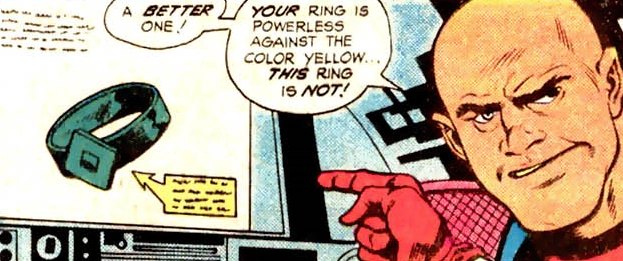
The retcon landed in two stages. First, Green Lantern: Rebirth (2004–2005) revealed the “yellow impurity” in the Central Power Battery wasn’t an inherent design flaw of the rings at all — it was Parallax, an ancient fear entity the Guardians had imprisoned inside the battery itself, quietly contaminating every ring drawing power from it. Then, during writer Geoff Johns’s 2007–2008 Sinestro Corps War arc, the rule was reframed for good: yellow represents fear on the Emotional Spectrum, and a Lantern who has genuinely mastered their own fear can act on it anyway. Hal Jordan’s arc through that war is built around exactly that idea — willpower overcoming fear directly, not being blocked by it. Since then, mainline DC continuity has treated the “powerless against yellow” rule as a relic, not a constant. (Notably, DC’s 2025 Absolute Universe line deliberately revived a version of it in Absolute Green Lantern — but reworked as a weakness to gold specifically, tied to a different in-story explanation, which only underscores how consciously optional the old rule has become for writers rather than a baseline law of the ring.) ScreenRant traces the full arc of that reversal if you want the beat-by-beat version.
Where the Ring’s Recruits Serve: the Green Lantern Corps
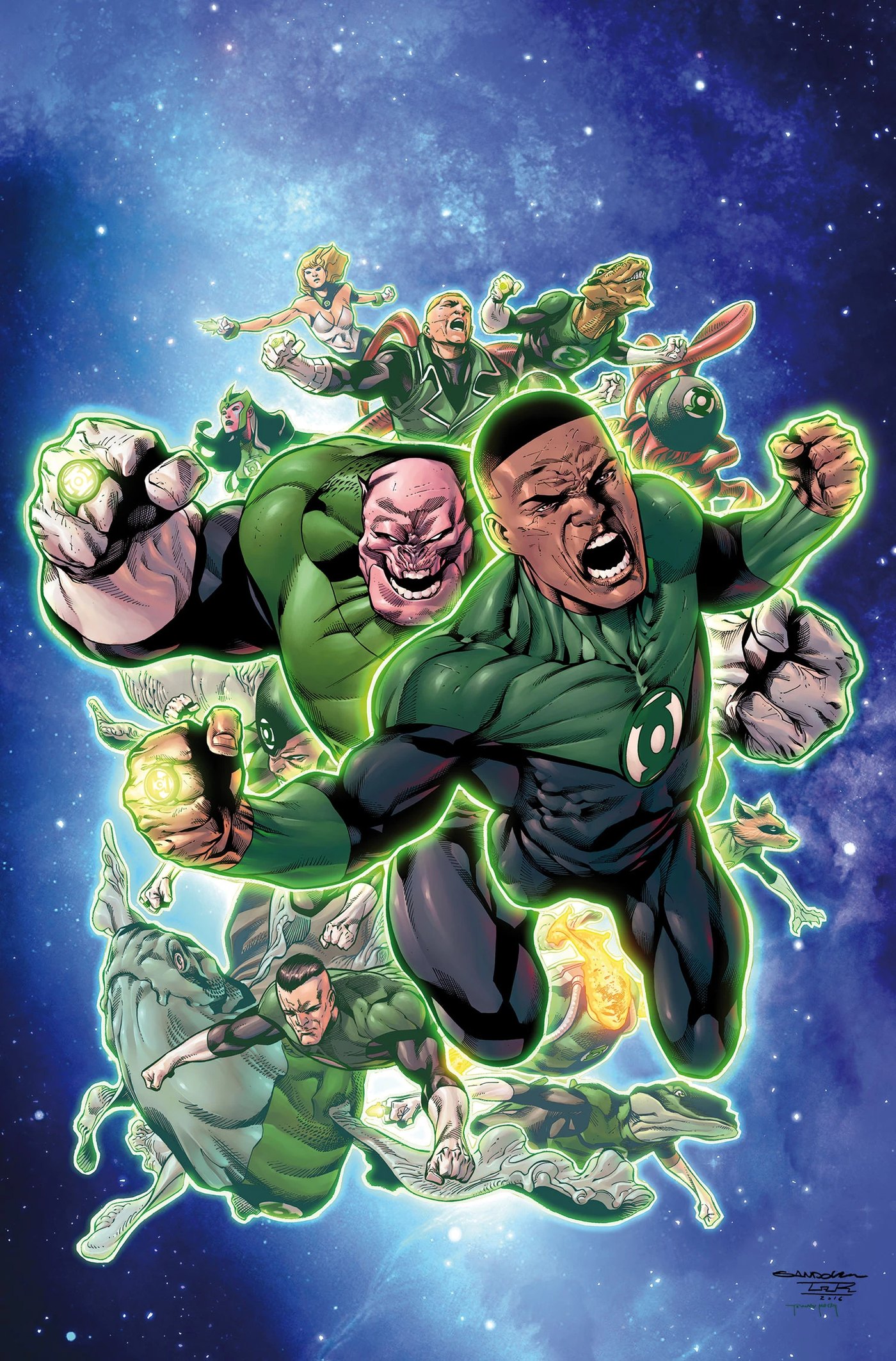
A bonded ring doesn’t just grant powers — it enlists. Accepting one makes a bearer a sworn member of the Green Lantern Corps, DC’s intergalactic peacekeeping force answering to the Guardians of the Universe on Oa. Earth alone has hosted an unusually large number of Lanterns for a single sector — Hal Jordan, John Stewart, Guy Gardner, Kyle Rayner, Jessica Cruz, and Simon Baz among them — which is itself treated as a plot point in the comics, since most sectors get one Lantern at a time, not six.
How HBO’s Lanterns Handles the Mechanics
HBO’s Lanterns, which premiered August 16, 2026 with Kyle Chandler as Hal Jordan and Aaron Pierre as John Stewart, leans into the ring as something closer to disciplined technology than pure space magic. The show restages the 24-hour charge ritual fairly faithfully — an early episode shows Hal touching his ring to a hidden personal battery and reciting the oath to top it back up — and its take on hard-light constructs has been described by critics as treating the ring’s inner workings almost like a brain-computer interface: intent read, then rendered as solid light. The series also invents new lore not found in the comics, including rings that keep a running backup of their bearer’s consciousness, discovered when John Stewart uses Hal’s ring and it produces a saved copy of Hal from years earlier. That’s a show-only addition, not something to treat as established comic canon. Critics have generally responded well to the approach — the series holds an 89% score on Rotten Tomatoes early in its run, with reviewers comparing its tone to prestige dramas like True Detective more than typical superhero television, per NPR’s review of the series.
If you’re trying to figure out how to actually watch it, our guide to streaming Lanterns, its price, and available free trials covers that separately.
Classic Weaknesses That Are Still Real
Not every limitation got written out. The ring still generally can’t create anything living, can’t directly harm a target through pure force of will alone without a construct or effect doing the work, and constructs remain dependent on the bearer’s concentration — break focus hard enough (through pain, distraction, or overwhelming fear) and a construct can waver or collapse. Wood has also recurred as an old-fashioned soft weak point in some eras, tied to Oa’s mythology rather than the Emotional Spectrum, though it’s inconsistently enforced across different writers and far less foundational than the yellow rule ever was.
Why the Ring Keeps Getting Rewritten
The pattern across sixty-plus years of Green Lantern comics is that the ring’s rules are usually retconned specifically to make Hal Jordan’s (or the Corps’s) next big fight harder rather than to build a more internally consistent magic system. The yellow weakness existed originally as a plot convenience for Silver Age writers; Rebirth needed a way to justify Hal’s 1990s villain turn without permanently ruining the character, so the same weakness became the explanation for both problems at once. Reading the ring’s power set as a moving target shaped by whatever story DC is telling — rather than a fixed rulebook — explains almost every apparent contradiction better than trying to reconcile all seven decades of appearances into one consistent system ever could. For a broader look at how writers handle this kind of power-system engineering across different franchises, see our breakdown of how comic book powers actually work.
Ring-fueled willpower also routinely lands Green Lanterns near the top of DC’s power tier lists once cosmic-scale constructs and Corps backup are factored in; see our ranking of the most powerful comic book characters of all time for where Hal Jordan and company land against Marvel and DC’s biggest names.
Frequently Asked Questions
Is the Green Lantern ring powerless against yellow in current comics?
No. That was a real rule for decades, but it was retconned starting with Green Lantern: Rebirth (2004–2005), which revealed the yellow impurity in the Central Power Battery was the fear entity Parallax, not a design flaw. By the 2007–2008 Sinestro Corps War, the rule had shifted to: a Lantern who genuinely overcomes their own fear can act on yellow. It’s not a hard block anymore in mainline continuity.
What actually powers a Green Lantern ring?
Willpower — specifically the green band of DC’s Emotional Electromagnetic Spectrum, stored in the Central Power Battery on the planet Oa. A ring draws its working charge from a bearer’s personal Power Battery, which in turn recharges from the Central Battery.
Do Green Lantern rings choose their own wearers?
Largely, yes. The ring carries its own onboard AI, which scans for candidates capable of overcoming great fear and can select a replacement bearer on its own when a Lantern dies or is otherwise unable to serve, generally without the Guardians of the Universe personally choosing that specific person.
Does HBO’s Lanterns follow the comic-accurate ring rules?
Mostly, yes for the basics — the 24-hour charge cycle and the oath both appear on-screen. But the show also introduces original lore, like rings storing a periodic backup of their bearer’s consciousness, that doesn’t exist in the source comics and shouldn’t be treated as established canon.