What Is a Quirk in My Hero Academia? Everything Explained
If you have watched even one episode of the anime, you have probably asked the same question every new fan asks: what is a quirk, and why does almost everyone in this world have one? Below is the complete, canon-accurate breakdown of the power system that runs Kohei Horikoshi’s entire universe, from the three official categories to the strange science of Quirk factors, the mystery of One For All, and the quiet social message buried underneath it all.
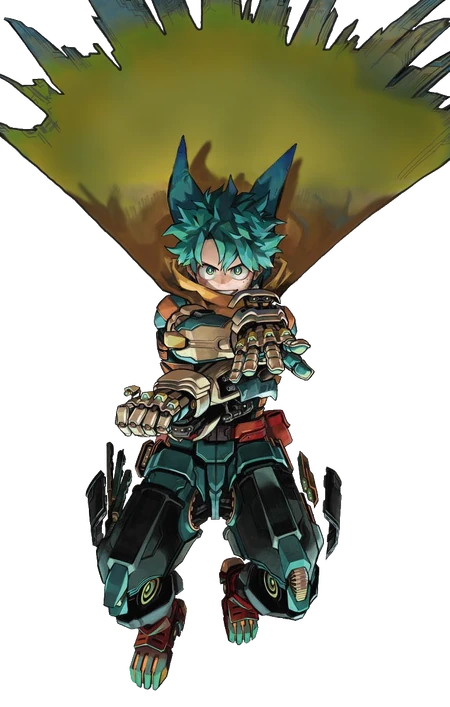
Quick answer: A Quirk is a superhuman ability that roughly 80% of people in My Hero Academia are born with. Each person typically has one unique Quirk, inherited genetically and manifesting around age four. Quirks fall into three official types — Emitter, Transformation, and Mutant — and define a person’s career, status, and identity.
What Is a Quirk, Exactly?
In the world of My Hero Academia, a Quirk (Japanese: Kosei, meaning “individuality”) is an innate, superhuman power unique to the person who holds it. It first appeared roughly a century before the events of the story, when a glowing baby was born in Qing Qing City, China. From that single point, the trait spread through the human population until it became the norm rather than the exception. Today, about 80% of humanity is born with some kind of ability, and a society once built around ordinary humans has completely reorganized itself around superpowers.
A Quirk is not a gadget or a learned skill — it is biological. It is written into a person’s genetics and tied to their body from birth. Most people have exactly one Quirk, and it usually reveals itself by the age of four. In-universe, doctors can even predict whether a child will develop a Quirk by checking their feet: children destined to have powers are born without the extra joint in the pinky toe that Quirkless humans still possess. That single evolutionary detail is one of Horikoshi’s cleverest touches, because it frames Quirks as the next stage of human evolution rather than magic.
Because a Quirk is unique to each person, no two are ever perfectly identical. Two people might both control fire, but the range, temperature, drawbacks, and control will differ. This individuality is the whole point — it is right there in the original name.
How Do Quirks Work? Quirk Factors and Singularity
Under the hood, every Quirk is powered by something called a Quirk factor — a genetic and physiological blueprint stored in the body. Emitter and Transformation users often carry this factor in a specific organ or tissue; for example, One For All’s stockpiled power is tied to a distinct factor that can literally be passed from one body to another. This is why Quirks can be inherited, transferred (in rare cases), and, in the story’s darker corners, stolen or artificially engineered.
Using a Quirk almost always comes with a cost. Explosion user Katsuki Bakugo sweats nitroglycerin, but overusing it risks fracturing his arms. Ochaco Uraraka’s Zero Gravity makes her nauseous past a certain limit. This “everything has a drawback” design is what keeps the power system grounded and dramatically fair — power is never free.
There is also a long-term theory that shapes the back half of the series: Quirk Singularity. Proposed by the villainous Dr. Kyudai Garaki, the theory argues that as Quirks are passed down and combined across generations through Quirk marriages, they grow stronger and more complex — until, eventually, a body may no longer be able to contain or control its own power. Garaki’s peers dismissed the idea, but the escalating, body-warping chaos of the final battles suggests he was not entirely wrong.
The Three Types of Quirks (Plus One Grey Zone)
Officially, the Hero Public Safety Commission sorts Quirks into three categories based on how they function, not how strong they are. A fourth informal “other” grouping exists for powers that refuse to sit still in one box. Here is how they compare.
| Type | How It Works | Key Strength | Key Weakness | Examples |
|---|---|---|---|---|
| Emitter | Generates, projects, or manipulates something on command (can be switched on/off) | Range and versatility; users resist their own effect | Physical strain; can be nullified by Erasure-type Quirks | Explosion, Half-Cold Half-Hot, Zero Gravity, Erasure |
| Transformation | Temporarily alters the user’s own body | Strong in close combat; hard-hitting | Time/resource limits; wears off with overuse | Hardening, Steel, Gigantification, Foldabody |
| Mutant (Heteromorphic) | Permanently changes the body’s form; always active | Immune to Erasure and suppressant drugs | Cannot be turned off; social discrimination | Frog, Dark Shadow, Dupli-Arms, Gecko |
Emitter Quirks
The most common category. Emitters (sometimes called Operative Quirks) let a user create or control something external — ice, acid, electricity, gravity — and turn it on or off at will. Because they can be activated and deactivated, they are also the most vulnerable to Shota Aizawa’s Erasure, which shuts other Quirks down mid-fight. Emitters usually build up a natural resistance to their own power, which is why Mina Ashido is not dissolved by her own acid.
Transformation Quirks
Transformation types temporarily reshape the user’s own body. Eijiro Kirishima’s Hardening turns his skin to rock; Tetsutetsu becomes living steel; Mount Lady grows to skyscraper height. These powers hit hard but run on a timer or a resource — Tetsutetsu literally eats iron to fuel his — and become useless once overdrawn.
Mutant (Heteromorphic) Quirks
Mutant-type, or Heteromorphic, Quirks are permanent physical alterations. Tsuyu Asui’s frog body, Tokoyami’s raven head, and Spinner’s gecko form are all always on. That permanence is a double-edged sword: these Quirks cannot be erased or drugged into submission, but their users also cannot hide, which is where much of the series’ commentary on prejudice lives.
One For All and All For One: The Special Cases
Two Quirks break every rule above, and they are the engine of the whole plot.
All For One is the villain’s signature power: it can steal Quirks from other people and give them away, letting its user hoard dozens of abilities at once. It is unique, monstrous, and the reason a single man could rule Japan’s criminal underworld for generations.
One For All is its mirror. Born when an early All For One tried to force a Quirk onto his Quirkless younger brother, it became a power that stockpiles raw strength and passes from holder to holder, growing more powerful with each generation. By the time it reaches Izuku Midoriya — a Quirkless boy who was never supposed to have anything — it carries the accumulated might and even the lingering spirits of every past user. One For All is technically an accumulation-type ability, but its inheritance mechanic makes it the rarest Quirk in the world: it is the one power you can only receive as a gift.
Quirk Awakening: Powering Up Under Pressure
Quirks are not fixed at birth. Through a phenomenon called Awakening, a user under extreme emotional or physical stress can unlock a dormant aspect of their power. Ochaco, Tokoyami, and most dramatically Tomura Shigaraki all experience awakenings that expand what their Quirks can do. Awakening is Horikoshi’s way of letting characters level up organically — growth comes from crisis, not just training montages.
Common Misconceptions About Quirks
- “Quirks are just anime superpowers.” Not quite. Unlike many hero settings, Quirks are strictly biological, singular per person, and almost always carry a physical cost. The rules are consistent, which is why fans can theorycraft matchups so seriously.
- “Everyone has a Quirk.” Around 20% of people are Quirkless. That minority — including Izuku at the start — faces real social disadvantage, which drives the story’s underdog heart.
- “There are four official types.” Only three are canon categories (Emitter, Transformation, Mutant). The “Other” grouping is a fan-and-fandom convenience for oddballs like Nezu’s High Specs.
- “You can learn a Quirk.” You cannot study your way into one. You are born with it, or you are not — which is exactly the point of the next section.
The Real Meaning of Quirks: A Story About Inherited Privilege
Here is the angle most explainers skip. Strip away the explosions and My Hero Academia‘s Quirk system is a sharp commentary on inherited privilege — and once you see it, you cannot unsee it.
Think about how a Quirk actually arrives: it is a genetic lottery you win or lose at birth, with no say and no effort. A child born with a flashy, combat-ready Quirk is fast-tracked toward the prestige and money of pro heroics, while a Quirkless kid like young Izuku is quietly told to give up on the only dream he has ever had. Endeavor takes this to its logical extreme with the concept of the Quirk marriage, essentially breeding his children for power the way a dynasty arranges marriages for a bloodline — and it produces exactly the kind of generational trauma real inherited privilege does.
The series keeps returning to this quiet core theme. Heteromorphic users face housing discrimination and slurs for a body they did not choose. Villains like Shigaraki and Toga are, in large part, people the Quirk lottery failed and society discarded. And the entire emotional weight of the story rests on Izuku — the boy with nothing — being handed the world’s greatest power, then spending the series proving that character, not genetics, is what makes a hero. In a world that sorts everyone by the accident of their birth, One For All is the one power that gets chosen rather than inherited. That is not a coincidence; it is the point. For more on how power fantasies encode real values, compare the pantheon in our roundup of the most powerful comic book characters ranked.
Frequently Asked Questions
What is a Quirk in My Hero Academia?
A Quirk is an innate superhuman ability that about 80% of the population is born with. Each person usually has one unique Quirk, inherited genetically and manifesting by around age four. Quirks are grouped into three official types: Emitter, Transformation, and Mutant.
What are the three types of Quirks?
Emitter Quirks generate or control something externally and can be switched on and off (like Explosion). Transformation Quirks temporarily change the user’s own body (like Hardening). Mutant, or Heteromorphic, Quirks permanently alter the body and are always active (like Frog).
Can a person have more than one Quirk?
Normally no — one Quirk per person is the rule. The major exceptions are All For One, which steals and hoards Quirks, and One For All, which stockpiles power across generations. In the story’s finale, a few characters temporarily gain access to multiple Quirks through these special abilities.
Is Deku Quirkless?
Izuku “Deku” Midoriya was born Quirkless, part of the roughly 20% who never develop a power. He receives One For All directly from All Might, making him the ninth holder of a Quirk that can only be inherited, never simply born with.
What is the Quirk Singularity theory?
It is the idea, floated by Dr. Kyudai Garaki, that Quirks grow stronger and more complex each generation as they combine through inheritance, eventually reaching a point where a body can no longer control its own power. It remains one of the series’ most debated concepts.
Want more power-scaling deep-dives? Explore our rankings of the strongest anime characters and see where MHA’s heavy hitters land, or read up on the strongest Marvel villains for a Western take on inherited and stolen power. You can also verify the canon details above via the official My Hero Academia Wikipedia entry and the community-maintained My Hero Academia Wiki.