What is the Speed Force? The Speed Force is an extra-dimensional energy field in DC Comics that gives the Flash and every other speedster their powers. Writer Mark Waid introduced it in 1994. It is both a power source and a place: it protects speedsters from friction, and a speedster can run fast enough to enter it.
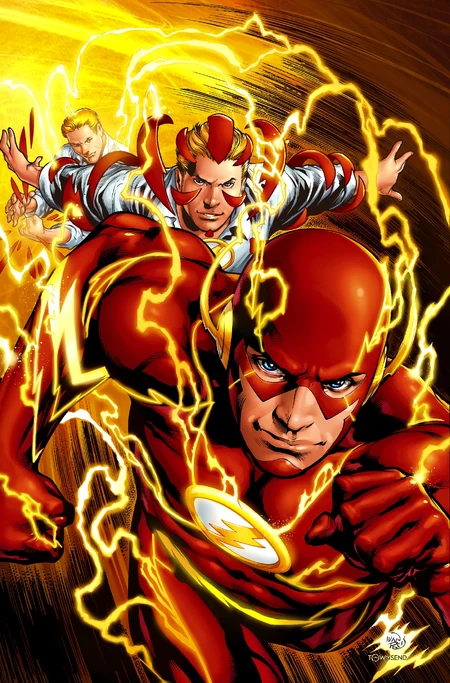
If you have ever wondered how Barry Allen runs faster than light without burning up, the short answer is the Speed Force. This page is the quick definition: what it is, who is connected to it, and how it differs from DC’s other Forces. For every power it grants and the full publishing history, see our in-depth guide to Speed Force powers and history.
What Is the Speed Force in DC Comics?
The Speed Force is a boundless source of kinetic energy that exists outside normal space and time. Mark Waid named it in The Flash (vol. 2) #91, cover-dated June 1994, with artist Mike Wieringo. It solved an old problem: a person running near light speed should be burned up by air friction and destroyed by the forces involved. Waid’s answer was that speedsters don’t generate their speed themselves. They draw on an outside energy field that handles the physics for them. DC’s own explainer describes the Speed Force as Waid’s fix for the impossibilities of super-speed.
Crucially, the Speed Force is also a place. A speedster who pushes past their limits can dissolve into it, and speedsters who seemed to die have later been pulled back out. Being both a power source and a destination is what lets writers use it for so many kinds of story.
How the Speed Force Works
Being connected to the Speed Force does three basic things. It surrounds a speedster with a protective aura, so friction, heat and impact don’t hurt them. It feeds them far more than raw speed: accelerated perception, phasing through solid objects, and travel through time and between dimensions. And it pulls speedsters in when they run too fast or die, with the Black Flash acting as its grim reaper.
Each of those abilities has its own rules and first appearances, covered in our full breakdown of every Speed Force ability.
Who Is Connected to the Speed Force?
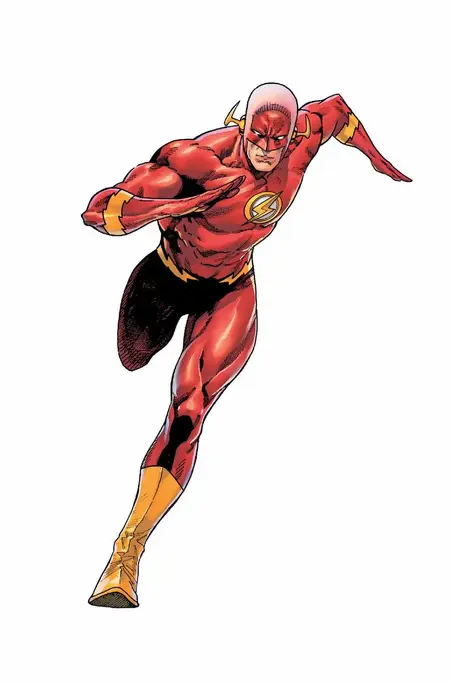
The Speed Force is what ties DC’s “Flash Family” together, and it’s why speedsters from different generations share the same abilities. A connection can come from an accident, like Barry’s lightning strike, from inheritance, or from deliberate cosmic manipulation.
| Speedster | Alias | Notable For |
|---|---|---|
| Jay Garrick | The Flash (Golden Age) | The first Flash, retroactively linked to the Speed Force |
| Barry Allen | The Flash | The Silver Age Flash; the most famous conduit |
| Wally West | The Flash / Kid Flash | First to consciously understand the Speed Force; master of speed-stealing |
| Bart Allen | Impulse / Kid Flash | Born in the future; perfect recall and raw speed |
| Max Mercury | Max Mercury (formerly Quicksilver) | Mentor who explained the Speed Force to Wally in 1994 |
| Jesse Quick | Jesse Quick | Legacy speedster and JSA member |
| Eobard Thawne | Reverse-Flash | Wields the opposing Negative Speed Force |
Barry Allen has a special place in it. Geoff Johns’ The Flash: Rebirth (2009–10) revealed that Barry was the Speed Force’s source, its “engine”. The New 52’s The Flash #13 later softened that, treating the Speed Force as something that had always existed. Where you land on it depends on which era you’re reading.
For who is actually fastest, see our ranking of the fastest speedsters in comics.
The Negative Speed Force and the Other Forces
For most of its history the Speed Force stood alone. Two changes gave it company.
| Force | Governs | Chief wielder | Introduced |
|---|---|---|---|
| Speed Force | Velocity, motion, time | Barry Allen, Wally West | The Flash #91 (1994) |
| Negative Speed Force | A corrupted mirror of the Speed Force | Eobard Thawne (Reverse-Flash) | The Flash: Rebirth (2009–10) |
| Strength Force | Physical power | Fuerza | The Flash #49 (2018) |
| Sage Force | Mind and perception | Psych | The Flash #49 (2018) |
| Still Force | Inertia, stopping motion | The Turtle | Justice League (2018) |
The Negative Speed Force is the one that matters most to Flash readers. In The Flash: Rebirth, Eobard Thawne generates his own opposing speed energy rather than drawing on Barry’s Speed Force, Wikipedia’s summary of the series notes. That is why the Reverse-Flash is usually drawn with red lightning instead of yellow.
The other three came in 2018. Joshua Williamson’s “Flash War” storyline broke the barrier holding back the Strength Force and Sage Force in The Flash #49, where Zoom taps both, as CBR explained. The Still Force, the power to stop motion, debuted earlier that year in Scott Snyder’s Justice League (2018), per CBR.
Common Misconceptions About the Speed Force
- “It just makes you run fast.” Speed is the least of it. The protective aura, phasing and time travel are just as central.
- “Only Barry Allen has it.” A whole family of speedsters draws on it, and villains have dark versions of it.
- “Barry created it, full stop.” The Flash: Rebirth “engine” idea is real, but later stories walked it back. Canon is inconsistent here.
- “Faster is always better.” Run too fast and the Speed Force can absorb you, which makes going faster a real risk rather than a free power-up.
Our Take: The Speed Force Works Best When Writers Say No
The Speed Force’s biggest weakness is how much it can justify. It explains why friction doesn’t kill a runner, how a man travels through time, how he walks through walls and crosses to parallel Earths. It has even been used to explain Barry’s own powers after the fact. When any obstacle can be solved by running a little faster, a fight loses its tension.
So the best Flash stories put limits on the Speed Force instead of unleashing it. Waid’s “Terminal Velocity” (1994–95) works because reaching the Speed Force means Wally might never come back. Geoff Johns’ best Rogues stories pit the Flash against villains whose gimmicks cancel out his speed, so he has to think instead of accelerate. Good fantasy magic systems work the same way: the rules that matter are the ones about what magic can’t do.
Frequently Asked Questions
Who created the Speed Force?
Writer Mark Waid created the Speed Force, introducing it in The Flash (vol. 2) #91, cover-dated June 1994, with artist Mike Wieringo. It gave every DC speedster a shared, in-universe source for their powers.
Can anyone tap into the Speed Force?
Not normally. A connection usually comes from an accident like Barry Allen’s lightning strike, inheritance within the Flash Family, or cosmic manipulation. Those who push too hard risk being absorbed into it.
What is the difference between the Speed Force and the Negative Speed Force?
The Speed Force is the natural energy field behind heroes like Barry Allen and Wally West. The Negative Speed Force is a corrupted opposite generated by Eobard Thawne, the Reverse-Flash, introduced in The Flash: Rebirth (2009-10) and usually drawn with red lightning.
Is the Speed Force a place you can visit?
Yes. Besides being an energy source, the Speed Force is a dimension speedsters can enter by reaching extreme speed. Barry Allen was later revealed to have run into it when he died in Crisis on Infinite Earths.
Does the Speed Force appear in movies and TV?
Yes. The CW’s The Flash made it a central force that could take human form, and the 2023 film The Flash shows Barry using it to travel through time.
Sources
- DC: The Speed Force Explained (April 11, 2023)
- CBR: The Flash: The Strength and Sage Forces, Explained
- CBR: Justice League introduces DC’s Still Force
- Wikipedia: The Flash: Rebirth