The best Catwoman comic storylines are the ones that let Selina Kyle carry her own book instead of orbiting Batman — Ed Brubaker and Darwyn Cooke’s 2001 “Trail of the Catwoman” run remains the character’s definitive text, with Jeph Loeb and Jim Lee’s “Hush” and the 2026 “Absolute Catwoman” relaunch close behind.
Catwoman has been published under DC since her first appearance in Batman #1 in the spring of 1940, and in that time she has been a jewel thief, a mob boss, a hero, a villain, and — as of June 10, 2026 — the star of her own line in DC’s Absolute Universe. That is an unusually long runway for a character DC editorial spent decades treating as a Batman supporting player. The storylines below are ranked on one test: does the story work because Selina Kyle is the protagonist, not because Batman is standing nearby.
Catwoman Storylines at a Glance
| Rank | Storyline | Writer / Artist | Year | Why It Matters |
|---|---|---|---|---|
| 5 | Catwoman (New 52) #1–12 | Judd Winick / Guillem March | 2011–12 | The most-criticized modern Catwoman run — included because it shows what happens when the East End thesis is dropped |
| 4 | Catwoman: Copycats | Joelle Jones | 2018 | Rebirth-era reinvention that gave Selina a rival (Raina Creel) built entirely around impersonating her |
| 3 | Batman: Hush | Jeph Loeb / Jim Lee | 2002–03 | Reset the modern Batman/Catwoman relationship that every live-action and animated version since has borrowed from |
| 2 | Catwoman: The Dollhouse | Genevieve Valentine / Garry Brown | 2015 | Turned Selina into Gotham’s crime boss and played her double life as a mob thriller, not a heist book |
| 1 | Catwoman: Trail of the Catwoman / Selina’s Big Score | Ed Brubaker / Darwyn Cooke | 2001–02 | Rebuilt Selina from scratch as an East End anti-hero with her own supporting cast, separate from Batman’s mythology |
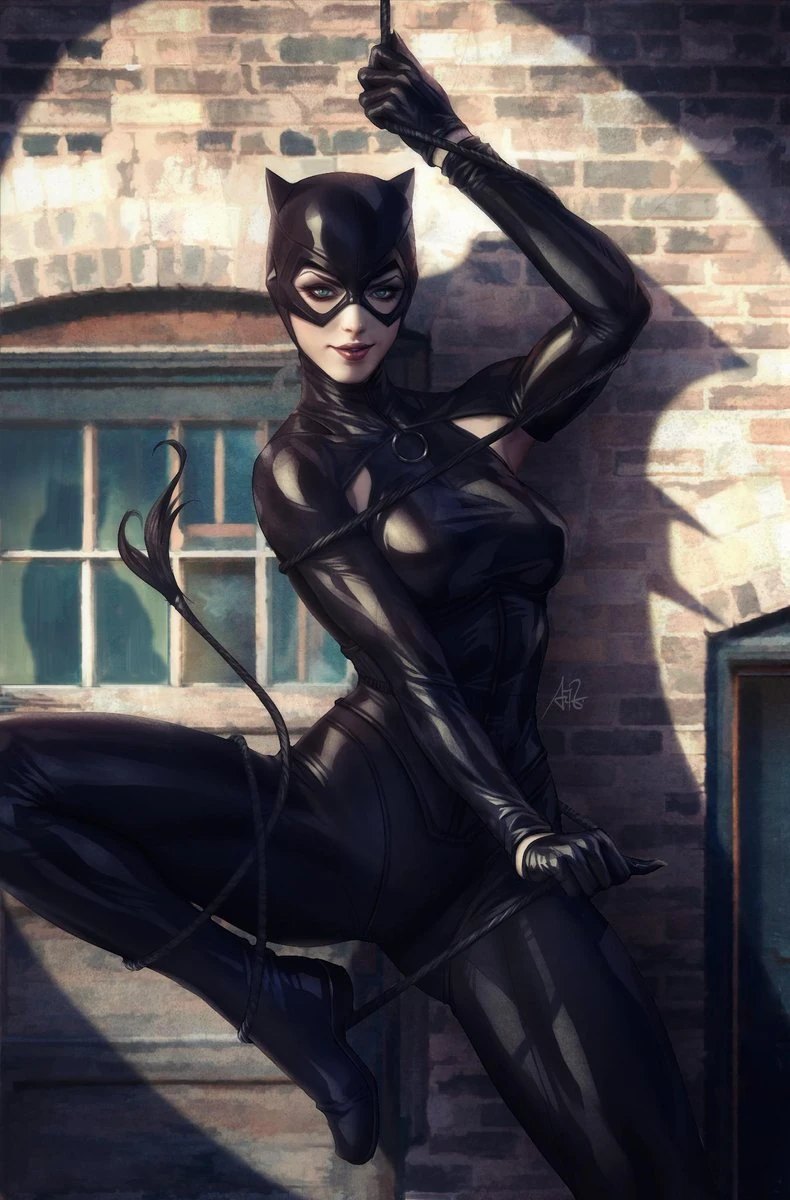
5. Catwoman (New 52) #1–12 — The Cautionary Tale (2011–12)
When DC relaunched its entire line in September 2011, Judd Winick and Guillem March’s Catwoman #1 became one of the most-discussed debuts of the New 52 — mostly for a rooftop sequence with Batman that critics and fans said replaced characterization with fan service. It is on this list as the counter-example: strip out Selina’s own motivations and supporting cast, and the character reverts to a Batman accessory, which is exactly the failure mode the higher-ranked runs below spent a decade fixing.
The run is not worthless — March’s art is kinetic and the Rat-Tail crime family gives Selina a genuine antagonist — but it is instructive precisely because it is the weakest data point in an otherwise strong publication history.
Catwoman shows up constantly on team-wide rankings too — she’s a fixture of our own Best Batman Villains list, even though, as the runs below make clear, calling her a villain at all is increasingly the minority position.
4. Catwoman: Copycats (2018)
Joelle Jones’s Rebirth-era opening arc solved a structural problem: after years of crossovers and relaunches, Gotham’s underworld no longer had a clean read on who Selina Kyle actually was. “Copycats” answers that by giving her a mirror — Raina Creel, a rival who steals Selina’s identity as literally as possible — and using the impersonation plot to relitigate what makes the real Catwoman distinct: not the costume, but the East End loyalty Brubaker built in 2001.
3. Batman: Hush (2002–03)
Jeph Loeb and Jim Lee’s 12-issue Batman arc is remembered for Bane, Killer Croc and a mystery villain, but its most durable contribution was resetting Bruce Wayne and Selina Kyle as adult equals — allies first, romantic partners second — rather than cat-and-mouse antagonists. That framing is the one every live-action Batman since The Dark Knight Rises has followed, and it is the version of the relationship “Hush” put into wide circulation.
It is ranked below the Brubaker and Valentine runs for the same reason the New 52 launch is ranked last, just to a smaller degree: “Hush” is a great Batman story that happens to feature Catwoman well, not a Catwoman story in its own right.
2. Catwoman: The Dollhouse (2015)
Genevieve Valentine’s run picked up an idea DC editorial had floated since the New 52 began — Selina Kyle as an actual Gotham crime boss, not a cat burglar who occasionally fights one — and took it seriously as genre fiction. “The Dollhouse” reads like a mob-family drama: territory, loyalty, and the cost of running an organization built on secrets. It is the closest any Catwoman writer has come to matching Brubaker’s crime-fiction register without simply repeating his East End setting.
1. Catwoman: Trail of the Catwoman / Selina’s Big Score (2001–02)
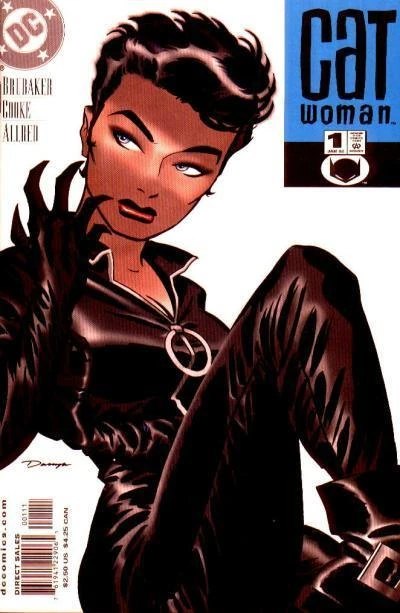
Ed Brubaker and Darwyn Cooke’s opening stretch on Catwoman Vol. 3 is the storyline every entry above is reacting to, one way or another. Brubaker brought Selina back from a staged death, planted her in Gotham’s East End as its protector rather than its predator, and — according to retrospectives from ComicsAlliance and Popoptiq — deliberately built the book as a crime comic first and a superhero comic second, with a cast of original supporting characters Catwoman had never had before. Cooke’s redesign of her costume, dropping the campy purple dress for the sleek goggled bodysuit, is still the baseline every artist since has drawn from.
The original insight worth taking from all five runs: every writer who has been credited with a definitive Catwoman story did the same thing — they gave Selina a stake in Gotham that has nothing to do with Batman’s rogues gallery. Brubaker gave her a neighborhood. Valentine gave her an organization. Even “Hush,” the most Batman-centric entry here, works because it treats her as Bruce’s equal rather than his opposite number. The one run that ranks last is also the only one that skipped this step. On a character DC has relaunched more than almost anyone else in its library, that is not a coincidence — it is the actual formula. It’s the same anti-hero throughline we traced across the wider genre in our look at the rise of the comic-book anti-hero.
Where Absolute Catwoman (2026) Fits
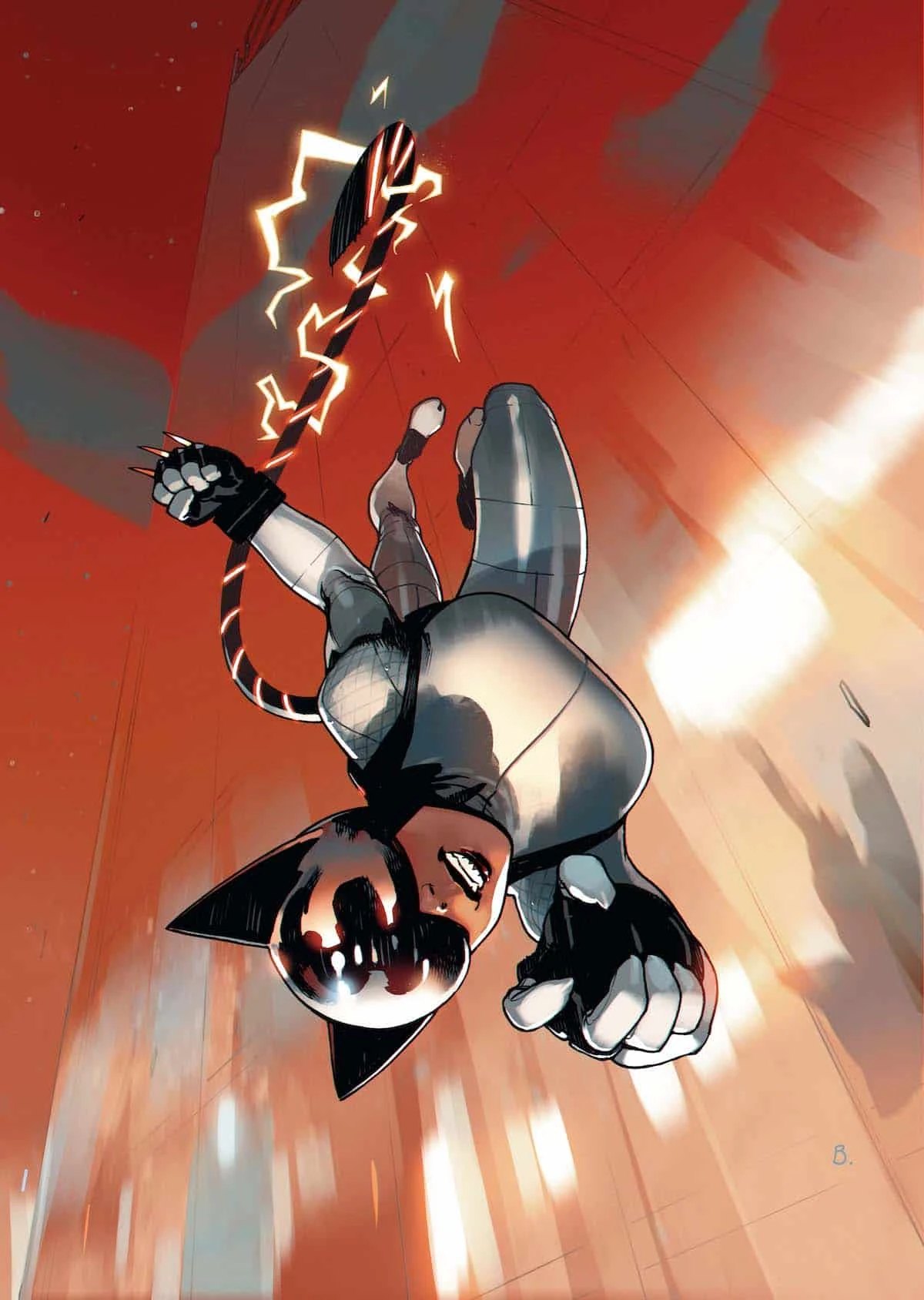
DC’s Absolute Catwoman, launched June 10, 2026 by Che Grayson and Scott Snyder with art from Bengal, is too new to rank against 20-year-old classics, but its premise is worth watching: this Selina has already become “the greatest thief the world has ever known” before the book starts, which is the Brubaker thesis pushed to its logical extreme — a Catwoman defined entirely on her own terms, with Batman nowhere in sight for the opening arc. It’s one of several character-defining relaunches worth tracking on our Best DC Comics reading guide.
Sources
Reporting and historical detail in this piece drew on DC’s own preview coverage of Absolute Catwoman and Wikipedia’s publication history for the Catwoman ongoing series.
Frequently Asked Questions
What is the best Catwoman comic to start with?
Ed Brubaker and Darwyn Cooke’s Catwoman Vol. 3 #1 (2002), collected as “Trail of the Catwoman,” is the most commonly recommended jumping-on point because it introduces Selina’s modern costume, her East End supporting cast, and the anti-hero framing every later writer has built on.
Is Catwoman a hero or a villain?
Since the early 2000s, mainstream DC continuity has written Catwoman primarily as an anti-hero — a thief who operates outside the law but protects a specific community (Gotham’s East End) and has been a recurring Batman ally rather than an adversary.
What is Absolute Catwoman about?
Absolute Catwoman is a 2026 six-issue limited series by Che Grayson, Scott Snyder and Bengal set in DC’s separate Absolute Universe continuity. It follows Selina Kyle returning to a changed Gotham after building a reputation as the world’s greatest thief.
Who created Catwoman?
Catwoman was created by Bill Finger and Bob Kane, debuting as “the Cat” in Batman #1 in the spring of 1940.