The best superhero teams are more than a roster of powerful characters standing shoulder to shoulder — they are dysfunctional families, ideological experiments, and decades-long soap operas that happen to punch gods. Sitting at number one, the X-Men remain the gold standard: a persecuted minority turned into the most emotionally resonant metaphor in comics. But the field is deep. Marvel and DC have spent 80-plus years building ensembles whose internal conflicts often matter more than the villains they fight. This ranking weighs cultural impact, creative peaks, longevity, and how well each team’s core idea has survived reinvention. From the Justice League’s mythic trinity to the Doom Patrol’s beautiful weirdness, here are the 12 greatest superhero teams in comics history, ranked with an eye on what actually makes a team endure.
| Rank | Team | Publisher | Debut | Core Idea |
|---|---|---|---|---|
| 1 | X-Men | Marvel | 1963 | Feared minority fighting for a world that hates them |
| 2 | Justice League | DC | 1960 | The pantheon — Earth’s mightiest icons united |
| 3 | The Avengers | Marvel | 1963 | Earth’s Mightiest Heroes, revolving-door blockbuster |
| 4 | Fantastic Four | Marvel | 1961 | Marvel’s first family of explorers |
| 5 | Teen Titans | DC | 1964 | Sidekicks stepping out of their mentors’ shadows |
| 6 | Guardians of the Galaxy | Marvel | 1969 | Cosmic misfits and a-holes saving the universe |
| 7 | Justice Society of America | DC | 1940 | The original team and its legacy of mentorship |
| 8 | Doom Patrol | DC | 1963 | Broken outsiders and surreal super-heroics |
| 9 | Suicide Squad | DC | 1959 / 1987 | Expendable villains on black-ops death missions |
| 10 | Legion of Super-Heroes | DC | 1958 | 31st-century teens inspired by Superboy |
| 11 | Birds of Prey | DC | 1996 | Oracle’s female-led covert network |
| 12 | The Defenders | Marvel | 1971 | The "non-team" of reluctant loners |
12. The Defenders — Marvel’s Anti-Team

The Defenders began in 1971 as a deliberate contradiction: a team of characters who did not want to be on a team. Writer Roy Thomas gathered Doctor Strange, the Hulk, Namor the Sub-Mariner, and later the Silver Surfer into a loose alliance with no charter, no headquarters, and no interest in each other’s company. Fans dubbed them the "non-team," and that anti-establishment identity became their charm. When cosmic or mystical threats grew too large for any one loner to handle, the Defenders coalesced, saved reality, and then happily went their separate ways.
The concept has proven surprisingly elastic. Steve Gerber’s 1970s run pushed the book into absurdist satire, while later relaunches swapped in everyone from Valkyrie to Nighthawk to a New Wave-flavored lineup. The name also anchored Marvel’s street-level Netflix universe with Daredevil, Jessica Jones, Luke Cage, and Iron Fist — a very different team sharing only a title. That flexibility keeps the Defenders relevant, even if they never command the loyalty of a true found family.
11. Birds of Prey — Oracle’s Network

Birds of Prey started in 1996 as a partnership between Barbara Gordon — paralyzed by the Joker and reborn as the hacker-tactician Oracle — and the martial-arts powerhouse Black Canary. It grew into one of the most important female-led franchises in mainstream comics, a covert operation targeting trafficking rings, arms dealers, and conspiracies too dirty for the Justice League to touch. Oracle running missions from behind a wall of monitors gave the book a spy-thriller texture that few super-teams ever matched.
Gail Simone’s celebrated run turned Birds of Prey into a character showcase, folding in Huntress, Lady Blackhawk, and a rotating sisterhood of operatives whose banter was as sharp as their combat. The team proved that a super-group could thrive on espionage, trust, and hard-earned camaraderie rather than raw wattage. Its influence echoes across every subsequent street-level and women-led ensemble DC has published.
10. Legion of Super-Heroes — Tomorrow’s Heroes

Debuting in 1958, the Legion of Super-Heroes is one of comics’ most ambitious concepts: a sprawling club of super-powered teenagers from across the galaxy in the 31st century, all inspired by the legend of Superboy. At its peak in the 1970s and ’80s the roster swelled past two dozen regulars — Lightning Lad, Saturn Girl, Cosmic Boy, Brainiac 5 and more — each with distinct powers, romances, and rivalries. It was a teenage superhero soap opera years before Marvel formalized the format.
The Legion’s high-water mark is the Paul Levitz and Keith Giffen era, especially "The Great Darkness Saga," still regarded as one of DC’s finest long-form stories. The franchise’s endless reboots have confused newcomers, but its core promise — a hopeful, diverse future built by young heroes — remains uniquely appealing. Few teams carry this much optimism about what tomorrow could look like.
9. Suicide Squad — Task Force X

The modern Suicide Squad is John Ostrander’s 1987 reinvention of a 1950s concept, and it changed what a team book could be. The premise is gloriously cynical: government handler Amanda Waller drafts incarcerated supervillains — Deadshot, Captain Boomerang, and others — for deniable black-ops missions, dangling reduced sentences and threatening to detonate the bombs implanted in their necks. Because these are expendable criminals, any member can die at any time, and Ostrander regularly made good on that threat.
That mortality gave the Squad genuine stakes rarely felt in cape comics. Amanda Waller emerged as one of DC’s great morally gray power players, and later runs turned Harley Quinn into a breakout anti-heroine. The team’s blend of villainy, dark humor, and expendability has made it a movie and video-game staple. For a deeper look at the characters they face off against, see our ranking of the strongest Marvel villains — the Squad’s DC rogues play in the same morally murky sandbox.
8. Doom Patrol — The World’s Strangest Heroes

Created in 1963 by Arnold Drake, the Doom Patrol were misfits before misfits were cool: Robotman, a brain in a metal shell; Negative Man, wrapped in bandages to contain a radioactive energy being; Elasti-Girl; and their wheelchair-using leader, the Chief. Billed as "the World’s Strangest Heroes," they were less a super-team than a support group for people the world had broken. That melancholy set them apart from every square-jawed hero of the era.
The book became legend when Grant Morrison took over in 1989 and pushed it into full surrealist territory — introducing Crazy Jane and her 64 personalities, the sinister Mr. Nobody, and villains that attacked reality itself. Morrison’s Doom Patrol is a landmark of avant-garde superhero storytelling and a foundational text for the Vertigo sensibility. No team better proves that weirdness and heart can carry a book for decades.
7. Justice Society of America — The First Team

The Justice Society of America holds a title no one can take away: in 1940’s All Star Comics #3, they became the first superhero team in comics history. Gathering Golden Age icons like the Flash (Jay Garrick), Green Lantern (Alan Scott), Hawkman, and Doctor Fate, the JSA invented the very idea of heroes teaming up — the template every entry on this list inherited. Superman and Batman were famously kept as honorary members because they were considered too popular to share the spotlight.
What elevates the JSA beyond mere historical footnote is its evolution into DC’s living legacy. Modern runs by James Robinson, David Goyer, and Geoff Johns reframed the team as elder statesmen mentoring the next generation, making tradition itself the theme. That intergenerational mission — veterans passing the torch — gives the Society an emotional weight few teams can claim. They are, quite literally, where it all began.
6. Guardians of the Galaxy — Cosmic Misfits

The Guardians of the Galaxy technically date to 1969, but the team most fans know is Dan Abnett and Andy Lanning’s 2008 relaunch, born out of the sprawling "Annihilation" cosmic sagas. Star-Lord, Gamora, Drax the Destroyer, Rocket Raccoon, and Groot were a band of damaged, wisecracking outsiders who appointed themselves the universe’s first responders. The DnA run gave Marvel’s cosmic corner a fresh, character-driven energy that had been missing for years.
That version exploded into a cultural juggernaut once James Gunn’s films arrived, but the comics earned the goodwill first with genuine pathos beneath the gallows humor. The Guardians proved that a super-team could be built entirely from B- and C-list castoffs and still feel essential. Their cosmic scale also intersects with our list of the most powerful comic book characters ranked, where several of their foes and allies loom large.
5. Teen Titans — Out of the Shadows

The Teen Titans began in the 1960s as a novelty — a clubhouse for the sidekicks of the Justice League, with Robin, Kid Flash, and Aqualad teaming up while the grown-ups were busy. It was fun, but disposable. Everything changed in 1980 when Marv Wolfman and George Pérez launched The New Teen Titans, introducing Cyborg, Raven, and Starfire alongside a maturing Dick Grayson and building a book that rivaled the X-Men for sales and emotional depth.
The Wolfman/Pérez run delivered "The Judas Contract," one of the greatest betrayal stories in comics, centered on the tragic double agent Terra. By treating teenage heroes with real dramatic seriousness — identity, family, first love, and loss — the Titans defined the young-hero genre for a generation and inspired a hugely popular animated legacy. They remain DC’s definitive coming-of-age team.
4. Fantastic Four — Marvel’s First Family

The Fantastic Four launched the entire Marvel Universe in 1961. Stan Lee and Jack Kirby’s tale of four explorers — Reed Richards, Sue Storm, Johnny Storm, and Ben Grimm — bombarded by cosmic rays broke from the era’s stiff conventions by making the heroes bicker like an actual family. Their first hundred issues are widely considered one of the greatest sustained creative runs in the history of the medium, introducing Doctor Doom, Galactus, the Silver Surfer, the Inhumans, and the Negative Zone in a torrent of imagination.
The FF’s core idea — a family of adventurers who bicker, love, and explore the unknown together — is the emotional bedrock of Marvel storytelling. When the team clicks, no book better captures the wonder of discovery. Their foundational status also makes their early issues blue-chip collectibles; browse our guide to the most valuable comic books to see just how much those Silver Age keys command today.
3. The Avengers — Earth’s Mightiest Heroes

The Avengers assembled in 1963 as Marvel’s answer to the Justice League, throwing Iron Man, Thor, Ant-Man, the Wasp, and the Hulk together against Loki. What separated them from the pack was the revolving door: Captain America thawed out in issue #4, reformed villains like Hawkeye, Scarlet Witch, and Quicksilver joined, and the lineup churned constantly. The Avengers are less a fixed group than an institution — a mantle passed among Marvel’s biggest names.
Creatively, the team peaked repeatedly: Roger Stern’s "Under Siege," Kurt Busiek and George Pérez’s operatic run, and Brian Michael Bendis’s New Avengers, which reshaped the entire Marvel line. Then the films made "Avengers Assemble" a global rallying cry and the highest-grossing franchise ever built from a comic. Sheer cultural reach lands them near the very top — only two teams have deeper roots.
2. Justice League — The Pantheon

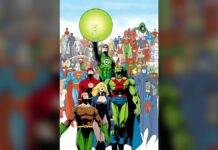
When Gardner Fox and the DC bullpen united Superman, Batman, Wonder Woman, the Flash, Green Lantern, Aquaman, and Martian Manhunter in 1960, they created the modern super-team blueprint — and, famously, inspired Marvel to counter with the Fantastic Four. The Justice League is comics’ pantheon, the closest thing the genre has to Mount Olympus. Its power lies in iconography: the "Trinity" of Superman, Batman, and Wonder Woman anchors DC’s entire mythology.
Grant Morrison’s 1996 JLA relaunch reasserted the team as literal gods among men, pitting the seven greatest heroes against threats of planetary scale from their satellite Watchtower. The League embodies aspiration — heroes at their most noble, competent, and united. It ranks second only because its very perfection can make it feel less human than the team just above it, whose flaws are the whole point.
1. X-Men — The Best Superhero Team in Comics

The X-Men debuted in 1963 alongside the Avengers, but for their first decade they were a commercial afterthought. Then Len Wein and Dave Cockrum’s 1975 Giant-Size X-Men #1 introduced a diverse international roster — Wolverine, Storm, Colossus, Nightcrawler — and Chris Claremont’s ensuing 16-year run transformed them into the best-selling franchise in comics. Claremont turned mutantkind into an enduring metaphor for every persecuted minority, giving the book a moral urgency that no rival team’s premise could match.
The proof is in the storytelling: "The Dark Phoenix Saga," "Days of Future Past," and God Loves, Man Kills are canonized classics, and Jonathan Hickman’s 2019 "House of X / Powers of X" and the Krakoa era reinvented the concept yet again for a new generation. No team blends soap-opera character depth, big-idea science fiction, and genuine thematic weight as consistently. The X-Men are not just the best superhero team — they are the argument for why superhero teams matter at all.
Why the Best Teams Are Built on Conflict, Not Firepower
Here is the pattern that separates a legendary super-team from a forgettable one: the greatest teams are held together by internal tension, not by the villains they fight. Rank these ensembles purely on raw power and you would crown the Justice League or a cosmic Avengers lineup every time. Yet the X-Men top nearly every serious list, and the reason is that a super-team is fundamentally a relationship engine. Cyclops and Wolverine’s rivalry, Reed and Ben’s guilt, the Titans’ first heartbreaks — these are the plots readers remember, decades after the specific alien invasion has been forgotten.
That explains why "power-fantasy" teams so often plateau while "found-family" teams keep regenerating. The Defenders and even the Justice League can feel emotionally flat precisely because their members are too iconic and too self-sufficient to truly need one another. The X-Men, Titans, Fantastic Four, and Guardians thrive because their members are broken people who are stronger — and more vulnerable — together. When you evaluate any new team book, ignore the roster’s wattage and ask a simpler question: do these characters have a reason to stay in the same room when the fighting stops? That single test predicts longevity better than any power ranking ever could.
Frequently Asked Questions
What is the best superhero team of all time?
By the combined measure of cultural impact, creative peaks, and staying power, the X-Men rank as the best superhero team. Chris Claremont’s landmark run turned them into both a sales juggernaut and comics’ most resonant metaphor for prejudice, and the concept has been successfully reinvented every generation since.
Which is better, the Avengers or the Justice League?
It depends on what you value. The Justice League offers pure iconography — Superman, Batman, and Wonder Woman as a modern pantheon. The Avengers offer a more human, ever-changing institution with deeper character churn. This list ranks the League slightly higher for its foundational, myth-defining status.
What was the first superhero team in comics?
The Justice Society of America, introduced in All Star Comics #3 in 1940. It invented the concept of heroes joining forces and became the template that the Justice League, Avengers, and every other team ultimately built upon.
Are teams like the Suicide Squad really superhero teams?
They are super-teams in structure even if the members are villains or anti-heroes. The Suicide Squad’s roster of incarcerated criminals on deadly government missions expands the genre, proving a "team book" does not require conventional heroes to work.
Which superhero teams are the best investment for collectors?
Foundational first appearances — Fantastic Four #1, Avengers #1, and X-Men #1 — are blue-chip Silver Age keys. See our guides to the most valuable comic books and the best comics to invest in for 2026 for current market detail.