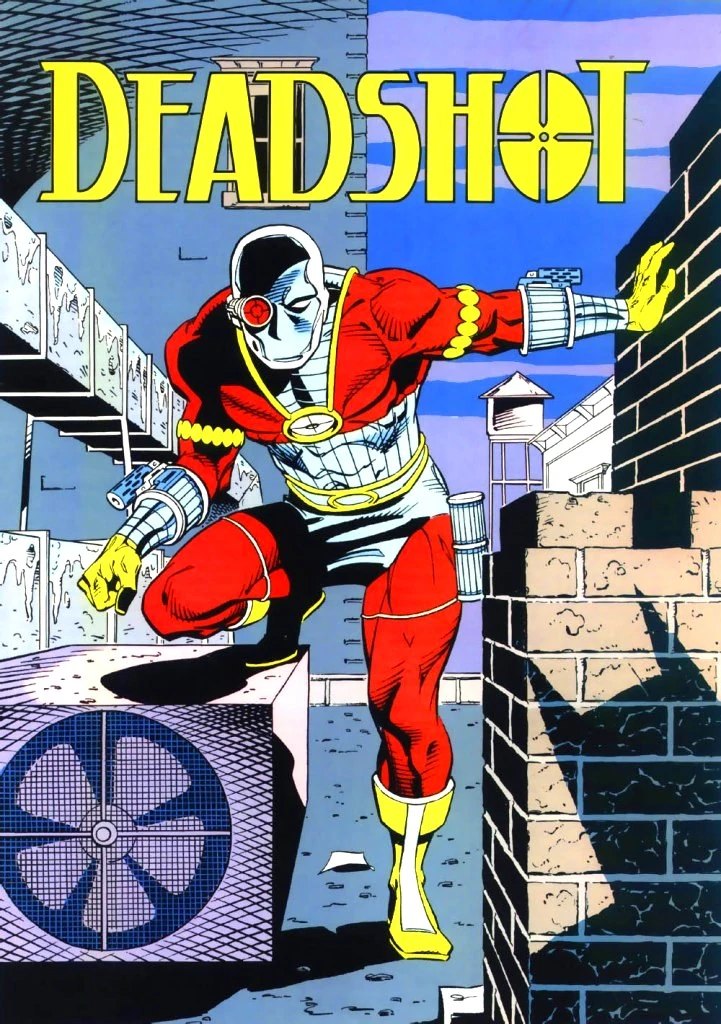
Deadshot is DC Comics’ deadliest marksman, an assassin who never misses a shot and never seems to care whether the next one kills him. Introduced as a one-off Batman villain in 1950, Floyd Lawton didn’t become a top-tier DC name until writer John Ostrander gave him a literal death wish in 1987. Here are his most significant, most ruthless comic book moments, ranked.
Last updated: September 10, 2026
1. John Ostrander Turns Him Into DC’s Most Nihilistic Antihero (Legends #3 and Suicide Squad #1, 1987)
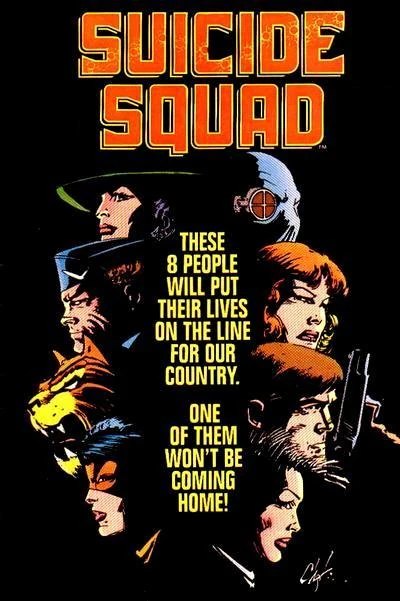
Deadshot spent decades as a forgettable Batman villain until writer John Ostrander rebuilt him from the inside out for the 1987 Legends crossover and the Suicide Squad ongoing series that followed. This is the single most important moment in the character’s history: Ostrander turned a costume with a gun gimmick into a fully-formed, suicidally reckless antihero.
Ostrander has said in interviews that Deadshot barely existed as a character before this — the Who’s Who reference guide gave him roughly half a page, which left Ostrander free to build almost everything else from scratch. He has traced the character’s core to a real person: a documentary special about an incarcerated contract killer. “I had seen a special with a hitman who had been incarcerated, he had the coldest eyes I had ever seen,” Ostrander told interviewer Jordan Edwards in an August 26, 2021 conversation for Gatecrashers. “His whole attitude was ‘I don’t care if I die so why should I care if you die?'” That reframing — a man who doesn’t fear death because he’s already made peace with dying — is why every subsequent writer treats Floyd Lawton as a tragedy wearing a target, not just a mercenary with good aim. It’s the same narrative trick that powered the broader 1980s-onward wave of comic antiheroes; readers curious about that larger trend should see our breakdown of the rise of the comic book antihero.
2. The Deadshot Miniseries Reveals He Accidentally Killed His Own Brother (Deadshot #1-4, 1988-89)
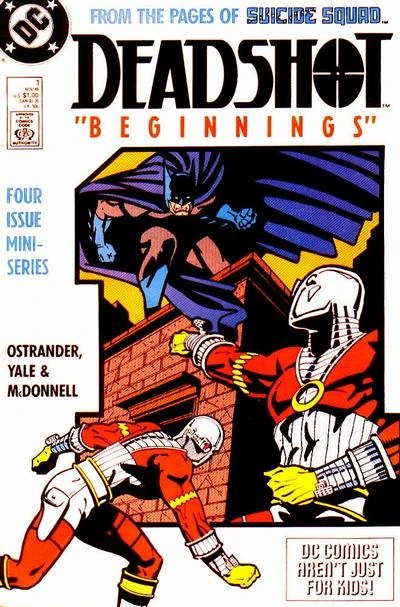
Ostrander and co-writer Kim Yale’s four-issue Deadshot limited series (1988-89, art by Luke McDonnell) is the closest thing the character has to a definitive origin. It’s a bleak psychological character study, not an action romp, and it’s where his death wish gets an actual traumatic root instead of just an attitude.
The series reveals that as a boy, Floyd tried to stop his older brother from murdering their abusive father — and accidentally shot his brother in the head instead. In the present-day storyline, his estranged mother arranges to have his young son, Edward Lawton, kidnapped, and Floyd’s response is brutal and final. The miniseries is widely regarded by longtime readers and critics as the story that cemented the crosshair-on-the-chest symbolism: Deadshot marks his own heart as a target because some part of him is still waiting to be shot, the same way he shot his brother.
3. He Assassinates a US Senator on His Own Authority (Suicide Squad #9, 1988)
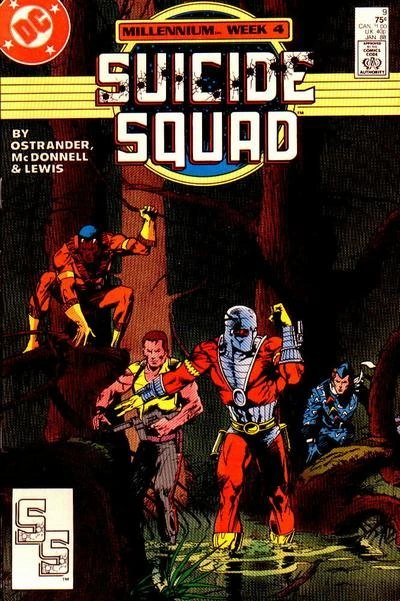
In “Final Round,” the climax of Ostrander’s first major Suicide Squad arc, Deadshot is ordered to help stop a rogue Rick Flag — and instead interprets his orders “rather liberally” by personally assassinating a corrupt senator who was threatening to shut down Amanda Waller’s entire black-ops program.
It’s a small scene with a large implication: Deadshot doesn’t just follow the chain of command, he solves the problem the way he thinks it should be solved, with a bullet, and lets Waller deal with the fallout. It set the template every later writer would return to — Deadshot as the Squad’s most efficient, least controllable asset, someone Waller relies on precisely because he doesn’t need permission to kill.
4. He Joins the Secret Six and Becomes a Genuine Anti-Hero (Villains United, 2005, and Secret Six, 2008-2011)
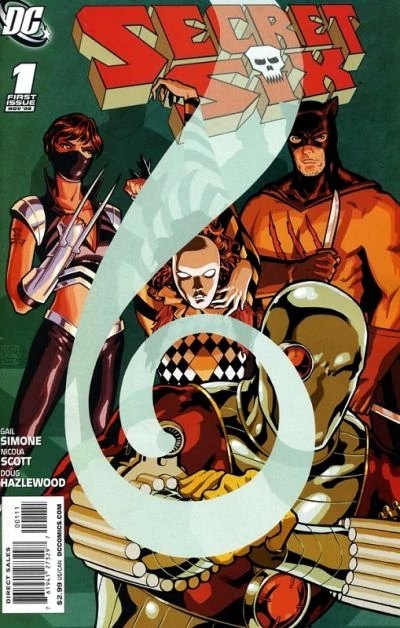
Deadshot was one of the six mercenaries recruited into Gail Simone’s Villains United (2005), a prequel to Infinite Crisis, specifically for his insider knowledge of the Suicide Squad’s remaining roster. When Simone relaunched Secret Six as an ongoing series in 2008, Deadshot became a core member alongside Catman, Scandal Savage, Bane, and Ragdoll.
This is the run where Deadshot arguably gets the most interior life he’s ever had outside Ostrander’s original material. Simone used him as a study in how a lifetime of contract killing hollows someone out — he’s written as a chain-smoking, morally numb professional who is nonetheless capable of loyalty to the handful of people who matter to him, chiefly his daughter Zoe. It’s the strongest case that Deadshot could carry his own book, an argument our list of DC villains who deserve a solo movie makes about several of his peers.
5. Amanda Waller Has Him “Assassinate” Her — On Purpose (Forever Evil, 2013-14)
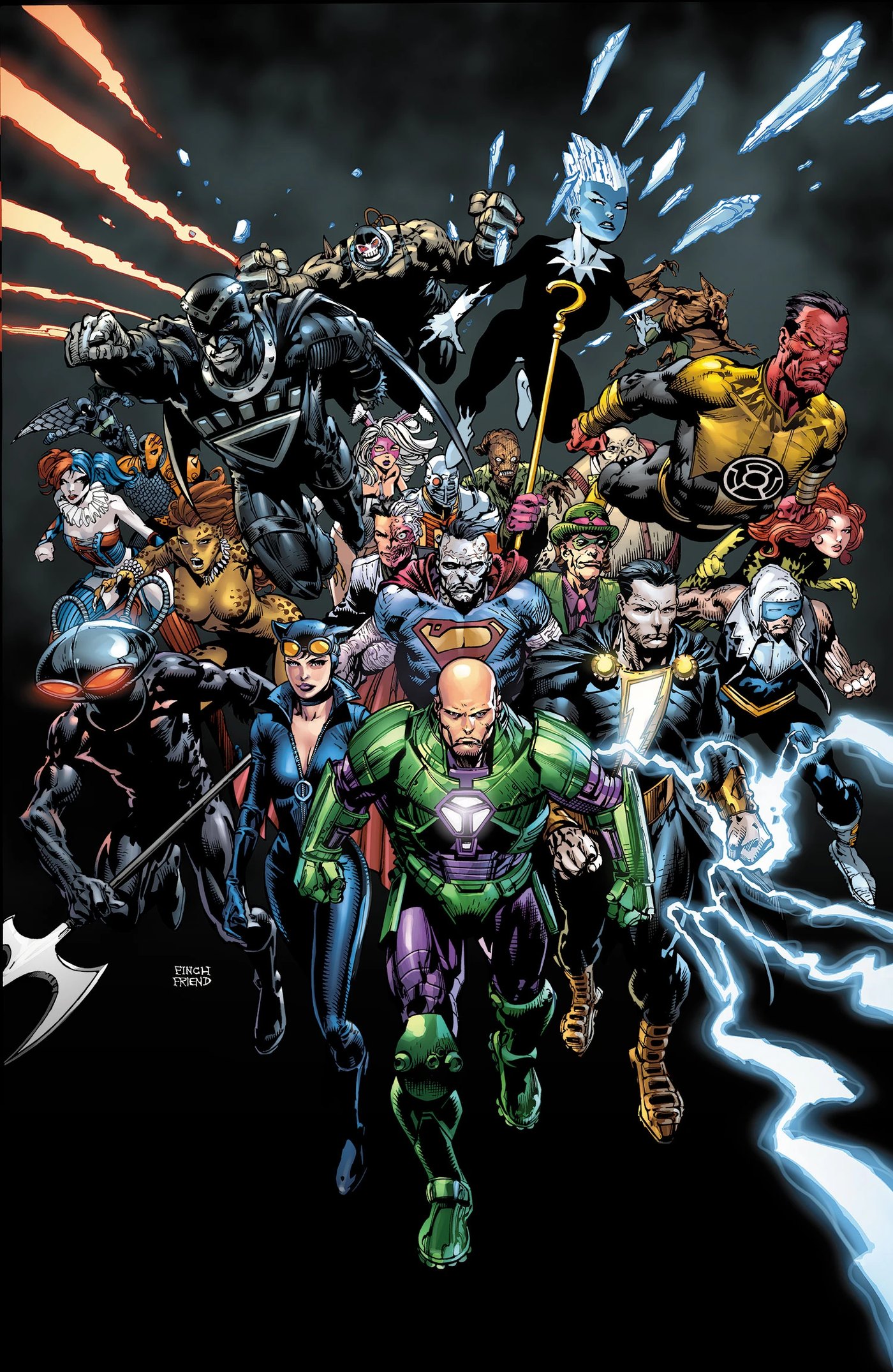
During the New 52’s Forever Evil event, Amanda Waller — temporarily stripped of her authority over Task Force X by a political rival — arranges her own apparent assassination by Deadshot so she can operate off the books, expose a traitor inside the government, and outmaneuver a villain takeover of Belle Reve. It’s a plot only Deadshot’s specific reputation makes plausible: everyone in-universe believes that if Floyd Lawton says he killed you, you’re dead.
The beat matters less for spectacle and more for what it says about his standing: by this point in DC continuity, Deadshot’s credibility as an assassin is treated as a piece of infrastructure other characters can weaponize, not just a personal trait.
6. Kobra Blackmails Him Into Targeting Bruce Wayne (Suicide Squad Vol. 5 #1, DC Rebirth, October 2016)
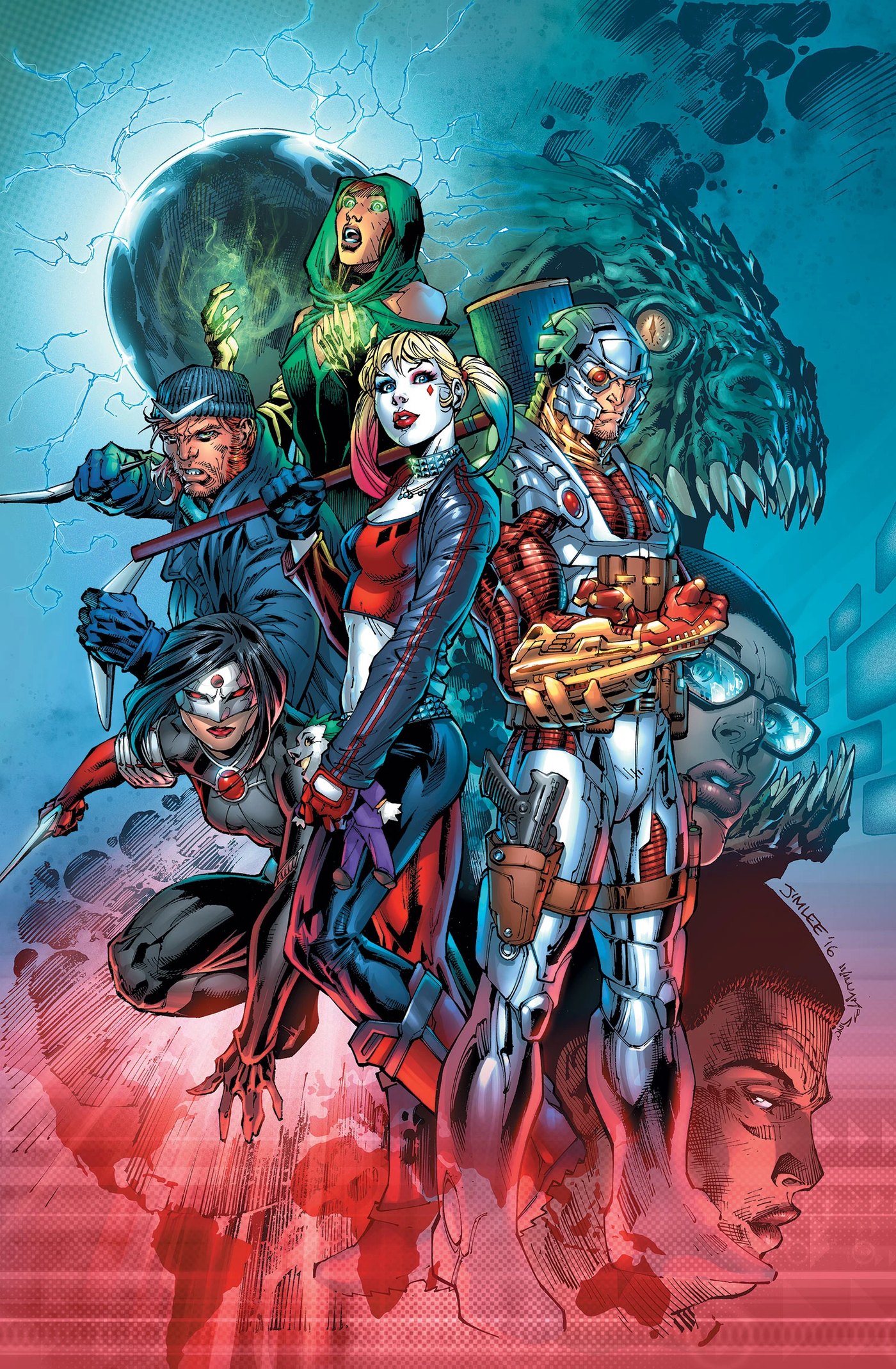
DC’s 2016 Rebirth relaunch of Suicide Squad (by Rob Williams with art including Jim Lee) opens on a flashback in which the crime-cult Kobra kidnaps Deadshot’s daughter Zoe and forces him to accept a contract on Bruce Wayne. It’s one of the few times the comics put Deadshot in direct, personal conflict with Batman’s civilian identity rather than the cowl.
The Deadshot/Batman relationship has always been an odd, respectful rivalry rather than pure hatred — Ostrander’s original run implied Deadshot is subconsciously unwilling to actually kill Batman, an echo of the guilt over his brother’s death. Batman, for his part, once broke Floyd out of Belle Reve so the two of them could rescue Floyd’s kidnapped daughter after Waller refused. That mutual, grudging respect is part of what makes Deadshot different from DC’s other hired guns: he’s the assassin the world’s greatest detective doesn’t entirely want dead.
7. The Visual Redesign That Made Him Iconic Before He Was Ever Written Well (Detective Comics #474, 1977)
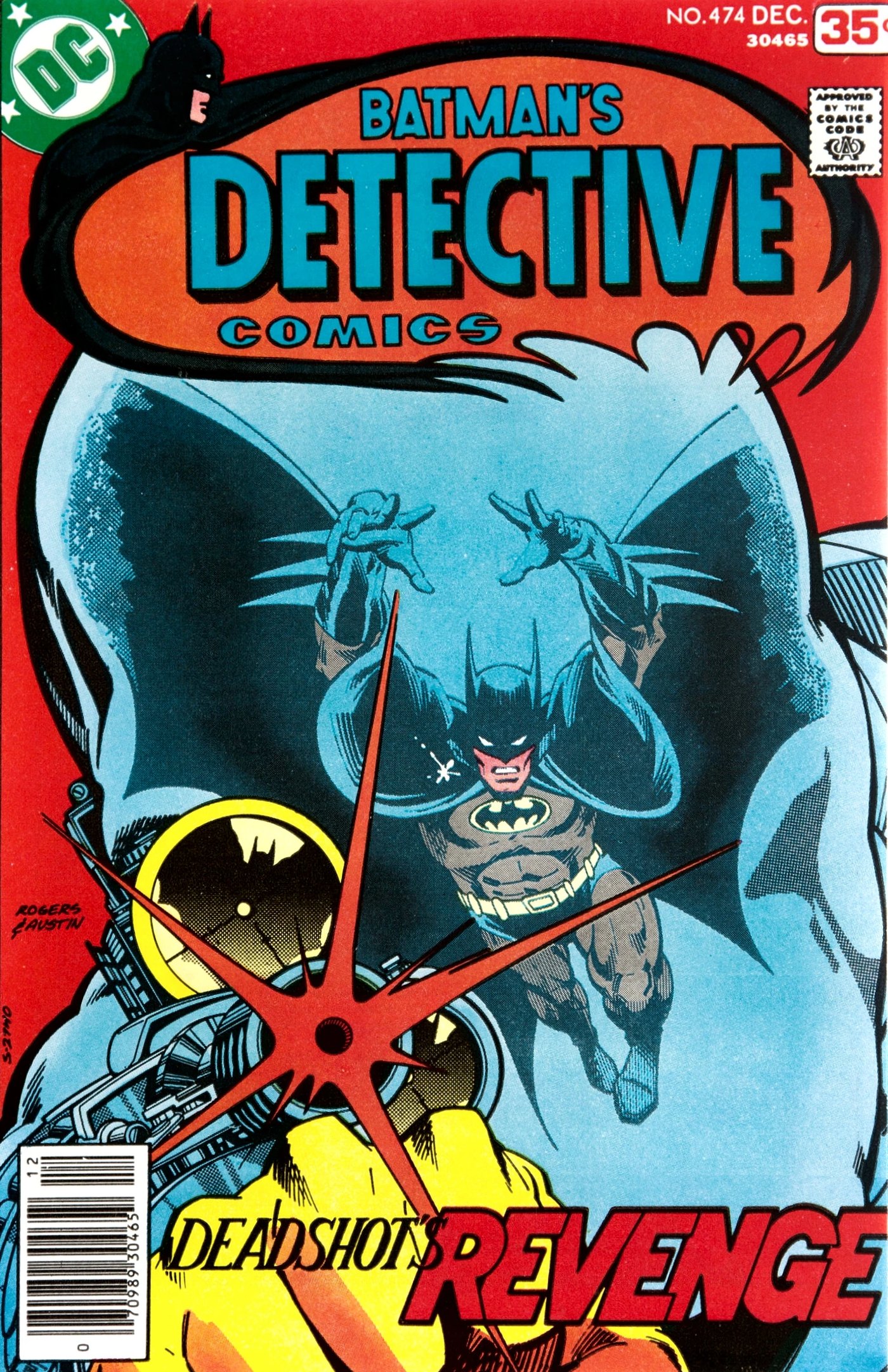
Ten years before Ostrander made Deadshot interesting, writer Steve Englehart and artist Marshall Rogers made him look interesting. Their “The Deadshot Ricochet” in Detective Comics #474 (cover-dated December 1977) introduced the wrist-mounted guns, the reticle/targeting-scope motif on the mask, and the sleek modern costume — replacing the original 1950 formalwear-and-domino-mask look.
The redesign is why the character survived at all: Rogers’ art is reportedly what caught John Ostrander’s eye while he was flipping through a Who’s Who reference volume looking for D-list characters to fill out his new Suicide Squad roster a decade later. Without the 1977 redesign, there’s a real chance Deadshot never gets picked for the team that made him famous.
8. He Becomes a Movie and TV Fixture — With One Persistent Mix-Up (2012-2016)
Canadian actor Michael Rowe played Floyd Lawton across nine episodes of the CW’s Arrow (debuting October 24, 2012), reworking him as a PTSD-afflicted former Army sergeant. Will Smith then played the character in David Ayer’s Suicide Squad (2016), which opened to roughly $133.7 million domestically over its August 5-7, 2016 weekend — an August box-office record at the time, according to The Hollywood Reporter’s contemporaneous coverage.
One correction worth making plainly, since the two are frequently confused: Idris Elba does not play Deadshot in James Gunn’s 2021 follow-up, The Suicide Squad. He plays Bloodsport (Robert DuBois), a distinct DC character who first appeared in the comics in Superman #4 (1987) and is best known there for shooting Superman with a kryptonite bullet. Deadshot simply doesn’t appear in the 2021 film at all. Given how often entertainment coverage still runs the two together, it’s the single most useful fact-check for casual fans searching for Deadshot’s live-action history.
Why Deadshot Still Works as a Character
The thing that separates Deadshot from DC’s dozens of other hired guns isn’t the aim — it’s that he’s structurally the opposite of Batman rather than just another rogue. Batman’s entire code rests on refusing to kill because he values his own life and sanity too much to cross that line. Deadshot’s code, as Ostrander built it, rests on not valuing his own life at all, which makes him one of the only villains in the Batman/Suicide Squad orbit who can’t be deterred by threats of death — he’s already made peace with it. That’s also why the character survives being folded into a “found family” team book (Secret Six, Suicide Squad) so much better than a straightforward supervillain would: his death wish gives every mission real stakes without requiring the writer to invent a redemption arc he’d resist anyway.
It’s worth noting the film versions soften this considerably. Will Smith’s Deadshot gets sarcastic-dad energy and a clean redemption beat about his daughter; the psychologically wrecked, crosshair-on-his-own-heart character from the 1988 miniseries would be a much harder sell in a four-quadrant summer blockbuster. That gap between “comics Deadshot” and “movie Deadshot” is really a gap in how much nihilism a PG-13 tentpole is willing to put on screen — and it’s a big part of why the comics version still reads as darker and more interesting than his box-office-friendly counterpart. For readers mapping where he sits among DC’s rogues generally, see our ranking of the most powerful DC villains.
“Deadshot, at that point, wasn’t actually a big player. I had seen his costume and read his background in Who’s Who and thought he was a really neat looking character and there were some possibilities there.” — John Ostrander, writer of Suicide Squad (1987-1992) and Deadshot (1988), quoted in CBR
Frequently Asked Questions
Is Deadshot the same character as Bloodsport in The Suicide Squad (2021)?
No. Deadshot does not appear in James Gunn’s The Suicide Squad (2021). Idris Elba plays Bloodsport (Robert DuBois), a separate DC character who first appeared in Superman #4 (1987). The two are unrelated beyond both being Task Force X marksmen with a similar visual archetype.
Who created Deadshot?
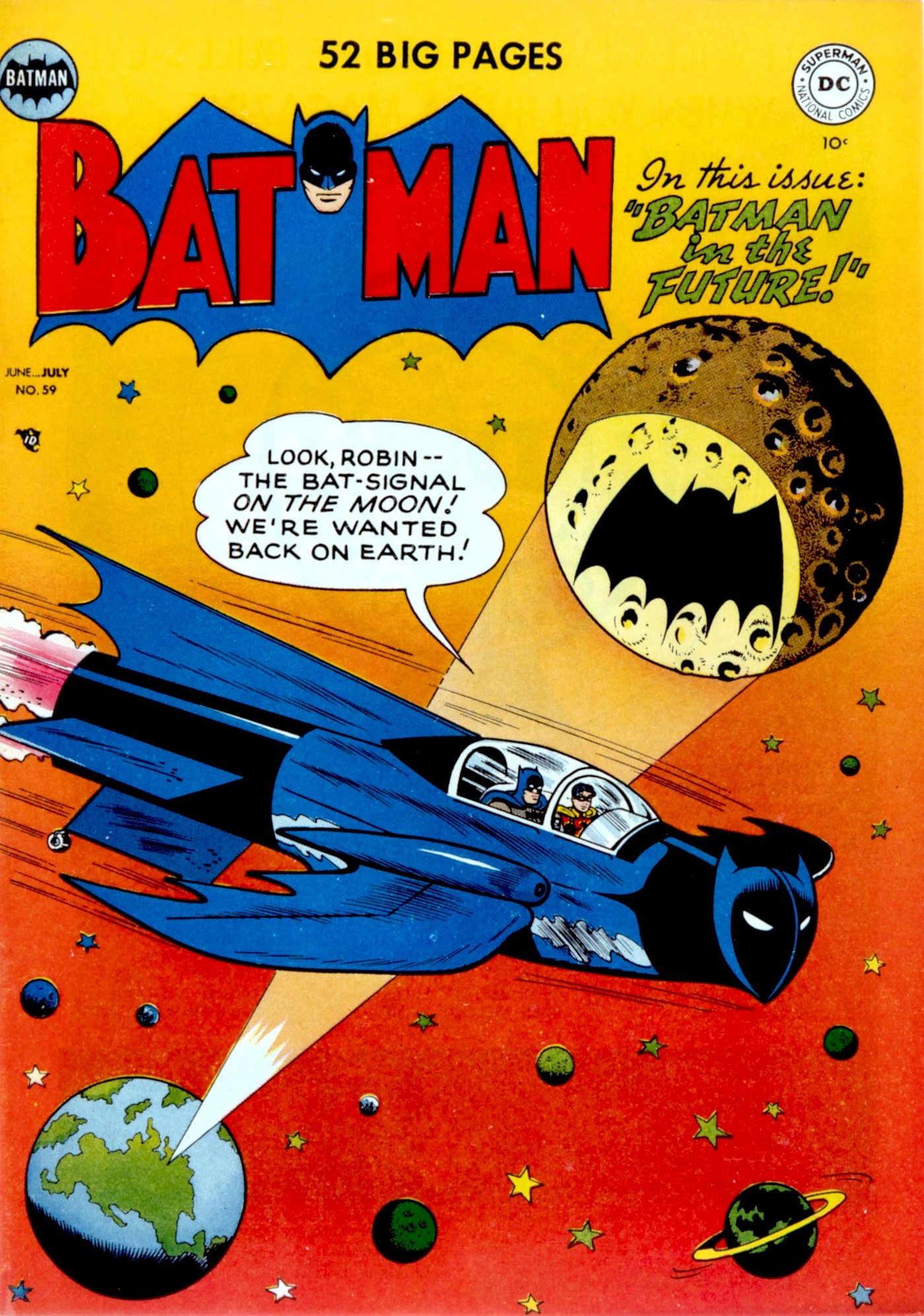
Deadshot (Floyd Lawton) first appeared in Batman #59 (June 1950), credited to writer David Vern Reed and artist Lew Sayre Schwartz, working under Bob Kane’s studio. The modern, deadly-assassin version most fans recognize was created later, primarily by writer Steve Englehart and artist Marshall Rogers (visual redesign, Detective Comics #474, 1977) and by writer John Ostrander (character and death-wish backstory, starting in Legends #3 and Suicide Squad #1, both 1987).
Why does Deadshot have a death wish?
Writer John Ostrander built the “death wish” into Deadshot starting in 1987, and the 1988-89 Deadshot miniseries traced it to a childhood trauma: as a boy, Floyd accidentally shot and killed his own older brother while trying to stop him from murdering their father. Every subsequent writer has treated his reckless willingness to die as the character’s defining trait.
Did Will Smith play Deadshot in both Suicide Squad movies?
No. Will Smith played Deadshot only in the first film, Suicide Squad (2016). He did not appear in the 2021 sequel/reboot The Suicide Squad, in which Deadshot is not a character at all.