Last updated: September 10, 2026
Dead City season 3, episode 7, "Hourglass," aired September 6, 2026 on AMC, and it is the strongest hour the series has produced. It works because it finally drops the question of whether Negan can change and asks a harder one instead: what a community owes a man it has every reason to kill.
Spoiler warning: everything below discusses plot details from "Hourglass," which aired September 6, 2026. If you have not watched episode 7 yet, stop here.
How this review was built: Comic Book Co’s TV desk does not run a first-watch pipeline for weekly AMC episodes, so the plot facts below are cross-checked across multiple independent accounts — Collider, Screen Rant, and AMC’s own episode synopsis — rather than taken from a single recap. The critical judgment and the comics analysis are this desk’s own.
What Happens in "Hourglass"
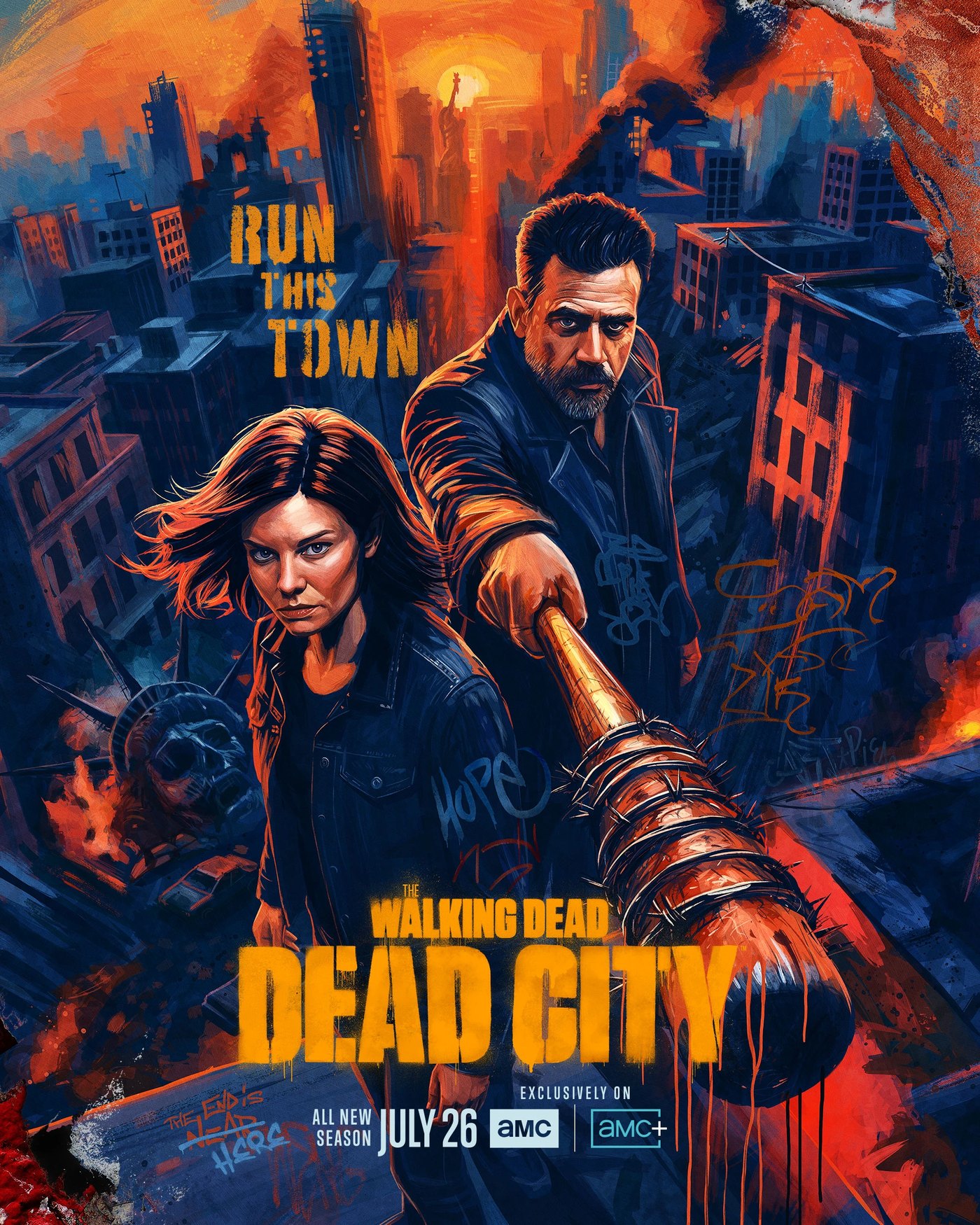
Episode 7 resolves the cliffhanger from "Genesis" and ends with the hospital community under new management. Negan is accused of maiming Dillard; the episode reveals he did not do it. Dillard cut his own face, blamed Negan, and used the lie to force the community to choose between them.
The trigger was real, though. Negan killed Dillard’s two chained walkers — the first by accident, the second deliberately. Dillard, who believes he can communicate with the dead, treated them as companions, and their loss is what turns him. He expects Renata to execute Negan for the assault. She refuses, holding to the rules she has spent the season imposing on the settlement.
Dillard shoots her, takes command of the group known as the Dozen, seizes the hospital and its armory, and gives Maggie an ultimatum: hand over Negan or people start dying, beginning with Luis, the community’s doctor and Renata’s sibling. Maggie, Negan, and Hershel end the hour locked outside.
The Thesis: The Show Changes the Question
Three seasons of Dead City have run on one question — can Negan be redeemed? It is a question the show cannot answer, because answering it ends the series. "Hourglass" sidesteps the trap by changing the subject: it stops interrogating Negan’s soul and starts testing the people around him.
That shift is why the episode lands. Negan’s guilt here is specific and small: he killed two walkers that belonged to someone who had been kind to him. He is not guilty of the thing he is accused of. The episode is not asking whether he is a good man, a question the show has worn smooth. It is asking whether a community can hold a rule that protects someone it despises, when holding it is expensive and breaking it is easy. That is a question with an actual answer, and "Hourglass" delivers it in the bleakest possible form. Renata holds the line and is shot for it.
Renata’s Death Is the Episode’s Real Subject
Renata is the season’s rule-maker, and the episode kills her at the exact moment she applies her own rules to the person she would most like to see punished. She refuses to execute Negan on Dillard’s word alone. That refusal is not sentiment about Negan; it is a statement that evidence matters.
Framing this as a shock death undersells it. Dillard does not kill Renata because she protects Negan. He kills her because she will not convict without proof, and his entire play depends on the community skipping that step. The episode is precise about the mechanism: the lie only works on a group willing to act on an accusation. Renata is the friction, so Renata is removed. Everything that follows — the Dozen falling in behind him, the armory, the ultimatum — is downstream of one community discovering that its procedures were only ever as strong as the one person willing to enforce them.
The Comics Angle: Dead City Is Rerunning Rick’s Decision
Source-material spoiler warning: this section discusses how Negan’s story ends in Robert Kirkman’s comics, including events the shows have never adapted. It is not a spoiler for the Dead City finale, but skip ahead if you are reading the books and want them clean.
This is where a comics site can say something a general TV recap cannot. Dead City is not inventing this dilemma — it is restaging the single most consequential decision in the comic, and reversing the outcome.
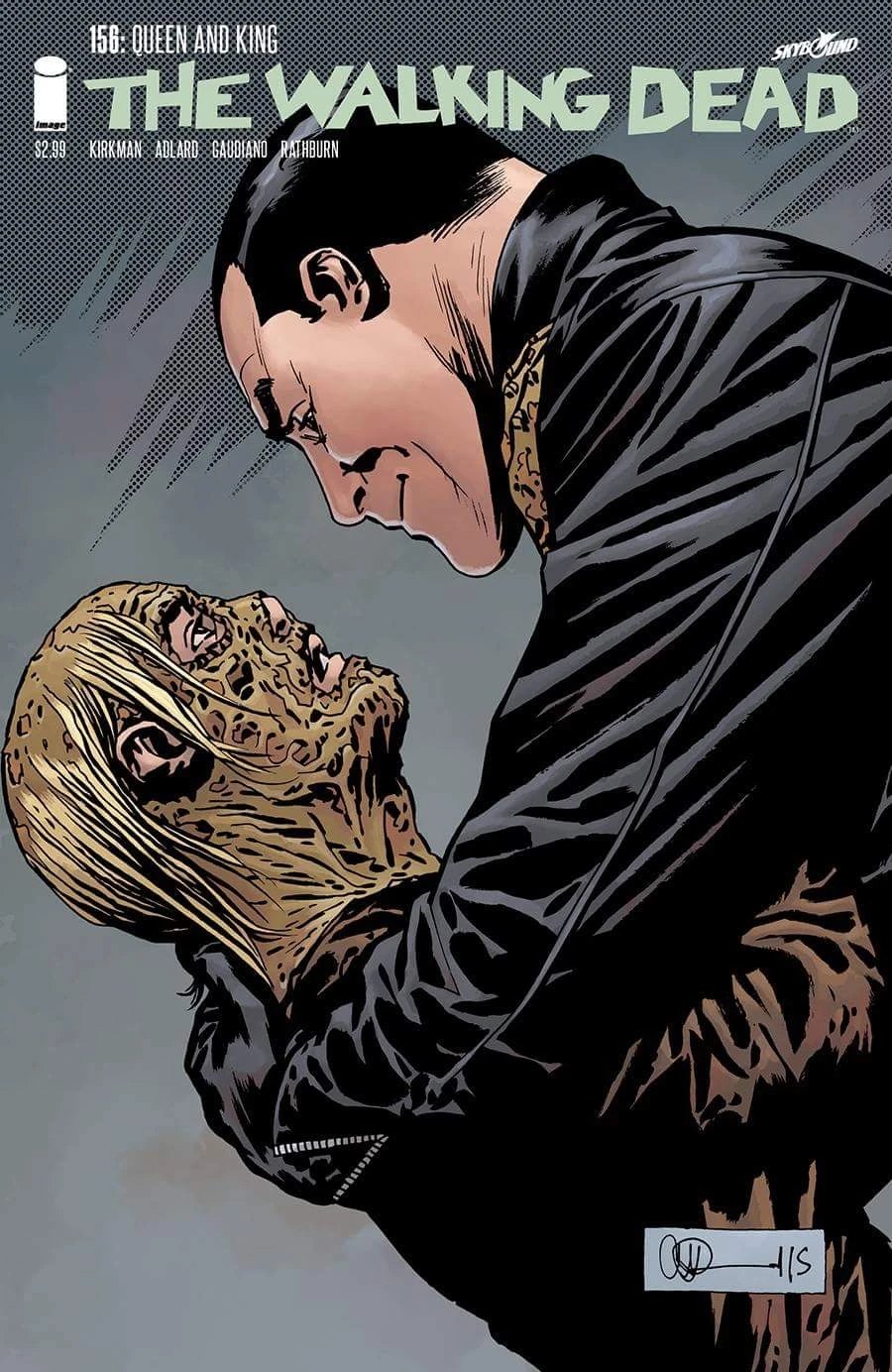
Negan debuted in The Walking Dead #100 in July 2012, killing Glenn. It remains the best-selling issue of the series at 383,612 copies, a figure Kirkman disclosed years later in his "Cutting Room Floor" column in The Walking Dead Deluxe #101 — a useful reminder that Negan was a commercial event before he was a redemption arc (Screen Rant).
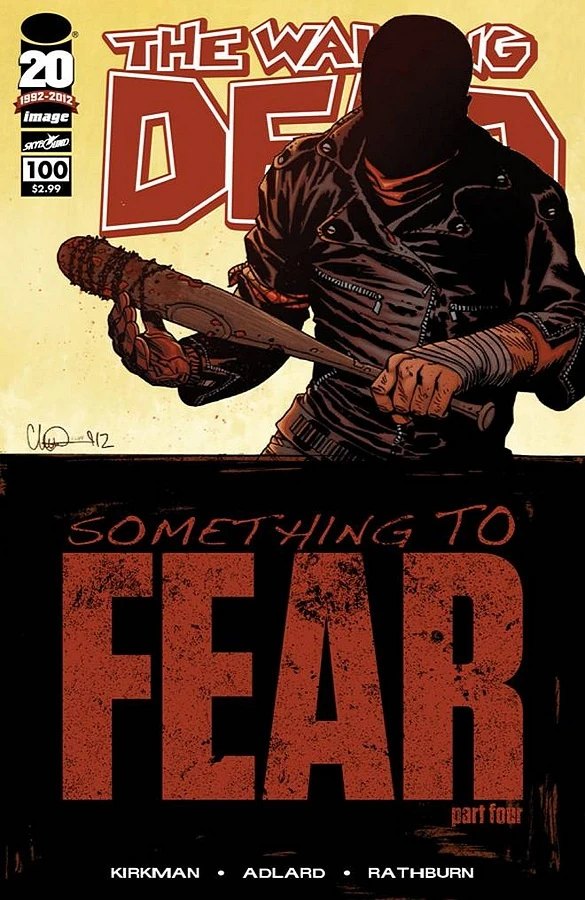
What happened next is the part Dead City is quietly rebuilding. After the war with the Saviors, Rick Grimes refused to execute Negan. He locked him in a cell in Alexandria for years, explicitly so that Negan would live to watch a civilization succeed without him. Rick’s position was that the rule mattered more than the satisfaction of breaking it. Negan eventually earned his way out by decapitating Alpha in issue #156 during the Whisperer War and delivering her head to Rick, and Kirkman still refused him a seat at the table: his final fate is exile, alone in an outpost, not reintegration. For more on where this run sits among the medium’s best, see our ranking of the best comic book runs of all time.
Here is the reversal. In the comic, Rick is never forced off that position, and the story vindicates it: the mercy he is criticized for is precisely what converts Negan into the weapon that ends the Whisperer War. Rick does die — assassinated by Sebastian Milton in issue #192 in 2019 — but not over Negan, and not because holding the line got him killed. In "Hourglass," the character who insists on process is murdered inside the same hour, and specifically because she insists on it.
Dead City is running Kirkman’s argument with the safety off, and it reaches the opposite conclusion: here, the rule of law does not survive contact with a man who knows how to lie about it. There is a further irony the show is well positioned to exploit. In the comics, the person who inherits Rick’s institution is Maggie — elected to lead the Commonwealth after his assassination. Dead City’s own lead is, in the source material, the character who ends up running the state that Rick’s restraint built. Watching her stand outside a hospital that has just executed its own rule-keeper is the sharpest thing this spinoff has done with its comics inheritance.
| Comics (Kirkman/Adlard) | Dead City season 3 | |
|---|---|---|
| The accusation | Negan is guilty of everything he is charged with | Negan is innocent of the specific charge, guilty of the trigger |
| Who argues for process | Rick Grimes | Renata |
| What it costs them | Political capital; the position holds | Her life; the position dies with her |
| How Negan is judged | Imprisoned for years, then exiled after killing Alpha (#156) | Judgment outsourced to a mob Dillard controls |
| The verdict on mercy | Vindicated — restraint is what civilization means | Exploited — restraint is a gap in the defenses |
Where the Episode Is Weakest
The episode has a structural problem it cannot fix: this is the seventh hour of an eight-episode season. Dead City spent six episodes on a threat it then discarded, and produced its most compelling antagonist in the penultimate installment.
Dillard is the best villain this show has had, and he has one episode left to be it. Jimmi Simpson plays the turn as heartbreak rather than menace — he told Collider he likes "playing people that have insane situations and then react in a way that makes total sense to them" — and that reading is the reason the character works. But an antagonist introduced this late cannot carry the weight the season needs him to. The walker-pet detail is doing enormous lifting for a relationship the show established recently and thinly; a version of this season that seeded Dillard’s attachment in episode two would have made his collapse devastating instead of merely effective. "Hourglass" is the best episode of the series and also the clearest evidence that season 3 misallocated its runtime.
So, Did It Work?
Yes, and it is not close. "Hourglass" is the first Dead City episode with a thesis rather than a premise. It converts Negan from a subject of debate into a pressure that reveals other characters, which is what the character is actually for, and it does so without asking the audience to forgive him.
The finale, "Tenebrae," airs September 13, 2026, with Maggie, Negan, and Hershel mounting a rescue against Dillard’s Dozen inside the hospital (Screen Rant). The test is whether the show honors what it just built. If Negan resolves this by being the better killer, the episode’s argument collapses into the same loop the series has run since season 1. If the finale lets Renata’s position win posthumously — if the community rebuilds the rule rather than avenging her — then "Hourglass" will read as the turn where Dead City finally became a show about something. For more of our episode coverage, see our reviews of the Silo season 3 finale and Strange New Worlds season 4, episode 7.
Frequently Asked Questions
When did Dead City season 3, episode 7 air?
"Hourglass," the seventh episode of The Walking Dead: Dead City season 3, aired on AMC on September 6, 2026. It is the penultimate episode of the eight-episode season.
Who kills Renata in Dead City season 3?
Dillard shoots Renata after she refuses to execute Negan on his accusation alone. Her death lets Dillard take control of the Dozen, the hospital, and its armory.
Did Negan really attack Dillard?
No. Dillard cut his own face and blamed Negan. Negan is, however, responsible for killing Dillard’s two chained walkers — one accidentally, one deliberately — which is what set the revenge plot in motion.
When is the Dead City season 3 finale?
The season 3 finale, "Tenebrae," airs September 13, 2026 on AMC, with Maggie, Negan, and Hershel attempting to retake the hospital from Dillard’s group.
How does Negan’s story end in the comics?
Rick Grimes imprisons rather than executes Negan, holding him in an Alexandria cell for years. Negan later kills the Whisperer leader Alpha in issue #156 and is granted exile, living alone in an outpost rather than rejoining the community.