Quick TakeArticle at a glance
- The greatest comic book villains of all time aren't just the ones who hit the hardest — they're the ones whose whole worldview makes sense from the inside, which is why the Joker, Doctor Doom, Magneto, and Thanos have outlasted almost every hero created to stop them.
- Created by Bill Finger, Bob Kane, and Jerry Robinson, the Joker first showed up in Batman #1 back in 1940 and has never once needed an origin story to work.
- Victor von Doom is what happens when you give a supervillain a country to run.
The greatest comic book villains of all time aren’t just the ones who hit the hardest — they’re the ones whose whole worldview makes sense from the inside, which is why the Joker, Doctor Doom, Magneto, and Thanos have outlasted almost every hero created to stop them. Here’s the definitive rundown, spanning both Marvel and DC, ranked by how much cultural and narrative weight each villain actually carries.
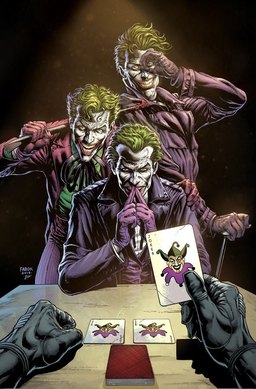
1. The Joker
Created by Bill Finger, Bob Kane, and Jerry Robinson, the Joker first showed up in Batman #1 back in 1940 and has never once needed an origin story to work. That’s the trick: he’s scarier without one. No master plan, no sympathetic backstory required — just a guy who thinks the world is a joke and wants everyone else to get the punchline. Every “best villain” list defaults to him first for a reason.
2. Doctor Doom
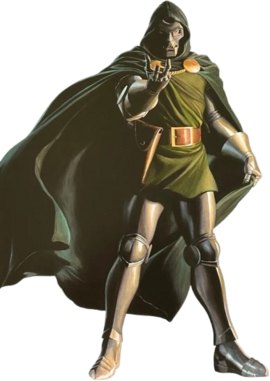
Victor von Doom is what happens when you give a supervillain a country to run. Since debuting in Fantastic Four #5 (1962), Doom has been positioned as smarter than Reed Richards, more powerful than most Avengers, and somehow still the sympathetic monarch of Latveria in his own head. He’s a rare villain whose ego is the whole character, and Marvel has never had to reinvent him to keep him relevant.
3. Magneto
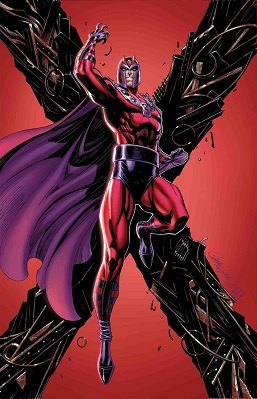
Magneto isn’t a villain because he’s wrong — that’s what makes him one of the best-written antagonists in comics. A Holocaust survivor who decided mutant persecution would end the same way human persecution did if nobody fought back, his conflict with Charles Xavier is one of the only hero-villain rivalries built entirely on two good arguments pointing in different directions.
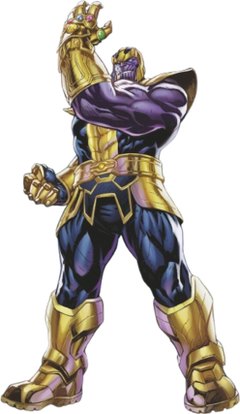
4. Thanos
Thanos loves Death — literally, as in the physical embodiment of it — and everything he does, including wiping out half the universe, is framed as an attempt to court her. It’s a genuinely strange motivation for a comic book villain, which is exactly why Jim Starlin’s version of the character has held up since his 1973 debut in Iron Man #55 instead of aging into a generic “wants power” antagonist.
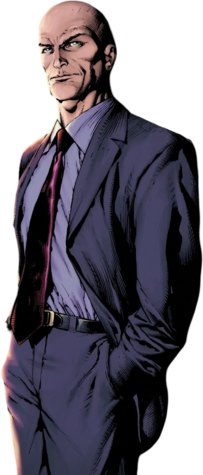
5. Lex Luthor
Superman doesn’t need a villain who can out-punch him — he needs one who can out-think everyone in the room, and that’s Lex Luthor. No powers, just money, genius, and a genuine belief that Superman is a threat to human self-determination. Luthor’s the reason “the smartest man in the room can still be the villain” works as a character archetype at all.
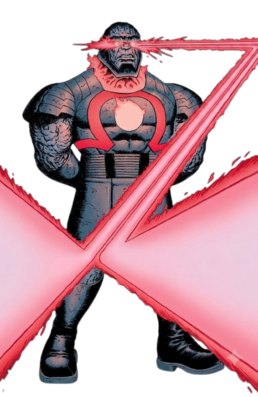
6. Darkseid
Jack Kirby built Darkseid as the endpoint of tyranny itself, and the character has never really needed to be more complicated than that. The Anti-Life Equation, Apokolips, the New Gods mythology — it’s cosmic-scale villainy, and Darkseid is one of the only DC villains who can credibly threaten the entire Justice League at once without the story needing to explain why.
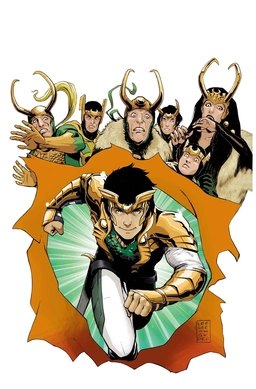
7. Loki
Loki works because he’s never fully committed to being a villain, which is rarer in comics than it sounds. He’s betrayed Thor, sided with Thor, destroyed Asgard, and rebuilt it, sometimes in the same decade of stories. That instability is the point — Loki’s threat isn’t strength, it’s that you genuinely don’t know which side he’s on until the story’s already over.
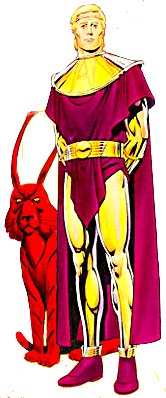
8. Ozymandias
Adrian Veidt from Alan Moore and Dave Gibbons’ Watchmen is the villain who wins — and the book’s entire argument is that “winning” doesn’t make what he did defensible. He fakes an alien invasion and kills millions to prevent nuclear war, and the story refuses to tell you whether that trade was worth it. Few villains in the medium have generated this much genuine debate decades after publication.
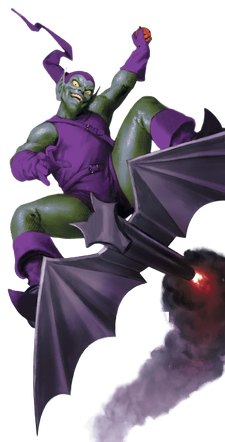
9. Green Goblin
Norman Osborn is personal in a way most Spider-Man villains aren’t — he’s Peter Parker’s best friend’s father, and the story never lets that distance shrink. The reveal of his identity in the early Lee/Romita run, and later killing Gwen Stacy in one of the most consequential single issues in Marvel history, cemented him as the villain every other Spider-Man antagonist gets measured against.
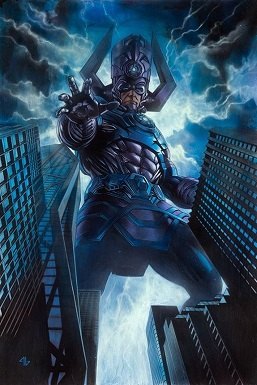
10. Galactus
Jack Kirby and Stan Lee needed a threat big enough that Earth’s mightiest heroes couldn’t just punch it, so they created a being who eats planets to survive. Galactus isn’t cruel — he’s closer to a force of nature that happens to be sentient, which makes him one of the few “villains” in mainstream comics that entire crossover events get built around instead of single arcs.
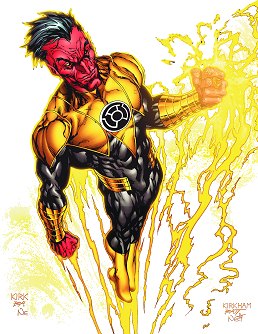
11. Sinestro
Once Hal Jordan’s mentor and the best Green Lantern the Corps ever trained, Sinestro’s fall from hero to fascist zealot is one of DC’s better tragic-villain arcs. His Yellow Lantern Corps runs on weaponized fear instead of will, which makes him a rare villain whose entire power set is a direct philosophical rebuttal to the hero he used to be.
12. Doomsday
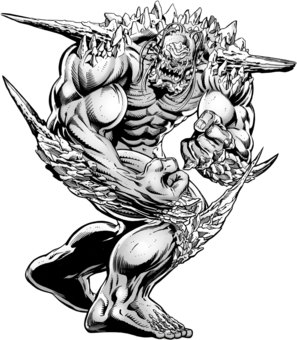
Doomsday doesn’t monologue, doesn’t scheme, and doesn’t need to — he was engineered purely to kill Kryptonians, and in Superman #75 (1992) he did exactly that. That single issue sold more than 6 million copies, making it the best-selling comic of 1992 and one of the biggest single sales days the industry has ever had. He remains one of the only villains in mainstream comics whose entire claim to fame is a single fight that ended with the hero dead. That same “no motive, pure violence” approach is what makes Deadshot’s most ruthless comic moments so unsettling — sometimes the scariest characters in comics are the ones who never explain themselves.
| Rank | Villain | Publisher | First Appearance |
|---|---|---|---|
| 1 | The Joker | DC | Batman #1 (1940) |
| 2 | Doctor Doom | Marvel | Fantastic Four #5 (1962) |
| 3 | Magneto | Marvel | X-Men #1 (1963) |
| 4 | Thanos | Marvel | Iron Man #55 (1973) |
| 5 | Lex Luthor | DC | Action Comics #23 (1940) |
| 6 | Darkseid | DC | Superman’s Pal Jimmy Olsen #134 (1970) |
| 7 | Loki | Marvel | Journey Into Mystery #85 (1962) |
| 8 | Ozymandias | DC (Watchmen) | Watchmen #1 (1986) |
| 9 | Green Goblin | Marvel | Amazing Spider-Man #14 (1964) |
| 10 | Galactus | Marvel | Fantastic Four #48 (1966) |
| 11 | Sinestro | DC | Green Lantern #7 (1961) |
| 12 | Doomsday | DC | Superman: The Man of Steel #17 (1992) |
The Difference Between a Great Villain and a Popular One
Look at this list and you’ll notice something: almost none of these villains are defined by raw power. Doctor Doom and Lex Luthor have no superpowers at all. The Joker’s threat level changes from story to story depending on which writer has him. What actually separates a villain who lasts eighty-plus years from one who gets quietly retired is whether their worldview survives contact with a good writer — Magneto’s argument about mutant survival, Ozymandias’s utilitarian math, Loki’s refusal to pick a side. Strength fades the moment a stronger hero shows up. A genuinely coherent motive doesn’t, which is why half this list predates the Marvel Cinematic Universe by fifty years and still hasn’t been replaced.
It’s also why villains built purely as physical threats — Doomsday is the clearest example — tend to define a single story instead of a whole era. Doomsday’s fight with Superman is one of the best-selling single issues in American comic book history, but almost nobody could tell you his motivation, because he doesn’t really have one beyond “kill Kryptonians.” Compare that to Lex Luthor’s best storylines, where the character’s motivation is the entire plot every single time.
Frequently Asked Questions
Who is considered the greatest comic book villain of all time?
The Joker is the most consistently ranked #1 across fan polls and critic lists, largely because Batman’s rogues’ gallery treats him as an idea more than a character — he works without an origin story, which almost no other major villain can claim.
Is Thanos or Doctor Doom the better villain?
They’re built for different roles. Doctor Doom is the sharper individual antagonist with a personal rivalry (Reed Richards); Thanos works better as a cosmic-scale threat whose motivation (courting Death) is stranger and more mythic than Doom’s political ambition.
What makes Magneto different from most supervillains?
Magneto’s goals — mutant survival against a species that has historically tried to exterminate them — are framed as legitimate, not delusional. His conflict with Professor X is built on two defensible philosophies rather than a simple hero-vs-evil setup.
Are any of these villains from outside Marvel and DC?
Ozymandias, from Alan Moore and Dave Gibbons’ Watchmen, is technically published under DC’s imprint but exists in a self-contained universe. He’s included because Watchmen is widely considered one of the most influential comics ever written.