Scarlet Witch’s best comic storylines span three decades of Wanda Maximoff going from Avengers mainstay to the woman who rewrote reality itself. House of M tops the list for sheer scale, but Avengers: Disassembled, the Children’s Crusade, and her two solo runs all matter if you want the full arc of how Marvel’s most powerful witch became its most tragic hero.
If you’re new to Wanda because of VisionQuest, start with the three below marked “essential.” Everything else fills in the gaps once you’re hooked.
| Storyline | Year | Why It Matters |
|---|---|---|
| Avengers: Disassembled | 2004 | The breakdown that triggers everything after it |
| House of M | 2005 | Wanda’s defining, most consequential story |
| Decimation / Son of M | 2005-2008 | The multi-year fallout of “no more mutants” |
| Avengers: The Children’s Crusade | 2010-2012 | First step in her redemption arc |
| Avengers vs. X-Men | 2012 | Wanda helps partially undo House of M |
| Trial of Magneto | 2021 | Wanda faces the mutants she depowered |
| Scarlet Witch by James Robinson | 2015-2017 | Occult-detective solo series |
| Scarlet Witch by Steve Orlando | 2023 | Current, most newcomer-friendly solo run |
8. Scarlet Witch (2023) by Steve Orlando
This 10-issue run (January to November 2023) put Wanda behind the counter of her own occult shop, helping strangers with magical problems between Avengers call-ups. It’s lower stakes than anything else on this list by design, and that’s the appeal: after two decades of cosmic-scale guilt, a Wanda who just wants to help people with small, weird magic problems is a genuine change of pace.
7. Scarlet Witch (2015) by James Robinson
James Robinson’s 15-issue series (December 2015 to February 2017) is the one that tried hardest to get Wanda out from under House of M’s shadow. He wrote her as an occult detective traveling the world and investigating magical crimes, with a rotating lineup of artists illustrating different one-shot-style arcs. It’s uneven, but David Aja’s covers alone make the trade paperbacks worth tracking down.
6. Avengers vs. X-Men (2012)
Wanda spends most of AvX atoning rather than fighting. The payoff comes in issue #12, where she and Hope Summers channel the Phoenix Force together to undo the one thing Wanda could never fix herself: the mutant depowering from House of M. It’s the first real turning point in her redemption arc, years before Marvel gave her a proper ending to that story.
5. X-Men: The Trial of Magneto (2021)
A five-issue murder mystery built around a genuinely strange premise: Wanda turns up dead, and because her killer has magnetic powers, Magneto becomes the Krakoan ruling council’s prime suspect. Before they can resurrect her through Krakoa’s usual process, Wanda resurrects herself — in a younger body, with no memory of anything since before Avengers: Disassembled. When those memories come flooding back, the guilt over House of M hits her all at once, and the story turns into her confronting it directly instead of carrying it quietly. It’s one of the few stories that forces that reckoning out into the open.
4. Avengers: The Children’s Crusade (2010-2012) — essential
Wiccan and Speed, the Young Avengers, start pulling on a thread that leads somewhere nobody expected: they’re convinced they’re the reincarnated souls of Wanda’s children, the twins she lost before Avengers: Disassembled. The hunt to find their missing mother becomes the first story to treat Wanda as someone worth saving rather than a problem to be contained, and it’s the direct bridge between House of M and everything that followed.
3. Avengers: Disassembled (2004) — essential
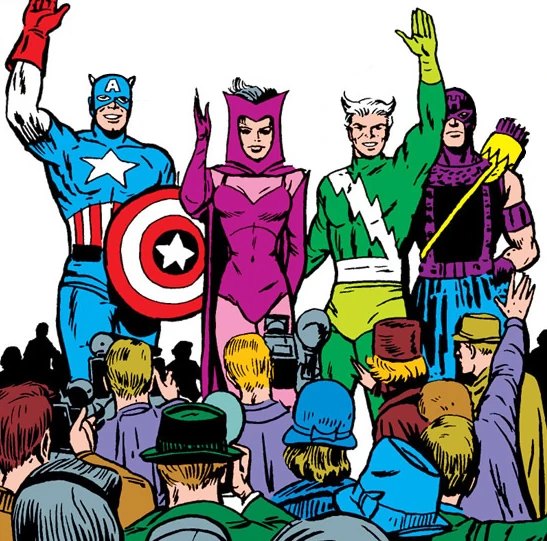
Before House of M, there was the breakdown. Years of manipulation by Immortus, Magneto, and Mephisto, stacked on top of losing her magically-created twin sons and her marriage to Vision, finally cracked Wanda’s control over her hex powers. The Avengers paid for it — Scott Lang and the Vision are both casualties, and Hawkeye dies holding the team together. It’s a hard read, but it’s the story that makes House of M make sense instead of feeling like a random reset button.
2. House of M (2005) — essential
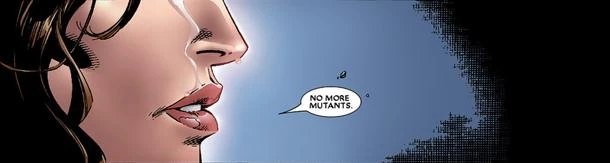
Marvel’s best-selling event of the mid-2000s, and still the single most important Scarlet Witch story ever published. Reeling from what she did in Disassembled, Wanda rewrites reality so Magneto rules a world where mutants are the ruling class. When it collapses, she speaks three words — “No more mutants” — and strips power from all but 198 mutants on Earth, a decision Marvel spent the next fifteen years of comics undoing. ComicBook.com and most other outlets that rank her stories put this at #1 for the same reason we do: nothing else she’s done has reshaped the entire Marvel Universe this completely. House of M #1 sold north of 233,000 units in June 2005, the best-selling single issue in comics that month, according to sales data tracked by Comichron.
1. House of M’s Aftermath, Told Across Decimation and Son of M
This is the one people underrate: not the big swing of House of M itself, but what Marvel did with the fallout for the rest of the decade. “No more mutants” didn’t just end the story — it became the operating condition of the entire X-Men line for years, reshaping characters from Quicksilver to Rogue to the X-Men’s membership. Wanda didn’t appear in most of it, which is exactly the point: her choice became bigger than she was, a rare case of a character’s single decision outgrowing the character and running an entire corner of the publishing line on its own momentum. That’s a different kind of impact than any fight scene, and it’s why we rank the consequences above the event that caused them.
Where VisionQuest Fits Into All This
VisionQuest is positioned as the third chapter of a trilogy that started with WandaVision, continued through White Vision’s return, and closes out Wanda and Vision’s story together on screen. If you want the comic-page version of that same arc — grief, identity, and a marriage that doesn’t survive what happens to it — House of M and the Children’s Crusade are the two to read first. For Vision’s own side of the story, our Vision’s Best Comic Storylines, Ranked and Ultron’s Best Comic Storylines, Ranked cover the rest of the trilogy’s comic-book roots.
Frequently Asked Questions
What is Scarlet Witch’s most important comic storyline?
House of M (2005). It’s the story every major Wanda arc since has had to respond to, and it’s still the one most frequently cited as her defining comic-book moment.
Do I need to read House of M before watching VisionQuest?
No — the show stands on its own. But House of M and Avengers: The Children’s Crusade explain where a lot of Wanda and Vision’s on-screen grief originally comes from on the page.
Is Scarlet Witch a villain or a hero in the comics?
Both, depending on the era. House of M and Avengers: Disassembled cast her as the Avengers’ biggest threat; everything from the Children’s Crusade onward is Marvel slowly rebuilding her as a hero again.
What’s the best Scarlet Witch comic to start with today?
Steve Orlando’s 2023 solo series. It doesn’t require you to already know House of M, and it’s the version of Wanda currently running in new Marvel comics.