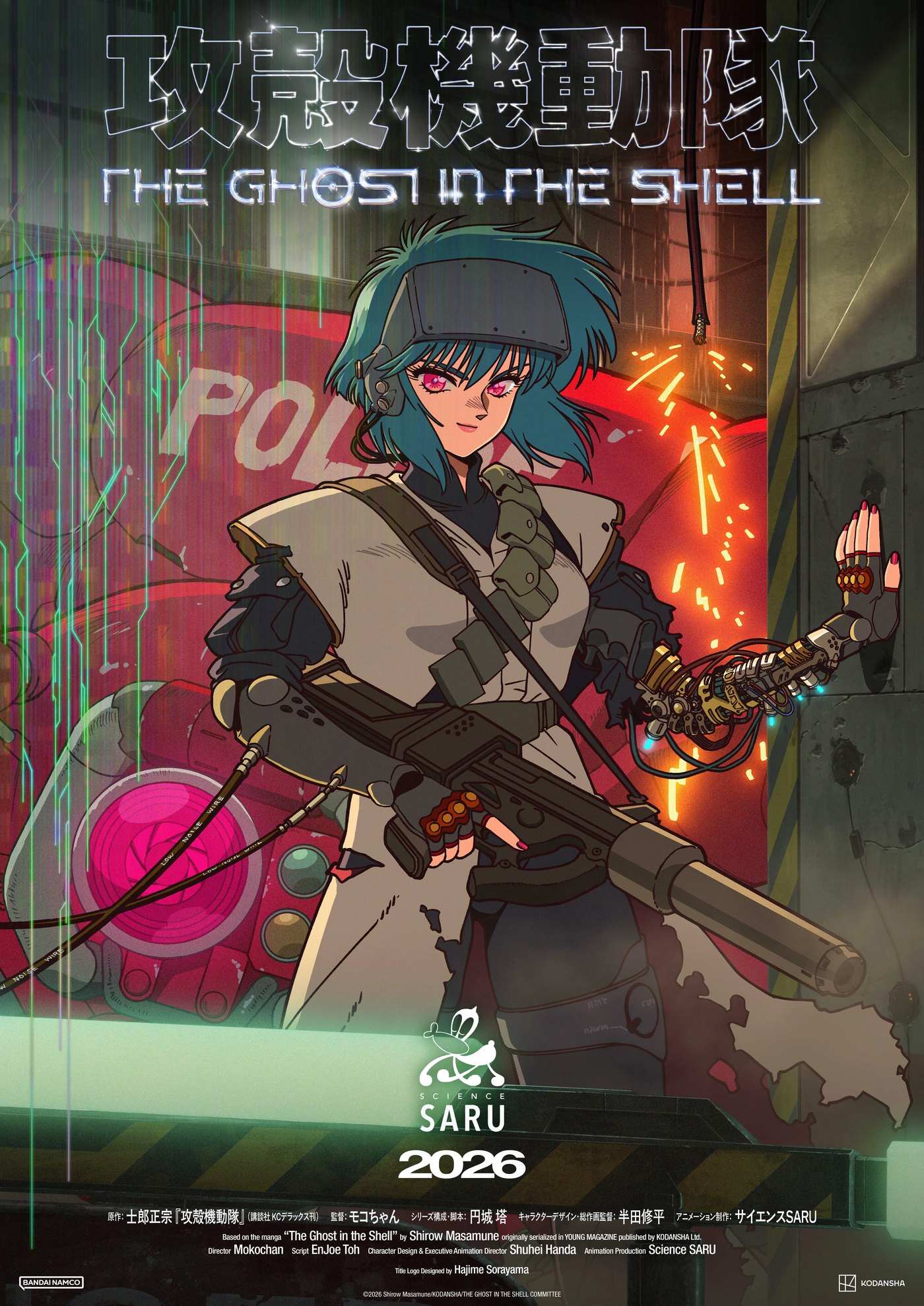
Ghost in the Shell episode 7 is the season’s most divisive instalment, and its tonal swings are deliberate rather than sloppy. Science Saru restores the comic register Masamune Shirow’s manga always had and Mamoru Oshii’s 1995 film deliberately stripped out — a choice that pays off everywhere except the episode’s single biggest scene.
How this review was put together: it compares episode 7 against the manga chapter it adapts — Masamune Shirow’s chapter 9, “Bye Bye Clay” — and against the same beat as staged in Mamoru Oshii’s 1995 film, using the official episode listing plus the published episode reviews cited throughout. It judges adaptation choices. It does not grade the voice performances or the score from first-hand viewing, and it attaches no numerical rating, because this desk runs no defined scale for weekly episodes. Where a judgement about execution belongs to a critic who watched the episode, that critic is named.
What Happens in “Bye Bye Clay”
A body walks out of Megatech Body Co. on its own. Section 9 takes the runaway shell into custody after it is hit by a truck on the highway, and discovers that something is living inside it — an entity that announces it is not a hacked program but a life form that arose spontaneously in the sea of information. It requests political asylum. Rival agency Section 6 wants it back. Moments after the request, the shell is stolen.
Motoko Kusanagi brain-dives the entity before it goes. That exchange is the episode’s centre of gravity, and it is the sequence reviewers single out — But Why Tho calls Science Saru’s surreal cyberspace animation “a visual treat,” and Bubbleblabber describes the Motoko/Puppet Master scene as “mesmerizing.”
That is the whole plot, and deliberately so — a full 25-minute episode of setup for a single conversation. What is worth arguing about is not what happens but the register it happens in.
The Tonal Clash Critics Are Describing Is the Adaptation Working
The most common complaint about this episode is tonal. But Why Tho calls out “jarring moments” where comedy undercuts tension, and a visual clash between the show’s comedic default style and its serious cyberspace sequences. That reading is accurate. The conclusion drawn from it — that the show is failing to control its tone — is not.
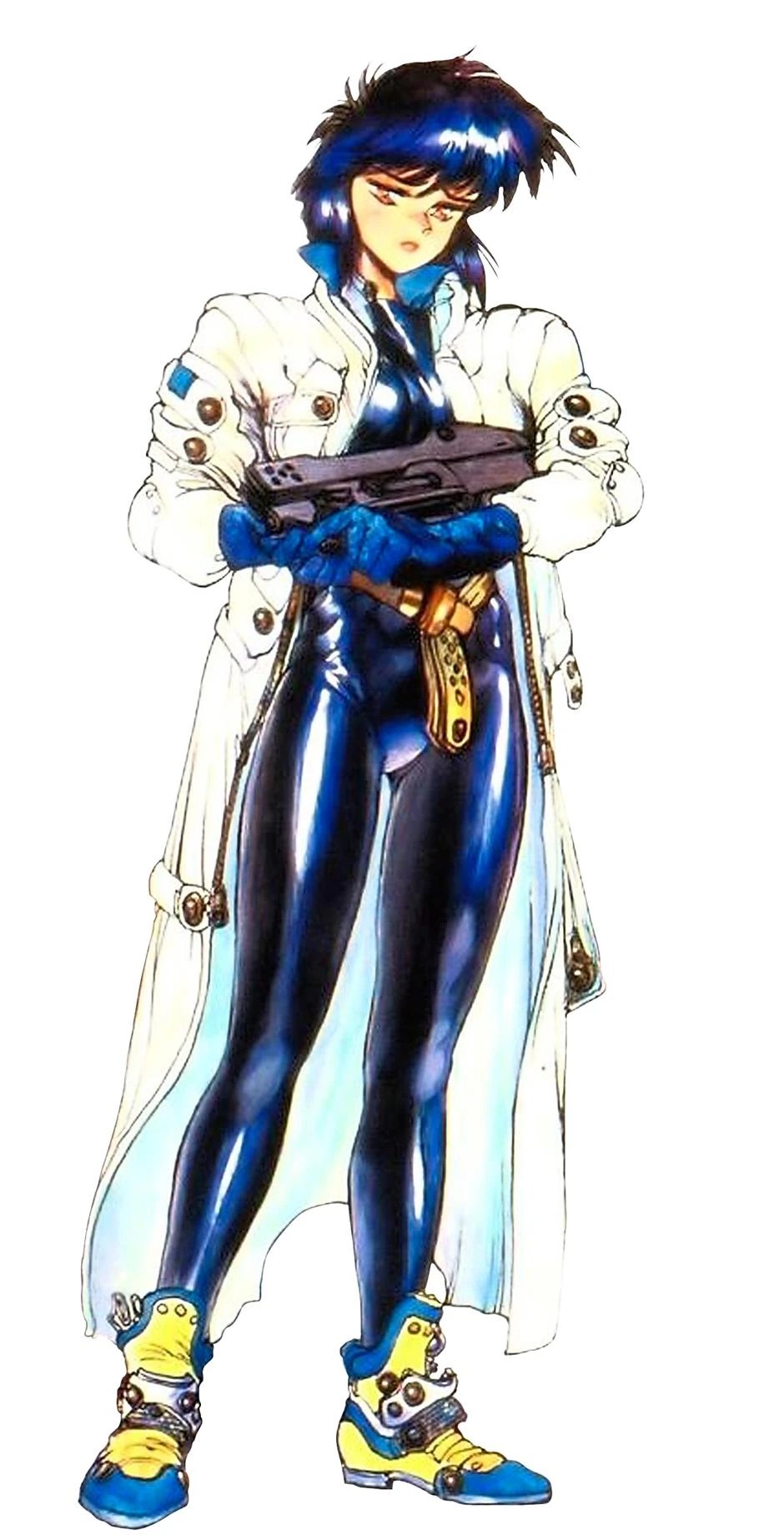
Here is the piece of adaptation history that reframes the whole complaint. Shirow’s 1989–91 manga is a comedy as much as it is a philosophy text — a book that interrupts its own cybernetics lectures with sarcastic asides and discursive footnotes, starring a Motoko who is visibly younger, brattier and more rebellious than the icon most people picture. The version most people picture is Oshii’s, and Oshii built it by subtraction.
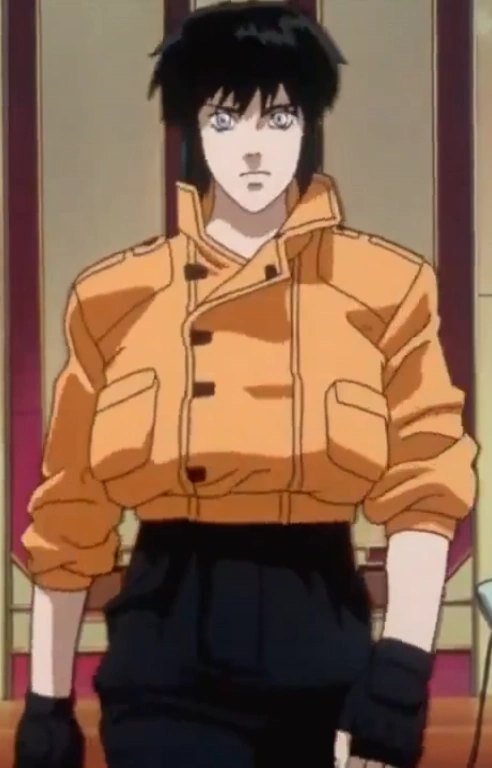
This is documented, not inferred. Character designer Hiroyuki Okiura made Motoko “more mature and serious than Masamune Shirow’s original portrayal” for the 1995 film, and the production removed “the comedic facial expressions and rebellious nature depicted in the manga,” replacing them with a wistful, contemplative personality. The solemnity that fans now treat as the essence of Ghost in the Shell was a directorial choice made in 1995, over the source material’s objection.
So when Science Saru lets a Fuchikoma gag land three seconds before a metaphysical monologue, it is not losing control of the material. It is playing the material as written. Thirty years of adaptations have trained the audience to expect Oshii, and this show is the first one that has declined to give them Oshii. That is the most interesting decision anyone has made with this franchise in two decades.
Where the Argument Breaks Down — the Asylum Scene
Being faithful and being right are different things, and this episode is where the distinction bites.
The asylum request is the single most famous beat in the franchise. In the 1995 film it is staged as a legal and theological event: a room of bureaucrats, a voice claiming personhood, and Oshii refusing to cut away or lighten the air for several minutes. It works because nothing is allowed to puncture it.
Episode 7 does not give that scene the same protection. The comic register that serves the Megatech chase and the Section 6 squabbling actively fights the asylum plea, and the episode has no compensating weapon — which brings up the other thing reviewers noticed. Bubbleblabber flags significant censorship relative to the manga, including the removal of its nudity. In Shirow’s version, the shock of the body is doing real argumentative work: the thing demanding to be recognised as a person is confrontationally, uncomfortably a manufactured object. Sand that down and keep the jokes, and the scene has neither Oshii’s gravity nor Shirow’s provocation.
This is a real flaw and it should be named as one. The show picked the harder tonal path, committed to it, and then hedged on the one element that made the harder path survivable. On the franchise’s most important scene, Oshii’s instinct was the correct one.
Maaya Sakamoto’s Motoko, and the Shadow of Atsuko Tanaka
Maaya Sakamoto’s performance is drawing praise — But Why Tho gives it particular recognition in this episode — and the context makes it heavier than a normal casting note. Sakamoto is the first actor to lead a Ghost in the Shell production after Atsuko Tanaka, who voiced Motoko from 1995 through SAC_2045, died in August 2024. This series is a complete recast, and it is the first one that had no choice.
That timing is worth naming, because it quietly removes an obstacle. A show attempting to unwind thirty years of Oshii-derived solemnity would have had a much harder job with the voice that defined that solemnity still in the booth. The recast was forced by circumstance, but it hands this production the one thing a manga-faithful Ghost in the Shell needs and could not otherwise have asked for: permission to sound different. Reviewers describe the entity opposite her as flat and affectless, which is the correct read of the manga’s version of the character.
“Bye Bye Clay” Across Three Versions
| Shirow manga (1989–91) | Oshii film (1995) | Science Saru (2026) | |
|---|---|---|---|
| Where it sits | Chapter 9, “Bye Bye Clay” | The film’s midpoint | Episode 7, same title |
| Tone | Satirical, gag-inflected, explicit | Solemn, unbroken, funereal | Comic default, surreal at the core |
| Motoko | Younger, brattier, rebellious | Mature, wistful, withdrawn | Light, amused, quick |
| The asylum plea | Undercut and provoked in equal measure | Protected absolutely | Undercut, but with the provocation removed |
That last row of the caption is the structural fact worth holding on to. Episodes 1 to 7 march through the manga’s chapters in sequence — “Super Spartan,” “Junk Jungle,” “Megatech Machine,” “Robot Rondo,” “Phantom Fund,” “Dumb Barter,” “Bye Bye Clay” — under Shirow’s own titles. No previous adaptation has done that. If you have only ever met this story through the films or Stand Alone Complex, our Ghost in the Shell watch order guide lays out how the four continuities differ.
📚 For Manga Readers Only — Source-Material Spoilers
Readers of the manga know that “Bye Bye Clay” is not a self-contained mystery but the opening move of the book’s endgame, and that the three chapters that remain — “Brain Drain,” “Ghost Coast” and the epilogue — resolve what the entity in the shell actually wants from Motoko specifically. Episode 8 is titled “Intermission + Brain Drain i,” which confirms the series is still tracking the chapter order exactly and is not going to detour.
The open question for readers is whether a show this committed to Shirow’s structure will also commit to Shirow’s resolution, which is stranger and less romantic than the one Oshii filmed. On the evidence of the censorship in this episode, there is reason for doubt.
Ghost in the Shell Episode 7 Review: The Verdict
“Bye Bye Clay” is the best argument yet for what this series is doing and the clearest example of its one structural weakness. It is a genuinely faithful Ghost in the Shell — the first one — and faithfulness turns out to cost something precisely where the franchise is most famous.
We are not assigning a score, because a single number would flatten a split verdict. For reference, published reviews have landed at 8.5/10 (But Why Tho) and 7.5/10 (Bubbleblabber), and the gap between them is essentially the argument above.
If you want more of our weekly genre TV coverage, we are also reviewing Bleach: Thousand-Year Blood War and HBO’s Lanterns episode by episode.
Frequently Asked Questions
When did Ghost in the Shell episode 7 come out?
“Bye Bye Clay” was released on 18 August 2026. The series airs weekly on Tuesdays in Japan and streams worldwide on Prime Video.
How many episodes is The Ghost in the Shell 2026 anime?
Ten episodes. Episode 8, “Intermission + Brain Drain i,” is dated 25 August 2026, with episode 9 following on 1 September 2026. Listings currently disagree on episode 9’s title, so treat any title you see for it as unconfirmed.
Is the 2026 Ghost in the Shell anime faithful to the manga?
Structurally, more faithful than any previous adaptation — it follows Masamune Shirow’s chapter order and keeps his chapter titles. It is less faithful in content, with reviewers noting censorship of the manga’s more explicit imagery.
Do I need to watch the 1995 film or Stand Alone Complex first?
No. The 2026 series is its own continuity and adapts the manga directly from the beginning, so it works as a standalone entry point.
Who voices Motoko Kusanagi in the 2026 series?
Maaya Sakamoto in Japanese and Suzie Yeung in the English dub. Sakamoto succeeds Atsuko Tanaka, the long-time voice of Motoko, who died in August 2024.