The Ghost in the Shell episode 9, “Brain Drain ii,” aired September 1, 2026 on Prime Video and is the penultimate episode of Science SARU’s ten-episode season. It puts Major Motoko Kusanagi and Section 9 under legal and political attack, and it is the strongest character writing the series has produced — even as its biggest adaptation change finally starts to hurt.
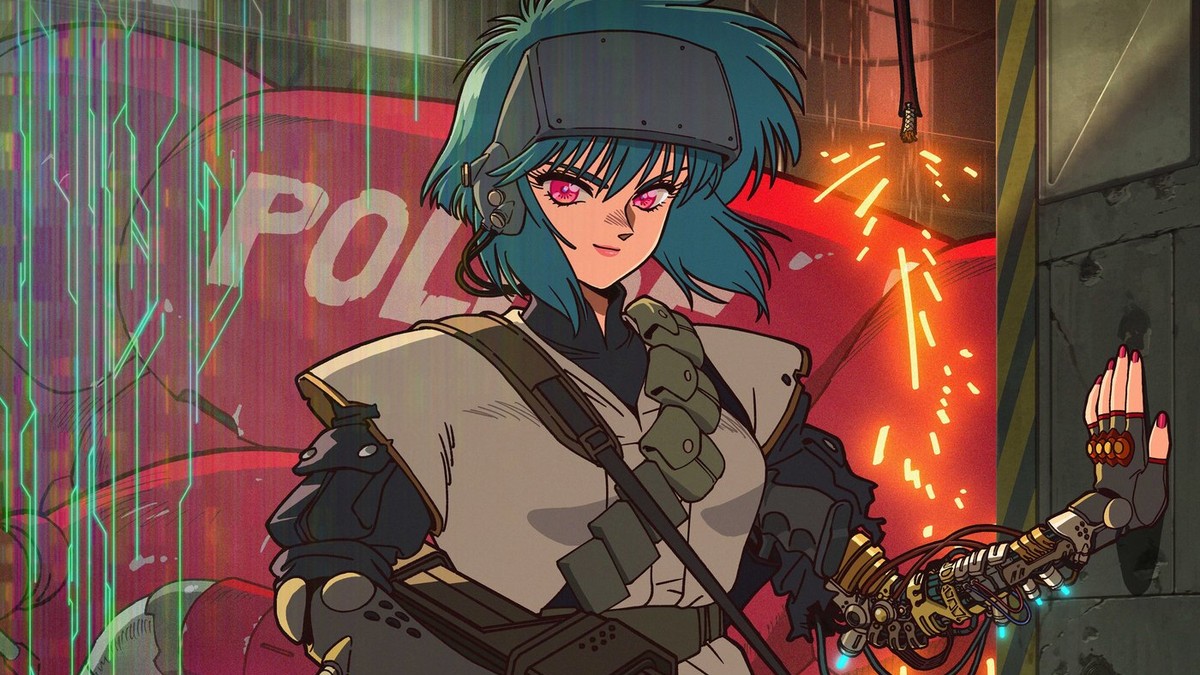
What happens in The Ghost in the Shell episode 9
Episode 9 opens with the fallout from Kusanagi shooting a suspect on camera. The footage goes out on live television, Section 9’s covert operations stop being covert, and the Major is put on trial for the killing. On the stand she does not plead the practical defence; she asks whether destroying software running on hardware is a killing at all, which is the show restating its own thesis in a courtroom.
Around her, the case turns out to be the point rather than the accident. The earlier yacht operation was arranged so that Section 9 would produce exactly this footage, and the recording is now leverage. Chief Daisuke Aramaki comes under pressure from the Ministry of Justice to hand Kusanagi over, and refuses. The team starts pulling on the thread of who set them up, which leads back into the foreign-intelligence plot the season has been building since the yacht.
The resolution is a staged one. Kusanagi takes a face sculptor hostage, wires him to explosives, and manoeuvres police snipers into position for what looks like a headshot on her. Aramaki, who has been quietly running the other half of the plan, sits in a car and waits. Batou is in it too. The episode then stops, mid-scene, on the way out.
The verdict: the best episode of the season, and the clearest look at its one bad call
Here is the argument in one line. Episode 9 is the best episode this adaptation has produced because it finally gives Kusanagi someone to be loyal to — Aramaki — and lets the plot turn on that loyalty rather than on hardware. But the same episode is where Science SARU’s decision to scrub the manga’s real nation-states into invented ones stops being a cosmetic hedge and starts actively costing the story its legibility.
Both halves of that are true at once, which is why the episode is worth arguing about. The series has spent nine weeks being admired for its surfaces — Shuhei Handa’s character designs, the Hajime Sorayama title logo, the King Gnu opening. This is the first week it has been genuinely moving, and the first week the adaptation choices have visibly got in the way.
Aramaki is the reason this episode works
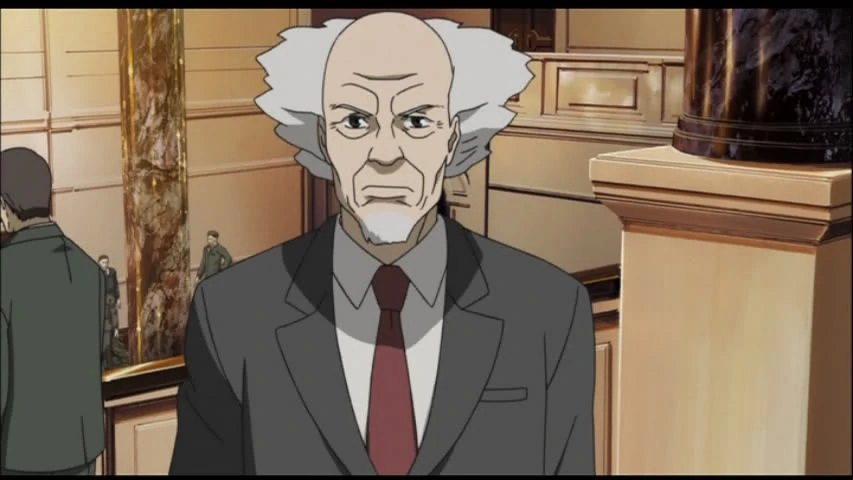
The strongest thing in episode 9 is not the courtroom and not the fake execution. It is a middle-aged bureaucrat declining to sacrifice a subordinate when sacrificing her would be the easy institutional move. Aramaki is usually written as an exposition valve — the man who explains the ministry politics between action beats. Here the ministry politics are aimed at him, and he absorbs them.
Anime News Network’s Kevin Cormack reads the pairing as a “father-daughter dynamic,” and that is close, but it undersells what the episode does. The show is not sentimental about it. Aramaki never says anything warm to Kusanagi; he simply keeps choosing her, at cost, and the episode trusts you to notice. That restraint is why the beat where he calmly gets into the car lands as well as it does — his own colleague is visibly appalled, and Aramaki is not.
It also fixes the season’s biggest character problem. Since the Puppet Master material began, Kusanagi has been drifting away from everyone, and a protagonist who is becoming less attached is hard to build an episode around. Giving her a relationship she will not abandon — and one that is professional rather than romantic — is the correct fix, and it is the one the show had available without inventing anything.
What the manga did with Brain Drain (source-material spoilers start here)
Manga spoilers below. This section discusses Masamune Shirow’s original chapter and what it contains. Skip to “The recasting is not a gimmick” if you are watching the anime cold.
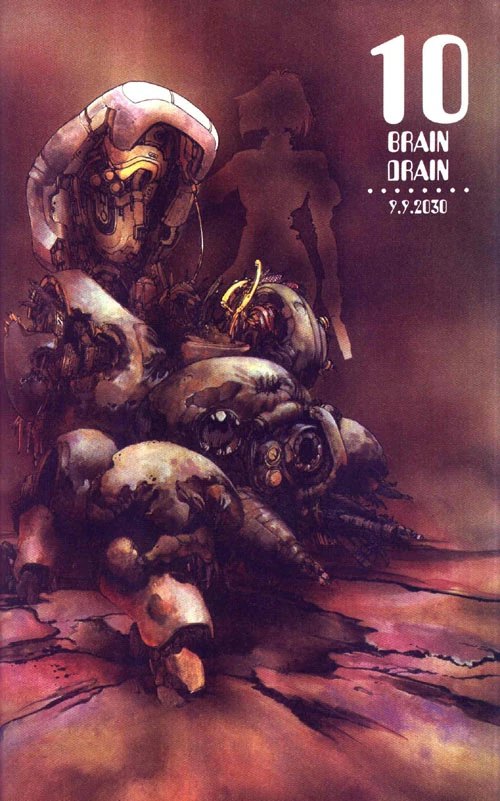
“Brain Drain” is chapter 10 of Shirow’s 1989–91 manga. It sits between “Bye Bye Clay” and “Ghost Coast,” which is exactly where the anime has placed it, and this series has been following the book chapter by chapter rather than remixing it. In the original, Section 9 uncovers an Israeli plot to assassinate Japan’s foreign minister, and Kusanagi is publicly framed as a killer so that the unit can be neutralised.
The anime keeps the frame-up and drops the map. Israel becomes a fictional state, Russia becomes Volgarena, and the United States becomes the MAG Union. Cormack notes at Anime News Network that the renaming looks designed to avoid “unnecessary political controversy,” and that it makes the story “somewhat harder to follow.” That is the polite version. The harder version is this: Shirow’s plot is not a spy story that happens to involve nations, it is a story about a middle power being used as a board by larger ones, and that only reads if the pieces have weight.
Invented countries have no weight. When the anime says a fictional Middle Eastern state arranged the yacht incident, the viewer has nothing to attach it to, so the conspiracy flattens into generic intrigue and the episode has to spend dialogue re-establishing stakes that the manga got for free. Two outlets covering episode 9 independently reached for different transliterations of the same country name, which is a small but telling sign of how little grip the invented geography has.
This is a defensible choice — a 2026 production naming a real state as the aggressor in an assassination plot would be a different kind of headline — but it is a choice with a bill attached, and episode 9 is where the bill arrives. The fix was available: keep the invented names and give them one concrete, memorable attribute each. The show has not done that.
Source-material spoilers end here.
The recasting is not a gimmick
One thing worth knowing before the finale, because it changes how the whole season sounds. Atsuko Tanaka was the definitive Japanese voice of Motoko Kusanagi, playing her in the 1995 film, Stand Alone Complex and SAC_2045. She died on August 20, 2024, aged 61. The recast to Maaya Sakamoto is not a reboot flourish; it is a necessity, and Sakamoto is the least arbitrary possible replacement, having already played a younger Kusanagi across Ghost in the Shell: Arise from 2013 to 2015.
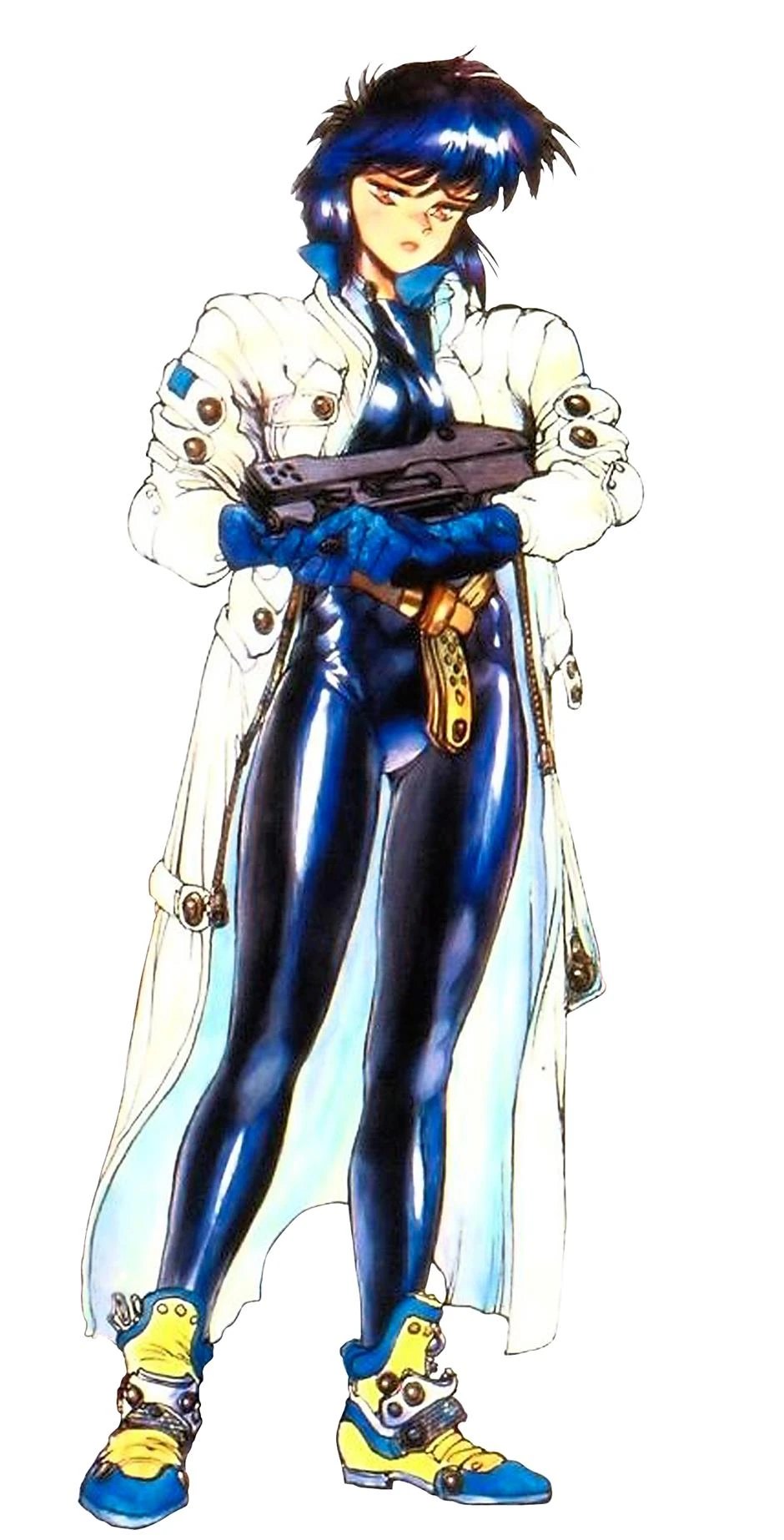
The detail almost nobody has flagged is what happened to Akio Otsuka. Otsuka played Batou for close to thirty years — the 1995 film, Stand Alone Complex, SAC_2045. In this series Batou is Hiroki Yasumoto, and Otsuka is still on the call sheet, cast instead as Colonel Malles. That is not a courtesy cameo. It is a production quietly signalling that it is not trying to be the previous continuity while keeping the previous continuity’s voice in the room, and it is the most graceful thing this adaptation has done off-screen.
Where episode 9 leaves the September 8 finale
The season ends on Tuesday, September 8, 2026, with a single episode carrying three titles: the end of “Brain Drain,” the whole of “Ghost Coast” and an epilogue. That is a lot of book for one slot, and it is the main reason to be nervous. The pacing complaint that has followed this adaptation all season is about compression, and the finale is the most compressed slot on the schedule.
| Episode | Title | Aired / airs | Manga source |
|---|---|---|---|
| 7 | Bye Bye Clay | August 18, 2026 | Chapter 9, “Bye Bye Clay” |
| 8 | Intermission + Brain Drain i | August 25, 2026 | Interlude + chapter 10 opening |
| 9 | Brain Drain ii | September 1, 2026 | Chapter 10, “Brain Drain” |
| 10 (finale) | Brain Drain iii + Ghost Coast + Epilogue | September 8, 2026 | Chapter 10 conclusion + chapter 11, “Ghost Coast” |
Episode 9 has done its job for that finale, though. It has given Kusanagi a reason to come back that is a person rather than a mission, and after nine weeks of a protagonist quietly detaching from her own body and her own team, that is the only setup that makes an ending possible. Whether the show can land “Ghost Coast” on top of it in one sitting is a different question.
If you are catching up, our review of episode 8 covers the Puppet Master material this arc is built on, the full 2026 episode schedule has every release date and time, and our Ghost in the Shell watch order explains how this series relates to the 1995 film, Stand Alone Complex and Arise.
Sources
Plot details were cross-checked against Anime News Network’s episode 9 review by Kevin Cormack and the episode 9 write-up at With Eyes East. Staff and cast credits, including Akio Otsuka’s role, come from the anime’s official staff and cast page. Atsuko Tanaka’s death was reported by Anime News Network on August 20, 2024.
Frequently Asked Questions
When did The Ghost in the Shell episode 9 come out?
Episode 9, “Brain Drain ii,” released on Tuesday, September 1, 2026 at 10:30 a.m. ET / 7:30 a.m. PT on Prime Video, with a same-day broadcast in Japan. Episodes drop weekly on Tuesdays at that time.
How many episodes does The Ghost in the Shell (2026) have?
Ten. Episode 9 is the penultimate episode and the finale, “Brain Drain iii + Ghost Coast + Epilogue,” airs September 8, 2026.
Which manga chapter is Brain Drain?
Chapter 10 of Masamune Shirow’s 1989–91 manga, sitting between chapter 9, “Bye Bye Clay,” and chapter 11, “Ghost Coast.” The anime is adapting the book in chapter order rather than remixing it, which is why the episode titles match.
Why is Motoko Kusanagi voiced by a different actor in the 2026 series?
Atsuko Tanaka, who played Kusanagi from the 1995 film through SAC_2045, died on August 20, 2024 at 61. Maaya Sakamoto, who voiced a younger Kusanagi in Ghost in the Shell: Arise, took over the role.
Do I need to watch the 1995 film or Stand Alone Complex first?
No. The 2026 series is a separate continuity adapting the manga directly and assumes no knowledge of the earlier anime. Reading Shirow’s manga helps far more than watching the previous adaptations does.