Moon Knight’s powers are the most inconsistent in Marvel Comics — by design. Marc Spector was resurrected by the Egyptian moon god Khonshu and classically drew strength, speed and agility that scaled with the lunar phase. But a 2006 storyline had him state outright that those powers were gone, and most modern runs write him as a peak-human vigilante instead.
So the honest answer to “what are Moon Knight’s powers” is: it depends entirely on which era you are reading. Here is the full picture, era by era, plus what the recent Khonshu retcon actually changed.
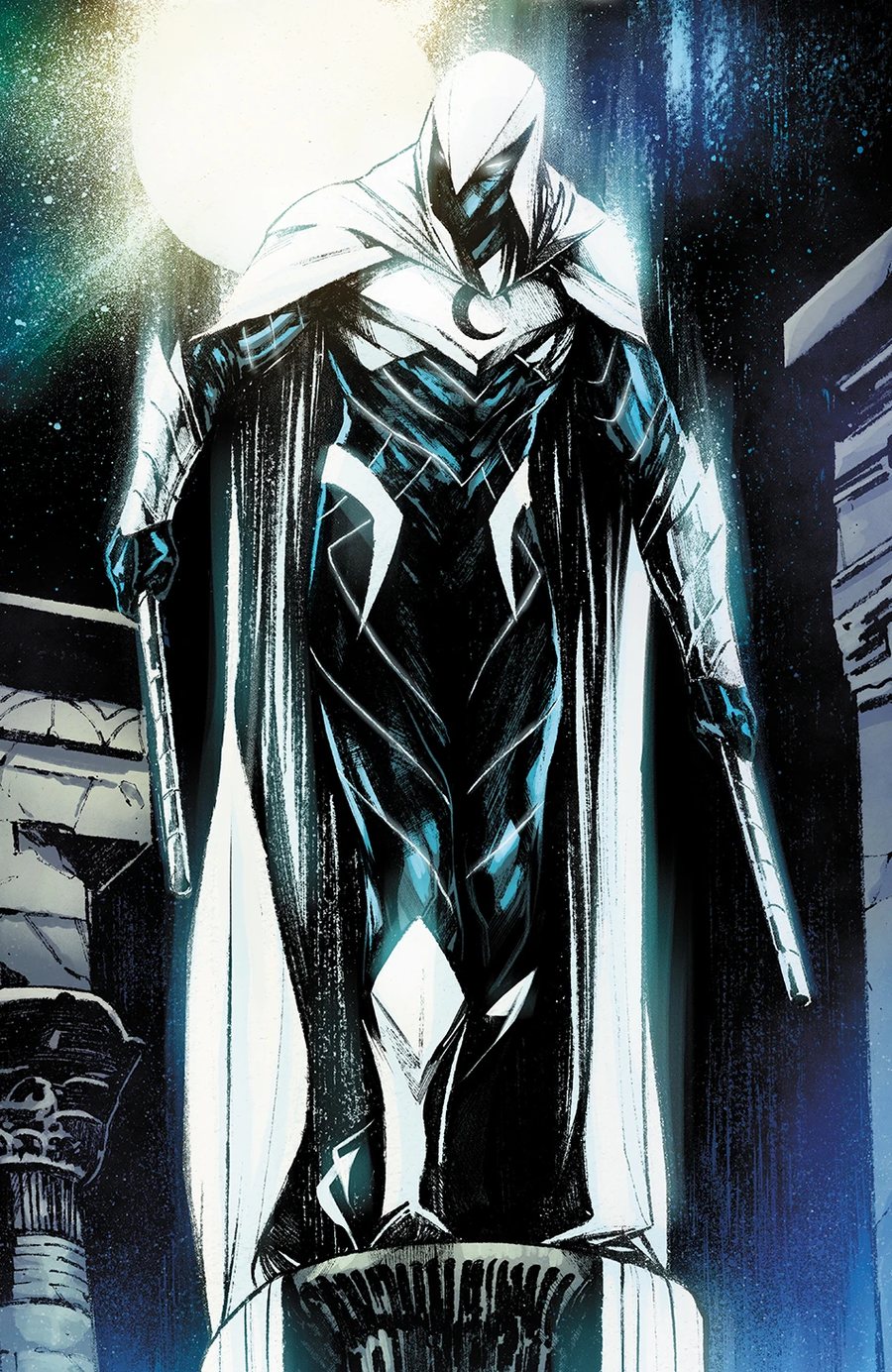
Who is Moon Knight?
Marc Spector debuted in Werewolf by Night #32 (August 1975), created by writer Doug Moench and artist Don Perlin. He was not a hero in that first appearance — he was a mercenary hired by an organisation called The Committee to capture or kill Jack Russell, the werewolf, and he came equipped with silver weaponry.
The origin that stuck came later. Spector, working as a mercenary in Egypt, was left to die beneath a statue of Khonshu. The moon god revived him and made him his avatar on Earth — the Fist of Khonshu — and Spector returned as Moon Knight.
Moon Knight powers, era by era
Ask what Moon Knight powers look like and you get four different answers depending on which run you pick up. This is the whole map:
| Era | Power level | What defines it |
|---|---|---|
| Classic (late 1970s–1980s) | Superhuman, lunar-scaled | Strength, speed and agility rise and fall with the moon phase, peaking at the full moon |
| Charlie Huston’s run (2006) | Peak human | Spector states directly that he used to have moon-based powers and no longer does |
| Jeff Lemire’s run (2016) | Deliberately ambiguous | Spector wakes in an asylum with no powers and a lifetime of medical records, calling the whole framework into question |
| Modern (2021 onward) | Peak human plus divine backing | Skill, equipment and Khonshu’s resurrections do the work rather than raw strength |
The lunar strength power, explained
In the classic portrayal, Moon Knight’s physical abilities tracked the lunar cycle. Handbook-era figures put Spector’s baseline at roughly 450 pounds of lifting capacity, rising to approximately 4,000 pounds under a full moon — a nearly ninefold swing depending on the date.
It is a genuinely distinctive power, and it is also a nightmare to write. A hero whose capability is set by a calendar means every story has to either specify the moon phase or quietly ignore it, and the drama of any fight can be undercut by the reader asking what night it is.
Which is roughly what happened.
Original insight: the powers were retired on the page, not quietly dropped
Most characters whose abilities become inconvenient simply stop using them, and the change is never acknowledged. Moon Knight is unusual because the walk-back is textual.
In Charlie Huston’s acclaimed 2006 run, Spector tells his trainer flatly that he has no superpowers — and admits, for the first time, that he used to have powers based on the phases of the moon. The character is made to say out loud that a previous era’s power set is over.
That is a deliberate creative choice with a clear purpose. Huston’s Moon Knight is a broken, brutal street-level book, and lunar super-strength belongs to a different genre than the one being written. Removing the powers turned Spector from a moon-themed strongman into what he has been ever since: a highly trained, extremely well-funded, mentally unwell man who wins because he is willing to go further than his opponents.
Jeff Lemire’s 2016 run pushed the ambiguity to its logical end, opening with Spector institutionalised, powerless, and confronted with medical records suggesting the entire Khonshu framework might be delusion. The book never fully resolves which reading is correct, and that irresolution is the point.
The practical consequence for readers: if you are trying to power-scale Moon Knight against other Marvel characters, you are attempting something the comics have actively refused to make possible for twenty years. Moon Knight powers are a storytelling variable, not a fixed statistic — and that is a deliberate editorial position, not an oversight.
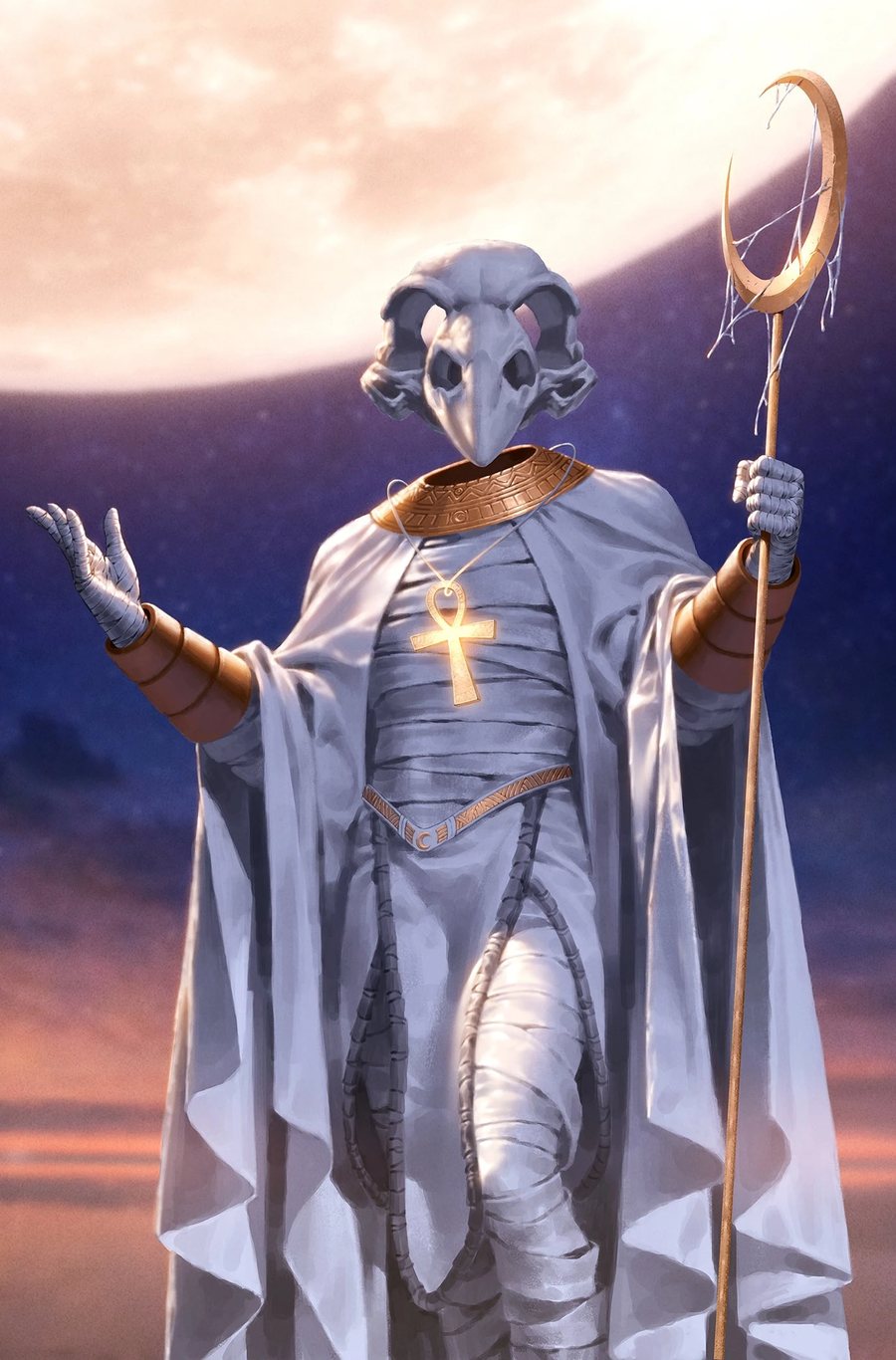
The Moon Knight powers that hold up across every era
Strip away the lunar-strength question and a consistent core survives:
- Resurrection. The most reliable ability in his kit. Khonshu has repeatedly brought Spector back from death, which functionally makes him very hard to permanently remove.
- Elite combat training. A former US Marine, boxer and CIA-linked mercenary, with skills that hold up against Marvel’s best hand-to-hand fighters.
- Crescent darts and hardware. His signature throwing weapons, plus a substantial arsenal funded by the Steven Grant identity’s wealth.
- Multiple identities as an operational asset. Steven Grant provides money and social access; Jake Lockley, a cab driver, provides street-level intelligence. The alters are not only a condition — they function as a network.
- Mr. Knight. A white-suited persona used for daylight investigation and negotiation rather than combat.
The Khonshu retcon: are the alters even his?
Moon Knight’s dissociative identity disorder has been central to the character for decades, and a more recent development complicated it considerably.
The reveal is that Khonshu has four aspects — the Pathfinder, the Embracer, the Defender, and the Watcher of Overnight Travelers — and that Spector cycling through these aspects as the god’s avatar is what his mind is labelling as separate identities. A secret fifth aspect, the One Who Lives On Hearts, appears in some storylines.
Those aspects share a defining logic: Khonshu’s protection applies to those travelling at night. If someone is not a night traveller, they are left to whatever fate finds them.
This is contested territory among readers, and reasonably so. Recasting a mental health condition as divine possession risks undoing what made the character resonant — Moon Knight has been meaningful to a lot of readers precisely because his struggle was psychological rather than magical. Marvel has generally left both readings available rather than closing the question.
Where to start reading
Given the era problem, entry point matters more than usual. Huston’s 2006 run is the cleanest starting place if you want the definitive street-level version. Lemire’s 2016 run is the best if you want the psychological reading. Doug Moench’s original run is where the lunar powers actually operate, if that is the version you came for.
Collectors should note that Werewolf by Night #32 is the single Moon Knight key issue and has appreciated substantially — see the most valuable comic books for where it sits, and our collecting guide for how first-appearance grading works.
For other Marvel characters whose power sets are more stable, our explainers on Emma Frost and Cyclops cover the same ground with considerably less ambiguity.
Frequently asked questions
Does Moon Knight get stronger with the full moon?
In classic-era comics, yes — his strength, speed and agility scaled with the lunar phase, peaking at the full moon. Charlie Huston’s 2006 run had Spector state he no longer has those powers, and most modern portrayals treat him as peak human.
How strong is Moon Knight?
It depends on the era. Handbook-era figures gave him a baseline around 450 pounds, rising to roughly 4,000 pounds under a full moon. Modern runs generally write him at peak human strength with no lunar scaling.
Is Moon Knight immortal?
Not immortal, but repeatedly resurrected. As Khonshu’s avatar, Spector has been brought back from death multiple times, which is the most consistently applied supernatural element of the character.
Are Moon Knight’s alters caused by Khonshu?
A later storyline suggests they may be. Khonshu has four aspects, and Spector cycling through them as the god’s avatar is presented as a possible explanation for what his mind interprets as separate identities. Marvel has largely kept both the psychological and supernatural readings available.
Sources: Marvel’s official Moon Knight profile, CBR on the lunar-phase strength power, and Moon Knight’s publication history.