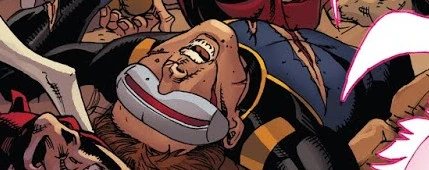
Cyclops is Scott Summers, the field leader of the X-Men and one of Marvel’s original five mutants, created by Stan Lee and Jack Kirby in The X-Men #1 (1963). He fires uncontrollable concussive force beams from his eyes and must wear a ruby quartz visor at all times to contain them.
Who is Cyclops in Marvel Comics?
Scott Summers debuted alongside the original X-Men team in September 1963 and has been the group’s tactical center for six decades. He is not the strongest X-Man, not the most popular, and not the most powerful — he is the one who decides where everyone else stands when the fighting starts.
His backstory is built on loss. As a boy, Scott and his younger brother Alex were thrown from a crashing plane by their parents, Christopher and Katherine Summers, with a single parachute between them. Scott suffered a head injury on landing that damaged the part of his brain governing his mutant power — which is why he cannot switch his optic blasts off. Christopher Summers survived and became the space pirate Corsair, leader of the Starjammers; Alex became Havok.
How Cyclops’s optic blasts actually work
The single most common misconception about Cyclops is that he shoots heat, lasers, or energy that burns. He does not. His optic blasts are concussive — pure kinetic force. A person hit by a full blast is thrown through a wall, not incinerated. Nothing he fires produces heat.
The in-universe mechanism has been explained differently across eras. The most durable version is that Scott’s eyes function as apertures that absorb ambient energy — sunlight and other radiation — metabolize it, and release it as directed concussive force. A related and long-running explanation frames his eyes as openings onto another dimension, with the beam being that dimension’s energy punching through into ours. Writers have leaned on whichever version served the story, and Marvel has never fully committed to one.
What has stayed consistent are the practical rules:
| Property | How it works |
|---|---|
| Damage type | Concussive kinetic force — no heat, no burning |
| Control | Cannot be switched off; brain damage removed the “off” reflex |
| Containment | Only ruby quartz blocks the beam — hence the visor and glasses |
| Power source | Ambient energy absorbed and converted, not an internal reserve |
| Immunity | Immune to his brothers’ powers (Havok, Vulcan), and they to his |
| Precision | Extreme — ricochet shots and pinpoint targeting are his signature |
That last row matters more than the raw output. Cyclops is written as a geometry savant: he calculates angles instinctively and is famous for bank shots that hit targets he cannot see directly. The power is a blunt instrument; the character’s skill is what makes it surgical.
Why Cyclops is the most misunderstood X-Man
Here is the argument worth making, because it explains both his reputation and why he is so hard to adapt.
Cyclops spent decades as the character fans found boring — the rule-follower standing next to Wolverine, who was everything Scott was not. That reputation is almost entirely an artifact of adaptation. Screen versions have consistently cast him as the stiff authority figure whose function is to be wrong so that Wolverine can be right.
The comics went somewhere far stranger. Across the 2000s and 2010s, Scott Summers was written into the most morally compromised position of any X-Man: he led a mutant nation, formed an X-Force willing to kill preemptively, split the team from Wolverine in Schism, and — while possessed by the Phoenix Force during Avengers vs. X-Men — killed Charles Xavier, the man who raised him. He then became, depending on the run, a fugitive, a revolutionary, and a martyr whose slogan other mutants spray-painted on walls.
That is not a boring character. That is Marvel’s most sustained study of what happens when a person raised to be a soldier from childhood concludes that the cause is worth more than his own decency. The reason he reads as flat on screen is that his defining trait is control — and control is inherently undramatic to watch. Wolverine’s interiority is visible in every scene because he is always barely containing something. Scott’s containment is literal, permanent, and invisible: a man who has not seen a color other than red since childhood and never mentions it.
Any adaptation that wants Cyclops to land has to make the cost of that restraint legible. That is the whole casting problem in one sentence.
Cyclops’s most important stories
If you want to understand the character rather than the reputation, these are the runs that built him:
- The Dark Phoenix Saga (X-Men #129–138, 1980) — Chris Claremont and John Byrne’s definitive arc, and the origin of Scott’s defining loss when Jean Grey dies.
- Inferno (1988–89) — the Madelyne Pryor storyline, in which Scott’s worst decisions as a husband and father come due.
- Astonishing X-Men (2004–08) — Joss Whedon and John Cassaday reposition him as a leader worth following, opposite Emma Frost.
- X-Men: Schism (2011) — the ideological split with Wolverine that divided the entire mutant population.
- Avengers vs. X-Men (2012) — the Phoenix Five, and the killing of Professor X.
- House of X / Powers of X (2019) — Jonathan Hickman’s Krakoan reset, which finally vindicates much of what Scott had argued for years.
For where these sit among the medium’s best work, see our guide to the best Marvel comics of all time.
How powerful is Cyclops compared to other X-Men?
By raw output, Cyclops sits in the upper-middle of the team — well below Omega-level mutants like Jean Grey, Storm, or Iceman, and well above the baseline. His blasts have been shown toppling structures and stopping opponents far physically stronger than he is.
But raw output undersells him, because Cyclops is the rare X-Man whose threat scales with preparation. Multiple writers have returned to the same beat across decades: Scott wins fights he should lose because he has already modeled them, and teammates who dislike him personally still defer to him tactically. The character’s real power level is a function of how much warning he had. Our ranking of the strongest X-Men of all time breaks down exactly where he lands against his own roster.
Cyclops’s first appearance and key issues
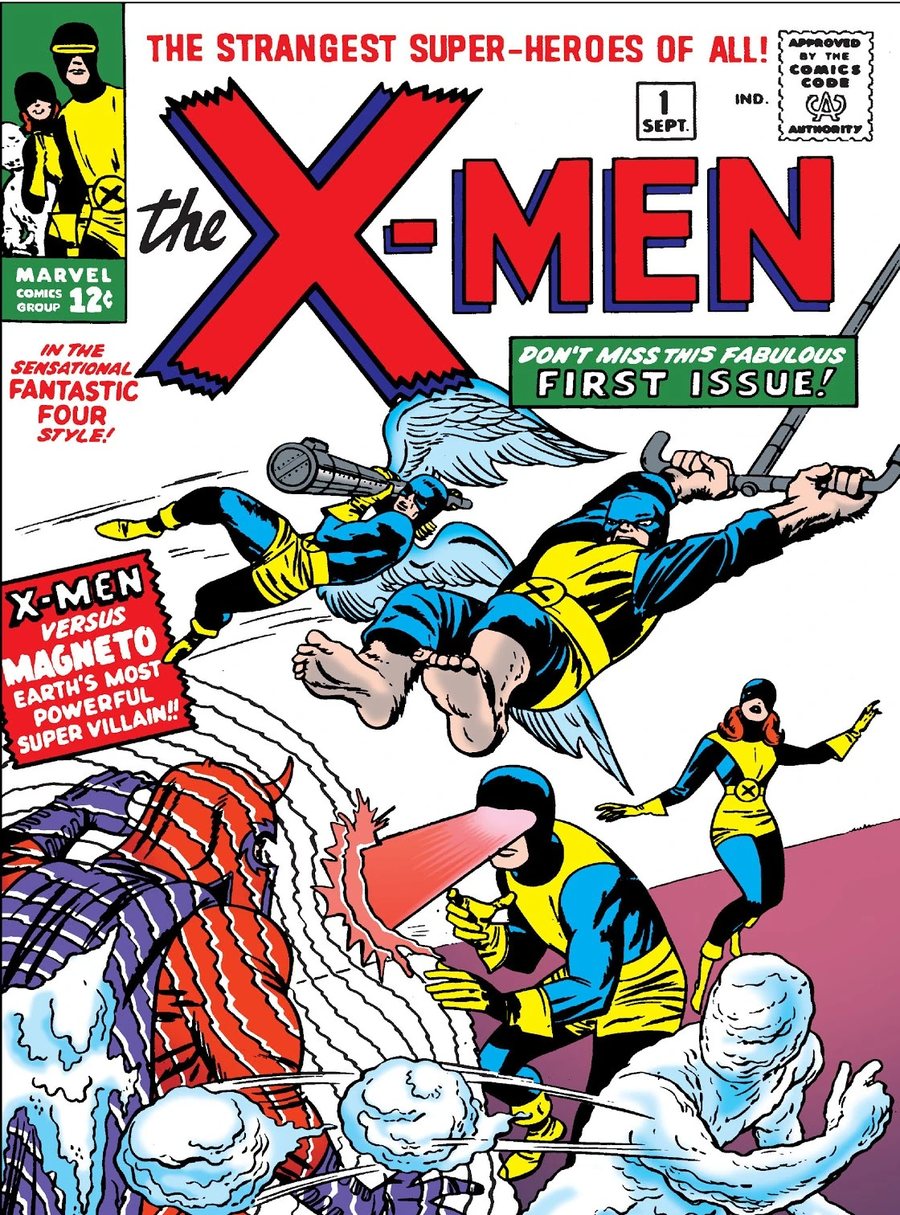
Scott Summers first appears in The X-Men #1 (September 1963) by Stan Lee and Jack Kirby — an issue that also debuts Jean Grey, Beast, Angel, Iceman, Professor X, and Magneto. That density of first appearances is why it is one of the most valuable Silver Age comics in existence, with high-grade graded copies trading in the six figures.
More attainable Cyclops keys include Giant-Size X-Men #1 (1975), which relaunches the franchise with Scott leading the new team, and X-Men #201 (1986), where he loses leadership to Storm. If you are working out what to actually buy, our beginner’s guide to comic collecting covers grading, key-issue evaluation, and the difference between a real key and a speculative one.
Frequently asked questions
Why does Cyclops wear a visor?
A childhood head injury damaged the part of his brain that would let him switch his optic blasts off, so the beams fire continuously whenever his eyes are open. Ruby quartz is the only known material that blocks them, so his visor and glasses are made from it.
Are Cyclops’s optic blasts heat or lasers?
Neither. They are concussive force — kinetic energy that hits like a physical impact. They produce no heat and do not burn, which is the most common misconception about the character.
Who are Cyclops’s brothers?
Alex Summers (Havok) and Gabriel Summers (Vulcan). All three are immune to each other’s energy powers. Their father, Christopher Summers, is the Starjammer known as Corsair.
Did Cyclops really kill Professor X?
Yes. During Avengers vs. X-Men (2012), while possessed by the Phoenix Force as the last of the Phoenix Five, Scott Summers killed Charles Xavier. It remains the single most consequential act in the character’s history.
Publication history via Marvel and the Marvel Comics database entry for The X-Men #1 (1963). Creator credits: Stan Lee and Jack Kirby.