The best X-Men villains are ranked here by power, narrative impact, and cultural legacy, topped by Magneto, Apocalypse, and the Dark Phoenix. This 2026 ranking covers 14 rogues, from founding Hellfire Club schemers to reality-breaking psionic threats, with the storylines and powers that earned each one a spot.
Last updated: August 30, 2026
The X-Men have fought more villains than almost any other Marvel team, and that is by design: the mutant metaphor only works if the threats come from every direction – human bigots, fellow mutants who chose conquest over coexistence, and forces born from the team’s own history. This list ranks the 14 X-Men villains who did the most damage to the franchise’s heroes, its status quo, and, in several cases, the entire Marvel Universe.
Best X-Men Villains at a Glance
The table below compares each villain’s signature power against the storyline that made them essential reading, so readers can jump straight to the era or character they care about before reading the full breakdown.
| Rank | Villain | Signature Power | Most Iconic Storyline |
|---|---|---|---|
| 1 | Magneto | Magnetism manipulation on a planetary scale | God Loves, Man Kills |
| 2 | Apocalypse | Cellular manipulation, size/strength shifting, immortality | Age of Apocalypse |
| 3 | Dark Phoenix | Cosmic Phoenix Force energy, reality alteration | The Dark Phoenix Saga |
| 4 | Onslaught | Psionic reality-warping, matter manipulation | Onslaught crossover (1996) |
| 5 | Mister Sinister | Genetic manipulation, cloning, energy blasts | Inferno |
| 6 | Mystique | Shapeshifting, infiltration, expert marksmanship | Days of Future Past |
| 7 | Sebastian Shaw | Kinetic energy absorption into strength | The Hellfire Club Saga |
| 8 | Sabretooth | Healing factor, enhanced senses and claws | Mutant Massacre |
| 9 | Bastion | Techno-organic adaptation, anti-mutant tech command | Operation: Zero Tolerance |
| 10 | Juggernaut | Mystical unstoppable force and near-invulnerability | Fatal Attractions |
| 11 | Shadow King | Astral-plane telepathy and possession | Muir Island Saga |
| 12 | William Stryker | No powers – military resources and fanaticism | God Loves, Man Kills |
| 13 | Stryfe | Telepathy/telekinesis, techno-organic virus | X-Cutioner’s Song |
| 14 | Mojo | Reality control within the Mojoverse, cybernetics | Longshot |
1. Magneto
Magneto is the best X-Men villain because he is the rare antagonist whose argument is never fully wrong. Erik Lehnsherr survived the Holocaust and concluded that mutants must seize power before humanity exterminates them, a philosophy that has made him an ally, a headmaster, and a mass-murderer within the same continuity.
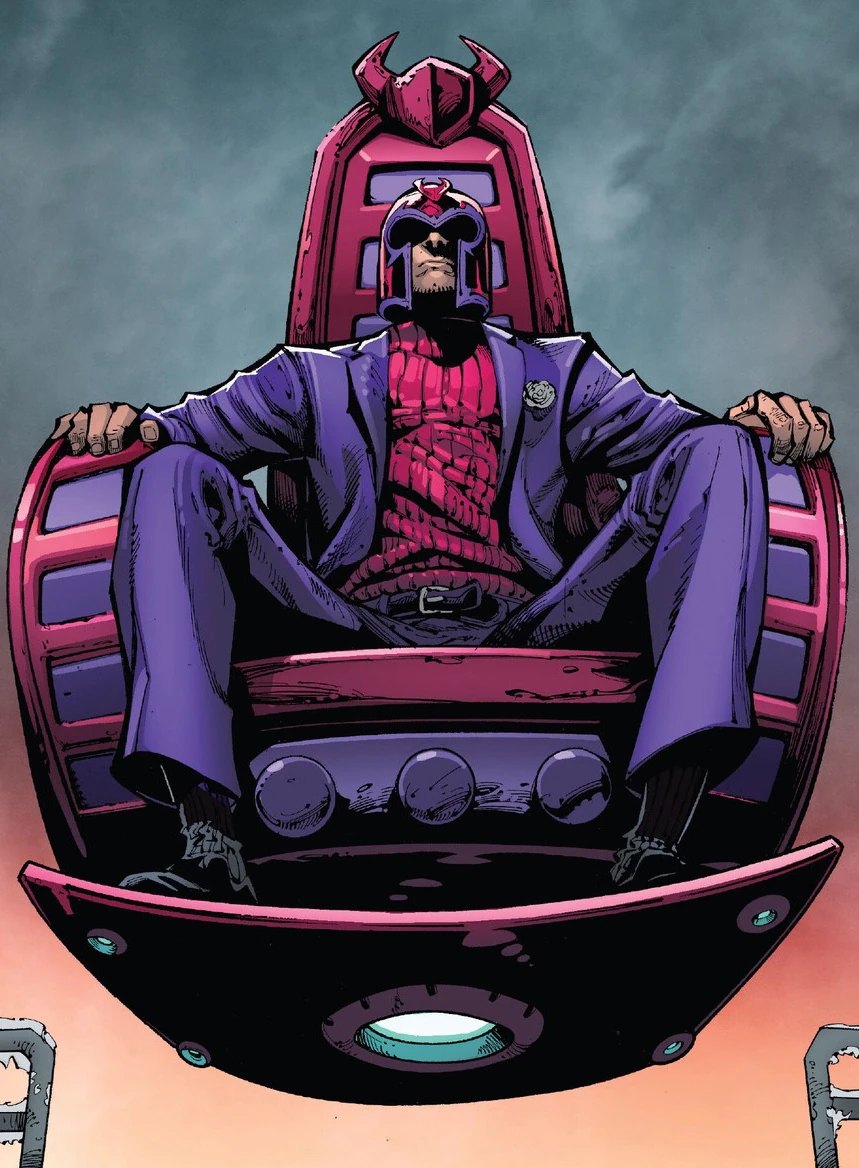
First appearing in X-Men #1 (1963), Magneto’s magnetic powers let him rip submarines from the ocean, level cities, and rewrite the Earth’s poles. What keeps him at the top of every ranking, though, is the writing: stories like “God Loves, Man Kills” cast him as the only person willing to say out loud what genocide against mutants would actually look like.
2. Apocalypse
Apocalypse is the X-Men’s oldest and most dangerous villain, a 5,000-year-old mutant convinced that only the strong deserve to survive. His survival-of-the-fittest doctrine has produced Four Horsemen, world wars, and the alternate-universe “Age of Apocalypse,” one of the best-selling X-Men crossovers of the 1990s.
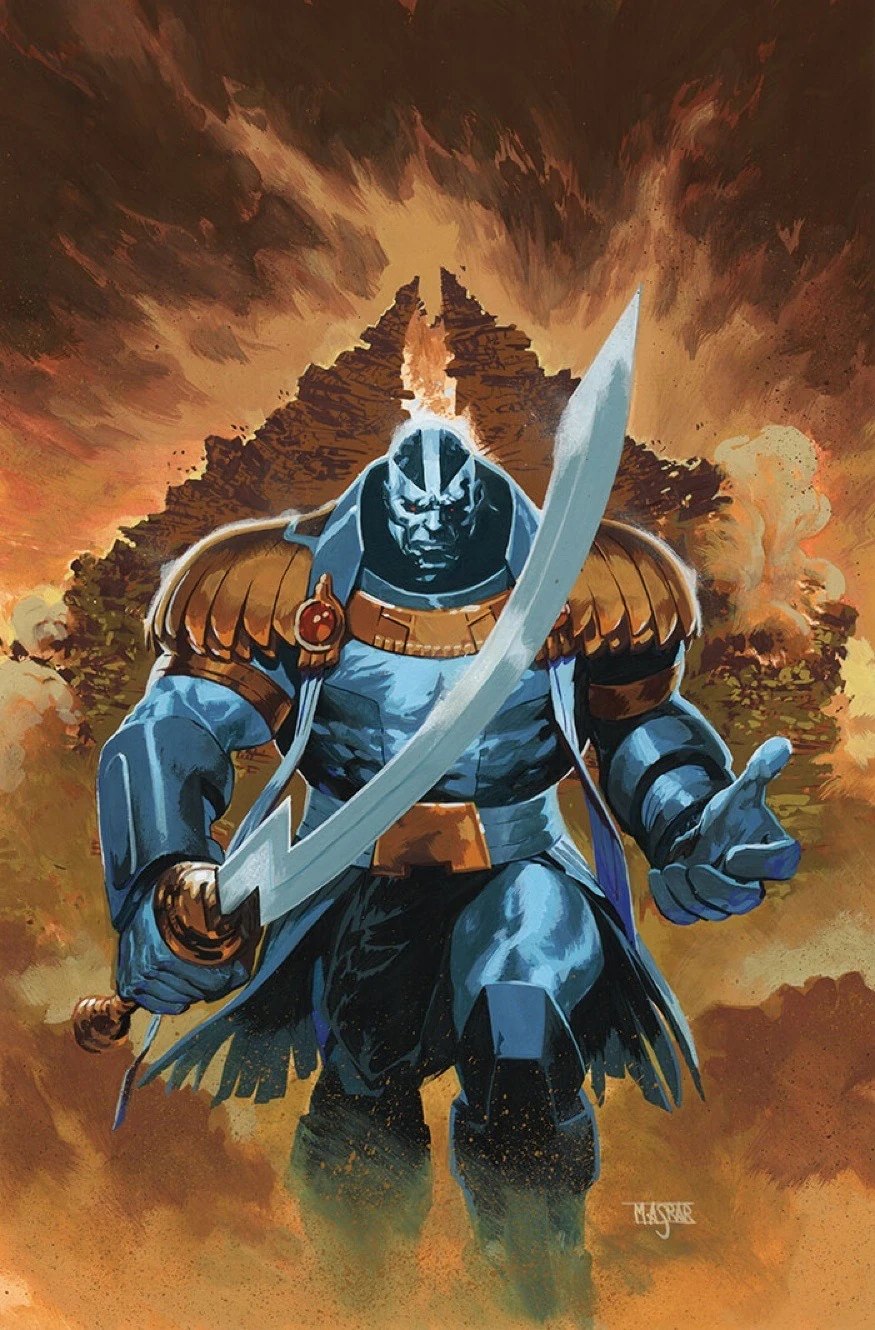
As En Sabah Nur, Apocalypse can manipulate his own cells to grow, heal, and adapt to any threat, effectively making him immortal. He recruits rather than simply attacks, which is why so many other entries on this list, including Sinister and Sabretooth, have served him at one point or another.
3. Dark Phoenix
The Dark Phoenix is Jean Grey possessed by the cosmic Phoenix Force, and it remains the single most powerful X-Men villain by raw output: in “The Dark Phoenix Saga” (1980), she casually destroys an inhabited star system, killing billions, before the X-Men can stop her.
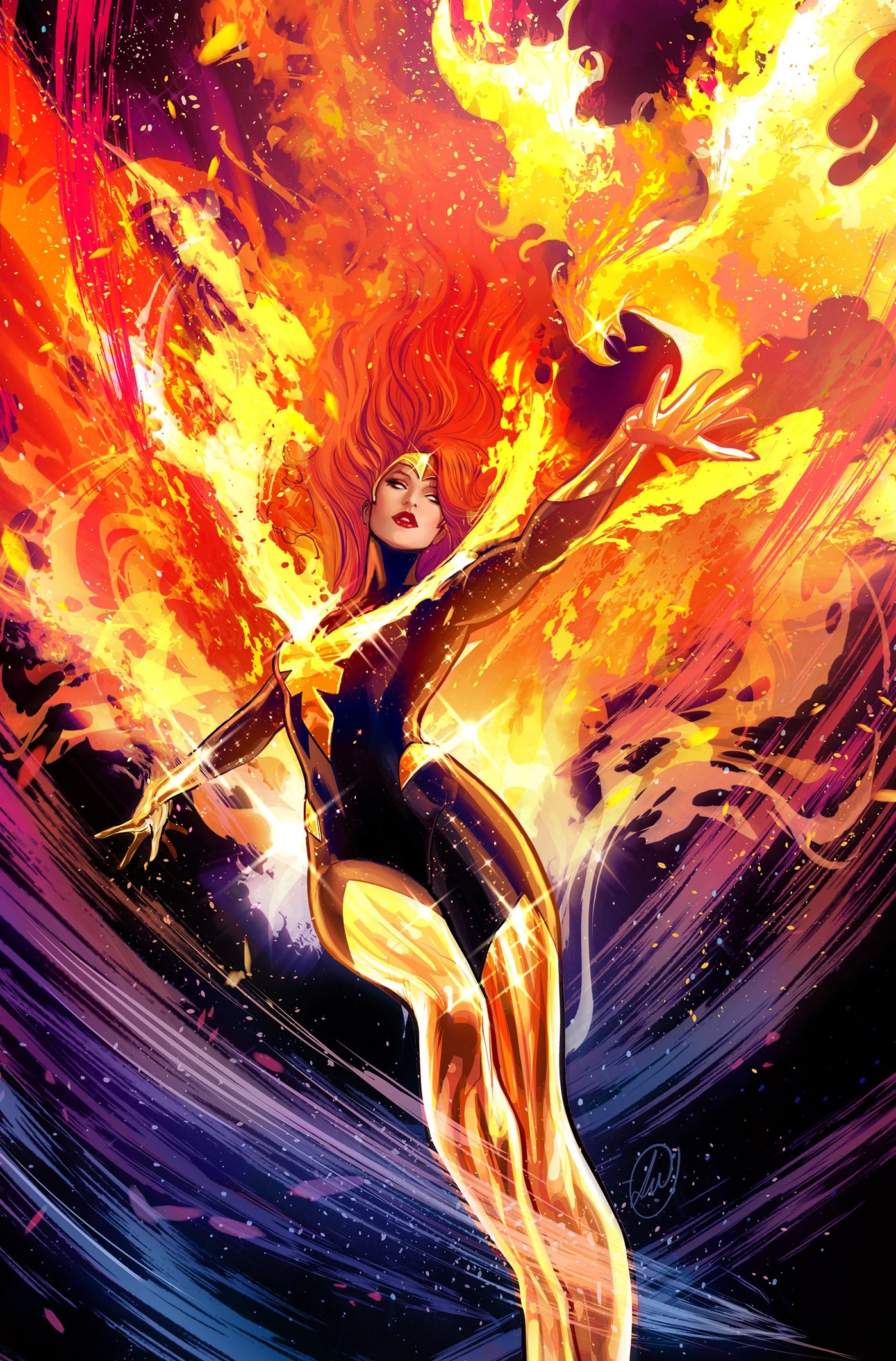
What makes the Dark Phoenix genuinely tragic rather than just cosmic-scale destruction is that it is Jean’s own mind and grief amplifying the Phoenix Force’s hunger, not an external puppeteer. It is the storyline that convinced Marvel villains did not need to be defeated – sometimes they have to be mourned.
4. Onslaught
Onslaught is a psionic entity born from the merged, corrupted psyches of Professor Xavier and Magneto after Xavier used his telepathy to shut Magneto’s mind down. The result was powerful enough to nearly kill the Avengers and Fantastic Four in the 1996 “Onslaught” crossover, forcing Marvel’s heroes into a pocket universe for almost a year of real time.
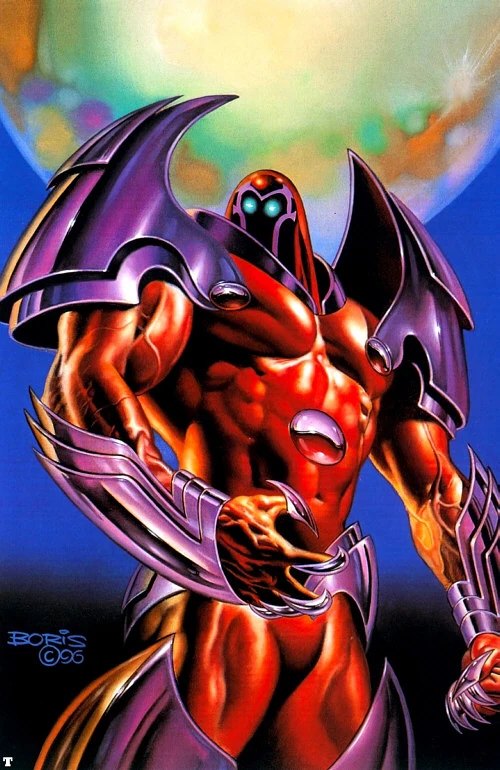
Onslaught matters less for how he fights and more for what he represents: two of the X-Men’s most important figures, hero and villain, becoming indistinguishable once their ideologies collided at full power. That is a distinctly X-Men kind of villain, one built out of the cast’s own history rather than dropped in from outside it.
5. Mister Sinister
Mister Sinister is a Victorian-era geneticist obsessed with the Summers bloodline, and his decades of secret cloning and manipulation are responsible for some of the X-Men’s biggest twists, including Cable, Stryfe, and Madelyne Pryor, all of whom trace back to his experiments.
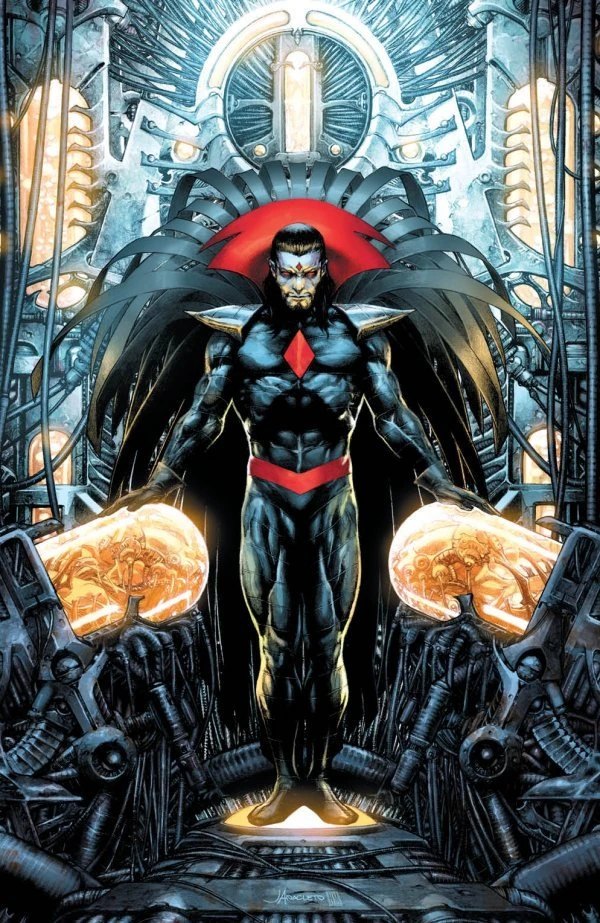
As Nathaniel Essex, Sinister debuted in 1987 and has quietly become one of the most-used villains in the franchise because his goals never resolve cleanly. He does not want to rule or destroy – he wants to breed the perfect mutant, which makes nearly every X-Men protagonist a potential ingredient in his next plan.
6. Mystique
Mystique is the X-Men’s best infiltrator: a shapeshifter who has posed as senators, First Ladies, and her own teammates’ loved ones. Her manipulation of the Brotherhood of Mutants and her complicated role as the biological mother of Rogue and Nightcrawler make her motives the hardest to predict on this list.
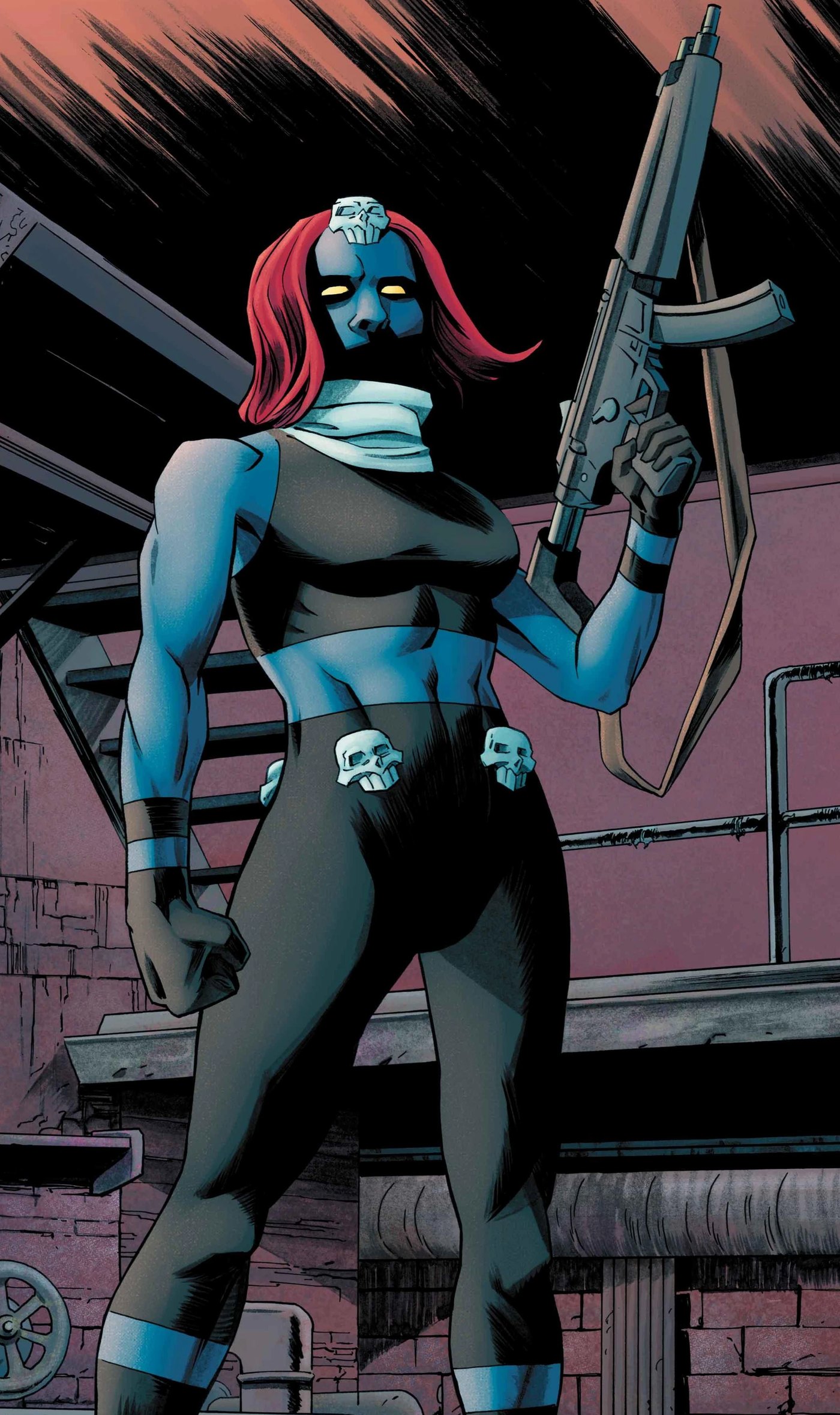
In “Days of Future Past,” Mystique’s assassination of Senator Kelly is the single act that triggers a dystopian, Sentinel-controlled future, meaning one of her killings, not a cosmic event, is responsible for the X-Men’s most influential timeline.
7. Sebastian Shaw and the Hellfire Club
Sebastian Shaw runs the Hellfire Club’s Inner Circle from behind a facade of Gilded-Age aristocracy, using his power to absorb kinetic energy into raw strength to survive fights with X-Men who look far stronger on paper. The Club’s other players, including a young Emma Frost as the White Queen, made the Hellfire Club a genuine rival power structure to the X-Men rather than a group that simply attacks and retreats.
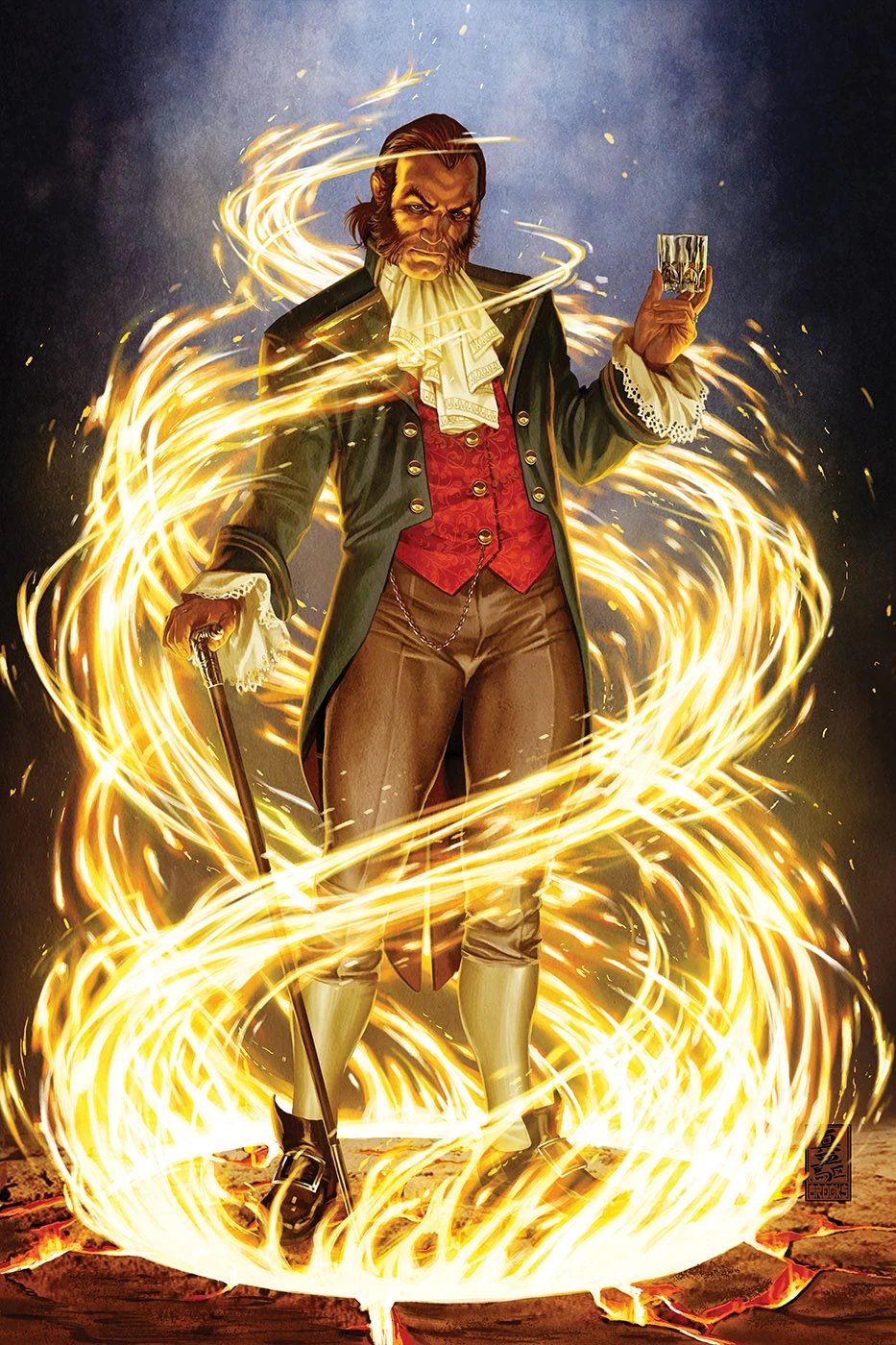
“The Hellfire Club Saga” (1980) is the storyline that cemented Shaw’s reputation, pitting the X-Men against an enemy who could out-fund and out-maneuver them in boardrooms as easily as in battle. You can read more about the Club’s most famous member in our profile of who Emma Frost is and how she went from White Queen to X-Men headmistress.
8. Sabretooth
Sabretooth is Wolverine’s oldest and most personal enemy, a feral mutant with a comparable healing factor and none of Wolverine’s restraint. Victor Creed has served the Weapon X program, the Marauders, and the Brotherhood, but he is most dangerous one-on-one, where his predatory senses and total lack of guilt make him nearly impossible to out-fight cleanly.
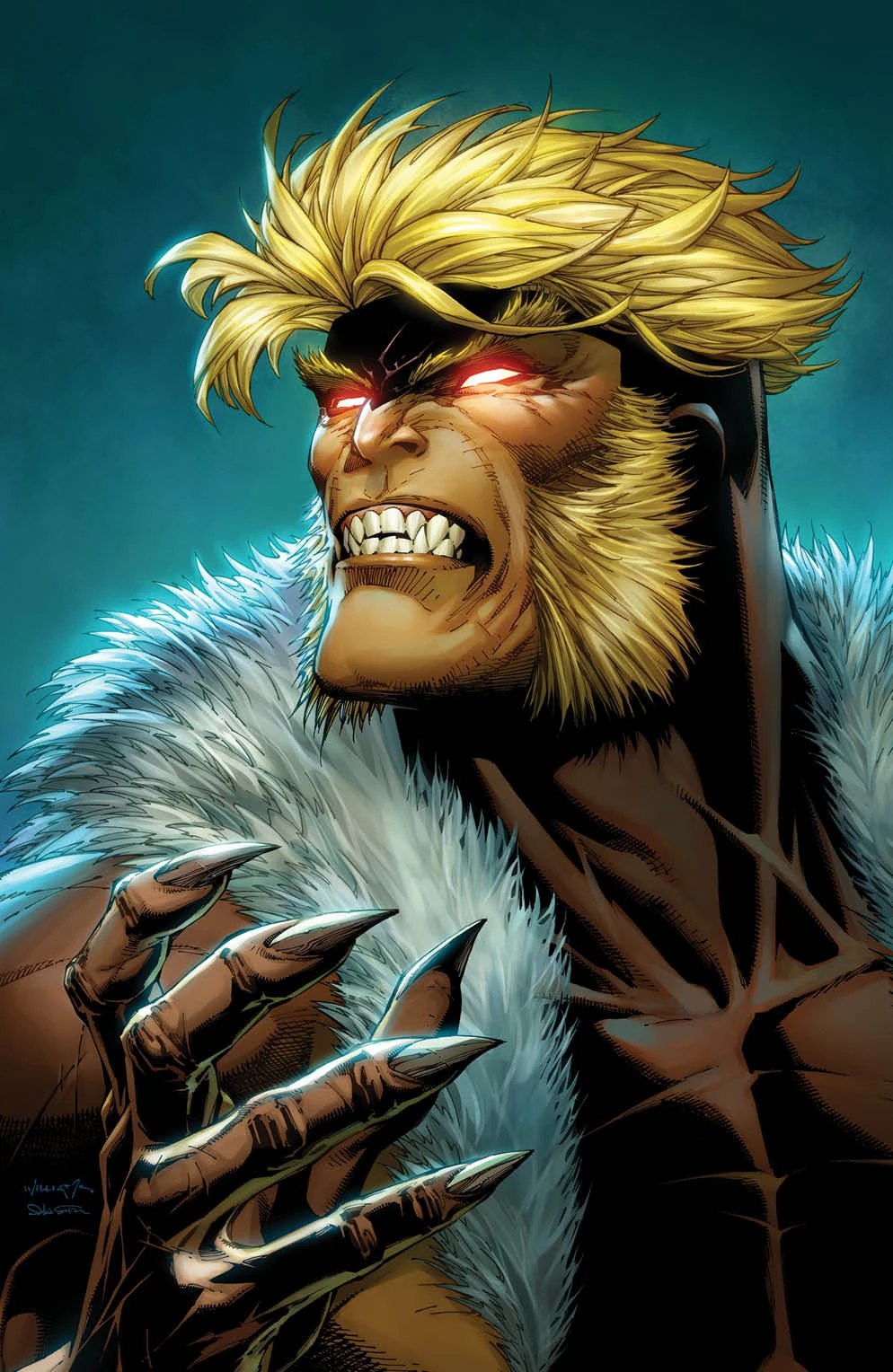
The Mutant Massacre, in which Sabretooth and the Marauders slaughtered dozens of the Morlocks in 1986, remains one of the darkest single acts committed by any villain on this list, X-Men or otherwise.
9. Bastion
Bastion is a techno-organic fusion of the Master Mold and the sentient Sentinel Nimrod, built from the X-Men’s own anti-mutant defense technology turned fully self-aware and hostile. He led Operation: Zero Tolerance, a government-backed purge of mutant-related technology and personnel that hit the X-Men from inside their own support systems.
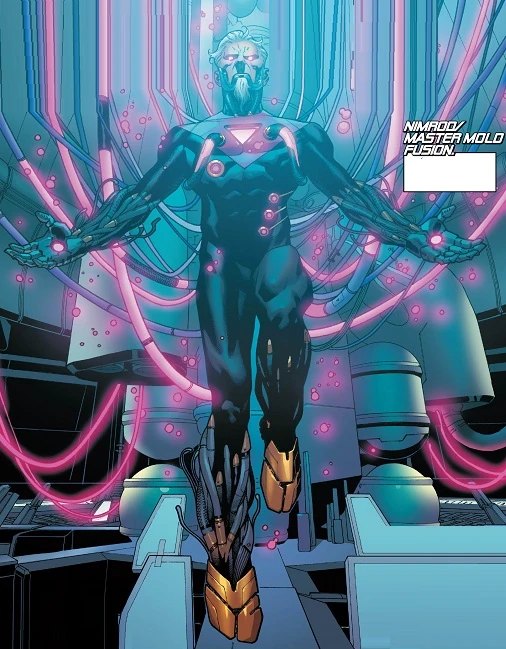
Bastion is scarier for what he represents than for a single power set: he is proof the X-Men’s enemies do not need mutant abilities at all when they can simply out-engineer them.
10. Juggernaut
Juggernaut is not a mutant at all – Cain Marko, Professor Xavier’s stepbrother, gained unstoppable strength and near-total invulnerability from the mystical Crimson Gem of Cyttorak. Once he starts moving in a direction, almost nothing in the Marvel Universe can physically stop him, which has made “can anyone actually stop the Juggernaut” a recurring plot engine since his 1965 debut.
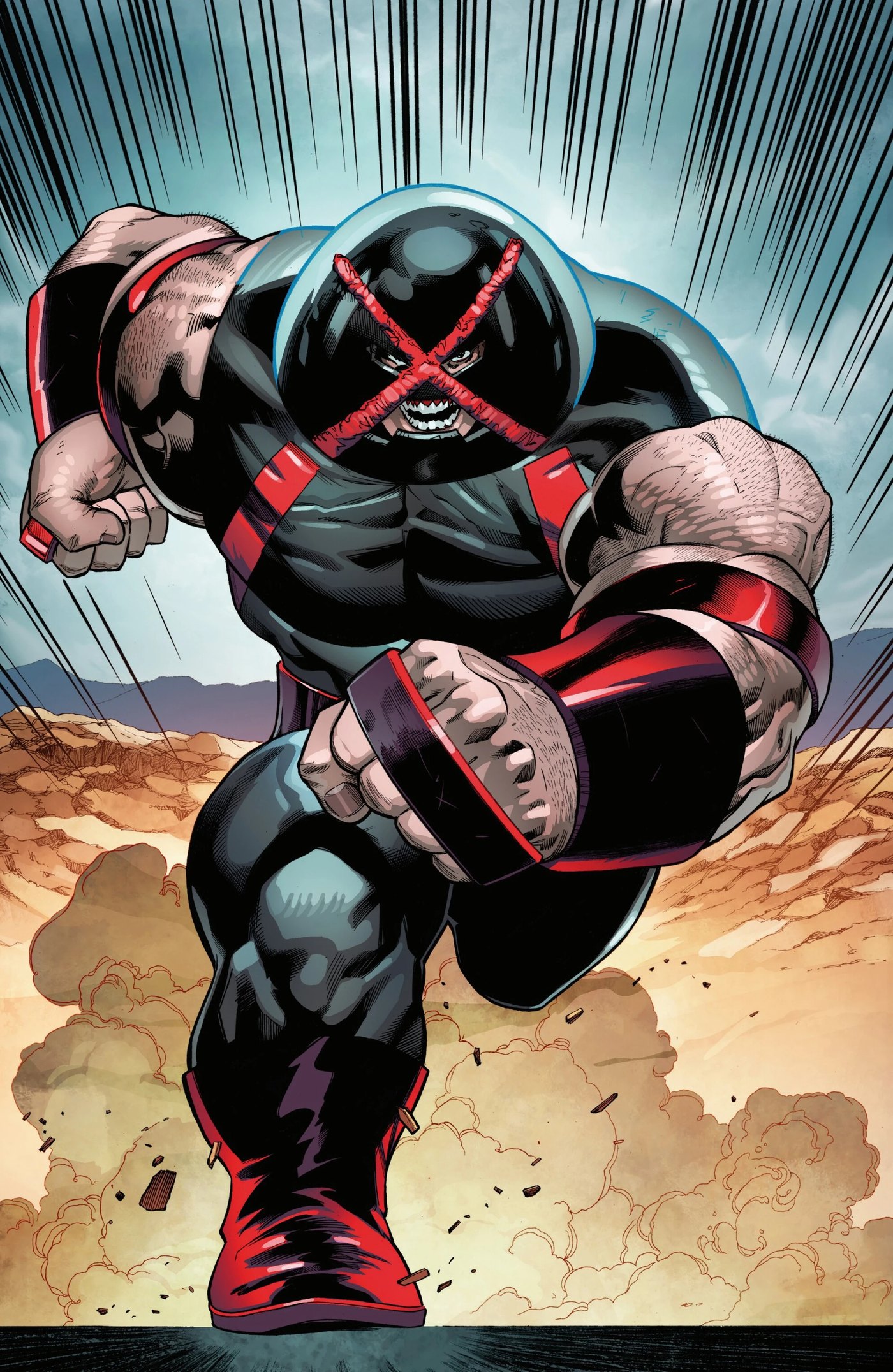
“Fatal Attractions” (1993) put Juggernaut through one of his most brutal defeats, but the character’s staying power comes from his family tie to Xavier, a stepbrother’s resentment given nearly limitless physical force.
11. Shadow King
The Shadow King is a parasitic telepath, Amahl Farouk, who was Professor Xavier’s first great enemy and part of the reason Xavier founded the X-Men in the first place. Operating primarily from the astral plane, he possesses hosts and topples entire nations through psychic manipulation rather than physical force.
The “Muir Island Saga” (1991) turned him into one of the franchise’s most oppressive threats, subjugating an entire Scottish island’s population through mind control before the X-Men could intervene.
12. William Stryker
William Stryker has no powers at all, and that is the point: he is a fanatical reverend convinced mutants are an abomination, willing to use military hardware, brainwashing, and outright murder to “cleanse” them. He is the human face of anti-mutant hatred in a rogues’ gallery otherwise dominated by super-powered threats.
Stryker headlines “God Loves, Man Kills” (1982), the graphic novel that most directly compares the X-Men’s persecution to real-world bigotry, and it later made him the film franchise’s most consistently reused human villain.
13. Stryfe
Stryfe is a clone of Cable, himself the son of Cyclops and a clone of Jean Grey, raised by Mister Sinister and consumed by the belief that he, not Cable, is the rightful heir to that lineage. His techno-organic virus and telepathic and telekinetic power set make him a match for Cable in nearly every fight the two have had.
“X-Cutioner’s Song” (1992), the crossover in which Stryfe frames Cable for shooting Professor Xavier, is one of the best-selling X-Men events of the early 1990s and the character’s definitive appearance.
14. Mojo
Mojo is a grotesque, media-obsessed tyrant who rules the Mojoverse by broadcasting violent entertainment to his dimension’s population, and who has repeatedly kidnapped X-Men, especially Longshot and Dazzler, to star in his gladiatorial television programming.
He is the list’s outlier: a satire of the entertainment industry itself, using cybernetic, spider-like limbs and total control over his own reality to keep his “stars” performing for an audience that never gets to look away.
The Pattern Other Rankings Miss
Line these villains up and a pattern appears that most “strongest villain” rankings skip past: an unusually high share of the X-Men’s greatest enemies are not external invaders but literal byproducts of the team’s own history. Onslaught is Xavier and Magneto’s own minds fused together. Bastion is the X-Men’s Sentinel-defense technology achieving full self-awareness. Stryfe is a clone raised by Mister Sinister to believe he is the rightful heir to Cable’s bloodline. Mystique is the biological mother of two X-Men who spent decades as their enemy. Even Dark Phoenix is Jean Grey’s own power turned against everyone she loves, not a possession by anything alien to her. Batman’s rogues’ gallery is largely built from outside forces reacting to Gotham; the X-Men’s rogues’ gallery is disproportionately built from the team’s own family tree, technology, and psychology turned monstrous. That is not a coincidence of who got popular – it is the mutant metaphor working exactly as intended, where the greatest threat to progress often comes from inside the movement rather than outside it.
Why X-Men Villains Are More Relevant Than Ever in 2026
X-Men villains are not just a nostalgia act. As of August 2026, X-Men ’97 remained the No. 1 most-watched show on Disney+ in the United States, built around Magneto, Mister Sinister, and Bastion as its central antagonists, even in weeks it failed to chart on Nielsen’s own streaming rankings, a gap that shows how much of the audience is watching outside the metrics networks usually rely on.
The collectibles market backs up the character’s staying power at the top of the list: a CGC 9.6 copy of X-Men #1 (1963), the issue containing Magneto’s first appearance, sold for a record $871,999.20 at a ComicConnect auction in 2022, and by 2026 even mid-grade Very Fine copies were trading between roughly $33,000 and $55,000, according to price-guide data compiled that year.
How These Villains Stack Up Against Marvel’s Power Rankings
Several of the villains on this list, especially Dark Phoenix, Onslaught, and arguably Apocalypse, are frequently discussed alongside Marvel’s omega-level mutants, the classification reserved for mutants whose powers are considered to have no known upper limit. For a broader view of where Marvel’s villains land across the whole publishing line, not just the X-Men corner of it, see our ranking of the strongest Marvel villains overall.
Frequently Asked Questions
Who is the most powerful X-Men villain?
By raw destructive output, the Dark Phoenix is the most powerful X-Men villain – in “The Dark Phoenix Saga,” Jean Grey destroys an inhabited star system. Onslaught and Apocalypse are the next-closest threats in terms of scale.
Who is the most iconic X-Men villain?
Magneto is the most iconic X-Men villain and usually tops these rankings, both for his planet-scale magnetic powers and for his decades-long philosophical rivalry with Professor Xavier over how mutants should respond to human persecution.
Is Mystique a villain or an anti-hero?
Mystique has been written as both. She spent most of her early appearances as a Brotherhood of Mutants villain, but later runs, including extended stretches on X-Force and with the X-Men themselves, cast her as a morally grey anti-hero acting in her own and her family’s interest.
Are any X-Men villains not mutants?
Yes. Juggernaut’s power comes from the mystical Crimson Gem of Cyttorak rather than mutation, and William Stryker and Bastion are human or technological threats with no mutant abilities at all, which is part of why both remain effective, since mutant powers alone cannot stop them.