The best time loop anime are not the ones with the cleverest rules — they are the ones where repeating a day hurts. A loop is dramatically free by default: nothing is permanent, so nothing matters. The nine series below are ranked by a single criterion, how expensive each repetition is for the person living it, because that is the only thing that separates a great loop from a gimmick.
How This List Is Ranked
Every entry here is ranked on one question: what does the protagonist lose each time the clock resets? Memory retention is the mechanism, not the point. A character who loops and remembers is accumulating trauma the world around them cannot see, and the best of these shows treat that accumulation as the actual story.
Two things this list deliberately does not weight. It does not rank by popularity — scores are listed for reference, not used as the ordering. And it does not require an infinite loop: several entries are finite rewinds, and where that is the case it is stated plainly rather than fudged to fit the category.
1. Steins;Gate (2011)
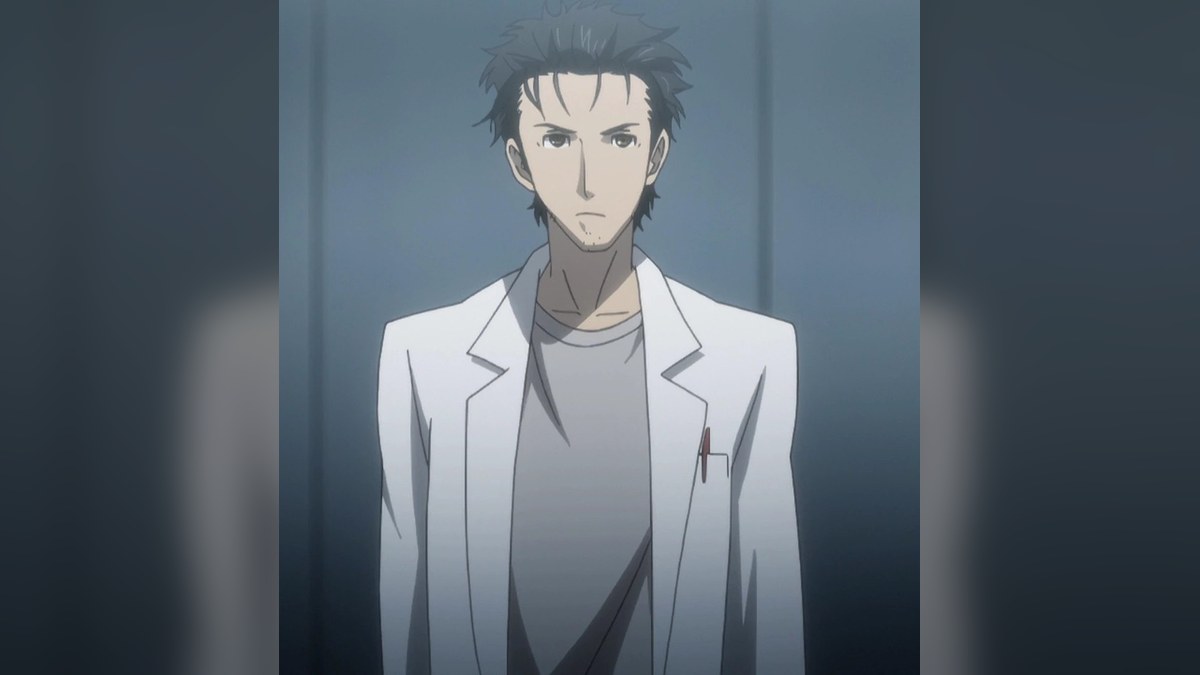
Steins;Gate tops this list because it is the only series here where undoing a loop is itself the punishment. Rintaro Okabe can retain memories across worldline shifts through a faculty the show calls Reading Steiner, and once he learns that his friend Mayuri Shiina dies in every timeline he has created, saving her means reversing each message he sent — and each reversal takes back something a friend built their life around.
White Fox’s adaptation runs 24 episodes and spends roughly half of them being a slow, chatty lab comedy before the trap closes, which is why the series’ reputation for a difficult first act is accurate and worth pushing through. It holds an average score of 89 on AniList, the highest of anything on this list. The cost of a reset here is not death. It is being the only person who remembers what everyone gave up.
2. Puella Magi Madoka Magica (2011)
SHAFT’s 12-episode series hides its loop until episode 10, and the reveal reframes everything before it. Homura Akemi has repeated the same month an unknown number of times trying to save Madoka Kaname, and the show’s cruellest idea is that her competence is the damage: the cold, unreadable transfer student of episode 1 is what a warm, frightened girl becomes after enough failed attempts.
The loop costs Homura her personality, and the audience only understands that retroactively. That structural trick — making you complicit in misreading someone — is why the series still sits at 83 on AniList fifteen years on, and why SHAFT’s involvement in a new time-loop project is worth paying attention to. The studio has done this before, at the highest level.

3. Re:Zero − Starting Life in Another World (2016)
Subaru Natsuki’s Return by Death sends him back to a checkpoint every time he dies, and he keeps the memory of dying. The price is specific and brutal: he physically cannot tell anyone what is happening to him. Every attempt to explain is cut off, which means he grieves people who are standing in front of him alive and has no way to be comforted for it.
White Fox again, 25 episodes in the first season, 81 on AniList. The series is frequently criticised for how unlikeable Subaru becomes around its midpoint, and that criticism gets the show backwards — the deterioration is the argument. If you want the mechanic broken down properly, we have a full explainer on how Return by Death works.

4. Higurashi: When They Cry (2006)
Studio DEEN’s 26-episode adaptation of Ryukishi07’s visual novel spends most of its length refusing to admit it is a loop story at all. It presents a sequence of self-contained arcs set in the village of Hinamizawa around the same June festival, each ending in a different massacre, and only gradually reveals that Rika Furude has lived all of them and hundreds more.
The cost is the sharpest on this list in one respect: Rika is a child who has been an adult for centuries of subjective time and cannot say so. Its 76 average on AniList reflects a presentation that has aged badly — the 2006 animation is rough and the tonal swings are abrupt — but structurally almost nothing since has been braver.
5. Summer Time Rendering (2022)
OLM’s 25-episode adaptation of Yasuki Tanaka’s manga is the most efficient thriller here. Shinpei Ajiro returns to a fixed save point on the island of Hitogashima each time he dies, hunting creatures called Shadows that copy and replace people. It is the entry that most respects its own rules: the loop has a defined checkpoint, the enemy learns, and information is the only thing Shinpei carries across.
It scores 83 on AniList and is genuinely underwatched relative to that. The cost is lower here than in the top four — Shinpei is durable in a way Subaru and Homura are not — which is the only reason it is not higher. As pure construction it is close to flawless.
6. The Tatami Galaxy (2010)
Masaaki Yuasa’s 11-episode Madhouse series is the outlier and, at 85 on AniList, the second highest-rated thing on this list. An unnamed student relives the same stretch of college, joining a different club each time, chasing a rose-coloured campus life he never gets. There is no monster, no death, no ticking clock.
What it costs him is the belief that a different choice would have produced a different person. That is the most uncomfortable version of the premise anyone has filmed, and the reason this entry outranks several more famous shows: the loop is not a trap someone put him in.
7. Erased (2016)
A-1 Pictures’ 12-episode adaptation of Kei Sanbe’s manga is a rewind, not a loop, and it belongs here with that caveat stated. Satoru Fujinuma is thrown backwards by an involuntary ability he calls Revival — usually seconds, once eighteen years, into 1988 Hokkaido and the winter a classmate was murdered.
The cost is that he gets a second attempt rather than infinite ones, which raises the stakes of the single retry enormously and is exactly why the finale divides people. At 81 on AniList it is the most watchable entry on this list for a newcomer, and the shortest commitment.
8. Tokyo Revengers (2021)
Takemichi Hanagaki leaps twelve years into his own past repeatedly, trying to prevent the deaths of people he failed the first time. LIDENFILMS’ 24-episode adaptation of Ken Wakui’s manga is the most conventional structure here — the loop is a plot device for a delinquent gang drama rather than the subject of the show.
That is why it ranks eighth at 77 on AniList despite being one of the biggest hits on this list. The repetitions cost Takemichi very little internally; he restarts as roughly the same person each time. It earns its place because the failures actually stick — the future he returns to keeps getting worse. Our breakdown of the War of the Three Titans trailer covers where the series goes next.
The Cautionary Tale: Endless Eight (2009)
This is not ranked, because it is the proof of the criterion rather than an example of it. Kyoto Animation’s Melancholy of Haruhi Suzumiya devoted eight consecutive broadcast episodes, airing from June 19 to August 7, 2009, to the same two weeks of summer holiday repeating — the second of them set on the 15,498th iteration, equivalent to roughly 594 years of subjective time.
Each of the eight was newly animated, with fresh storyboards, new outfits and separately recorded performances, so the studio was not saving money. It was making the audience experience the loop rather than watch it. The arc is still among the most disliked stretches of television in the medium, and CBR’s retrospective and The Mary Sue’s defence of it are worth reading against each other.
It failed for the reason every entry above succeeds by inversion. Endless Eight made repetition expensive for the viewer and free for the characters, who forget every cycle. Nobody on screen paid anything. That is the whole rule this list is built on, demonstrated in the negative.
| # | Series | Year | Studio | Eps | AniList | What the loop costs |
|---|---|---|---|---|---|---|
| 1 | Steins;Gate | 2011 | White Fox | 24 | 89 | Every reversal takes something a friend built their life on |
| 2 | Puella Magi Madoka Magica | 2011 | SHAFT | 12 | 83 | Homura’s warmth, spent one attempt at a time |
| 3 | Re:Zero | 2016 | White Fox | 25 | 81 | The ability to be believed, or comforted |
| 4 | Higurashi: When They Cry | 2006 | Studio DEEN | 26 | 76 | A child’s entire subjective adulthood, unspeakable |
| 5 | Summer Time Rendering | 2022 | OLM | 25 | 83 | Information only — the cheapest price in the top five |
| 6 | The Tatami Galaxy | 2010 | Madhouse | 11 | 85 | The belief that another choice would have helped |
| 7 | Erased | 2016 | A-1 Pictures | 12 | 81 | One retry, not infinite — a rewind, not a loop |
| 8 | Tokyo Revengers | 2021 | LIDENFILMS | 24 | 77 | Little internally; the future degrades instead |
| — | Endless Eight (Haruhi S2) | 2009 | Kyoto Animation | 8 | — | Nothing. That is precisely the problem |
Where to Start if You Have Never Watched One
Start with Erased. Twelve episodes, a single clear retry, no genre knowledge assumed, and it makes the emotional logic of the format obvious in about four hours. Move to Steins;Gate next and accept that the first eight episodes are setup. Save Madoka Magica for third, because its reveal only lands if you have not been told what it is.
Skip Higurashi until you are certain you like the format — 26 episodes of deliberately withheld explanation is a hard first date. And treat Endless Eight as reading, not watching. Last verified: August 31, 2026.
The format is not finished either. A new SHAFT time-loop adaptation was announced on August 31, 2026 — our report on The Long Summer of August 31’s anime and live-action series has the details. For everything else landing soon, see our fall 2026 anime lineup.
Frequently Asked Questions
What is the best time loop anime?
Steins;Gate. Its 24-episode White Fox adaptation is the only major time-loop series where undoing the loop is itself the cost: to save one friend, Rintaro Okabe must reverse messages that other people have already built their lives around. It holds an average score of 89 on AniList, the highest of any series on this list.
Is Re:Zero a time loop anime?
Yes. Subaru Natsuki’s Return by Death returns him to a fixed checkpoint every time he dies, and he keeps his memories of each death. A curse prevents him from telling anyone what is happening, which is the defining cost of the mechanic.
Is Erased actually a time loop?
Not strictly. Erased is a rewind rather than an endless loop. Satoru Fujinuma’s ability, called Revival, throws him backwards involuntarily, usually by seconds and once by eighteen years. It is included here because the emotional logic is identical, but he does not get unlimited attempts.
Why is Endless Eight so hated?
Kyoto Animation devoted eight consecutive 2009 episodes of The Melancholy of Haruhi Suzumiya to the same summer repeating, with the second set on the 15,498th iteration. Each episode was newly animated rather than reused footage, but the characters forget every cycle, so no one on screen suffers any consequence. The repetition cost the audience everything and the cast nothing.
What is the shortest time loop anime to start with?
Erased, at 12 episodes. It assumes no genre knowledge, resolves fully within its run, and makes the emotional appeal of the format clear in roughly four hours. Puella Magi Madoka Magica is also 12 episodes but works best once you already know the format.
Are there any new time loop anime coming?
Yes. The Long Summer of August 31, Ikkado Ito’s time-loop manga from Kodansha’s Morning magazine, was announced on August 31, 2026 as both a SHAFT-produced television anime and a live-action drama series. No broadcast window has been confirmed for either.