The best Gambit comic storylines all revolve around the same unresolved question Chris Claremont built into the character in 1990: what did Remy LeBeau actually do during the Mutant Massacre? “The Trial of Gambit” (Uncanny X-Men #350, 1997) is the storyline that finally answers it, and it is the single most important Gambit comic ever published.
Gambit is a strange case among major X-Men — he debuted in a walk-on role in Uncanny X-Men #266 in 1990, became a breakout star largely on the strength of the 1990s animated series, and yet has never carried a truly long-running solo book the way Wolverine or Deadpool have. His best material has almost always come from X-Men team books forcing the rest of the cast to reckon with his past. Two new series in 2026 — Gambit: Wanted from Chris Claremont himself, and Gambit: Gone from Steve Orlando — are both explicitly built around that same unresolved-past structure, which is as good a sign as any of what actually works for this character.
Gambit Storylines at a Glance
| Rank | Storyline | Writer / Artist | Year | Why It Matters |
|---|---|---|---|---|
| 5 | Gambit (ongoing) #1–25 | Fabian Nicieza / Steve Skroce | 1999–2001 | Gambit’s only extended solo ongoing to date — uneven, but it is the closest thing to a definitive solo status quo he has |
| 4 | Gambit and the X-Ternals | Fabian Nicieza / Steve Skroce | 1995 | Introduced the Thieves’ and Assassins’ Guilds war that still underpins every Gambit origin story told since |
| 3 | X-Men: Blood of Apocalypse | Mike Carey | 2006 | Gambit at his lowest point post-“Decimation,” agreeing to become Apocalypse’s Horseman of Death |
| 2 | Wolverine/Gambit: Victims | Jeph Loeb / Tim Sale | 1995 | A Victorian-London murder mystery that is widely cited as the best Gambit team-up ever published, despite not being an X-Men book |
| 1 | The Trial of Gambit (Uncanny X-Men #347–350) | Scott Lobdell / Joe Madureira | 1997 | Forces the X-Men to judge Gambit for his role in the Mutant Massacre — the character’s defining storyline |
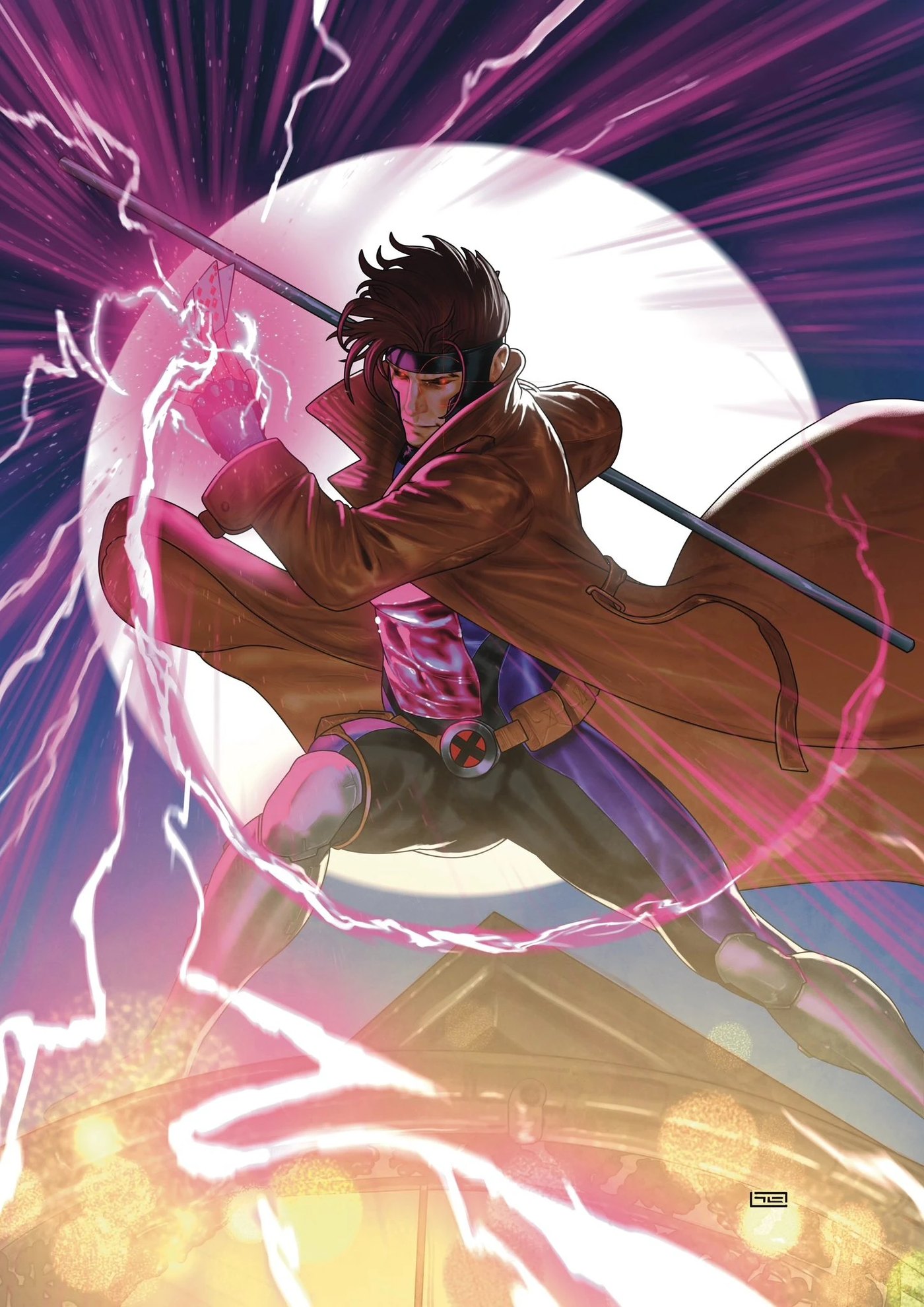
5. Gambit (1999–2001)
Fabian Nicieza and Steve Skroce’s ongoing is the only extended Gambit solo series Marvel has published to date, running 25 issues. It leans into globe-trotting heist plots and gives Remy a rotating cast of guild rivals, but it never quite decides whether Gambit works better as a thief-adventurer or an X-Man in exile — a tension the character still hasn’t fully resolved almost thirty years later.
Wolverine is Gambit’s most frequent team-up partner outside straight X-Men books, which is exactly the pairing behind the #2 entry below — for the broader mutant-powers context, see our breakdown of Wolverine’s powers and healing factor.
4. Gambit and the X-Ternals (1995)
This miniseries did the structural work later Gambit stories lean on constantly: it formalized the war between the Thieves’ Guild and the Assassins’ Guild of New Orleans, the two organizations Remy was born and married into. Every subsequent “Gambit’s secret past” plot — including both of his 2026 series — draws on the guild structure this story locked in.
3. X-Men: Blood of Apocalypse (2006)
Written by Mike Carey during the post-“Decimation” era, when the 616 mutant population had just been reduced from millions to under two hundred, this arc catches Gambit at his most desperate: estranged from Rogue and cut off from most of his powers, he agrees to become Apocalypse’s Horseman of Death in exchange for having them restored. It is one of the only stories to seriously explore what Gambit would do without the moral guardrails the X-Men usually provide him.
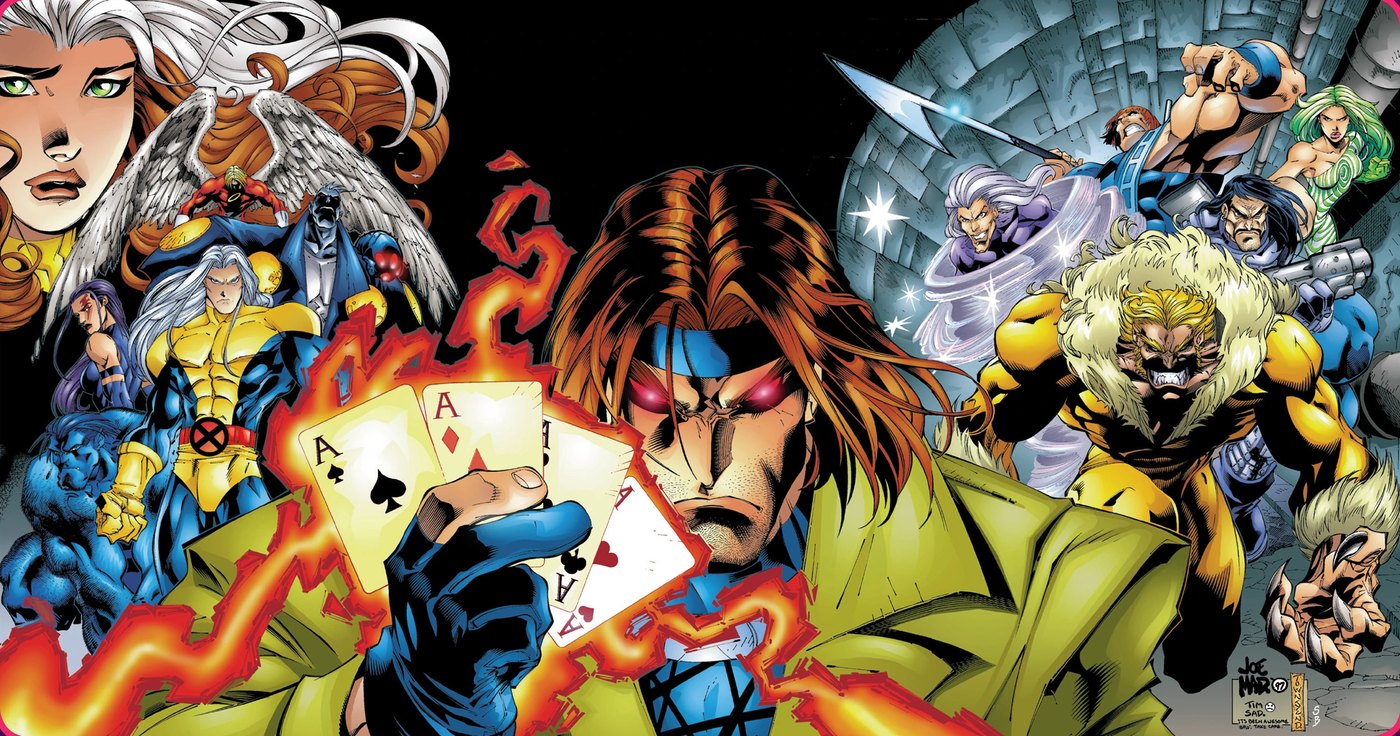
2. Wolverine/Gambit: Victims (1995)
Jeph Loeb and Tim Sale — the team behind Batman: The Long Halloween — paired Wolverine and Gambit in Victorian-era London to hunt a serial killer, and the result is routinely cited by outlets including CBR and ScreenRant as the strongest Gambit story that isn’t a core X-Men crossover. It works because it strips away the guild intrigue and X-Men politics entirely and just asks what Remy LeBeau is like under pressure with almost no institutional support.
1. The Trial of Gambit (Uncanny X-Men #347–350, 1997)
Scott Lobdell and Joe Madureira’s three-issue arc is the payoff to a plot thread Chris Claremont planted seven years earlier: Gambit’s unexplained role in the 1986 Mutant Massacre, in which the Marauders slaughtered most of the Morlock community living beneath Manhattan. “The Trial of Gambit” finally reveals that Remy unknowingly led the Marauders to the Morlocks’ tunnels, then forces the X-Men — and the reader — to decide whether that makes him complicit in a massacre he did not personally commit. The Marauders themselves remain one of the X-Men franchise’s most brutal antagonist groups — see our ranking of the best X-Men villains for where they and Mister Sinister land.
The original insight worth taking from all five entries: Gambit’s best stories are never about his powers. Every ranked entry above treats the kinetic-charging ability as a given and instead interrogates his debts — to the guilds, to the Marauders, to Apocalypse, to Rogue. That is unusual for an X-Man whose power set is this flashy, and it is probably why Marvel keeps returning to “what did Gambit do and who does he owe” as a structure: Gambit: Wanted (July 2026) is Claremont revisiting the character’s Uncanny-era debts directly, and Gambit: Gone (September 2026) swaps him with his Age of Apocalypse counterpart to ask the same question from the other direction.
Sources
Reporting on Gambit’s 2026 series drew on Collider’s coverage of Gambit: Gone and Wikipedia’s Gambit publication and powers history.
Frequently Asked Questions
What is Gambit’s best comic storyline?
“The Trial of Gambit,” running through Uncanny X-Men #347–350 (1997) by Scott Lobdell and Joe Madureira, is widely considered Gambit’s defining story. It reveals his unwitting role in the 1986 Mutant Massacre and forces the X-Men to judge him for it.
How does Gambit’s power actually work?
Gambit converts the potential energy in an object into explosive kinetic energy through physical contact, most often charging his signature playing cards. The larger the object, the longer it takes to charge, and he cannot charge living organisms.
Did Gambit ever have his own ongoing comic series?
Yes. Fabian Nicieza and Steve Skroce’s Gambit ongoing ran 25 issues from 1999 to 2001, and remains his only extended solo series. Marvel returned to solo Gambit stories with the 2026 miniseries Gambit: Wanted and Gambit: Gone.
What are the Thieves’ Guild and Assassins’ Guild?
They are two rival New Orleans criminal organizations central to Gambit’s backstory. Remy LeBeau was adopted into the Thieves’ Guild and later married Bella Donna Boudreaux of the Assassins’ Guild, a union meant to end a long-running war between the two.