The short answer: the best Batman reading order for a new reader is five books, not fifty. Year One, The Long Halloween, The Killing Joke, Hush, and The Court of Owls take you from Bruce Wayne’s first night in the cowl to a secret society that’s still messing with him today, and none of them require homework first.
That’s the twist nobody mentions: a character with 87 years of continuity has one of the simplest on-ramps in superhero comics. The hard part isn’t finding where to start. It’s trusting that five books are actually enough before you touch everything else DC has ever printed. They are. Here’s the order, and why each one earns its spot before you go looking for extra credit.
The Batman Reading Order, Start to Finish
Read these five in order and you get a complete, self-contained version of Batman: origin, Gordon, the rogues’ gallery, and a modern jumping-on point. Nothing here requires you to have read anything else first.
| Order | Book | Creators | Year | What it sets up |
|---|---|---|---|---|
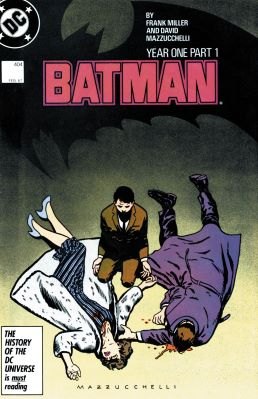
| 1 | Batman: Year One | Frank Miller & David Mazzucchelli | 1987 | Origin, Jim Gordon’s first year, Gotham before the rogues’ gallery existed |
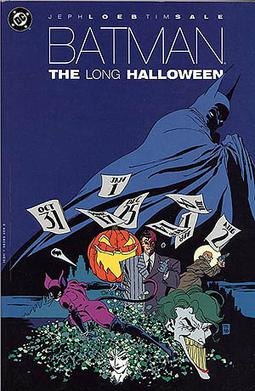
| 2 | Batman: The Long Halloween | Jeph Loeb & Tim Sale | 1996–97 | Two-Face’s origin, the Falcone crime family, the full early rogues’ gallery |
| 3 | Batman: The Killing Joke | Alan Moore & Brian Bolland | 1988 | The definitive Joker character study |
| 4 | Batman: Hush | Jeph Loeb & Jim Lee | 2002–03 | A tour of the whole rogues’ gallery, built around one mystery villain |
| 5 | Batman: The Court of Owls | Scott Snyder & Greg Capullo | 2011 | The modern starting point, a secret society Gotham itself doesn’t believe in |
Why Year One Comes First
Year One assumes nothing. Frank Miller and David Mazzucchelli spend four issues on Bruce Wayne’s first, badly bungled year as Batman, running in parallel with Jim Gordon’s first year as an honest cop in a corrupt department. There’s no cowl-era history to track and no villain roster to memorize, just two men figuring out how much the city is going to cost them. Every reading order on the internet starts here for the same reason: it’s the only Batman story that was deliberately written as a first issue, not a sequel to fifty years of comics.
The Long Halloween Finishes What Year One Starts
The Long Halloween picks up where Year One leaves Gotham: the Falcone crime family still runs the city, and Batman, Gordon, and DA Harvey Dent are building a case against it one holiday murder at a time. By the end, Dent is Two-Face, and you’ve met nearly every major rogue in a single, self-contained read. It’s the book that turns “Batman has a rogues’ gallery” into “here’s why each one of them exists.”
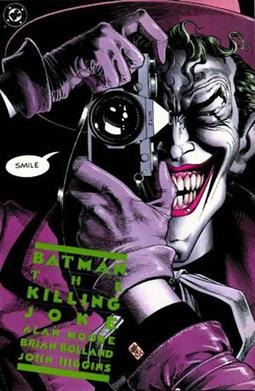
The Killing Joke Is Short, Essential, and Not for Kids
The Killing Joke is barely 50 pages, and it’s still the book most other Joker stories get measured against. Alan Moore and Brian Bolland’s one-shot won the Eisner Award for Best Graphic Album in 1989 and landed on the New York Times Best Seller list in May 2009, 21 years after it was published, which tells you how little it has aged out of the conversation. It’s also genuinely dark; this isn’t the Joker as comic relief.
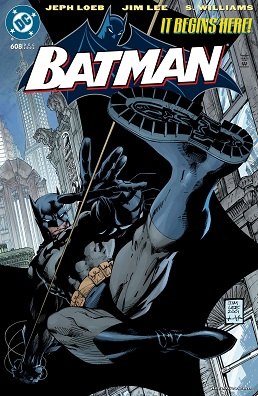
Hush Is the Rogues’ Gallery Tour (and the Twist Isn’t the Riddler)
Hush runs Batman through nearly every major villain in one year-long arc: Catwoman, Killer Croc, Poison Ivy, Scarecrow, Ra’s al Ghul, Joker, all circling a masked mastermind called Hush. A lot of recaps get the ending wrong: the Riddler figures out who’s behind the mask and sells him the plan, but the Riddler isn’t Hush. That’s childhood friend Thomas Elliot. Jim Lee’s art sold the book on its own: sales grew roughly 123 percent from issue #608’s 139,000 copies to the finale’s 310,000 copies in 2003, per sales figures tracked by Comic Book Invest. For a monthly superhero comic, that’s a run that built its own audience issue by issue.
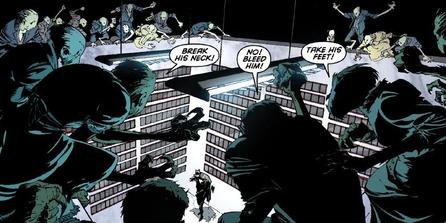
The Court of Owls Is the Modern Jumping-On Point
When DC relaunched its whole line in 2011, Scott Snyder and Greg Capullo deliberately built The Court of Owls as the new reader’s door in. It introduces a centuries-old secret society that Gotham’s rich families insist is a nursery rhyme, right up until it isn’t. It reads more like psychological horror than a detective story, and it’s the book that updates everything the first four taught you for a Gotham that still looks like today’s.
What to Read After the Core Five
Two things come up constantly once you’ve finished the five, and both deserve a caveat before you pick them up. The Dark Knight Returns (Frank Miller, 1986) is one of the most influential comics ever made, a retired, 55-year-old Bruce Wayne comes back to the cowl, but it’s a standalone alternate future, not a continuation of anything above, and reading it too early tends to confuse people about which Batman they’re following. And if you want a current, ongoing book instead of a finished arc, DC’s Batman (2025) relaunch from writer Matt Fraction and artist Jorge Jimenez started a new era in September 2025 and is still running monthly.
Five books, one city, zero prerequisites. The character everyone assumes needs a syllabus turns out to have the shortest reading list in superhero comics, the real skill is stopping at five instead of chasing every issue DC has ever printed. Next question worth asking: if Batman’s rogues’ gallery earns that much space across five books, which one of them is actually winning the fight? That’s its own ranking, and it’s worth reading next.
See the full Batman villains ranking →
Still building a library instead of just Batman’s corner of it? How to Start Reading Marvel Comics covers the Marvel side, and What Is a Key Issue Comic? explains why issues like Batman #608 matter to collectors, not just readers. For the ranked version of this universe’s storylines, see the best Batman storylines, ranked.
Frequently Asked Questions
What’s the best Batman comic to read first?
Batman: Year One (Frank Miller and David Mazzucchelli, 1987). It’s a four-issue origin story written to need zero prior knowledge, covering Bruce Wayne’s first year as Batman alongside Jim Gordon’s first year as an honest cop in Gotham.
Do I need to read Batman comics in publication order?
No. Most reading-order guides, including this one, group books by what they establish rather than by strict publication date. The goal is a complete picture of the character, not a cover-to-cover history of every issue DC has printed since 1939.
Is The Dark Knight Returns a good starting point?
Not as a first book. It’s one of the most important Batman stories ever told, but it’s a standalone 1986 alternate-future story about a retired, older Bruce Wayne, and it isn’t connected to the ongoing continuity the other five books build.
What’s Batman’s current ongoing comic?
Batman (2025), written by Matt Fraction with art by Jorge Jimenez, launched in September 2025 as DC’s newest flagship Batman relaunch and is still publishing monthly.