Quick TakeArticle at a glance
- The best Batman comic storylines all do one thing really well: they make Gotham feel like it is closing in on him.
- Frank Miller and David Mazzucchelli stripped Batman down to a rookie who keeps getting hurt and keeps going back out anyway.
- Alan Moore and Brian Bolland's 1988 one-shot is the reason every modern Joker story circles back to a single bad day.
Last updated October 5, 2026.
The best Batman comic storylines all do one thing really well: they make Gotham feel like it is closing in on him. Frank Miller’s Year One, Alan Moore’s The Killing Joke, and Scott Snyder’s Court of Owls reshaped the character so completely that filmmakers still borrow from them decades later.
At a Glance: The 9 Storylines
| Storyline | Year | Writer / Artist | Why It Still Matters |
|---|---|---|---|
| Batman: Year One | 1987 | Frank Miller / David Mazzucchelli | The template every modern origin copies |
| The Killing Joke | 1988 | Alan Moore / Brian Bolland | Defined the Joker’s “one bad day” philosophy |
| The Long Halloween | 1996–97 | Jeph Loeb / Tim Sale | Source material for Nolan’s Batman Begins and The Dark Knight |
| The Dark Knight Returns | 1986 | Frank Miller / Klaus Janson / Lynn Varley | Invented the broken, aging Batman story; turned 40 in 2026 |
| Batman: Hush | 2002–03 | Jeph Loeb / Jim Lee | A rogues’-gallery tour that hooked a new generation of readers |
| Arkham Asylum: A Serious House on Serious Earth | 1989 | Grant Morrison / Dave McKean | The art-horror Batman that gave the video games their name |
| Batman: Knightfall | 1993 | Chuck Dixon, Doug Moench, Alan Grant / various | Bane breaks Batman and someone else takes the cowl |
| A Death in the Family | 1988 | Jim Starlin / Jim Aparo | Fans phoned in and voted to kill Jason Todd |
| Batman: The Court of Owls | 2011–12 | Scott Snyder / Greg Capullo | Proved Gotham still had secrets after 70-plus years |
1. Batman: Year One Is Still the Best Place to Start
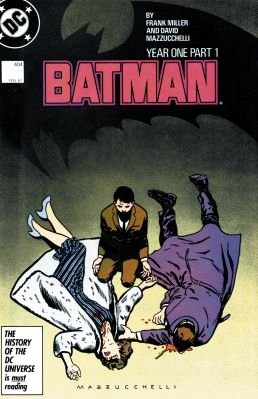
Frank Miller and David Mazzucchelli stripped Batman down to a rookie who keeps getting hurt and keeps going back out anyway. Year One (1987) follows Bruce Wayne’s first, messy year in the cape alongside a young, corruptible Jim Gordon, and it is the version of the origin that Christopher Nolan’s Batman Begins and almost every Batman cartoon since have borrowed from. There is no Joker, no master plan — just a city that does not want to be saved and a man who is bad at this yet.
2. The Killing Joke Gave the Joker His Origin (Maybe)
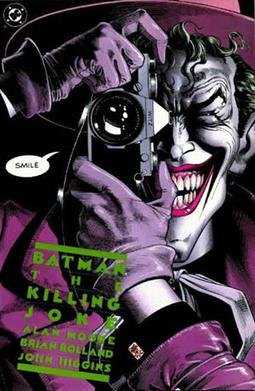
Alan Moore and Brian Bolland’s 1988 one-shot is the reason every modern Joker story circles back to a single bad day. The comic intercuts a possible origin — a failed comedian pushed into a vat of chemicals — with a present-day assault on Barbara Gordon that is still debated for how brutally it treats her. Moore himself has said he is not fully happy with it, but its ideas about the Joker’s philosophy never left the character.
3. The Long Halloween Is the Blueprint for Nolan’s Gotham
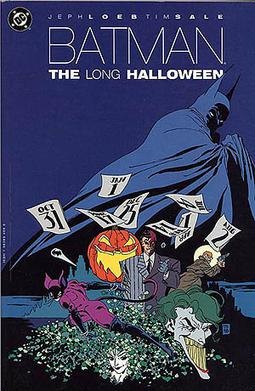
Jeph Loeb and Tim Sale’s 13-issue murder mystery (1996–97) follows a killer called Holiday who strikes once a month, forcing Batman, Jim Gordon, and Harvey Dent to work together before Dent’s fall into Two-Face. If the tone of Batman Begins and The Dark Knight feels familiar, that is because Christopher Nolan has named this one directly as a reference for both films.
4. The Dark Knight Returns Invented the Old, Broken Batman
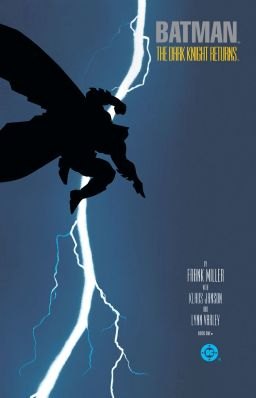
Frank Miller’s 1986 miniseries pulls a 55-year-old Bruce Wayne out of retirement for one last fight, against a city, a government, and eventually Superman. It is the comic that made grim, aging superheroes a genre unto themselves, and DC marked its 40th anniversary in February 2026 with reprints and a new foreword. The original miniseries also won the 1987 Jack Kirby Award for Best Single Issue.
5. Batman: Hush Is the Fun, Gateway Version
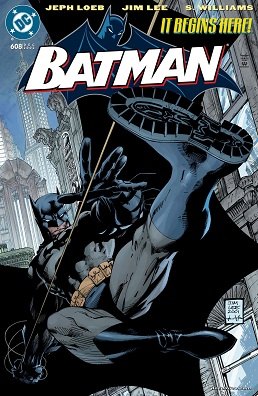
Jeph Loeb and Jim Lee followed up The Long Halloween with a 12-issue arc (2002–03) that drags nearly every major Batman villain into one mystery, while quietly rebuilding Bruce Wayne’s relationship with Catwoman. It is not the most thematically deep story on this list, but Jim Lee’s art made it one of the best-selling Batman trades of the 2000s and the easiest on-ramp for new readers.
6. Arkham Asylum Is the One That Gets Under Your Skin
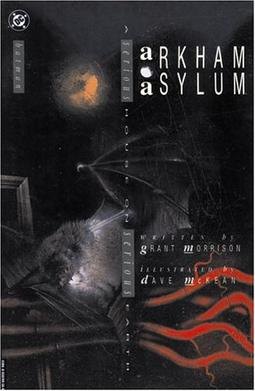
Grant Morrison and Dave McKean’s 1989 graphic novel traps Batman inside Arkham Asylum during an inmate takeover, using tarot imagery and painted, nightmarish art instead of a normal superhero layout. It reads more like psychological horror than an action comic, and it lent its name — and some of its ideas — to Rocksteady’s Batman: Arkham Asylum video game two decades later.
7. Knightfall Is the One Where Bane Actually Wins
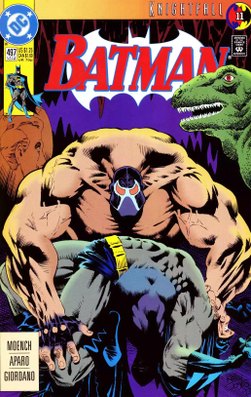
Bane spends months engineering Batman’s exhaustion before breaking his back in Batman #497 (1993), forcing Bruce Wayne to hand the cowl to the unstable Jean-Paul Valley. The full saga runs through Knightfall, Knightquest, and KnightsEnd before Bruce reclaims the role, and it is still the story the only live-action Bane so far — Tom Hardy’s, in The Dark Knight Rises — gets compared against.
8. A Death in the Family Let Readers Vote on a Murder
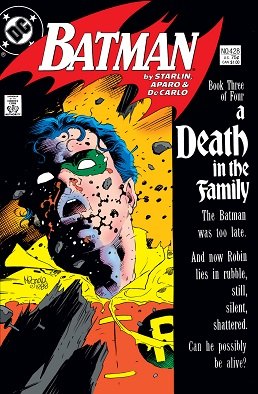
DC left the decision to readers in 1988: two 1-900 numbers let callers decide whether the Joker should kill the second Robin, Jason Todd, and more than 10,000 people phoned in over a single 36-hour window. Jim Starlin and Jim Aparo’s story went out with the “kill” line winning by just 72 votes, 5,343 to 5,271, and Jason Todd stayed dead for almost two decades before returning as the Red Hood. It remains the most direct example of a comic’s audience changing canon in real time.
9. The Court of Owls Proved the New 52 Reboot Could Still Surprise
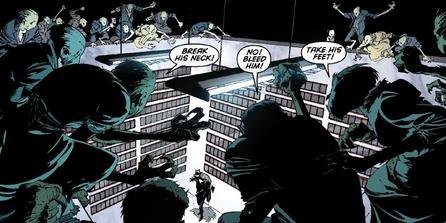
Scott Snyder and Greg Capullo opened DC’s 2011 New 52 relaunch by introducing a secret society of assassins that had supposedly been manipulating Gotham for centuries — something Batman, the world’s greatest detective, had never even heard of. The twist worked because it attacked Batman’s whole premise instead of just giving him a new villain, and the Court has stuck around in Gotham stories ever since.
The Pattern Behind Every Great Batman Story
Line these nine up and a pattern shows up that most “best Batman stories” lists do not mention: almost none of them hand Batman something new. They take something away instead — his family in Year One, his certainty in Killing Joke, his spine in Knightfall, his faith that he knows his own city in Court of Owls. Batman’s best writers have figured out that he is more interesting broken than he is armed with one more gadget. For more essential reading beyond Gotham, our best DC Comics list and our ranking of the greatest comic book villains of all time are good places to go next.
Frequently Asked Questions
What’s the single best Batman comic to start with?
Batman: Year One. It’s short, self-contained, and every later story on this list assumes you already know this version of Bruce Wayne and Jim Gordon.
Is The Killing Joke still canon?
DC has never formally erased it, and writers still reference its Joker origin and its effect on Barbara Gordon, though individual creators treat the details loosely depending on the story.
What order do you read the Knightfall saga in?
Knightfall, then Knightquest: The Crusade and Knightquest: The Search (running at the same time), then KnightsEnd, which is when Bruce Wayne takes the cowl back from Jean-Paul Valley.
Did any of these storylines win major awards?
The Dark Knight Returns #1 won the 1987 Jack Kirby Award for Best Single Issue, and both it and Arkham Asylum are regularly named by critics among the best graphic novels ever published.