Quick TakeArticle at a glance
- The best Joker comic storylines all do the same trick from different angles: they stop treating the Joker as a villain to be beaten and start using him to ask what Batman would become if he ever broke his one rule.
- Alan Moore and Brian Bolland's one-shot is still the story every other Joker comic on this list is reacting to, one way or another.
- Jim Starlin and Jim Aparo's Batman #426–429 did something DC had never tried before: they let readers decide whether Jason Todd, the second Robin, lived or died by calling a 1-900 number.
The best Joker comic storylines all do the same trick from different angles: they stop treating the Joker as a villain to be beaten and start using him to ask what Batman would become if he ever broke his one rule. From a 1988 one-shot that’s never been out of print to a 2020 mystery that sold over 300,000 copies in a single issue, these are the seven Joker stories worth reading first.
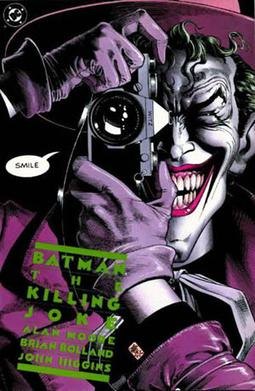
Batman: The Killing Joke (1988)
Alan Moore and Brian Bolland’s one-shot is still the story every other Joker comic on this list is reacting to, one way or another. It gives the Joker his most famous (and most deliberately unreliable) origin — a failed comedian who falls into a vat of chemicals during one impossibly bad night — while Batman spends the present-day story trying to reach a man he suspects can’t be reached anymore. Moore has since distanced himself from parts of the book, but Bolland’s art, especially the final panel, is still the reference point for how the character is drawn today.
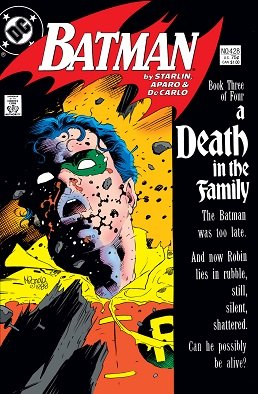
A Death in the Family (1988)
Jim Starlin and Jim Aparo’s Batman #426–429 did something DC had never tried before: they let readers decide whether Jason Todd, the second Robin, lived or died by calling a 1-900 number. Fans voted for the Joker’s beating with a crowbar to be fatal, and the decision reshaped Batman’s supporting cast for decades. It’s the story that proves the Joker doesn’t need a scheme to be terrifying — he just needs five minutes alone with someone Batman loves.
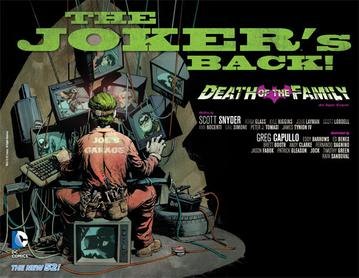
Batman: Death of the Family (2012–2013)
Scott Snyder and Greg Capullo’s Batman #13–17 opens with the Joker returning after a year gone, wearing his own surgically removed face as a mask. Snyder told ComicsAlliance the story is built around the Joker’s real argument to Batman: “We’ve become these things that are greater than ourselves… Whoever you are under the mask does not matter.” The Joker spends the story trying to prove the Bat-family makes Batman weaker, not stronger, by going after Nightwing, Robin, Batgirl, and the rest one at a time.
Batman: Endgame (2014–2015)
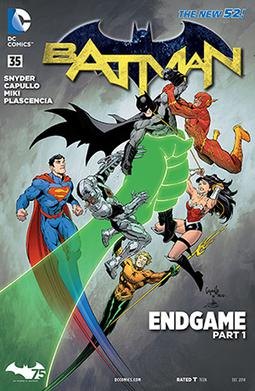
The direct follow-up to Death of the Family, also by Snyder and Capullo, runs through Batman #35–40 and escalates from personal horror to citywide catastrophe: a Joker-engineered toxin turns all of Gotham, including the Justice League, into laughing, violent puppets. It’s the biggest-scale Joker story on this list, and the ending is Snyder and Capullo’s answer to the question the two arcs spend nearly a year building toward — whether Batman and the Joker’s fight can actually end.
Batman: The Joker War (2020)
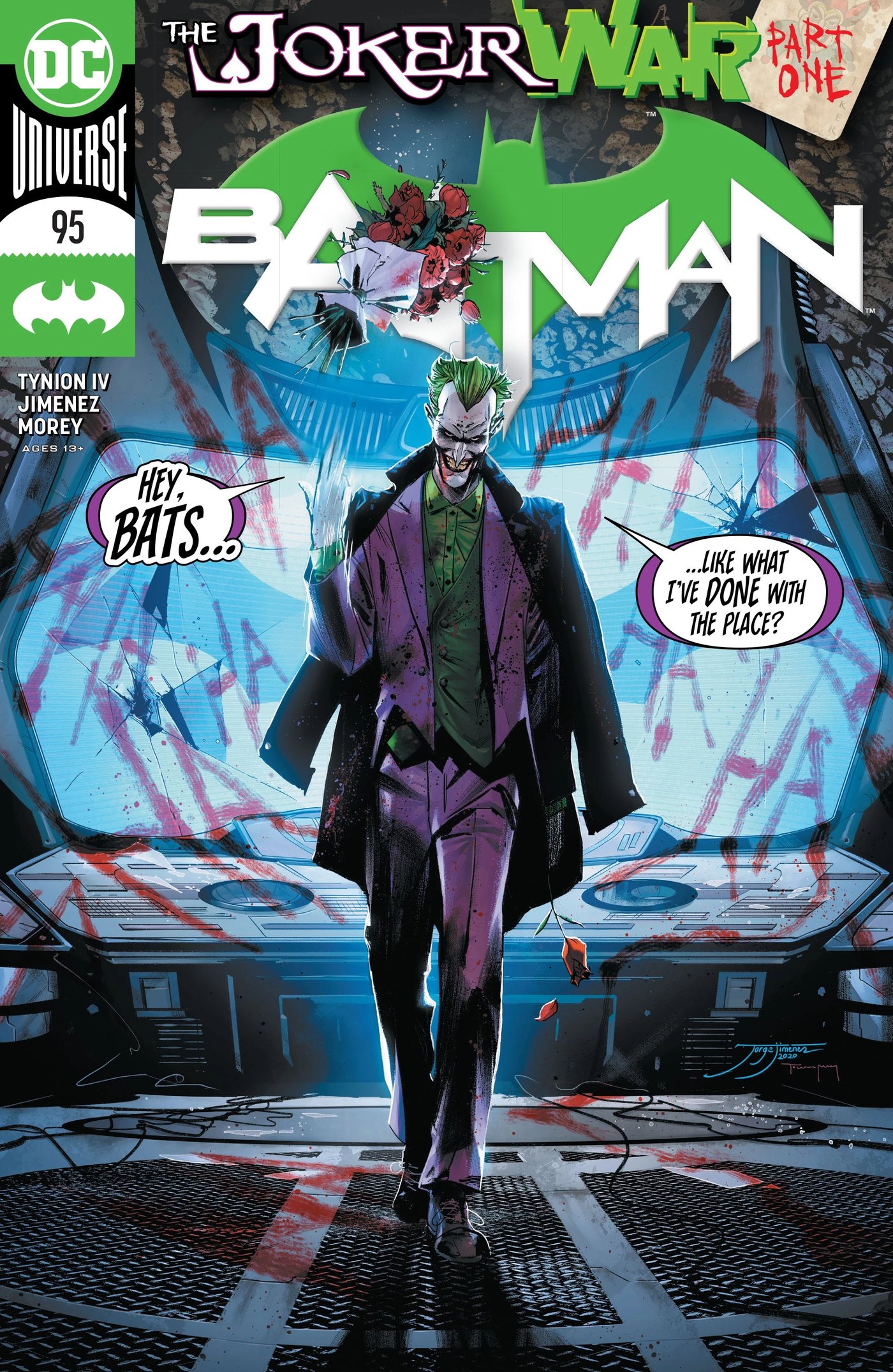
James Tynion IV and Jorge Jiménez’s Batman #95–100 gave the Joker something he’d never really had before: Bruce Wayne’s fortune. After seizing control of Wayne Enterprises, the Joker bankrolls a full-scale armed assault on Gotham, forcing Batman to fight a war he can’t out-punch his way through. It’s also the story that introduces Punchline and Clownhunter, two characters who’ve stuck around in Batman’s world well past the crossover itself.
Batman: The Man Who Laughs (2005)
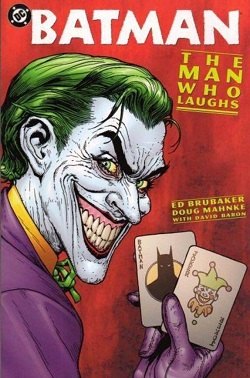
Ed Brubaker and Doug Mahnke’s one-shot rewrites the Joker’s first appearance from 1940’s Batman #1 as a modern, post-Year One story, and it’s become the closest thing DC has to a definitive “Batman meets the Joker for the first time” comic. It’s colder and more procedural than the others on this list — Batman is still learning what he’s dealing with, which makes the Joker’s first murders land as pure dread instead of spectacle.
Batman: Three Jokers (2020)
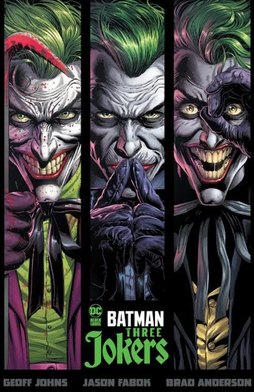
Geoff Johns and Jason Fabok’s three-issue prestige-format series takes a running fan theory — that inconsistencies in the Joker’s history mean there’s been more than one — and makes it text. Three Jokers #1 sold more than 300 thousand copies to retailers in August 2020, a number DC’s own publisher Jim Lee called “a gigantic number for having new distribution.” It’s less about answering who the Joker really is than about what it does to Batman, Jason Todd, and Barbara Gordon to be told the man who hurt them might not even be a single, consistent person.
Quick Reference: Every Storyline at a Glance
| Storyline | Year | Writer | Artist |
|---|---|---|---|
| Batman: The Killing Joke | 1988 | Alan Moore | Brian Bolland |
| A Death in the Family | 1988 | Jim Starlin | Jim Aparo |
| Death of the Family | 2012–2013 | Scott Snyder | Greg Capullo |
| Endgame | 2014–2015 | Scott Snyder | Greg Capullo |
| The Joker War | 2020 | James Tynion IV | Jorge Jiménez |
| The Man Who Laughs | 2005 | Ed Brubaker | Doug Mahnke |
| Three Jokers | 2020 | Geoff Johns | Jason Fabok |
Why Every Great Joker Story Is Secretly a Batman Story
Line these seven up and the Joker barely changes — he’s still chaos with a punchline attached in 1988 and in 2020. What changes is what Batman risks by not killing him. A Death in the Family and Death of the Family both cost the people around Batman something real; Endgame and Joker War both scale that cost up to the size of the whole city; Three Jokers even questions whether “the Joker” is stable enough to be the same moral test twice. The character works less like a villain with a plan and more like a pressure gauge for how far Batman’s one rule can actually stretch before something breaks.
That throughline is also why it’s worth reading these alongside the Joker’s screen evolution — nearly every live-action version has picked one of these comics as its emotional template rather than inventing a new one.
The Joker consistently tops rankings of the greatest comic book villains ever created, and he’s the rare DC antagonist popular enough to have his own storylines list rather than sharing space on a general Batman villains ranking — a treatment this site has only given a handful of other characters, including Lex Luthor.
Frequently Asked Questions
What is the best Joker comic storyline to start with?
Batman: The Killing Joke (1988) is the most self-contained starting point — it’s a single 48-page issue that doesn’t require any other Batman comics to make sense, and it’s the story most later Joker arcs are directly responding to.
Are Death of the Family and Endgame connected?
Yes. Endgame (2014-2015) is a direct sequel to Death of the Family (2012-2013), both written by Scott Snyder and drawn by Greg Capullo, and reading Death of the Family first makes Endgame’s ending land much harder.
Is the Joker really three different people in Three Jokers?
The 2020 series by Geoff Johns and Jason Fabok presents that as one in-story theory investigated by Batman, Jason Todd, and Barbara Gordon, but the comic is intentionally more interested in what the idea does to those three characters than in giving a single, final answer.
Does the Joker die in any of these storylines?
Not permanently. A Death in the Family ends with the Joker alive after killing Jason Todd, and every other story on this list ends with him captured, escaped, or otherwise positioned to return — DC has never let a Joker story stick with his death.
Last updated September 19, 2026.