Luke Cage and Iron Fist are Marvel Comics’ original “Heroes for Hire” — a bulletproof ex-con from Harlem and a martial artist raised in a mystical lost city who became one of comics’ first mixed-race superhero duos, fought crime for a paycheck starting in 1978, and later reunited on Netflix in Luke Cage, Iron Fist, and The Defenders.
Last updated: September 10, 2026
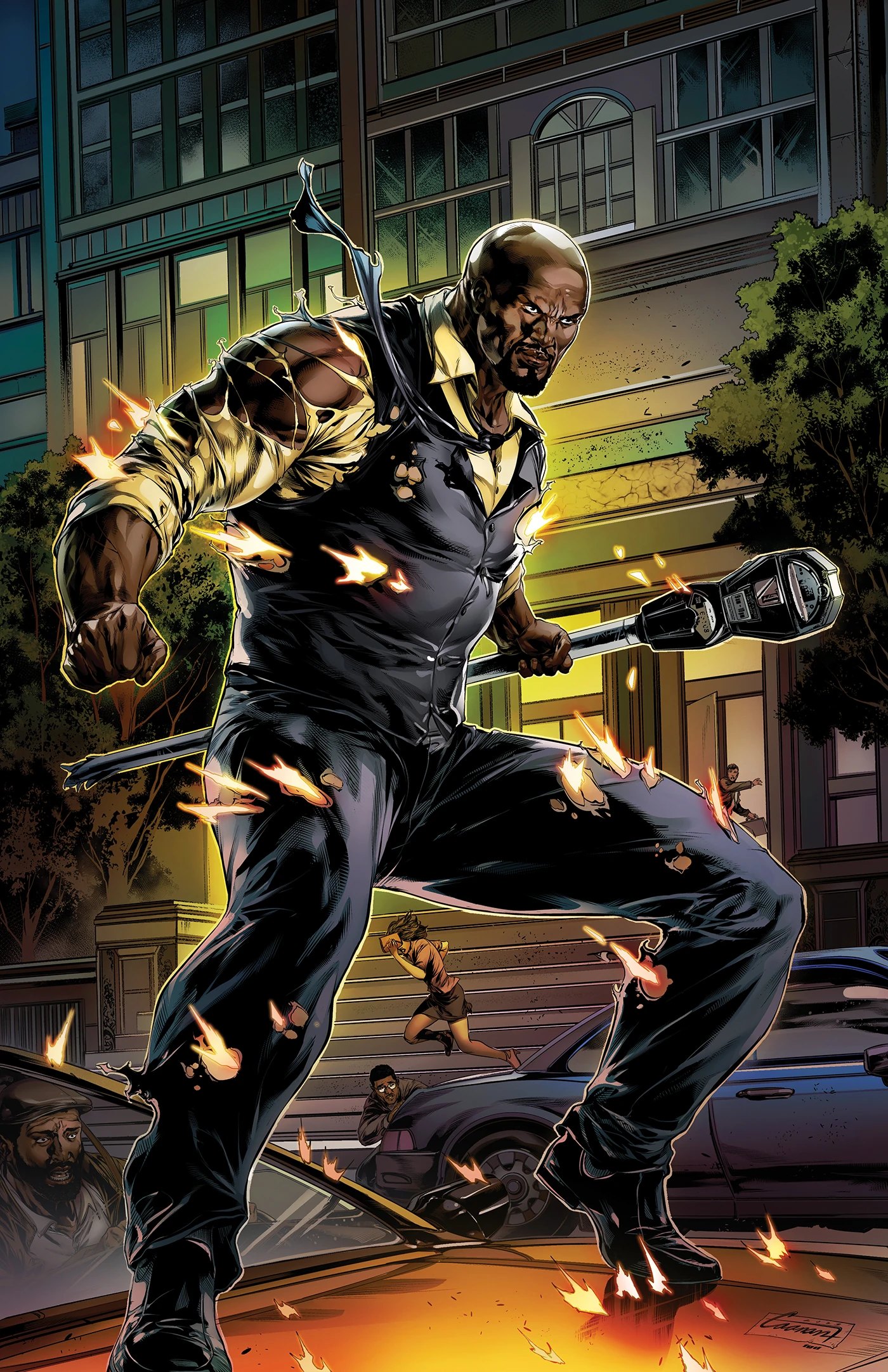
Who Is Luke Cage? The Origin of Marvel’s Bulletproof Man
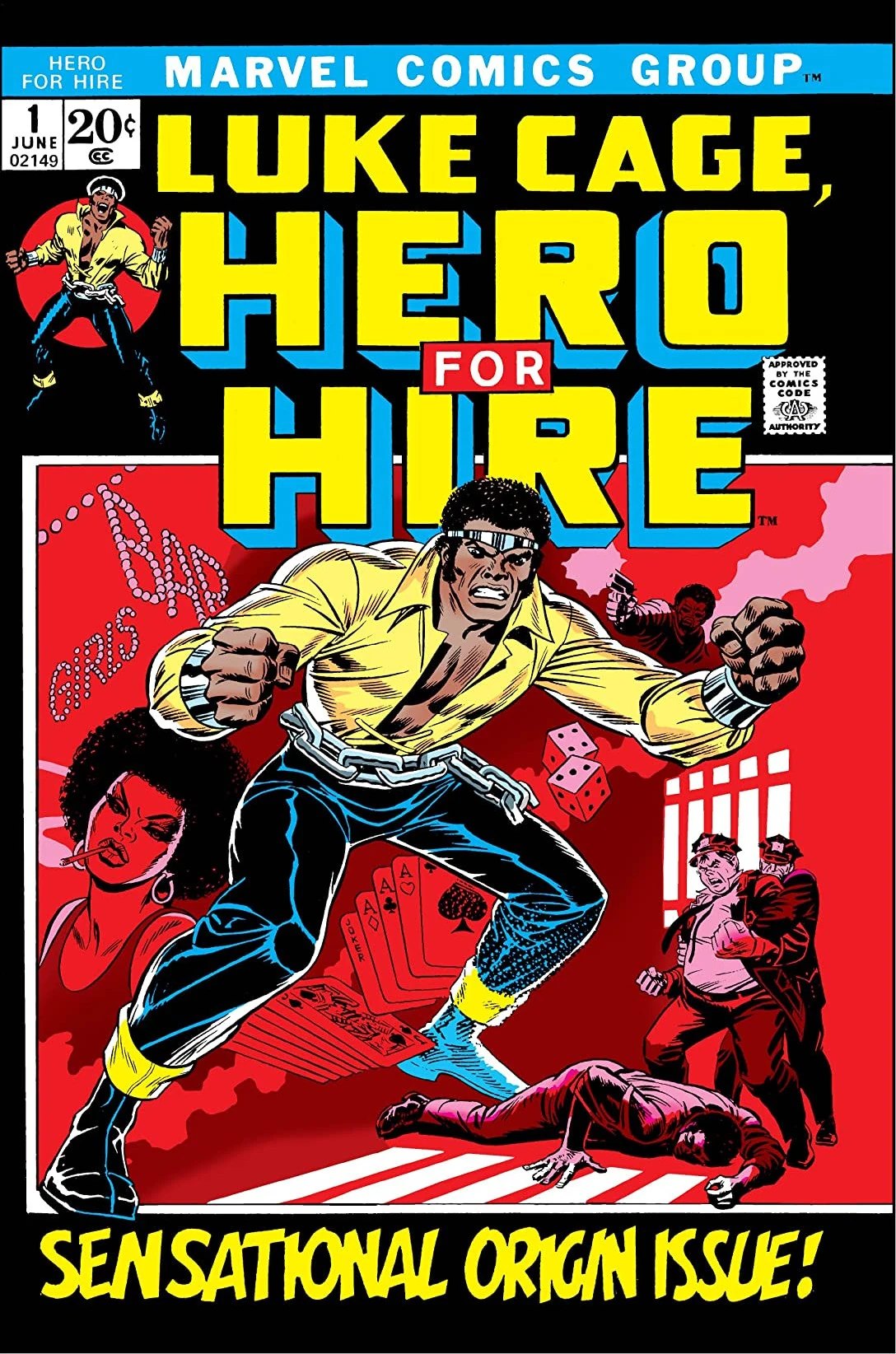
Luke Cage debuted as Carl Lucas in Hero for Hire #1 (June 1972), created by writer Archie Goodwin with artists George Tuska and John Romita Sr. handling the character’s visual design — making Cage the first Black superhero to headline his own ongoing Marvel comic. The original pitch leaned hard into blaxploitation cinema, then in its early-1970s heyday, but the character quickly outgrew the gimmick.
In the comics, Carl Lucas is framed for a crime he didn’t commit and sent to Seagate Prison, a facility off the coast of Georgia. Inside, corrupt guard Albert Rackham runs an illegal fighting ring while Dr. Noah Burstein conducts an experimental cellular-regeneration treatment on inmates. When Lucas becomes a liability, Rackham sabotages the machine mid-treatment, hoping to kill him. Instead the overdose of the experimental serum fuses steel-hard density into Lucas’s skin and cellular tissue, leaving him with bulletproof skin and superhuman strength. He punches his way out of the wrecked lab, breaks out of Seagate, and returns to New York, where he takes the name Luke Cage and starts charging money to use his powers — a street-level twist that separated him from cape-and-tights Marvel icons like Spider-Man or Thor.
Who Is Iron Fist? Danny Rand’s Path from Orphan to Living Weapon
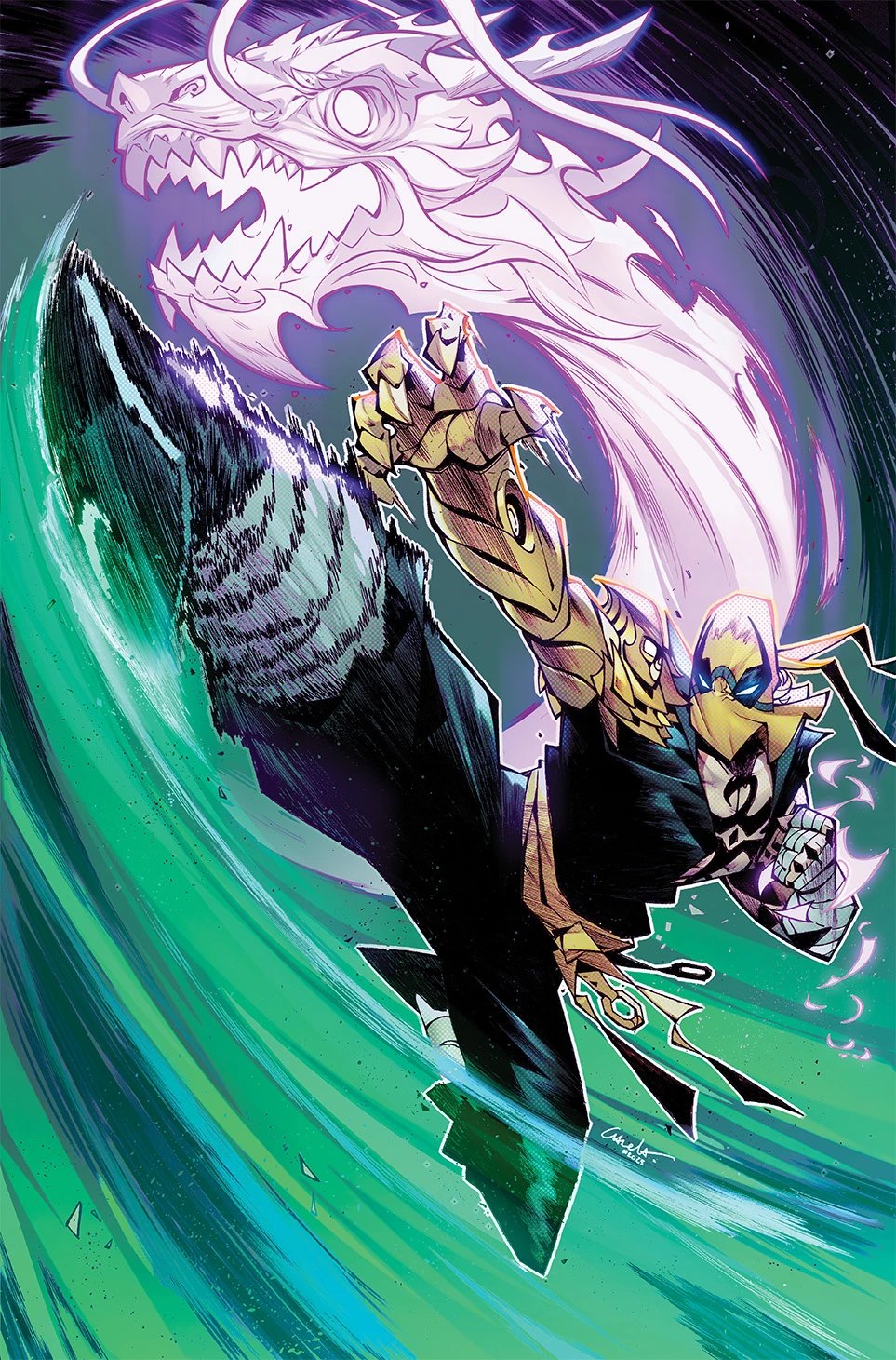
Iron Fist debuted two years later in Marvel Premiere #15 (May 1974), created by writer Roy Thomas and artist Gil Kane. Daniel “Danny” Rand is nine years old when his parents, Wendell Rand and Heather Duncan, are killed on an expedition to find the lost dimensional city of K’un-Lun — a betrayal orchestrated by Wendell’s business partner, Harold Meachum. Danny survives and reaches the city’s gates, where he’s taken in by Lei Kung the Thunderer, who spends roughly a decade training him in K’un-Lun’s martial arts.
To earn the title of Iron Fist, Danny must enter the Cave of the Dragon and defeat Shou-Lao the Undying, then plunge his hand into the dragon’s molten heart. Surviving the trial brands the Mark of Shou-Lao onto his chest and grants him the ability to focus his chi into an “iron fist” capable of shattering steel. Now an adult, Danny returns to New York to reclaim his stake in Rand-Meachum, the company his father co-founded with the man who arranged his parents’ deaths — setting up a corporate-thriller backdrop that made Iron Fist’s world very different from Cage’s Harlem streets.
How Luke Cage and Iron Fist Became Partners
The team-up wasn’t a launch gimmick — it took six years of separate solo runs to happen. Hero for Hire was retitled Luke Cage, Power Man in 1974 after Cage’s own series stalled, and sales kept sliding through the mid-1970s. Marvel’s fix was to merge two underperforming books: writer Chris Claremont and artist John Byrne folded Iron Fist into Cage’s title across a three-issue arc in Power Man #48–50, and with issue #50 (April 1978), titled “Beginning: A New Era of Greatness!,” the book was permanently rechristened Power Man and Iron Fist. It ran under that banner for a decade, through issue #125 in 1986, making Cage and Rand one of the longest-running non-team-book duos in Marvel history.
The pairing worked because the two characters are near-opposites who cover each other’s blind spots: Cage is streetwise, guarded, and financially desperate; Rand is wealthy, mystically trained, and prone to naivety about how the world outside K’un-Lun actually works. When David F. Walker relaunched the pair in a 2016 ongoing series with artist Sanford Greene, he told Fast Company that when a Marvel editor asked him to list the characters he most wanted to write, Cage and Rand “as a team” sat at the top — a book he’d wanted to make since childhood, having grown up on the Jo Duffy/Kerry Gammill issues of the original run.
Heroes for Hire: The Business Behind the Muscle
“Heroes for Hire” isn’t just a nickname — it’s a literal company inside Marvel continuity. Cage and Rand co-founded Heroes for Hire, Inc., a state-licensed private investigation and protection service headquartered on Park Avenue, staffed by secretary Jenny Royce and run legally by attorney Jeryn Hogarth. Iron Fist’s inherited fortune from Rand-Meachum bankrolled the operation, while Cage’s willingness to take dangerous jobs for a flat fee gave the business its edge — a superhero take on a two-man security firm rather than a costumed vigilante club. Marvel spun the concept into its own dedicated ongoing series in 1997, expanding the roster to a rotating cast of B- and C-list heroes working under the same paid-hero premise, and the “Heroes for Hire” name has been revived multiple times since as both a team book and a standalone imprint.
From Comic Panel to Netflix: The MCU Adaptations
Marvel and Netflix built an entire slate around bringing this pairing to live action. Mike Colter first appeared as Luke Cage in a supporting role on Marvel’s Jessica Jones (2015) before headlining Marvel’s Luke Cage, which premiered September 30, 2016. The show landed hard: per Symphony Advanced Media’s third-party ratings estimates (Netflix does not release official viewership data), season one was streamed 12.1 million times within its first 35 days, outpacing the comparable early-viewing numbers for Daredevil season two at the time.
Finn Jones took on Danny Rand in Marvel’s Iron Fist, which premiered March 17, 2017, as the fourth series in Netflix’s Marvel slate. It became the most poorly reviewed of the four solo shows — season one holds just a 20% critics’ score on Rotten Tomatoes, though its season two follow-up (2018) rebounded to 56% after a showrunner change. All four leads — Daredevil, Jessica Jones, Luke Cage, and Iron Fist — converged in Marvel’s Defenders, an eight-episode limited series that premiered August 18, 2017, giving Colter and Jones their first extended on-screen partnership as a team rather than guest stars in each other’s shows.
Neither solo series lasted past its cancellation wave: Netflix canceled Iron Fist in October 2018, and Luke Cage followed just seven days later, on October 19, 2018 — canceled the same day Daredevil season three premiered, reportedly after a writers’ room had already spent months breaking a third season. Discussing their on-screen chemistry ahead of The Defenders, Colter told ComicBook.com that the dynamic mirrored the comics’ generational-clash appeal: “There’s an exuberance that Iron Fist comes with that Luke Cage wants to temper a bit. It can’t help but have a wisdom-versus-youth quality… Danny comes out like a bull in a china shop in some ways, and I think Luke has seen the world and knows certain things.” For the fuller arc of how Netflix’s Marvel corner unwound and where the franchise stands now, see our coverage of Daredevil: Born Again’s season 3 renewal and the MCU history that led there.
Legacy: Where Cage and Rand Stand in Comics Today
Both characters have remained active well past their Netflix cancellations. Danny Rand died as Iron Fist in the Iron Fist 50th Anniversary Special (2024), and returned as an undead “Ghost Fist” in The Undead Iron Fist, a four-issue limited series by Jason Loo and Fran Galán that ran September through December 2025. Luke Cage, meanwhile, is now the mayor of New York City in current Marvel continuity, a status quo carried into Power Man: Timeless #1 (February 2025) from writers Collin Kelly and Jackson Lanzing with artist Bernard Chang. Deadline reported in February 2025 that Marvel Studios was actively “exploring” bringing Jessica Jones, Luke Cage, and Iron Fist back into the MCU proper, suggesting the Netflix chapter isn’t necessarily the last word on any of them.
The more interesting pattern is how closely the comics’ and the shows’ fortunes rhymed. Cage’s solo book kept getting renamed and nearly canceled through the mid-1970s until pairing him with Rand gave the title a decade of stability — and thirty-eight years later, the Netflix version of Cage was the stronger-reviewed show that still got canceled in the same housecleaning as the weaker Iron Fist. In both media, Cage has functioned as the load-bearing character whose stability made room for a shakier Iron Fist to exist at all; the partnership isn’t a coincidence of two heroes who happened to work well together, it’s structurally how the weaker property has survived twice, forty years apart. That’s not a detail Marvel’s own wiki pages tend to draw out, because it requires comparing publication history to streaming history side by side.
Unlike the morally compromised leads explored in our piece on Marvel and DC’s rise of the antihero, Cage and Rand were never rewritten into outright antiheroes — they charge for their services, but the “for hire” premise was always a financial arrangement bolted onto conventional heroism, not a moral compromise. That distinction is part of why the pairing has aged well: it’s a workplace buddy story wearing a cape.
Luke Cage and Iron Fist: Quick Comparison
| Category | Luke Cage | Iron Fist |
|---|---|---|
| Real name | Carl Lucas | Daniel “Danny” Rand |
| First appearance | Hero for Hire #1 (June 1972) | Marvel Premiere #15 (May 1974) |
| Creators | Archie Goodwin, John Romita Sr., George Tuska | Roy Thomas, Gil Kane |
| Core powers | Unbreakable skin, superhuman strength and durability | Chi-focused “iron fist” strike, martial arts mastery |
| Signature weakness | Vulnerable to certain vibranium/adamantium weapons and specialized ammo | Power depends on maintaining focus/chi; can be disrupted mid-strike |
| Live-action actor | Mike Colter (2015–2018) | Finn Jones (2017–2018) |
Frequently Asked Questions
Was Luke Cage originally imprisoned for a crime he actually committed?
No. In the comics, Carl Lucas is framed by a former associate, Willis Stryker, and wrongly convicted; the Seagate Prison experiment that gives him his powers happens while he’s incarcerated for a crime he didn’t commit, which is central to his motivation once he escapes.
Did Power Man and Iron Fist ever appear together outside their own comic?
Yes. Beyond the original Power Man and Iron Fist run (1978–1986) and its 1997 Heroes for Hire spinoff, the two have reunited in multiple limited series, including David F. Walker and Sanford Greene’s 2016 Power Man and Iron Fist, and both have made guest appearances in New Avengers and Defenders-branded team books over the decades.
Is Iron Fist’s mystical power the same one Danny Rand’s predecessors held?
Yes, with variation. The Iron Fist is a title passed to whoever defeats the dragon Shou-Lao in the Cave of the Dragon in K’un-Lun; Danny Rand is one of many warriors across history to hold the mantle, which is why later comics have explored other characters briefly wielding the same power.
Why did Netflix cancel both Luke Cage and Iron Fist within the same month?
Netflix never gave an official reason for either cancellation. Iron Fist was canceled in October 2018 after two seasons with mixed reviews; Luke Cage was canceled seven days later, on October 19, 2018, despite stronger reviews and a writers’ room already developing season three, fueling speculation that the decision was tied to Netflix’s broader restructuring of its Marvel deal rather than either show’s individual performance.